Results by title
3258 books match the query 'Performing Arts' and 266 start with a
At the Chinese Multiplex
The Cultural Infrastructure of the World’s Largest Film Exhibition MarketJames Udden
Lever Press, 2027
For over a century, Hollywood controlled the largest unified film market in the developed world, making it the global leader in film production and distribution. Since 2017, however, China has surpassed the North American market in the number of screens and cutting-edge technology. At the Chinese Multiplex asserts that this change was not the result of market forces, but rather of government policies that helped engineer what is arguably the greatest cultural infrastructure project in history. In China, the state plays a central role in the development of the film exhibition market that follows the same patterns as other infrastructure projects initiated by the Chinese Communist Party. While state-directed, the growth of the Chinese film exhibition market—centered on new multiplexes housed in China’s growing number of urban shopping malls—is part of a larger project to engineer a consumer economy in China. China’s simultaneous embrace of the digital economy, particularly the QR code, has also played a crucial role in the shifting landscape of China’s media industry.
Focusing on the movie theatre as a contested site, author James Udden offers a timely study of China’s domestic film market. The picture that emerges is one complicated by conflicts between government regulation and private investment, by concerns about digitally managed pricing variables, and by questions about the future viability of a film market focused on regime-friendly blockbusters.

At the Movies, Film Reviewing, and Screenwriting
Selective Affinities and Cultural MediationSteven Maras
Intellect Books, 2025
At the Movies, Film Reviewing, and Screenwriting discusses the interplay between film criticism and screenwriting, providing a different view on how reviewers engage with story and dialogue. Steven Maras draws on Pierre Bourdieu’s theories of cultural taste to examine film reviewing as a key site of cultural production, analyzing ten years of television scripts from At the Movies (2004–2014). Hosted by Australia’s most influential film critics Margaret Pomeranz and David Stratton, this long-running program shaped public discourse on cinema and left an indelible mark on Australian screen culture.
Studying the program’s broadcast scripts, this book addresses how film reviewing operates as both critique and storytelling. Of particular interest to media scholars, screenwriting researchers, and cinephiles alike, it provides fresh insights into the evolving role of criticism in contemporary screen culture. Engaging and deeply researched, this work rightfully emphasizes the cultural significance of movie criticism in film culture in Australia and beyond.
Athenian Tragedy in Performance
A Guide to Contemporary Studies and Historical DebatesMelinda Powers
University of Iowa Press, 2014
A case study of Euripides’s Bacchae, which provides more information about performance than any other extant tragedy, demonstrates possible methods for reconstructing the play’s historical performance and also the inevitable challenges inherent in that task, from the limited sources and the difficulty of interpreting visual material, to the risks of conflating actor with character and extrapolating backward from contemporary theatrical experience.
As an inquiry into the study of theatre and performance, an introduction to historical writing, a reference for further reading, and a clarification of several general misconceptions about Athenian tragedy and its performance, this historiographical analysis will be useful to specialists, practitioners, and students alike.
Atmospheres of Projection
Environmentality in Art and Screen MediaGiuliana Bruno
University of Chicago Press, 2022
Projection has long been transforming space, from shadow plays to camera obscuras and magic lantern shows. Our fascination with projection is alive on the walls of museums and galleries and woven into our daily lives. Giuliana Bruno explores the histories of projection and atmosphere in visual culture and their continued importance to contemporary artists who are reinventing the projective imagination with atmospheric thinking and the use of elemental media.
To explain our fascination with projection and atmosphere, Bruno traverses psychoanalysis, environmental philosophy, architecture, the history of science, visual art, and moving image culture to see how projective mechanisms and their environments have developed over time. She reveals how atmosphere is formed and mediated, how it can change, and what projection can do to modify a site. In so doing, she gives new life to the alchemic possibilities of transformative projective atmospheres. Showing how their “environmentality” produces sites of exchange and relationality, this book binds art to the ecology of atmosphere.
Atom Egoyan
Emma Wilson
University of Illinois Press, 2009
In this study, Emma Wilson closely analyzes the range of Egoyan's films and their visual textures, emotional control, and perverse beauty. Offering a full-scale chronological overview of Egoyan's work on films up to and including Where the Truth Lies, Wilson shows the persistence and development of certain structures and themes in Egoyan's cinema: questions of exile and nostalgia, trauma and healing, the family and sexuality. While drawing on ideas about intercultural cinema, Wilson also sets Egoyan's films in the context of contemporary Canadian cinema and European art-house cinema. Egoyan's own comments on his films thread throughout Wilson's analyses, and the book features a recent interview with the director.
Atomic Light (Shadow Optics)
Akira Mizuta Lippit
University of Minnesota Press, 2005
Akira Mizuta Lippit focuses on historical moments in which such modes of avisuality came into being—the arrival of cinema, which brought imagination to life; psychoanalysis, which exposed the psyche; the discovery of x-rays, which disclosed the inside of the body; and the “catastrophic light” of Hiroshima and Nagasaki, which instituted an era of atomic discourses.
With a taut, poetic style, Lippit produces speculative readings of secret and shadow archives and visual structures or phenomenologies of the inside, charting the materiality of what both can and cannot be seen in the radioactive light of the twentieth century.
Akira Mizuta Lippit is professor of cinema, comparative literature, and Japanese culture at the University of Southern California. He is the author of Electric Animal: Toward a Rhetoric of Wildlife (Minnesota, 2000).
August Wilson
Completing the Twentieth-Century CycleAlan Nadel
University of Iowa Press, 2010
Just prior to his death in 2005, August Wilson, arguably the most important American playwright of the last quarter-century, completed an ambitious cycle of ten plays, each set in a different decade of the twentieth century. Known as the Twentieth-Century Cycle or the Pittsburgh Cycle, the plays, which portrayed the struggles of African-Americans, won two Pulitzer Prizes for Drama, a Tony Award for Best Play, and seven New York Drama Critics Circle Awards. August Wilson: Completing the Twentieth-Century Cycle is the first volume devoted to the last five plays of the cycle individually—Jitney,Seven Guitars, King Hedley II, Gem of the Ocean, and Radio Golf—and in the context of Wilson's entire body of work.
Editor Alan Nadel's May All Your Fences Have Gates: Essays on the Drama of August Wilson, a work Henry Louis Gates called definitive, focused on the first five plays of Wilson's cycle. This new collection examines from myriad perspectives the way Wilson's final works give shape and focus to his complete dramatic opus. It contains an outstanding and diverse array of discussions from leading Wilson scholars and literary critics. Together, the essays in Nadel's two volumes give Wilson's work the breadth of analysis and understanding that this major figure of American drama merits.
Contributors
Herman Beavers
Yvonne Chambers
Soyica Diggs Colbert
Harry J. Elam, Jr.
Nathan Grant
David LaCroix
Barbara Lewis
Alan Nadel
Donald E. Pease
Sandra Shannon
Vivian Gist Spencer
Anthony Stewart
Steven C. Tracy
Dana Williams
Kimmika L. H. Williams-Witherspoon
Australian Film Theory and Criticism
Volume 3: DocumentsEdited by Deane Williams and Constantine Verevis
Intellect Books, 2017
Australian Post-War Documentary Film
An Arc of MirrorsDeane Williams
Intellect Books, 2008
Authorship in Film Adaptation
Edited with an introduction by Jack Boozer
University of Texas Press, 2008
Authoring a film adaptation of a literary source not only requires a media conversion but also a transformation as a result of the differing dramatic demands of cinema. The most critical central step in this transformation of a literary source to the screen is the writing of the screenplay. The screenplay usually serves to recruit producers, director, and actors; to attract capital investment; and to give focus to the conception and production of the film project. Often undergoing multiple revisions prior to production, the screenplay represents the crucial decisions of writer and director that will determine how and to what end the film will imitate or depart from its original source.
Authorship in Film Adaptation is an accessible, provocative text that opens up new areas of discussion on the central process of adaptation surrounding the screenplay and screenwriter-director collaboration. In contrast to narrow binary comparisons of literary source text and film, the twelve essays in this collection also give attention to the underappreciated role of the screenplay and film pre-production that can signal the primary intention for a film. Divided into four parts, this collection looks first at the role of Hollywood's activist producers and major auteurs such as Hitchcock and Kubrick as they worked with screenwriters to formulate their audio-visual goals. The second part offers case studies of Devil in a Blue Dress and The Sweet Hereafter, for which the directors wrote their own adapted screenplays. Considering the variety of writer-director working relationships that are possible, Part III focuses on adaptations that alter genre, time, and place, and Part IV investigates adaptations that alter stories of romance, sexuality, and ethnicity.
Autism in Film and Television
On the IslandEdited by Murray Pomerance and R. Barton Palmer
University of Texas Press, 2022
Global awareness of autism has skyrocketed since the 1980s, and popular culture has caught on, with film and television producers developing ever more material featuring autistic characters. Autism in Film and Television brings together more than a dozen essays on depictions of autism, exploring how autistic characters are signified in media and how the reception of these characters informs societal understandings of autism.
Editors Murray Pomerance and R. Barton Palmer have assembled a pioneering examination of autism’s portrayal in film and television. Contributors consider the various means by which autism has been expressed in films such as Phantom Thread, Mercury Rising, and Life Animated and in television and streaming programs including Atypical, The Bridge, Stranger Things, Star Trek: The Next Generation, and Community. Across media, the figure of the brilliant, accomplished, and “quirky” autist has proven especially appealing. Film and television have thus staked out a progressive position on neurodiversity by insisting on screen time for autism but have done so while frequently ignoring the true diversity of autistic experience. As a result, this volume is a welcome celebration of nonjudgmental approaches to disability, albeit one that is still freighted with stereotypes and elisions.

Avant-Garde Performance and the Limits of Criticism
Approaching the Living Theatre, Happenings/Fluxus, and the Black Arts MovementMike Sell
University of Michigan Press, 2005
Mike Sell's study is groundbreaking in its consideration of the avant-garde in relationship to a crucial but rarely considered agent: the scholar and critic. The book examines the role of the scholar and critic in the cultural struggles of radical artists and activists and reveals how avant-garde performance identifies the very limits of critical consideration. The book also explores the popularization of the avant-garde: how formerly subversive art is eventually discovered by the mass media, is gobbled up by the marketplace, and eventually finds its way onto the syllabi of college and university courses. Avant-Garde Performance and the Limits of Criticism is a timely and significant book that will become a standard reference for scholars in the fields of avant-garde literary criticism, theater history, critical theory, and performance studies.
"A provocative exploration of relations between the historical avant-garde and Cold War vanguard art and theatre. Sell's compelling historical and cultural narrative shows how the connections between the two exist at a very deep level of radical politics and aesthetics--an amazing concoction of rigorous scholarship, interdisciplinary learning, and progressive theorizing."
--Michael Vanden Heuvel, University of Wisconsin, Madison
"One of the most sophisticated, engaged, and engaging studies of the avant-garde in the United States that I've read-an important study that will raise the bar not only on scholarship of the Black Arts Movement, but on U.S. avant-gardism generally."
--James Smethurst, University of Massachusetts
A volume in the series Theater: Theory/Text/Performance. A list of recent titles in the series appears at the front of this volume.
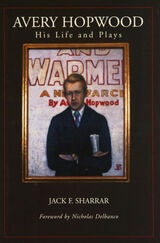
Avery Hopwood
His Life and PlaysJack F. Sharrar
University of Michigan Press, 1998
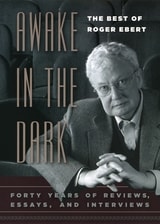
Awake in the Dark
The Best of Roger EbertRoger Ebert
University of Chicago Press, 2006
Roger Ebert has been writing film reviews for the Chicago Sun-Times for nearly forty years. And during those four decades, his wide knowledge, keen judgment, prodigious energy, and sharp sense of humor have made him America’s most celebrated film critic. He was the first such critic to win a Pulitzer Prize—one of just three film critics ever to receive that honor—and the only one to have a star dedicated to him on the Hollywood Walk of Fame. His groundbreaking hit TV show, At the Movies, meanwhile, has made “two thumbs up” one of the most coveted hallmarks in the entire industry.
No critic alive has reviewed more movies than Roger Ebert, and yet his essential writings have never been collected in a single volume—until now. With Awake in the Dark, both fans and film buffs can finally bask in the best of Ebert’s work. The reviews, interviews, and essays collected here present a picture of this indispensable critic’s numerous contributions to the cinema and cinephilia. From The Godfather to GoodFellas, from Cries and Whispers to Crash, the reviews in Awake in the Dark span some of the most exceptional periods in film history, from the dramatic rise of rebel Hollywood and the heyday of the auteur, to the triumph of blockbuster films such as Star Wars and Raiders of the Lost Ark, to the indie revolution that is still with us today.
The extraordinary interviews gathered in Awake in the Dark capture Ebert engaging not only some of the most influential directors of our time—Martin Scorsese, Steven Spielberg, Woody Allen, Robert Altman, Werner Herzog, and Ingmar Bergman—but also some of the silver screen’s most respected and dynamic personalities, including actors as diverse as Robert Mitchum, James Stewart, Warren Beatty, and Meryl Streep. Ebert’s remarkable essays play a significant part in Awake in the Dark as well. The book contains some of Ebert’s most admired pieces, among them a moving appreciation of John Cassavetes and a loving tribute to the virtues of black-and-white films.
If Pauline Kael and Andrew Sarris were godmother and godfather to the movie generation, then Ebert is its voice from within—a writer whose exceptional intelligence and daily bursts of insight and enthusiasm have shaped the way we think about the movies. Awake in the Dark, therefore, will be a treasure trove not just for fans of this seminal critic, but for anyone desiring a fascinating and compulsively readable chronicle of film since the late 1960s.
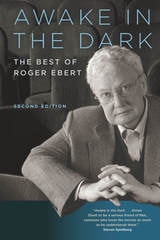
Awake in the Dark
The Best of Roger Ebert: Second EditionRoger Ebert
University of Chicago Press, 2017
Arriving fifty years after Ebert published his first film review in 1967, this second edition of Awake in the Dark collects Ebert’s essential writings into a single, irresistible volume. Featuring new Top Ten Lists and reviews of the years’ finest films through 2012, this edition allows both fans and film buffs to bask in the best of an extraordinary lifetime’s work. Including reviews from The Godfather to GoodFellas and interviews with everyone from Martin Scorsese to Meryl Streep, as well as showcasing some of Ebert’s most admired essays—among them a moving appreciation of John Cassavetes and a loving tribute to the virtues of black-and-white films—Ebert’s Awake in the Dark is a treasure trove not just for fans of this era-defining critic, but for anyone desiring a compulsively readable chronicle of the silver screen.
Stretching from the dramatic rise of rebel Hollywood and the heyday of the auteur to the triumph of blockbuster films such as Star Wars and Raiders of the Lost Ark, to the indie revolution that is still with us today, Awake in the Dark reveals a writer whose exceptional intelligence and daily bursts of insight and enthusiasm helped shape the way we think about the movies. But more than this, Awake in the Dark is a celebration of Ebert’s inimitable voice—a voice still cherished and missed.
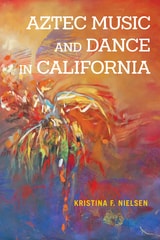
Aztec Music and Dance in California
Kristina F. Nielsen
University of Illinois Press, 2026