4531 books match the query 'Cultural & Ethnic Studies' and 364 start with a

cover of At Translation's Edge

At Translation's Edge

Edited by Nataša Durovicová, Patrice Petro, and Lorena Terando

Rutgers University Press, 2019
Since the 1970s, the field of Translation Studies has entered into dialogue with an array of other disciplines, sustaining a close but contentious relationship with literary translation. At Translation’s Edge expands this interdisciplinary dialogue by taking up questions of translation across sub-fields and within disciplines, including film and media studies, comparative literature, history, and education among others. For the contributors to this volume, translation is understood in its most expansive, transdisciplinary sense: translation as exchange, migration, and mobility, including cross-cultural communication and media circulation. Whether exploring the Universal Declaration of Human Rights or silent film intertitles, this volume brings together the work of scholars aiming to address the edges of Translation Studies while engaging with major and minor languages, colonial and post-colonial studies, feminism and disability studies, and theories of globalization and empire.
[more]
cover of At the Core and in the Margins: Incorporation of Mexican Immigrants in Two Rural Midwestern Communities

At the Core and in the Margins

Incorporation of Mexican Immigrants in Two Rural Midwestern Communities

Julia Albarracín

Michigan State University Press, 2016

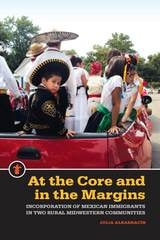
Beardstown and Monmouth, Illinois, two rural Midwestern towns, have been transformed by immigration in the last three decades. This book examines how Mexican immigrants who have made these towns their homes have integrated legally, culturally, and institutionally. What accounts for the massive growth in the Mexican immigrant populations in these two small towns, and what does the future hold for them?
Based on 260 surveys and 47 in-depth interviews, this study combines quantitative and qualitative research to explore the level and characteristics of immigrant incorporation in Beardstown and Monmouth. It assesses the advancement of immigrants in the immigration/ residency/citizenship process, the immigrants’ level of cultural integration (via language, their connectedness with other members of society, and their relationships with neighbors), the degree and characteristics of discrimination against immigrants in these two towns, and the extent to which immigrants participate in different social and political activities and trust government institutions.
Immigrants in new destinations are likely to be poorer, to be less educated, and to have weaker English-language skills than immigrants in traditional destinations. Studying how this population negotiates the obstacles to and opportunities for incorporation is crucial.
[more]
cover of Atenco Lives!: Filmmaking and Popular Struggle in Mexico

Atenco Lives!

Filmmaking and Popular Struggle in Mexico

Livia K. Stone

Vanderbilt University Press, 2019

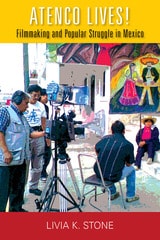
The People's Front in Defense of Land of Atenco (the "Frente") is an emblematic force in contemporary Mexican politics and in anti-capitalist, anti-neoliberal activist networks throughout the world. Best known for years of resistance against the encroachment of a government airport project on communal farmland, the Frente also became international news when its members were subject to state violence, rape, and intimidation in a brutal government crackdown in 2006. Through it all, documentary filmmaking has been one aspect of the Frente and its allies' efforts. The contradictions and difficulties of this moral and political project emerge in the day-to-day experiences of local, national, and international filmmakers and film distributors seeking to participate in the social movement.

Stone highlights the importance of how the circulation of the physical videos, and not just their content, promotes the social movement. More broadly she shows how videographers perform their activism, navigating the tensions between neoliberal personhood or ego and an ethos of compañerismo that privileges community. Grounded in the lived experiences of Atenco's activists and allied filmmakers, Atenco Lives! documents the making and circulating of films as an ethical and political practice purposefully used to transform human relationships.

[more]
cover of Athlete and Activist: 28 Sports Stars Who Changed the Game

Athlete and Activist

28 Sports Stars Who Changed the Game

Jules Boykoff, Alex C. Davis, and Amira Rose Davis Illustrations by Martin French

University of Illinois Press, 2026

Time and again, great athletes seem to do the impossible. Their skills amaze us. Their work ethic inspires awe. Their talent is next level. At the same time, an athlete’s fame gives them a platform to speak out on important issues. With words and actions, a basketball star or Olympic legend can reach millions of people with their message.

Athlete and Activist highlights sports figures who risked their popularity and even their careers to stand against injustice. Each profile takes readers inside the issues that motivated an athlete’s activism. Striking portraits by award-winning illustrator Martin French add a visual dimension to the dramatic stories. Throughout, the authors show athletes using different kinds of activism. Some spoke out. Others performed silent gestures. Still others let their success speak for itself.

A different kind of sports history, Athlete and Activist is an inspiring look at heroic acts beyond our favorite games.
[more]
cover of Atlas's Bones: The African Foundations of Europe

Atlas's Bones

The African Foundations of Europe

D. Vance Smith

University of Chicago Press, 2025

A major new look at Africa’s influence on European culture and how colonization remade Africa in the image of a medieval Europe.
  
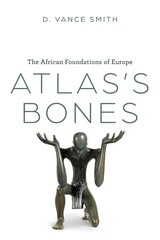
Virgil. Chaucer. Petrarch. These names resonate with many as cornerstones of European culture. Yet, in Atlas’s Bones, D. Vance Smith reveals that much of what is claimed as European culture up to the Middle Ages—its great themes in literature, its sources in political thought, its religious beliefs—originated in the writings of African thinkers like Augustine, Fulgentius, and Martianus Capella, or Europeans who thought extensively about Africa. In fact, a third of Virgil’s Aeneid takes place in Africa. Francis Petrarch believed his most important achievement was his epic Africa; while Geoffrey Chaucer wrote repeatedly about the figures of Scipio Africanus, actually two different men who defeated and destroyed Carthage.
 
Smith tells the story of how Europe created a false “medieval” version of Africa to acquire resources and power during the era of imperialism and colonialism. The first half of the book, “Reading Africa,” traces Egypt’s, Libya’s, and Carthage’s influence on classical and medieval thinking about Africa, highlighting often ignored literary and legendary traditions, for example, that Alexander the Great named himself the son of an African god. The second part, “Writing Africa,” focuses on how the different cultures of the two great African cities—Carthage and Alexandria—shaped modern literary criticism and political theology and examines the cross-influences of modern anthropology, medieval studies, and colonial law.
 
Atlas’s Bones firmly re-establishes the significance of Africa in European intellectual history. It will be essential reading for anyone seeking to understand how much of Africa informs our artistic and cultural world.
[more]
cover of Aurrera!: A Textbook for Studying Basque, Volume 1

Aurrera!

A Textbook for Studying Basque, Volume 1

Linda White

University of Nevada Press, 2008
The Basque language is one of Europe’s most ancient, its origins as mysterious as those of the Basque people themselves. It is also the official language of Euskadi, the bustling, modern Basque Autonomous Region of Spain, and the preferred tongue of tens of thousands of Basques and their descendants living in the European Basque Country and in diaspora around the world. Aurrera! is a comprehensive text for beginning-level students who are learning Basque (the Batua form approved by the Academy of the Basque Language) in a classroom setting or on their own. Each chapter introduces an element of grammar and offers students new vocabulary, written and spoken exercises, dialogues, and other activities that demonstrate the language in action, plus Basque reading texts that will entertain while they illustrate the material covered in the chapter. The complexities of Basque grammar are explained in clear, easy-to-understand terms, and the dialogues and exercises introduce students to common idioms and the basics of social conversation. Volume 1 covers material for the first two semesters of college-level language-classroom work. It is also designed to give independent learners a sound foundation in the language that will allow them to make their own way in a Basque-speaking environment and to read basic Basque texts.
[more]
cover of Aurrera!: A Textbook for Studying Basque, Volume 2

Aurrera!

A Textbook for Studying Basque, Volume 2

Linda White

University of Nevada Press, 2010
Aurrera! is a comprehensive text for beginning-level students who are learning Basque (the Batua form approved by the Academy of the Basque Language) in a classroom setting or on their own. Each chapter introduces elements of grammar and offers students written and spoken exercises, vocabulary, dialogues, and other activities that demonstrate the language in action, plus Basque reading texts that entertain while they illustrate the points of the chapter. The complexities of Basque grammar are explained in clear, easy-to-understand terms, and the dialogues and exercises introduce students to common idioms and the basics of social conversation. Volume 1 covers material for the first two semesters of college-level language-classroom work, and volume 2 covers a third and fourth seme- ster of study, addressing more advanced grammatical structures and introducing additional vocabulary. Aurrera! offers a systematic and engaging approach to teaching Basque in a classroom. In addition, it gives independent learners a sound foundation in the language that will allow them to make their own way in a Basque-speaking environment and to read basic Basque texts.
[more]
cover of Authentically African: Arts and the Transnational Politics of Congolese Culture

Authentically African

Arts and the Transnational Politics of Congolese Culture

Sarah Van Beurden

Ohio University Press, 2015

Together, the Royal Museum for Central Africa in Tervuren, Belgium, and the Institut des Musées Nationaux du Zaire (IMNZ) in the Congo have defined and marketed Congolese art and culture. In Authentically African, Sarah Van Beurden traces the relationship between the possession, definition, and display of art and the construction of cultural authenticity and political legitimacy from the late colonial until the postcolonial era. Her study of the interconnected histories of these two institutions is the first history of an art museum in Africa, and the only work of its kind in English.

Drawing on Flemish-language sources other scholars have been unable to access, Van Beurden illuminates the politics of museum collections, showing how the IMNZ became a showpiece in Mobutu’s effort to revive “authentic” African culture. She reconstructs debates between Belgian and Congolese museum professionals, revealing how the dynamics of decolonization played out in the fields of the museum and international heritage conservation. Finally, she casts light on the art market, showing how the traveling displays put on by the IMNZ helped intensify collectors’ interest and generate an international market for Congolese art.

The book contributes to the fields of history, art history, museum studies, and anthropology and challenges existing narratives of Congo’s decolonization. It tells a new history of decolonization as a struggle over cultural categories, the possession of cultural heritage, and the right to define and represent cultural identities.

[more]
cover of Autobiography of My Hungers

Autobiography of My Hungers

Rigoberto González

University of Wisconsin Press, 2019

Rigoberto González, author of the critically acclaimed memoir Butterfly Boy: Memories of a Chicano Mariposa, takes a second piercing look at his past through a startling new lens: hunger.
            The need for sustenance originating in childhood poverty, the adolescent emotional need for solace and comfort, the adult desire for a larger world, another lover, a different body—all are explored by González in a series of heartbreaking and poetic vignettes.
            Each vignette is a defining moment of self-awareness, every moment an important step in a lifelong journey toward clarity, knowledge, and the nourishment that comes in various forms—even "the smallest biggest joys" help piece together a complex portrait of a gay man of color who at last defines himself by what he learns, not by what he yearns for.

Bill Whitehead Award for Lifetime Literary Achievement, Publishing Triangle

“Told in a series of revealing vignettes and poems, González’s Autobiography of my Hungers turns moments of need and want into revelations of truth and self-awareness, creating the portrait of an artist that is complex if not entirely complete.”—El Paso Times

“Through his provocative vignettes, González communicates a lifetime of struggle for affirmation and self-acceptance.”—Make/Shift 
[more]
cover of Automobiles and the Future: Competition, Cooperation, and Change

Automobiles and the Future

Competition, Cooperation, and Change

Robert E. Cole, Editor

University of Michigan Press, 1983

At the time of the U.S.-Japan auto conferences in March 1983, the hoped-for economic recovery as manifested in auto sales had revealed itself quite modestly. Three months later, the indicators were more robust and certainly long overdue for those whose livelihood depends on the health of the industry--some of whom are university professors.
With Japanese import restrictions in place until March 1984 and drastically reduced break-even points for domestic manufactures, rising consumer demand holds great promise for the industry. The rapidly rising stock prices of the auto-makers captures well the sense of heightened optimism, as do the various forecasts for improved profits.
While the news is certainly welcome, it nevertheless should be greeted with caution. As Mr. Perkins noted at the conference, "we have a tendency to forget things very quickly. If we have a boom market this year, there is a good chance that a lot of things we learned will be forgotten."
To put the matter differently and more bluntly, with growing prosperity there is the risk that management will fall back into old habits, making impossible the achievement of sustained quality and productivity improvement. Similarly, the commitment to develop cooperative relations with workers and suppliers will weaken. The union will be under membership pressure to retrieve concessions rather than to take the longer-term view. This longer-term view recognizes that "up-front increases" and adherence to existing work rules increasingly come at the sacrifice of future job security. Government policymakers will turn their attention away from the industry. This may not mean a great deal given how weakly focused their attentions has been during the last three years and how mixed and contradictory government auto policies have been for over a decade.
[more]
cover of Available Light: Omar Badsha and the Struggle for Change in South Africa

Available Light

Omar Badsha and the Struggle for Change in South Africa

Daniel Magaziner

Ohio University Press, 2024

Available Light tells the story of an activist, an artist, a uniquely South African individual, and his community and family across the second half of the twentieth century. Omar Badsha was born in Durban, on the country’s southeastern coast in 1945. His was the third generation of his Gujarati family to call South Africa home. Before he turned five, the country’s white electorate had voted to institute apartheid to strip the rights and privileges of citizenship from most of the population, including Badsha’s Indian community and especially the country’s Black majority. By the time he turned fifteen, nonviolent protest against apartheid had been quashed; by the time he turned twenty, so too had the armed struggle to dislodge white supremacy within the country. The ongoing, resilient, and oft-rebuffed struggle against apartheid was a definitive factor in Badsha’s life. Furthermore, Badsha was raised in a community where art—painting, carving, music, poetry, theater—was inseparable from other values, whether Islamic and conservative or radical and urgently committed. When Badsha struggled in school, he, like his father, turned to art to express what he otherwise had difficulty conveying. Art brought him into contact with people of disparate backgrounds from far beyond Durban. In time, his friendships with other artists helped him refine his voice, first in drawing and eventually in photography, and capture the political ethic by which he strove to live his life and which he shared with similarly committed artist-activists. Daniel Magaziner chronicles how art and politics became intertwined in South Africa and explains what it takes to maintain a critical aesthetic approach to political crises in the past and present. The book tracks the personal and social costs that commitment can incur, while also appreciating how Badsha and others like him have maintained their vision of an equitable, transformed society even today, when the ideals that once animated the South African struggle are on the back foot worldwide.
[more]
cover of Awakening to Equality: A Young White Pastor at the Dawn of Civil Rights

Awakening to Equality

A Young White Pastor at the Dawn of Civil Rights

Karl E. Lutze

University of Missouri Press, 2006

When Karl Lutze arrived in Oklahoma in 1945, he stepped into another world. A newly ordained clergyman born in Wisconsin, he was a young white man assigned to minister among Muskogee’s African American community. He soon found that in the South, crosses were as likely to be burned as revered. His recollections of postwar Oklahoma provide a compelling testament to the era’s racial conflict and some steps taken toward its resolution.
Awakening to Equality offers a unique perspective on an often-violent era that witnessed the gradual dismantling of segregation. Serving congregations in Muskogee and Tulsa, Lutze encountered a cross section of both communities—from the white and black power brokers to the most disempowered black and biracial families—and a stratified society buttressed by intimidation, cross burnings, and bombs. His activism in the Urban League and other local civil rights organizations gave him firsthand experience with forces moving toward change, as well as with the more entrenched forces resisting it.
Blending personal anecdotes and recollections of key players in this unfolding drama, Lutze puts a human face on historical and journalistic accounts of social change during the crucial early years of the civil rights movement. He takes readers back to small-town and urban Oklahoma in a time when African Americans were beginning to challenge segregation in Muskogee’s public transportation and a handful of liberal whites were trying to move their communities toward desegregation. Throughout this rich memoir, we meet actual people creating a future—one that involved the very redefinition of America.
More than a view of an earnest young clergyman trying to grow beyond the racial and social limitations of the church of his day, Awakening to Equality also depicts the struggles of Lutze’s own denomination to overcome its earlier accommodation of racism. Lutze’s success in his ministries made his achievements a model for mission work among African Americans and led to his appointment in 1959 first as field secretary and then shortly thereafter as executive director of the Lutheran Human Relations Association, a pioneering civil rights organization. Simultaneously, he taught classes as Associate Professor of Theology at Valparaiso University.
Lutze not only witnessed important events but also participated in them and found that his entire career was shaped by the experience. Awakening to Equality is a moving story that captures the real-life education of a prominent clergyman during a critical period in American life.
[more]
cover of Awakening to Race: Individualism and Social Consciousness in America

Awakening to Race

Individualism and Social Consciousness in America

Jack Turner

University of Chicago Press, 2012
The election of America’s first black president has led many to believe that race is no longer a real obstacle to success and that remaining racial inequality stems largely from the failure of minority groups to take personal responsibility for seeking out opportunities. Often this argument is made in the name of the long tradition of self-reliance and American individualism. In Awakening to Race, Jack Turner upends this view, arguing that it expresses not a deep commitment to the values of individualism, but a narrow understanding of them.
 
Drawing on the works of Ralph Waldo Emerson, Henry David Thoreau, Frederick Douglass, Ralph Ellison, and James Baldwin, Turner offers an original reconstruction of democratic individualism in American thought. All these thinkers, he shows, held that personal responsibility entails a refusal to be complicit in injustice and a duty to combat the conditions and structures that support it. At a time when individualism is invoked as a reason for inaction, Turner makes the individualist tradition the basis of a bold and impassioned case for race consciousness—consciousness of the ways that race continues to constrain opportunity in America. Turner’s “new individualism” becomes the grounds for concerted public action against racial injustice.
[more]
cover of Aztlán Arizona: Mexican American Educational Empowerment, 1968–1978

Aztlán Arizona

Mexican American Educational Empowerment, 1968–1978

Darius V. Echeverría

University of Arizona Press, 2014

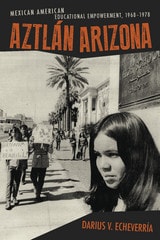
Aztlán Arizona is a history of the Chicano Movement in Arizona in the 1960s and 1970s. Focusing on community and student activism in Phoenix and Tucson, Darius V. Echeverría ties the Arizona events to the larger Chicano and civil rights movements against the backdrop of broad societal shifts that occurred throughout the country. Arizona’s unique role in the movement came from its (public) schools, which were the primary source of Chicano activism against the inequities in the judicial, social, economic, medical, political, and educational arenas.

The word Aztlán, originally meaning the legendary ancestral home of the Nahua peoples of Mesoamerica, was adopted as a symbol of independence by Chicano/a activists during the movement of the 1960s and 1970s.  In an era when poverty, prejudice, and considerable oppositional forces blighted the lives of roughly one-fifth of Arizonans, the author argues that understanding those societal realities is essential to defining the rise and power of the Chicano Movement.

The book illustrates how Mexican American communities fostered a togetherness that ultimately modified larger Arizona society by revamping the educational history of the region. The concluding chapter outlines key Mexican American individuals and organizations that became politically active in order to address Chicano educational concerns. This Chicano unity, reflected in student, parent, and community leadership organizations, helped break barriers, dispel the Mexican American inferiority concept, and create educational change that benefited all Arizonans.

No other scholar has examined the emergence of Chicano Movement politics and its related school reform efforts in Arizona. Echeverría’s thorough research, rich in scope and interpretation, is coupled with detailed and exact endnotes. The book helps readers understand the issues surrounding the Chicano Movement educational reform and ethnic identity. Equally important, the author shows how residual effects of these dynamics are still pertinent today in places such as Tucson.
[more]