Results by title
4917 books match the query 'Philosophy' and 406 start with a
Aristotle
Democracy and Political ScienceDelba Winthrop
University of Chicago Press, 2018
Today, democracy is seen as the best or even the only legitimate form of government. With this book, Delba Winthrop punctures this complacency and takes up the challenge of justifying democracy through Aristotle’s political science. In Aristotle’s time and in ours, democrats want inclusiveness; they want above all to include everyone as a part of a whole. But what makes a whole? This is a question for both politics and philosophy, and Winthrop shows that Aristotle pursues the answer in the Politics. She uncovers in his political science the insights philosophy brings to politics and, especially, the insights politics brings to philosophy. Through her appreciation of this dual purpose and her skilled execution of her argument, Winthrop makes profound discoveries. Central to politics, she maintains, is the quality of assertiveness—the kind of speech that demands to be heard. Aristotle, she shows for the first time, carries assertive speech into philosophy, where human reason claims its due as a contribution to the universe. Political science has the high role of teaching ordinary folk about democracy and what sustains it.
This posthumous publication is more than an honor to Delba Winthrop’s memory. It is a gift to partisans of democracy, advocates of justice, and students of Aristotle.
Around the Day in Eighty Worlds
Politics of the PluriverseMartin Savransky
Duke University Press, 2021
Art And Engagement
Arnold Berleant
Temple University Press, 1993
In this book Arnold Berleant develops a bold alternative to the eighteenth-century aesthetic of disinterestedness. Centering on the notion of participatory engagement in the appreciation of art, he explores its appearance in art and in aesthetic perception, especially during the past century. Aesthetic engagement becomes a key, both on historical and theoretical grounds, to making intelligible our experiences with both contemporary and classical arts. In place of the traditional aesthetic that enjoins the appreciator to adopt a contemplative attitude, distancing the art object in order to ensure its removal from practical uses, Art and Engagement examines the ways in which art entices us into intimate participation in its workings.
Beginning with the historical and theoretical underpinnings of the idea of engagement, Berleant focuses on how engagement works as a force in different arts. Successive chapters pursue its influence in landscape painting, architecture and environmental design, literature, music, dance, and film.
Art and Engagement argues forcefully for the originality and power of aesthetic perception. Demolishing the conceptual barriers erected by the Western world’s limiting tradition, the book discloses the condition of engagement that has always been present when our aesthetic encounters have been most effective and suggests a new direction for aesthetic inquiry.
Art Of The Motor
Paul Virilio
University of Minnesota Press, 1995
Art Without Borders
A Philosophical Exploration of Art and HumanityBen-Ami Scharfstein
University of Chicago Press, 2009
People all over the world make art and take pleasure in it, and they have done so for millennia. But acknowledging that art is a universal part of human experience leads us to some big questions: Why does it exist? Why do we enjoy it? And how do the world’s different art traditions relate to art and to each other?
Art Without Borders is an extraordinary exploration of those questions, a profound and personal meditation on the human hunger for art and a dazzling synthesis of the whole range of inquiry into its significance. Esteemed thinker Ben-Ami Scharfstein’s encyclopedic erudition is here brought to bear on the full breadth of the world of art. He draws on neuroscience and psychology to understand the way we both perceive and conceive of art, including its resistance to verbal exposition. Through examples of work by Indian, Chinese, European, African, and Australianartists, Art Without Borders probes the distinction between accepting a tradition and defying it through innovation, which leads to a consideration of the notion of artistic genius. Continuing in this comparative vein, Scharfstein examines the mutual influence of European and non-European artists. Then, through a comprehensive evaluation of the world’s major art cultures, he shows how all of these individual traditions are gradually, but haltingly, conjoining into a single current of universal art. Finally, he concludes by looking at the ways empathy and intuition can allow members of one culture to appreciate the art of another.
Lucid, learned, and incomparably rich in thought and detail, Art Without Borders is a monumental accomplishment, on par with the artistic achievements Scharfstein writes about so lovingly in its pages.
Art and Answerability
Early Philosophical EssaysBy M. M. Bakhtin
University of Texas Press, 1990
Art and Answerability contains three of Mikhail Bakhtin's early essays from the years following the Russian Revolution, when Bakhtin and other intellectuals eagerly participated in the debates, lectures, demonstrations, and manifesto writing of the period. Because they predate works that have already been translated, these essays—"Art and Answerability," "Author and Hero in Aesthetic Activity," and "The Problem of Content, Material, and Form in Verbal Art"—are essential to a comprehensive understanding of Bakhtin's later works. A superb introduction by Michael Holquist sets out the major themes and concerns of the three essays and identifies their place in the canon of Bakhtin's work and in intellectual history. The introduction, together with Vadim Liapunov's scholarly gloss, makes these essays accessible to students as well as scholars.
Art and Contemporaneity
Edited by Frank Ruda and Jan Voelker
Diaphanes, 2015
Art and Contemporaneity features contributions from leading scholars, including Alain Badiou and Alexander García Düttmann, who bring theories of aesthetic philosophy to bear on one of the most crucial questions about contemporary art: how do works of art come to exist within and in relation to time? A specific temporality of an artwork emerges from the material and political conditions of its production. But works of art also forge new relationships to time in their reception, which are continually superimposed upon layers of history. With a broad range of perspectives, Art and Contemporaneity offers a sustained reflection on the relationship between art and time, and it will appeal to those interested in both the theory and practice of contemporary art.
Art and Freedom
E. E. Sleinis
University of Illinois Press, 2002
What does a life with art offer that a life without art does not? Art and Freedom asserts that the fundamental point of the enterprise of art is the creation and delivery of values that are not singularly available in the nonart world.
E. E. Sleinis discusses visual art, literature, music, theater, and other art forms, arguing that as art both liberates and provides new points of focus and awareness, the art enterprise depends on a positive freeing from the nonart world, rather than on mere addition to it.
Art and Freedom introduces a novel classificatory system for representation, expression, and formalist theories of art. Sleinis argues that a characteristic defect of contemporary theories of art is their neglect of the issue of value. Challenging these reductive, formalist notions of art, he emphasizes the potential, and the need, for art to evolve and make progress in ways comparable to the sciences, albeit on a very different model.
A smart blend of incisive commentary and illuminating philosophy, Art and Freedom provides a useful context for transforming a sometimes baffling medium into a means of fostering personal growth and creating and sharing values.
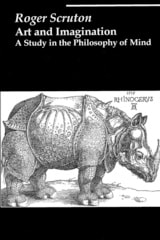
Art and Imagination
A Study in the Philosophy of MindRoger Scruton
St. Augustine's Press, 2015
Scruton examines and rejects various attempts made by recent philosophers to demarcate the realm of aesthetic judgment. He argues that the logic of aesthetic judgment does not suffice to distinguish what is “aesthetic” from what is not, for aesthetic judgments must be explained in terms of the conditions for their acceptance rather than the conditions for their truth. These “acceptance conditions” can be understood only if we first know what is meant by aesthetic experience. This theory attempts to show how aesthetic experience can be regarded as autonomous, even though it is intimately connected with ordinary experience, and is indeed dependent on ordinary experience for its full description.
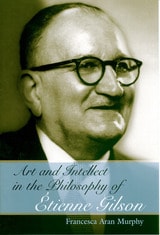
Art and Intellect in the Philosophy of Étienne Gilson
Francesca Aran Murphy
University of Missouri Press, 2004
Art and Postcapitalism
Aesthetic Labour, Automation and Value ProductionDave Beech
Pluto Press, 2019
Art and Postcapitalism
Aesthetic Labour, Automation and Value ProductionDave Beech
Pluto Press, 2019
Art and Posthumanism
Essays, Encounters, ConversationsCary Wolfe
University of Minnesota Press, 2021
A sustained engagement between contemporary art and philosophy relating to our place in, and responsibility to, the nonhuman world
How do contemporary art and theory contemplate the problem of the “bio” of biopolitics and bioart? How do they understand the question of “life” that binds human and nonhuman worlds in their shared travail? In Art and Posthumanism, Cary Wolfe argues for the reconceptualization of nature in art and theory to turn the idea of the relationship between the human and the planet upside down.
Wolfe explores a wide range of contemporary artworks—from Sue Coe’s illustrations of animals in factory farms and Eduardo Kac’s bioart to the famous performance pieces of Joseph Bueys and the video installations of Eija-Liisa Ahtila, among others—examining how posthumanist theory can illuminate, and be illuminated by, artists’ engagement with the more-than-human world. Looking at biological and social systems, the question of the animal, and biopolitics, Art and Posthumanism explores how contemporary art rivets our attention on the empirically thick, emotionally charged questions of “life” and the “living” amid ecological catastrophe.
One of the foremost theorists of posthumanism, Wolfe pushes that philosophy out of the realm of the purely theoretical to show how a posthumanist engagement with particular works and their conceptual underpinnings help to develop more potent ethical and political commitments.
Art and Truth after Plato
Tom Rockmore
University of Chicago Press, 2013
Art from Start to Finish
Jazz, Painting, Writing, and Other ImprovisationsEdited by Howard S. Becker, Robert R. Faulkner, and Barbara Kirshenblatt-Gimblett
University of Chicago Press, 2006
Art from Start to Finish gathers a unique group of contributors from the worlds of sociology, musicology, literature, and communications—many of them practicing artists in their own right—to discuss how artists from jazz musicians to painters work: how they coordinate their efforts, how they think, how they start, and, of course, how they finish their productions.
Specialists in the arts have much to say about the works themselves, which are often neglected by scholarsi n other fields. Art from Start to Finish takes a different tack by exploring the creative process itself and its social component. Any reader who makes art or has an interest in it will value this book.
Art in Context
Understanding Aesthetic ValueDavid E. W. Fenner
Ohio University Press, 2008
Art in Context is a systematic, historically situated, and historically evidenced attempt to demonstrate the importance of considering contexts that will, in the vast majority of cases, increase the aesthetic experience. While focusing on distance, detachment, aestheticism, art for art’s sake, and formalism can at times be instructive and interesting, such approaches risk missing the larger and often central issue of the piece.
Based on the findings of philosophers and critics, and on artwork throughout
history, Art in Context provides a solid foundation for understanding and valuing a work of art in perspective as well as within the particular world in which it exists.
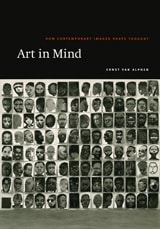
Art in Mind
How Contemporary Images Shape ThoughtErnst van Alphen
University of Chicago Press, 2005
Examining a broad range of works, van Alphen—a renowned art historian and cultural theorist—demonstrates how art serves a socially constructive function by actually experimenting with the parameters of thought. Employing work from artists as diverse as Picasso, Watteau, Francis Bacon, Marlene Dumas, and Matthew Barney, he shows how art confronts its viewers with the "pain points" of cultural experience-genocide, sexuality, diaspora, and transcultural identity-and thereby transforms the ways in which human existence is conceived. Van Alphen analyzes how art visually "thinks" about these difficult cultural issues, tapping into an understudied interpretation of art as the realm where ideas and values are actively created, given form, and mobilized. In this way, van Alphen's book is a work of art in itself as it educates us in a new mode of thought that will forge equally new approaches and responses to the world.
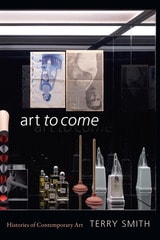
Art to Come
Histories of Contemporary ArtTerry Smith
Duke University Press, 2019
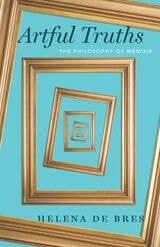
Artful Truths
The Philosophy of MemoirHelena de Bres
University of Chicago Press, 2021
Artful Truths offers a concise guide to the fundamental philosophical questions that arise when writing a literary work about your own life. Bringing a philosopher’s perspective to a general audience, Helena de Bres addresses what a memoir is, how the genre relates to fiction, memoirists’ responsibilities to their readers and subjects, and the question of why to write a memoir at all. Along the way, she delves into a wide range of philosophical issues, including the nature of the self, the limits of knowledge, the idea of truth, the obligations of friendship, the relationship between morality and art, and the question of what makes a life meaningful.
Written in a clear and conversational style, it offers a resource for those who write, teach, and study memoirs, as well as those who love to read them. With a combination of literary and philosophical knowledge, de Bres takes the many challenges directed at memoirists seriously, while ultimately standing in defense of a genre that, for all its perplexities—and maybe partly because of them—continually proves to be both beloved and valuable.
Artful Truths
The Philosophy of MemoirHelena de Bres
University of Chicago Press, 2021
Offers a philosophical perspective on the nature and value of writing a memoir.
Artful Truths offers a concise guide to the fundamental philosophical questions that arise when writing a literary work about your own life. Bringing a philosopher’s perspective to a general audience, Helena de Bres addresses what a memoir is, how the genre relates to fiction, memoirists’ responsibilities to their readers and subjects, and the question of why to write a memoir at all. Along the way, she delves into a wide range of philosophical issues, including the nature of the self, the limits of knowledge, the idea of truth, the obligations of friendship, the relationship between morality and art, and the question of what makes a life meaningful.
Written in a clear and conversational style, it offers a resource for those who write, teach, and study memoirs, as well as those who love to read them. With a combination of literary and philosophical knowledge, de Bres takes the many challenges directed at memoirists seriously, while ultimately standing in defense of a genre that, for all its perplexities—and maybe partly because of them—continually proves to be both beloved and valuable.
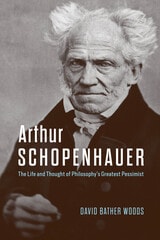
Arthur Schopenhauer
The Life and Thought of Philosophy’s Greatest PessimistDavid Bather Woods
University of Chicago Press, 2025
Arthur Schopenhauer (1788–1860) almost wasn’t one of the greatest philosophers of the nineteenth century. Born in the Free City of Danzig to a family of shipping merchants, he was destined for a life of imports and exports until his father died in a suspected suicide. After much deliberation, the young Schopenhauer invested his inheritance in himself and his philosophical vocation. But the long road to recognition was a difficult one, with Schopenhauer spending all but the last decade of his life in total obscurity. Yet his ideas and style went on to influence great thinkers, including Friedrich Nietzsche, Ludwig Wittgenstein, and Sigmund Freud, as well as artists such as the composer Richard Wagner and writers Marcel Proust, Thomas Mann, Samuel Beckett, and many more.
A singular and remarkably influential thinker, Schopenhauer is usually described as an extreme pessimist. He questioned the purpose of existence in a world where pain and suffering are inescapable and happiness is all too brief. In this engaging philosophical biography, David Bather Woods reevaluates Schopenhauer’s pessimism in the context of his life experiences, revealing the philosopher’s relentless fascination with the world and making a case for his contemporary relevance. Bather Woods weaves together Schopenhauer’s ideas with the story of how he came to be, including such topics as love, loneliness, morality, politics, gender, sexuality, death, suicide, fame, and madness. In doing so, this book answers some of life’s most challenging questions about how to deal with pain and loss, and how to live with ourselves and each other.
Despite his pessimistic outlook on human existence, Schopenhauer didn’t give up on life. Rather, he recognized that the question of how to live becomes even more pressing, and he worked to provide an answer. Bather Woods shows how Schopenhauer’s life informed his ideas and how they still resonate today.
Articulating Difference
Sex and Language in the German Nineteenth CenturySophie Salvo
University of Chicago Press, 2024
Drawing on a wide range of texts, from understudied ethnographic and scientific works to canonical literature and philosophy, Sophie Salvo uncovers the prehistory of the inextricability of gender and language. Taking German discourses on language as her focus, she argues that we are not the inventors but, rather, the inheritors and adapters of the notion that gender and language are interrelated. Particularly during the long nineteenth century, ideas about sexual differences shaped how language was understood, classified, and analyzed. As Salvo explains, philosophers asserted the patriarchal origins of language, linguists investigated “women’s languages” and grammatical gender, and literary Modernists imagined “feminine” sign systems, and in doing so they not only deemed sex-based divisions to be necessary categories of language but also produced a plethora of gendered tropes and fictions, which they used both to support their claims and delimit their disciplines.
Articulating Difference charts new territory, revealing how gendered conceptions of language make possible the misogynistic logic of exclusion that underlies arguments claiming, for example, that women cannot be great orators or writers. While Salvo focuses on how male scholars aligned language study with masculinity, she also uncovers how women responded, highlighting the contributions of understudied nineteenth-century works on language that women wrote even as they were excluded from academic opportunities.
Articulating the World
Conceptual Understanding and the Scientific ImageJoseph Rouse
University of Chicago Press, 2015
In Articulating the World, Joseph Rouse argues that the most pressing challenge for advocates of naturalism today is precisely this: to understand how to make sense of a scientific conception of nature as itself part of nature, scientifically understood. Drawing upon recent developments in evolutionary biology and the philosophy of science, Rouse defends naturalism in response to this challenge by revising both how we understand our scientific conception of the world and how we situate ourselves within it.
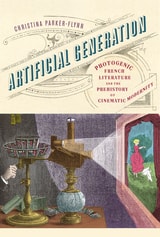
Artificial Generation
Photogenic French Literature and the Prehistory of Cinematic ModernityChristina Parker-Flynn
Rutgers University Press, 2022
Artificial Humanities
A Fictional Perspective on Language in AINina Beguš
University of Michigan Press, 2025
Highlighting the impact of human-like AI design, from gendered virtual assistants to romanticized social robots, the book shows how these technologies intersect with longstanding humanistic questions about the concepts of creativity and language as well as the relations between humans and machines. Additionally, the book explores AI’s applications in medical fields, particularly psychiatry and neurotechnology, including how AI interacts with the human body and mind to address conditions like paralysis. By emphasizing the philosophical and cultural implications of these technologies, Beguš highlights the need for responsible innovation that prioritizes human well-being as well as machine potential outside of human imitation. Accessible and thought-provoking, Artificial Humanities offers tools for analyzing and assessing technologies while they are being developed and invites readers to see how the humanities can guide us toward a more thoughtful future for AI.
Artistic License
The Philosophical Problems of Copyright and AppropriationDarren Hudson Hick
University of Chicago Press, 2017
Engaging with long-standing debates about the nature of originality, authorship, and artists’ rights, Hick examines the philosophical challenges presented by the role of intellectual property in the artworld and vice versa. Using real-life examples of artists who have incorporated copyrighted works into their art, he explores issues of artistic creation and the nature of infringement as they are informed by analytical aesthetics and legal and critical theory. Ultimately, Artistic License provides a critical and systematic analysis of the key philosophical issues that underlie copyright policy, rethinking the relationship between artist, artwork, and the law.
Arts of Wonder
Enchanting Secularity - Walter De Maria, Diller + Scofidio, James Turrell, Andy GoldsworthyJeffrey L. Kosky
University of Chicago Press, 2012
Arts of the Political
New Openings for the LeftAsh Amin and Nigel Thrift
Duke University Press, 2013
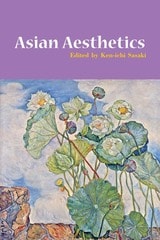
Asian Aesthetics
Ken-ichi Sasaki
National University of Singapore Press, 2011
The book is divided into five sections, dealing with Japanese, Korean, Chinese, Indian and Southeast Asian aesthetics. Individual chapters provide in-depth investigations of specific traditions, embracing both classical as well as modern aesthetic forms. The author suggest that Japanese culture is characterized by an openness to diverse cultural influences, Korean culture by "peninsularity," Chinese culture by parallels with the West, Indian culture by "rasa" (a kind of "cosmic" feeling that is distinct from one who feels), and Southeast Asian culture by dilemmas of modernization. The volume as a whole integrates these studies, clarifying essential elements of each aesthetic culture and drawing on this material to characterize an Asian civilization that transcends individual countries and cultures.
Assayas and Political Seriousness
Brian Price
Northwestern University Press, 2026
A cogent reconsideration of Assayas’s cinematic oeuvre and what it teaches us about the political today
The films of Olivier Assayas are widely celebrated for their complex responses to the many shifts that globalization has introduced in our time. Brian Price contends that they offer a different way of regarding the so-called problem of cultural and political enmeshment that Carl Schmitt and other conservative thinkers fear, including a contention that enmeshment is not a problem at all, in fact, but rather a different mode of social and political organization. Price puts Assayas’s films in dialogue not only with Schmitt’s theory of the political but also with the history of political philosophy after Schmitt, especially in the work of Hannah Arendt, Jacques Derrida, and Chantal Mouffe, all of whom have attempted to reckon with the friend/enemy dynamic at the core of the political.
At the heart of Assayas’s cinematic oeuvre, and of this book, is a reflection on what it means to be politically serious, which, Price shows, cannot be reduced to criteria that can simply be applied or repeated. The boundaries between the political and the varied forms of the social demand a sensitivity to change and the unknown, none of which can be accessed in the states of absolute certainty that are derived from crises that do not repeat in the same ways. The messiness and nuances of modern life are held together by moving images, which insist that we know why we value what we demand and seek to protect.
Astrotopia
The Dangerous Religion of the Corporate Space RaceMary-Jane Rubenstein
University of Chicago Press, 2022
As environmental, political, and public health crises multiply on Earth, we are also at the dawn of a new space race in which governments team up with celebrity billionaires to exploit the cosmos for human gain. The best-known of these pioneers are selling different visions of the future: while Elon Musk and SpaceX seek to establish a human presence on Mars, Jeff Bezos and Blue Origin work toward moving millions of earthlings into rotating near-Earth habitats. Despite these distinctions, these two billionaires share a core utopian project: the salvation of humanity through the exploitation of space.
In Astrotopia, philosopher of science and religion Mary-Jane Rubenstein pulls back the curtain on the not-so-new myths these space barons are peddling, like growth without limit, energy without guilt, and salvation in a brand-new world. As Rubenstein reveals, we have already seen the destructive effects of this frontier zealotry in the centuries-long history of European colonialism. Much like the imperial project on Earth, this renewed effort to conquer space is presented as a religious calling: in the face of a coming apocalypse, some very wealthy messiahs are offering an other-worldly escape to a chosen few. But Rubenstein does more than expose the values of capitalist technoscience as the product of bad mythologies. She offers a vision of exploring space without reproducing the atrocities of earthly colonialism, encouraging us to find and even make stories that put cosmic caretaking over profiteering.

Asylum
The Concept and the PracticeRanjana Khanna
Duke University Press, 2026
At Home in Nature
Technology, Labor, and Critical Ecology in Modern ChinaBan Wang, issue editor
Duke University Press, 2023
At Home in the World
Michael Jackson
Duke University Press, 1995
Something of a nomad himself, having lived in New Zealand, Sierra Leone, England, France, Australia, and the United States, Jackson is deft at capturing the ambiguities of home as a lived experience among the Warlpiri. Blending narrative ethnography, empirical research, philosophy, and poetry, he focuses on the existential meaning of being at home in the world. Here home becomes a metaphor for the intimate relationship between the part of the world a person calls "self" and the part of the world called "other." To speak of "at-homeness," Jackson suggests, implies that people everywhere try to strike a balance between closure and openness, between acting and being acted upon, between acquiescing in the given and choosing their own fate. His book is an exhilarating journey into this existential struggle, responsive at every turn to the political questions of equity and justice that such a struggle entails.
A moving depiction of an aboriginal culture at once at home and in exile, and a personal meditation on the practice of ethnography and the meaning of home in our increasingly rootless age, At Home in the World is a timely reflection on how, in defining home, we continue to define ourselves.
At the Heart of Reason
Translated from the French by Michael B. Smith and Claude Romano
Northwestern University Press, 2015
Against the common view, which restricts the range of reason to logic and truth-theory alone, Romano advocates "big-hearted rationality," including in it what is only ostensibly its opposite, that is, sensibility, and locating in sensibility itself the roots of the categorical forms of thought. Contrary to what was claimed by the "linguistic turn," language is not a self-enclosed domain; it cannot be conceived in its specificity unless it is led back to its origin in the pre-predicative or pre-linguistic structure of experience itself.
At the Heart of the State
The Moral World of InstitutionsDidier Fassin, et al.
Pluto Press, 2015
The state is often regarded as an abstract and neutral bureaucratic entity. Against this common sense idea, At the Heart of the State argues that it is also a concrete and situated reality, embodied in the work of its agents and inscribed in the issues of its time.
The result of a five-year investigation conducted by ten scholars, this book describes and analyses the police, the court system, the prison apparatus, the social services, and mental health facilities in France. Combining genealogy and ethnography, its authors show that these state institutions do not simply implement laws, rules and procedures: they mobilise values and affects, judgements and emotions. In other words, they reflect the morality of the state.
Of immense interest to both social scientists and political theorists, this work will make an important contribution to the ever expanding literature on the contemporary state.
At the Limits of Political Philosophy
From "Brilliant Errors" to Things of Uncommon ImportanceJames V. Schall
Catholic University of America Press, 1996
Athens and Jerusalem
Lev Shestov
Ohio University Press, 2016
For more than two thousand years, philosophers and theologians have wrestled with the irreconcilable opposition between Greek rationality (Athens) and biblical revelation (Jerusalem). In Athens and Jersusalem, Lev Shestov—an inspiration for the French existentialists and the foremost interlocutor of Edmund Husserl, Martin Heidegger, and Martin Buber during the interwar years—makes the gripping confrontation between these symbolic poles of ancient wisdom his philosophical testament, an argumentative and stylistic tour de force.
Although the Russian-born Shestov is little known in the Anglophone world today, his writings influenced many twentieth-century European thinkers, such as Albert Camus, D. H. Lawrence, Thomas Mann, Czesław Miłosz, and Joseph Brodsky. Athens and Jerusalem is Shestov’s final, groundbreaking work on the philosophy of religion from an existential perspective. This new, annotated edition of Bernard Martin’s classic translation adds references to the cited works as well as glosses of passages from the original Greek, Latin, German, and French. Athens and Jerusalem is Shestov at his most profound and most eloquent and is the clearest expression of his thought that shaped the evolution of continental philosophy and European literature in the twentieth century.
Atoms and Alchemy
Chymistry and the Experimental Origins of the Scientific RevolutionWilliam R. Newman
University of Chicago Press, 2006
Tracing the alchemical roots of Robert Boyle’s famous mechanical philosophy, Newman shows that alchemy contributed to the mechanization of nature, a movement that lay at the very heart of scientific discovery. Boyle and his predecessors—figures like the mysterious medieval Geber or the Lutheran professor Daniel Sennert—provided convincing experimental proof that matter is made up of enduring particles at the microlevel. At the same time, Newman argues that alchemists created the operational criterion of an “atomic” element as the last point of analysis, thereby contributing a key feature to the development of later chemistry. Atomsand Alchemy thus provokes a refreshing debate about the origins of modern science and will be welcomed—and deliberated—by all who are interested in the development of scientific theory and practice.
Attraction of Opposites
Thought and Society in the Dualistic ModeDavid Maybury-Lewis and Uri Almagor, Editors
University of Michigan Press, 1989
Authentically Jewish
Identity, Culture, and the Struggle for RecognitionStuart Z. Charmé
Rutgers University Press, 2022
Author Stuart Z. Charmé explores how debates over authenticity and struggles for recognition are a key to understanding a wide range of controversies between Orthodox and liberal Jews, Zionist and diaspora Jews, white Jews and Jews of color, as well as the status of intermarried and messianic Jews, and the impact of Jewish genetics. In addition, it discusses how and when various cultural practices and traditions such as klezmer music, Israeli folk dance, Jewish yoga and meditation, and others are recognized as authentically Jewish, or not.
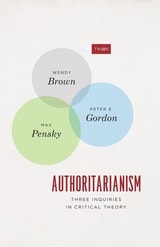
Authoritarianism
Three Inquiries in Critical TheoryWendy Brown, Peter E. Gordon, and Max Pensky
University of Chicago Press, 2018
In this volume, three distinguished scholars draw on critical theory to address our current predicament. Wendy Brown, Peter E. Gordon, and Max Pensky share a conviction that critical theory retains the power to illuminate the forces producing the current political constellation as well as possible paths away from it. Brown explains how “freedom” has become a rallying cry for manifestly un-emancipatory movements; Gordon dismantles the idea that fascism is rooted in the susceptible psychology of individual citizens and reflects instead on the broader cultural and historical circumstances that lend it force; and Pensky brings together the unlikely pair of Tocqueville and Adorno to explore how democracies can buckle under internal pressure. These incisive essays do not seek to smooth over the irrationality of the contemporary world, and they do not offer the false comforts of an easy return to liberal democratic values. Rather, the three authors draw on their deep engagements with nineteenth–and twentieth–century thought to investigate the historical and political contradictions that have brought about this moment, offering fiery and urgent responses to the demands of the day.
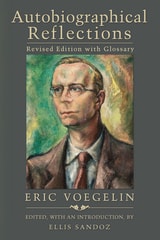
Autobiographical Reflections, Revised Edition with Glossary
Eric Voegelin, edited with an introduction by Ellis Sandoz
University of Missouri Press, 2011
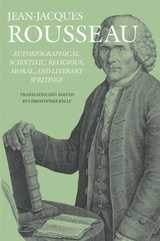
Autobiographical, Scientific, Religious, Moral, and Literary Writings
Jean Rousseau
Dartmouth College Press, 2014
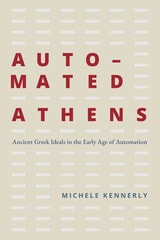
Automated Athens
Ancient Greek Ideals in the Early Age of AutomationMichele Kennerly
University of Chicago Press, 2026
A critical history of the recurring idea that technology will free us from work and bring about a truly democratic society.
In popular thought, ancient Athens endures as a place ahead of its time—the birthplace of democracy, a cultural center, and a model toward which modern societies should strive. In Automated Athens, Michele Kennerly examines the many and frequent appeals to this nostalgic vision of the ancient city-state throughout the early age of computerized automation. In the mid-twentieth century, people hoped that automation would free us from mindless, dehumanizing work so that we could attend to creative and communal pursuits. Proponents appealed to ancient Athens, saying automated systems and machines would stand in for the craftsmen, enslaved people, and subordinated women who performed the undesirable work that enabled that city-state’s flourishing. Automated Athens scrutinizes this appeal as it moves chronologically into present debates about the promise of automation and AI. For Kennerly, our inability to settle debates about where accelerating automation may take us, especially politically, reveals a deeper cultural indecisiveness about how to live well and live well together.
Automatic Architecture
Motivating Form after ModernismSean Keller
University of Chicago Press, 2017
The quixotic attempts to formulate such design processes extended modernist principles and tried to draw architecture closer to mathematics and the sciences. By focusing on design methods, and by examining evidence at a range of scales—from institutions to individual buildings—Automatic Architecture offers an alternative to narratives of this period that have presented postmodernism as a question of style, as the methods and techniques traced here have been more deeply consequential than the many stylistic shifts of the past half century. Sean Keller closes the book with an analysis of the contemporary condition, suggesting future paths for architectural practice that work through, but also beyond, the merely automatic.
Automatic Religion
Nearhuman Agents of Brazil and FrancePaul Christopher Johnson
University of Chicago Press, 2021
Automatic Religion explores an unlikely series of episodes from the end of the nineteenth century, when crucial ideas related to automatism and, in a different realm, the study of religion were both being born. Paul Christopher Johnson draws on years of archival and ethnographic research in Brazil and France to explore the crucial boundaries being drawn at the time between humans, “nearhumans,” and automata. As agency came to take on a more central place in the philosophical, moral, and legal traditions of the West, certain classes of people were excluded as less-than-human. Tracking the circulation of ideas across the Atlantic, Johnson tests those boundaries, revealing how they were constructed on largely gendered and racial foundations. In the process, he reanimates one of the most mysterious and yet foundational questions in trans-Atlantic thought: what is agency?
Autonomy After Auschwitz
Adorno, German Idealism, and ModernityMartin Shuster
University of Chicago Press, 2014
Shuster uncovers dangers in the notion of autonomy as it was originally conceived by Kant. Putting Adorno into dialogue with a range of European philosophers, notably Kant, Hegel, Horkheimer, and Habermas—as well as with a variety of contemporary Anglo-American thinkers such as Richard Rorty, Stanley Cavell, John McDowell, and Robert Pippin—he illuminates Adorno’s important revisions to this fraught concept and how his different understanding of autonomous agency, fully articulated, might open up new and positive social and political possibilities. Altogether, Autonomy after Auschwitz is a meditation on modern evil and human agency, one that demonstrates the tremendous ethical stakes at the heart of philosophy.
Autonomy
The Social Ontology of Art under CapitalismNicholas Brown
Duke University Press, 2019
Avatar Bodies
A Tantra For PosthumanismAnn Weinstone
University of Minnesota Press, 2004
An ethically-based approach to human relations for the media age
Otherness, alterity, the alien—over the course of the past fifty years many of us have based our hopes for more ethical relationships on concepts of difference. Combining philosophy, literary criticism, fiction, autobiography, and real and imagined correspondence, Ann Weinstone proposes that only when we stop ordering the other to be other—whether technological, animal, or simply inanimate—will we truly become posthuman.
Posthumanism has thus far focused nearly exclusively on human–technology relations. Avatar Bodies develops a posthumanist vocabulary for human-to-human relationships that turns our capacities for devotion, personality, and pleasure. Drawing on both the philosophies and practices of Indian Tantra, Weinstone argues for the impossibility of absolute otherness; we are all avatar bodies, consisting of undecidably shared gestures, skills, memories, sensations, beliefs, and affects.
Weinstone calls her book a “tantra”—by which she means a set of instructions for practices aimed at sensitizing the reader to the inherent permeability of self to other, self to world. This tantra for posthumanism elaborates devotional gestures that will expose us to more unfettered contacts and the transformative touch.