8812 books match the query 'Political Science' and 626 start with a
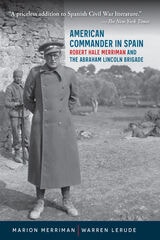
cover of American Commander in Spain: Robert Hale Merriman and the Abraham Lincoln Brigade

American Commander in Spain

Robert Hale Merriman and the Abraham Lincoln Brigade

Marion Merriman

University of Nevada Press, 1986

The Spanish Civil War (1936—1939) was a confrontation between supporters of Spain's democratically elected Republic—including peasants, communists, union workers, and anarchists—and an alliance of nationalist Army rebels and upper-class forces, including the Catholic Church and landlords, led by General Francisco Franco. In the political climate of the time, this civil war became the focus of foreign interests advocating conflicting ideas of democracy and fascism. Spain became a training ground where Nazi Germany and Fascist Italy tested military techniques intended for use in a yet to be declared wider world war. Although most Western nations embraced a neutrality pact, individual volunteers from around the world, including the United States, made their way to Spain to support the Republican cause.

Among the Americans was Robert Hale Merriman, a scholar who had been studying international economics in Europe. He and his wife, Marion, joined volunteers from fifty-four countries in International Brigades. Merriman became the first commander of the Americans; Abraham Lincoln Battalion and a leader among the International Brigades. Now available in a new paperback edition, American Commander in Spain is based on Merriman and Marion's diaries and personal correspondence, Marion's own service at his side in Spain, as well as Warren Lerude's extensive research and interviews with people who knew Merriman and Marion, government records, and contemporary news reports. This critically acclaimed work is both the biography of a remarkable man who combined his idealism with life-risking action to fight fascism threatening Europe and Marion's vivid first-hand account of life in Spain during the civil war that became a prologue to the Second World War.

 
[more]
cover of American Community: Radical Experiments in Intentional Living

American Community

Radical Experiments in Intentional Living

Mark S. Ferrara

Rutgers University Press, 2020

Mainstream notions of the “American Dream” usually revolve around the ownership of private property, a house of one’s own. Yet for the past 400 years, a large number of Americans have dared to dream bigger and bolder, choosing to live in intentional communities that pooled resources, and they worked to ensure the well-being of all their members. 
 
American Community takes us inside forty of the most interesting intentional communities in the nation’s history, from the colonial era to the present day. You will learn about such little-known experiments in cooperative living as the Icarian communities, which took the utopian ideas expounded in a 1840 French novel and put them into practice, ultimately spreading to five states over fifty years. Plus, it covers more recent communities such as Arizona’s Arcosanti, designed by architect Paolo Soleri as a model for ecologically sustainable living.
 
In this provocative and engaging book, Mark Ferrara guides readers through an array of intentional communities that boldly challenged capitalist economic arrangements in order to attain ideals of harmony, equality, and social justice. By shining a light on these forgotten histories, it shows that far from being foreign concepts, communitarianism and socialism have always been vital parts of the American experience.
[more]
cover of American Conservatism: Thinking It, Teaching It

American Conservatism

Thinking It, Teaching It

Paul Lyons

Vanderbilt University Press, 2009

This book offers a rare opportunity to read about how a scholar's teaching informs his research, in this case an examination of the nature of American conservatism. It is based on an interdisciplinary senior seminar Lyons taught in Spring 2006. His teaching log, including student comments from an electronic conferencing system, gives a vivid sense of the daily frustrations and triumphs. Lyons reflects on some of the most difficult issues in higher education today, such as how to handle racism and political passions in the classroom, as well as how a teacher presents his own political convictions.

Lyons begins with the premise that most universities have been negligent in helping undergraduates understand a movement that has shaped the political landscape for half a century. In addition, in a series of essays that frame the teaching log, he makes the case that conservatives have too often failed to adhere to basic, Burkean principles, and that the best of conservatism has often appeared as a form of liberalism from thinkers such as Hannah Arendt, Reinhold Niebuhr, and George Kennan. The essays also cover the history of conservatism, conservative use of the city-on-a-hill metaphor, and an examination of how the promise of Camelot sophistication was subverted by a resurgence of right-wing populism.
[more]
cover of American Corruption Talk: A Political Etymology

American Corruption Talk

A Political Etymology

Robert G. Boatright and Molly Brigid McGrath

Temple University Press, 2025

Americans often worry about political corruption—not only about specific officials misusing their powers, but also more broadly about political, cultural, moral decay or deterioration. Underneath our talk about corruption lie deeper claims and concerns about how we organize our common life. American Corruption Talk presents a study of corruption and corruption talk that seeks to understand those deeper claims and concerns.

Robert Boatright and Molly Brigid McGrath focus on the role corruption talk plays in American political discourse. They distinguish between two ways people speak about corruption—corruption talk in the style of a purifier, who wishes to expunge the evil forces or drain the swamp, and corruption talk in the style of the mender, who thinks of managing, replacing, or repairing.  

American Corruption Talk begins by tracing how the concept of political corruption was developed by philosophers and political thinkers, leading up to its use in the American context, especially in the Progressive Era. It also compares modes of contemporary corruption talk in different areas of public life. In doing so, the authors hope to resolve confusion and partisan disagreements about what corruption is and to discourage the tendency to label actions, events, and ideas that we merely disagree with as corrupt.
[more]
cover of American Diplomacy

American Diplomacy

George F. Kennan

University of Chicago Press, 1985

Drawing on his diplomatic experience and expertise, George F. Kennan offers an informed, plain-spoken appraisal of United States foreign policy. His evaluations of diplomatic history and international relations cut to the heart of policy issues much debated today.

This expanded edition retains the lectures and essays first published in 1951 as American Diplomacy, 1900-1950 and adds two lectures delivered in 1984 as well as a new preface by the author. In these additional pieces, Kennan explains how some of his ideas have changed over the years. He confronts the events and topics that have come to occupy American opinion in the last thirty years, including the development and significance of the Cold War, the escalation of the nuclear arms race, and the American involvement in Vietnam.

"A book about foreign policy by a man who really knows something about foreign policy."—James Reston,New York Times Book Review

"These celebrated lectures, delivered at the University of Chicago in 1950, were for many years the most widely read account of American diplomacy in the first half of the twentieth century. . . . The second edition of the work contains two lectures from 1984 that reconsider the themes of American Diplomacy"—Foreign Affairs, Significant Books of the Last 75 Years.
[more]
cover of American Diplomacy: Sixtieth-Anniversary Expanded Edition

American Diplomacy

Sixtieth-Anniversary Expanded Edition

George F. Kennan

University of Chicago Press, 2012

For more than sixty years, George F. Kennan’s American Diplomacy has been a standard work on American foreign policy. Drawing on his considerable diplomatic experience and expertise, Kennan offers an overview and critique of the foreign policy of an emerging great power whose claims to rightness often spill over into self-righteousness, whose ambitions conflict with power realities, whose judgmentalism precludes the interests of other states, and whose domestic politics frequently prevent prudent policies and result in overstretch. Keenly aware of the dangers of military intervention and the negative effects of domestic politics on foreign policy, Kennan identifies troubling inconsistencies in the areas between actions and ideals—even when the strategies in question turned out to be decided successes.

In this expanded sixtieth-anniversary edition, a substantial new introduction by John J. Mearsheimer, one of America’s leading political realists, provides new understandings of Kennan’s work and explores its continued resonance. As America grapples with its new role as one power among many—rather than as the “indispensable nation” that sees “further into the future”—Kennan’s perceptive analysis of the past is all the more relevant. Today, as then, the pressing issue of how to wield power with prudence and responsibility remains, and Kennan’s cautions about the cost of hubris are still timely. Refreshingly candid, American Diplomacy cuts to the heart of policy issues that continue to be hotly debated today.

“These celebrated lectures, delivered at the University of Chicago in 1950, were for many years the most widely read account of American diplomacy in the first half of the twentieth century.”—Foreign Affairs, Significant Books of the Last 75 Years
[more]
cover of American Dove: US Foreign Policy and the Failure of Force

American Dove

US Foreign Policy and the Failure of Force

Zachary C. Shirkey

University of Michigan Press, 2020
Zachary C. Shirkey argues that the United States is overly reliant on the active use of force and should employ more peaceful foreign policy tools. Force often fails to achieve its desired ends for both tactical and strategic reasons and is relatively infungible, making it an inappropriate tool for many US foreign policy goals. Rather than relying on loose analogies or common sense as many books on US grand strategy do, American Dove bases its argument directly on an eclectic mix of academic literature, including realist, liberal, and constructivist theory as well as psychology. Shirkey also argues against retrenchment strategies, such as offshore balancing and strategic restraint as lacking a moral component that leaves them vulnerable to hawkish policies that employ moral arguments in favor of action. US withdrawal would weaken the existing liberal international security, economic, and legal orders—orders that benefit the United States. Rather, the book argues the United States needs an energetic foreign policy that employs passive uses of force such as deterrence and nonmilitary tools such as economic statecraft, international institutions, international law, and soft power. Such a policy leaves room for a moral component, which is necessary for mobilizing the American public and would uphold the existing international order. Last, Shirkey argues that to be successful, doves must frame their arguments in terms of strategy rather than in terms of costs and must show that dovish policies are consistent with national honor and a broad range of American values. American Dove offers a framework for US grand strategy and a plan for persuading the public to adopt it.
[more]
cover of American Empire and the Politics of Meaning: Elite Political Cultures in the Philippines and Puerto Rico during U.S. Colonialism

American Empire and the Politics of Meaning

Elite Political Cultures in the Philippines and Puerto Rico during U.S. Colonialism

Julian Go

Duke University Press, 2007

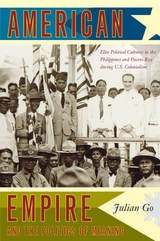
When the United States took control of the Philippines and Puerto Rico in the wake of the Spanish-American War, it declared that it would transform its new colonies through lessons in self-government and the ways of American-style democracy. In both territories, U.S. colonial officials built extensive public school systems, and they set up American-style elections and governmental institutions. The officials aimed their lessons in democratic government at the political elite: the relatively small class of the wealthy, educated, and politically powerful within each colony. While they retained ultimate control for themselves, the Americans let the elite vote, hold local office, and formulate legislation in national assemblies.

American Empire and the Politics of Meaning is an examination of how these efforts to provide the elite of Puerto Rico and the Philippines a practical education in self-government played out on the ground in the early years of American colonial rule, from 1898 until 1912. It is the first systematic comparative analysis of these early exercises in American imperial power. The sociologist Julian Go unravels how American authorities used “culture” as both a tool and a target of rule, and how the Puerto Rican and Philippine elite received, creatively engaged, and sometimes silently subverted the Americans’ ostensibly benign intentions. Rather than finding that the attempt to transplant American-style democracy led to incommensurable “culture clashes,” Go assesses complex processes of cultural accommodation and transformation. By combining rich historical detail with broader theories of meaning, culture, and colonialism, he provides an innovative study of the hidden intersections of political power and cultural meaning-making in America’s earliest overseas empire.
[more]
cover of American Evangelicals and the 1960s

American Evangelicals and the 1960s

Edited by Axel R. Schäfer

University of Wisconsin Press, 2013
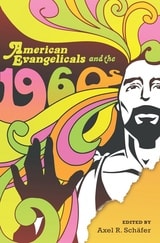
In the late 1970s, the New Christian Right emerged as a formidable political force, boldly announcing itself as a unified movement representing the views of a "moral majority." But that movement did not spring fully formed from its predecessors. American Evangelicals and the 1960s refutes the thesis that evangelical politics were a purely inflammatory backlash against the cultural and political upheaval of the decade.
            Bringing together fresh research and innovative interpretations, this book demonstrates that evangelicals actually participated in broader American developments during "the long 1960s," that the evangelical constituency was more diverse than often noted, and that the notion of right-wing evangelical politics as a backlash was a later creation serving the interests of both Republican-conservative alliances and their critics. Evangelicalism's involvement with—rather than its reaction against—the main social movements, public policy initiatives, and cultural transformations of the 1960s proved significant in its 1970s political ascendance. Twelve essays that range thematically from the oil industry to prison ministry and from American counterculture to the Second Vatican Council depict modern evangelicalism both as a religious movement with its own internal dynamics and as one fully integrated into general American history.
[more]
cover of American Exceptionalism: A New History of an Old Idea

American Exceptionalism

A New History of an Old Idea

Ian Tyrrell

University of Chicago Press, 2022

A powerful dissection of a core American myth.
 
The idea that the United States is unlike every other country in world history is a surprisingly resilient one. Throughout his distinguished career, Ian Tyrrell has been one of the most influential historians of the idea of American exceptionalism, but he has never written a book focused solely on it until now. The notion that American identity might be exceptional emerged, Tyrrell shows, from the belief that the nascent early republic was not simply a postcolonial state but a genuinely new experiment in an imperialist world dominated by Britain. Prior to the Civil War, American exceptionalism fostered declarations of cultural, economic, and spatial independence. As the country grew in population and size, becoming a major player in the global order, its exceptionalist beliefs came more and more into focus—and into question. Over time, a political divide emerged: those who believed that America’s exceptionalism was the basis of its virtue and those who saw America as either a long way from perfect or actually fully unexceptional, and thus subject to universal demands for justice. Tyrrell masterfully articulates the many forces that made American exceptionalism such a divisive and definitional concept. Today, he notes, the demands that people acknowledge America’s exceptionalism have grown ever more strident, even as the material and moral evidence for that exceptionalism—to the extent that there ever was any—has withered away.

[more]
cover of American Extremes: Extremos de América

American Extremes

Extremos de América

By Daniel Cosío Villegas

University of Texas Press, 1964

In this notable collection of essays, written in the middle of the twentieth century, a towering Mexican thinker discusses both Latin America's internal problems and its relations with the United States, Russia, and the rest of the world. This perceptive examination of many political and economic topics will be of interest to all readers concerned with what our southern neighbors think on subjects important to us.

The author brings into particularly sharp focus the relationship of Mexico and other Latin American countries to the United States. Cosío Villegas bluntly tells the reader how much remains to be accomplished: " . . . I believe that Mexico and the United States are so far from resolving their problems that, in truth, it can be said that the process of understanding has not yet even begun." He then impartially analyzes the problems that stand in the way of improved relations, and he looks at these difficulties from an altogether fresh perspective.

Another major theme is the Mexican Revolution, what it did, and what it became. In many important ways, the author feels, the Revolution failed. For the rejuvenation that Mexico needs, should it look toward the United States or toward Russia? And what resources within itself does it need to develop in order to provide the leadership that Latin America requires? Cosío Villegas evaluates the permanent impact of the Cuban Revolution on our hemisphere. He considers where Latin American interests lie in the cold war and suggests how that area may use its voice most effectively in global decisions.

With the increase in world tensions and the decrease in world size, this book will be extremely valuable for every thinking citizen.
[more]
cover of American Girls and Global Responsibility: A New Relation to the World during the Early Cold War

American Girls and Global Responsibility

A New Relation to the World during the Early Cold War

Helgren, Jennifer

Rutgers University Press, 2017

American Girls and Global Responsibility brings together insights from Cold War culture studies, girls’ studies, and the history of gender and militarization to shed new light on how age and gender work together to form categories of citizenship.
 
Jennifer Helgren argues that a new internationalist girl citizenship took root in the country in the years following World War II in youth organizations such as Camp Fire Girls, Girl Scouts, YWCA Y-Teens, schools, and even magazines like Seventeen. She shows the particular ways that girls’ identities and roles were configured, and reveals the links between internationalist youth culture, mainstream U.S. educational goals, and the U.S. government in creating and marketing that internationalist girl, thus shaping the girls’ sense of responsibilities as citizens. 
[more]
cover of American Immunity: War Crimes and the Limits of International Law

American Immunity

War Crimes and the Limits of International Law

Patrick Hagopian

University of Massachusetts Press, 2013

In 1955 the Supreme Court ruled that veterans of the U.S. armed forces could not be court-martialed for overseas crimes that were not detected until after they had left military service. Territorial limitations placed such acts beyond the jurisdiction of civilian courts, and there was no other American court in which they could be adjudicated. As a result, a jurisdictional gap emerged that for decades exempted former troops from prosecution for war crimes. “This was not merely a theoretical possibility,” Patrick Hagopian writes. Over a dozen former soldiers who participated in the My Lai massacre did in fact “get away with murder.” Further court rulings expanded the gap to cover civilian employees and contractors that accompanied the armed forces.

In American Immunity, Hagopian places what he calls the “superpower exemption” in the context of a long-standing tension between international law and U.S. sovereignty. He shows that despite the U.S. role in promulgating universal standards of international law and forming institutions where those standards can be enforced, the United States has repeatedly refused to submit its own citizens and troops to the jurisdiction of international tribunals and failed to uphold international standards of justice in its own courts. 

In 2000 Congress attempted to close the jurisdictional gap with passage of the Military Extraterritorial Jurisdiction Act. The effectiveness of that legislation is still in question, however, since it remains unclear how willing civilian American juries will be to convict veterans for conduct in foreign war zones.
[more]
cover of American Intelligence: Small-Town News and Political Culture in Federalist New Hampshire

American Intelligence

Small-Town News and Political Culture in Federalist New Hampshire

Ben P. Lafferty

University of Massachusetts Press, 2020

The rapid expansion of the newspaper business in the first decade of the American republic had crucial consequences for cultural, commercial, and political life in the early United States, as the nation went from having dozens of weekly newspapers to hundreds. Before organized newsrooms and bureaus came on the scene, these fledgling publications were filled with content copied from other newspapers as well as letters, poems, religious tracts, and ribald anecdotes submitted by readers. 

Taking up the New Hampshire newspaper industry as its case study, American Intelligence unpacks the ways in which an unprecedented quantity of printed material was gathered, distributed, marketed, and consumed, as well as the strong influence that it had on the shaping of the American political imagination. Ben P. Lafferty also considers the lives of the printers themselves and asks why so many men chose to pursue such a fraught and turbulent profession. This snapshot resonates with the contemporary media-saturated and politically chaotic age.
[more]
cover of American Jewish Identity Politics

American Jewish Identity Politics

Deborah Dash Moore, editor

University of Michigan Press, 2009

"Displays the full range of informed, thoughtful opinion on the place of Jews in the American politics of identity."
---David A. Hollinger, Preston Hotchkis Professor of American History, University of California, Berkeley

"A fascinating anthology whose essays crystallize the most salient features of American Jewish life in the second half of the twentieth century."
---Beth S. Wenger, Katz Family Associate Professor of American Jewish History and Director of the Jewish Studies Program, University of Pennsylvania

"A wonderful collection of important essays, indispensable for understanding the searing conflicts over faith, familial, and political commitments marking American Jewry's journey through the paradoxes of the post-Holocaust era."
---Michael E. Staub, Professor of English, Baruch College, CUNY, and author of Torn at the Roots: The Crisis of Jewish Liberalism in Postwar America

"This provocative anthology offers fascinating essays on Jewish culture, politics, religion, feminism, and much more. It is a must-read for all those interested in the intersection of Jewish life and identity politics in the modern period."
---Joyce Antler, Samuel Lane Professor of American Jewish History and Culture, Brandeis University

"This collection of essays invites the reader to engage with some of the best writing and thinking about American Jewish life by some of the finest scholars in the field. Deborah Moore's introduction offers an important framework to understand not only the essays, but the academic and political contexts in which they are rooted."
---Riv-Ellen Prell, Professor and Chair, American Studies, University of Minnesota, and editor of Women Remaking American Judaism
This collection of essays explores changes among American Jews in their self-understanding during the last half of the 20th century.
 
Written by scholars who grew up after World War II and the Holocaust who participated in political struggles in the 1960s and 1970s and who articulated many of the formative concepts of modern Jewish studies, this anthology provides a window into an era of social change. These men and women are among the leading scholars of Jewish history, society and culture.
 
The volume is organized around contested themes in American Jewish life: the Holocaust and World War II, religious pluralism and authenticity, intermarriage and Jewish continuity. Thus, it offers one of the few opportunities for students to learn about these debates from participant scholars.
 
The book includes a dozen photographs of contemporary Jewish experience in the United States by acclaimed Jewish photographer Bill Aron. Like the scholars of the essays, Aron participated in struggles within the Jewish community and the Jewish counterculture in the 1970s and 1980s. His images reflect shifting perspectives toward spirituality, community, feminism, and memory culture.
The essays reflect several layers of identity politics. On one level, they interrogate the recent past of American Jews, starting with their experiences of World War II. Without the flourishing of identity politics and the white ethnic revival, many questions about American Jewish history might never have been explored. Those who adopted identity politics often saw Jews as an ethnic group in the United States, one connected both to other Americans and to Jews throughout the world and in the past. On another level, these essays express ideas nourished in universities during the turbulent 1970s and 1980s. Those years marked the expansion of Jewish studies as a field in the United States and the establishment of American Jewish studies as an area of specialization. Taken together they reveal the varied sources of American Jewish studies. Finally, one must note that in many cases these essays anticipate major books on the subject. Reading them now reveals how ideas took shape within the political pressures of the moment.
 
These articles teach us not only about their subject but also about how issues were framed and debated during what might be called our fin de siecle, the end of the twentieth century and beginning of the twenty-first. The authors of these articles include several, most notably Arthur Green, Alvin Rosenfield, and the late Egon Mayer, who collectively could be thought of as the founding fathers of this new generation of Jewish scholars. Green in theology, Rosenfield in literature, and Mayer in sociology influenced younger academics such as Arnold Eisen. A slightly different relationship exists among the historians. Several come to their subject though the study of American history, including Hasia Diner, Stephen Whitfield, and Jonathan Sarna, while others approach through the portal of Jewish history, such as Paula Hyman and Jeffrey Gurock.
[more]
cover of American Labor and the Cold War: Grassroots Politics and Postwar Political Culture

American Labor and the Cold War

Grassroots Politics and Postwar Political Culture

Cherny, Robert

Rutgers University Press, 2004

The American labor movement seemed poised on the threshold of unparalleled success at the beginning of the post-World War II era. Fourteen million strong in 1946, unions represented thirty five percent of non-agricultural workers. Why then did the gains made between the 1930s and the end of the war produce so few results by the 1960s?

This collection addresses the history of labor in the postwar years by exploring the impact of the global contest between the United States and the Soviet Union on American workers and labor unions. The essays focus on the actual behavior of Americans in their diverse workplaces and communities during the Cold War. Where previous scholarship on labor and the Cold War has overemphasized the importance of the Communist Party, the automobile industry, and Hollywood, this book focuses on politically moderate, conservative workers and union leaders, the medium-sized cities that housed the majority of the population, and the Roman Catholic Church. These are all original essays that draw upon extensive archival research and some upon oral history sources.
[more]
cover of American Labor in the Southwest: The First One Hundred Years

American Labor in the Southwest

The First One Hundred Years

Edited by James C. Foster

University of Arizona Press, 1982

A collection of outstanding contributions on…
 
The Western Federation of Miners
James C. Foster, D. H. Dinwoodie
 
The Industrial Workers of the World
Earl Bruce White, James Byrkit
 
The Rise of Unionized Farm Workers
H. L. Mitchell, Edward D. Beechert, Art Carstens
 
Mexican Labor, North and South of the Border
John M. Hart, Rodney Anderson, David Maciel
 
Labor and Politics
Paul Mandel, George N. Green, Charles O. Rice
[more]
cover of American Memories: Atrocities and the Law

American Memories

Atrocities and the Law

Joachim J. Savelsberg

Russell Sage Foundation, 2012
In the long history of warfare and cultural and ethnic violence, the twentieth century was exceptional for producing institutions charged with seeking accountability or redress for violent offenses and human rights abuses across the globe, often forcing nations to confront the consequences of past atrocities. The Holocaust ended with trials at Nuremberg, apartheid in South Africa concluded with the Truth and Reconciliation Commission, and the Gacaca courts continue to strive for closure in the wake of the Rwandan genocide. Despite this global trend toward accountability, American collective memory appears distinct in that it tends to glorify the nation’s past, celebrating triumphs while eliding darker episodes in its history. In American Memories, sociologists Joachim Savelsberg and Ryan King rigorously examine how the United States remembers its own and others’ atrocities and how institutional responses to such crimes, including trials and tribunals, may help shape memories and perhaps impede future violence. American Memories uses historical and media accounts, court records, and survey research to examine a number of atrocities from the nation’s past, including the massacres of civilians by U.S. military in My Lai, Vietnam, and Haditha, Iraq. The book shows that when states initiate responses to such violence—via criminal trials, tribunals, or reconciliation hearings—they lay important groundwork for how such atrocities are viewed in the future. Trials can serve to delegitimize violence—even by a nation’s military— by creating a public record of grave offenses. But the law is filtered by and must also compete with other institutions, such as the media and historical texts, in shaping American memory. Savelsberg and King show, for example, how the My Lai slayings of women, children, and elderly men by U.S. soldiers have been largely eliminated from or misrepresented in American textbooks, and the army’s reputation survived the episode untarnished. The American media nevertheless evoked the killings at My Lai in response to the murder of twenty-four civilian Iraqis in Haditha, during the war in Iraq. Since only one conviction was obtained for the My Lai massacre, and convictions for the killings in Haditha seem increasingly unlikely, Savelsberg and King argue that Haditha in the near past is now bound inextricably to My Lai in the distant past. With virtually no criminal convictions, and none of higher ranks for either massacre, both events will continue to be misrepresented in American memory. In contrast, the book examines American representations of atrocities committed by foreign powers during the Balkan wars, which entailed the prosecution of ranking military and political leaders. The authors analyze news accounts of the war’s events and show how articles based on diplomatic sources initially cast Serbian President Slobodan Milosevic in a less negative light, but court-based accounts increasingly portrayed Milosevic as a criminal, solidifying his image for the public record. American Memories provocatively suggests that a nation’s memories don’t just develop as a rejoinder to events—they are largely shaped by institutions. In the wake of atrocities, how a state responds has an enduring effect and provides a moral framework for whether and how we remember violent transgressions. Savelsberg and King deftly show that such responses can be instructive for how to deal with large-scale violence in the future, and hopefully how to deter it. A Volume in the American Sociological Association’s Rose Series in Sociology.
[more]
cover of American Multiculturalism and the Anti-Discrimination Regime: The Challenge to Liberal Pluralism

American Multiculturalism and the Anti-Discrimination Regime

The Challenge to Liberal Pluralism

Thomas F. Powers

St. Augustine's Press, 2023
Wokeness, cancel culture, identity politics, political correctness, multiculturalism—terms unsettling but also somehow inescapable. Thomas F. Powers shows how these are all one thing, elements of one broad political phenomenon—the anti-discrimination regime—–that has since 1964 been working to challenge and undermine America’s defining liberal democratic tradition (the tradition of the Declaration and the Constitution). The many deep lines of tension between the old and the new, presented here with arresting clarity, allow us to grasp the new order in its distinctiveness. Novel imperatives to regulate private life (behavior, speech, thought) begin to come to sight in the new order’s many laws and institutions. Attentive to the crucial role of law, the main focus of this book is nevertheless on the ideas, especially the moral ideals, thrust upon us by the new regime. This study examines theorists of multicultural education (non-postmodernist and postmodernist) who, without hesitation, set forth a new civic education and a new form of democratic pluralism for America. When a country has a new civic education, a new pluralism, and a new morality, these are signs of fundamental change not to be ignored. The book culminates in a direct critical examination of the new logic of group politics and the new morality of the anti-discrimination regime. In embarking on this new chapter of democratic life, do we know what we are doing?
[more]
cover of American Occupation: Dispatches from Minnesota's Resistance to ICE

American Occupation

Dispatches from Minnesota's Resistance to ICE

Jonny Diamond

University of Minnesota Press, 2027

A collection of intimate writings first published by Literary Hub in the Letters From Minnesota series that recounts the lived community experience of facing—and resisting—ICE violence during Operation Metro Surge

The history of America is a history of occupations. But what happens when an imperial nation, defined by endless expansion, runs out of frontier? It turns inward. It occupies itself.

American Occupation is an urgent compilation of reflections and accounts that emerged during the shocking, months-long ICE operation in Minnesota. In December 2025, the Department of Homeland Security launched Operation Metro Surge, and thousands of ICE and border patrol agents in paramilitary costumes descended on the Twin Cities. Their brutal, unconstitutional campaign resulted in the terrorization and disappearance of countless US citizens and immigrants, the murders of legal observers Renee Good and Alex Pretti, and the mobilization of vast, intricate mutual aid networks, massive protests, and staggering acts of courage during one of the coldest Minnesota winters in a decade.

Two days after Alex Pretti was killed on January 24, 2026, Literary Hub published the first of forty-four Letters From Minnesota, an online rapid response series that invited novelists, journalists, poets, and memoirists to document their experiences under occupation. An immigrant mother makes a plan with her young children in case she’s detained by ICE. A Powderhorn Park resident witnesses the traumatic abduction of two neighbors at a bus stop. A professor chronicles the relentless federal violence throughout her family’s journey from Mexico to California to Minnesota, among other harrowing stories and accounts.

With twelve new contributions, American Occupation offers a mosaic of deeply personal and defiant testimonies detailing the creative solidarity and resolve of Minnesotans confronting fascist cruelty. Contextualized in the history of the US government’s abuse of power against its own civilians, American Occupation reveals the grim reality of yet another American administration in thrall to its own mythologies—and the long arc of resistance and compassion of ordinary people.

Contributors: Angela Ajayi, Anonymous, Charles Baxter, Victoria Blanco, Jennifer Eli Bowen, Katherine Packert Burke, Zeke Caligiuri, David Aiona Chang, Dana Chiueh, Heid E. Erdrich, Nick Estes, Nimo Farah, V. V. Ganeshananthan, Shannon Gibney, Dobby Gibson, Sarah Green, Molly Beth Griffin, Dara Moskowitz Grumdahl, Marian Hassan, Hedgiee, Laurie Hertzel, Carolyn Holbrook, Siri Hustvedt, Đenise Hạnh Huỳnh, Andrea Jenkins, Michael Kleber-Diggs, Ed Bok Lee, Josina Manu Maltzman, Will McGrath, Jim Moore, David Mura, Nia Navarro, Sahra Noor, Kara Olson, Peter Pearson, Angela Pelster, Bao Phi, Kaia Preus, Susan Raffo, Marcie Rendon, Kate Romero and Gustavo Romero, Sean Sherman, Sun Yung Shin, Gabriela Spears-Rico, Michael Torres, Kawai Strong Washburn, Sana Wazwaz, chaun webster, Diane Wilson, A. E. Wynter, Kao Kalia Yang, Ahmed Ismail Yusuf, Michelle Zamanian.

Retail e-book files for this title are screen-reader friendly.
[more]
cover of American Oligarchy: The Permanent Political Class

American Oligarchy

The Permanent Political Class

Ron Formisano

University of Illinois Press, 2017
A permanent political class has emerged on a scale unprecedented in our nation 's history. Its self-dealing, nepotism, and corruption contribute to rising inequality. Its reach extends from the governing elite throughout nongovernmental institutions. Aside from constituting an oligarchy of prestige and power, it enables the creation of an aristocracy of massive inherited wealth that is accumulating immense political power. In a muckraking tour de force reminiscent of Lincoln Steffens, Upton Sinclair, and C. Wright Mills, American Oligarchy demonstrates the way the corrupt culture of the permanent political class extends down to the state and local level. Ron Formisano breaks down the ways this class creates economic inequality and how its own endemic corruption infects our entire society. Formisano delves into the work of not just politicians but lobbyists, consultants, appointed bureaucrats, pollsters, celebrity journalists, behind-the-scenes billionaires, and others. Their shameless pursuit of wealth and self-aggrandizement, often at taxpayer expense, rewards channeling the flow of income and wealth to elites. That inequality in turn has choked off social mobility and made a joke of meritocracy. As Formisano shows, these forces respond to the oligarchy 's power and compete to bask in the presence of the .01 percent. They also exacerbate the dangerous instability of an American democracy divided between extreme wealth and extreme poverty.
[more]
cover of American Political Thought, volume 10 number 3 (Summer 2021)

American Political Thought, volume 10 number 3 (Summer 2021)

The University of Chicago Press

University of Chicago Press Journals, 2021
This is volume 10 issue 3 of American Political Thought. Bridging the gap between historical, empirical, and theoretical research, American Political Thought (APT) is the only journal dedicated exclusively to the study of the American political tradition. Interdisciplinary in scope, APT features research by political scientists, historians, literary scholars, economists, and philosophers who study the foundation and political tradition of concepts such as democracy, constitutionalism, equality, liberty, citizenship, political identity, and the role of the state.
[more]
cover of American Political Thought, volume 10 number 4 (Fall 2021)

American Political Thought, volume 10 number 4 (Fall 2021)

The University of Chicago Press

University of Chicago Press Journals, 2021
This is volume 10 issue 4 of American Political Thought. Bridging the gap between historical, empirical, and theoretical research, American Political Thought (APT) is the only journal dedicated exclusively to the study of the American political tradition. Interdisciplinary in scope, APT features research by political scientists, historians, literary scholars, economists, and philosophers who study the foundation and political tradition of concepts such as democracy, constitutionalism, equality, liberty, citizenship, political identity, and the role of the state.
[more]
cover of American Political Thought, volume 11 number 1 (Winter 2022)

American Political Thought, volume 11 number 1 (Winter 2022)

The University of Chicago Press

University of Chicago Press Journals, 2022
This is volume 11 issue 1 of American Political Thought. Bridging the gap between historical, empirical, and theoretical research, American Political Thought (APT) is the only journal dedicated exclusively to the study of the American political tradition. Interdisciplinary in scope, APT features research by political scientists, historians, literary scholars, economists, and philosophers who study the foundation and political tradition of concepts such as democracy, constitutionalism, equality, liberty, citizenship, political identity, and the role of the state.
[more]
cover of American Political Thought, volume 11 number 2 (Spring 2022)

American Political Thought, volume 11 number 2 (Spring 2022)

The University of Chicago Press

University of Chicago Press Journals, 2022
This is volume 11 issue 2 of American Political Thought. Bridging the gap between historical, empirical, and theoretical research, American Political Thought (APT) is the only journal dedicated exclusively to the study of the American political tradition. Interdisciplinary in scope, APT features research by political scientists, historians, literary scholars, economists, and philosophers who study the foundation and political tradition of concepts such as democracy, constitutionalism, equality, liberty, citizenship, political identity, and the role of the state.
[more]
cover of American Political Thought, volume 11 number 3 (Summer 2022)

American Political Thought, volume 11 number 3 (Summer 2022)

The University of Chicago Press

University of Chicago Press Journals, 2022
This is volume 11 issue 3 of American Political Thought. Bridging the gap between historical, empirical, and theoretical research, American Political Thought (APT) is the only journal dedicated exclusively to the study of the American political tradition. Interdisciplinary in scope, APT features research by political scientists, historians, literary scholars, economists, and philosophers who study the foundation and political tradition of concepts such as democracy, constitutionalism, equality, liberty, citizenship, political identity, and the role of the state.
[more]
cover of American Political Thought, volume 11 number 4 (Fall 2022)

American Political Thought, volume 11 number 4 (Fall 2022)

The University of Chicago Press

University of Chicago Press Journals, 2022
This is volume 11 issue 4 of American Political Thought. Bridging the gap between historical, empirical, and theoretical research, American Political Thought (APT) is the only journal dedicated exclusively to the study of the American political tradition. Interdisciplinary in scope, APT features research by political scientists, historians, literary scholars, economists, and philosophers who study the foundation and political tradition of concepts such as democracy, constitutionalism, equality, liberty, citizenship, political identity, and the role of the state.
[more]
cover of American Political Thought, volume 12 number 1 (Winter 2023)

American Political Thought, volume 12 number 1 (Winter 2023)

The University of Chicago Press

University of Chicago Press Journals, 2023
This is volume 12 issue 1 of American Political Thought. Bridging the gap between historical, empirical, and theoretical research, American Political Thought (APT) is the only journal dedicated exclusively to the study of the American political tradition. Interdisciplinary in scope, APT features research by political scientists, historians, literary scholars, economists, and philosophers who study the foundation and political tradition of concepts such as democracy, constitutionalism, equality, liberty, citizenship, political identity, and the role of the state.
[more]
cover of American Political Thought, volume 12 number 2 (Spring 2023)

American Political Thought, volume 12 number 2 (Spring 2023)

The University of Chicago Press

University of Chicago Press Journals, 2023
This is volume 12 issue 2 of American Political Thought. Bridging the gap between historical, empirical, and theoretical research, American Political Thought (APT) is the only journal dedicated exclusively to the study of the American political tradition. Interdisciplinary in scope, APT features research by political scientists, historians, literary scholars, economists, and philosophers who study the foundation and political tradition of concepts such as democracy, constitutionalism, equality, liberty, citizenship, political identity, and the role of the state.
[more]
cover of American Political Thought, volume 12 number 3 (Summer 2023)

American Political Thought, volume 12 number 3 (Summer 2023)

The University of Chicago Press

University of Chicago Press Journals, 2023
This is volume 12 issue 3 of American Political Thought. Bridging the gap between historical, empirical, and theoretical research, American Political Thought (APT) is the only journal dedicated exclusively to the study of the American political tradition. Interdisciplinary in scope, APT features research by political scientists, historians, literary scholars, economists, and philosophers who study the foundation and political tradition of concepts such as democracy, constitutionalism, equality, liberty, citizenship, political identity, and the role of the state.
[more]
cover of American Political Thought, volume 12 number 4 (Fall 2023)

American Political Thought, volume 12 number 4 (Fall 2023)

The University of Chicago Press

University of Chicago Press Journals, 2023
This is volume 12 issue 4 of American Political Thought. Bridging the gap between historical, empirical, and theoretical research, American Political Thought (APT) is the only journal dedicated exclusively to the study of the American political tradition. Interdisciplinary in scope, APT features research by political scientists, historians, literary scholars, economists, and philosophers who study the foundation and political tradition of concepts such as democracy, constitutionalism, equality, liberty, citizenship, political identity, and the role of the state.
[more]
cover of American Political Thought, volume 13 number 1 (Winter 2024)

American Political Thought, volume 13 number 1 (Winter 2024)

The University of Chicago Press

University of Chicago Press Journals, 2024
This is volume 13 issue 1 of American Political Thought. Bridging the gap between historical, empirical, and theoretical research, American Political Thought (APT) is the only journal dedicated exclusively to the study of the American political tradition. Interdisciplinary in scope, APT features research by political scientists, historians, literary scholars, economists, and philosophers who study the foundation and political tradition of concepts such as democracy, constitutionalism, equality, liberty, citizenship, political identity, and the role of the state.
[more]
cover of American Political Thought, volume 13 number 2 (Spring 2024)

American Political Thought, volume 13 number 2 (Spring 2024)

The University of Chicago Press

University of Chicago Press Journals, 2024
This is volume 13 issue 2 of American Political Thought. Bridging the gap between historical, empirical, and theoretical research, American Political Thought (APT) is the only journal dedicated exclusively to the study of the American political tradition. Interdisciplinary in scope, APT features research by political scientists, historians, literary scholars, economists, and philosophers who study the foundation and political tradition of concepts such as democracy, constitutionalism, equality, liberty, citizenship, political identity, and the role of the state.
[more]
cover of American Political Thought, volume 13 number 3 (Summer 2024)

American Political Thought, volume 13 number 3 (Summer 2024)

The University of Chicago Press

University of Chicago Press Journals, 2024
This is volume 13 issue 3 of American Political Thought. Bridging the gap between historical, empirical, and theoretical research, American Political Thought (APT) is the only journal dedicated exclusively to the study of the American political tradition. Interdisciplinary in scope, APT features research by political scientists, historians, literary scholars, economists, and philosophers who study the foundation and political tradition of concepts such as democracy, constitutionalism, equality, liberty, citizenship, political identity, and the role of the state.
[more]
cover of American Political Thought, volume 13 number 4 (Fall 2024)

American Political Thought, volume 13 number 4 (Fall 2024)

The University of Chicago Press

University of Chicago Press Journals, 2024
This is volume 13 issue 4 of American Political Thought. Bridging the gap between historical, empirical, and theoretical research, American Political Thought (APT) is the only journal dedicated exclusively to the study of the American political tradition. Interdisciplinary in scope, APT features research by political scientists, historians, literary scholars, economists, and philosophers who study the foundation and political tradition of concepts such as democracy, constitutionalism, equality, liberty, citizenship, political identity, and the role of the state.
[more]
cover of American Political Thought, volume 14 number 1 (Winter 2025)

American Political Thought, volume 14 number 1 (Winter 2025)

The University of Chicago Press

University of Chicago Press Journals, 2025
This is volume 14 issue 1 of American Political Thought. Bridging the gap between historical, empirical, and theoretical research, American Political Thought (APT) is the only journal dedicated exclusively to the study of the American political tradition. Interdisciplinary in scope, APT features research by political scientists, historians, literary scholars, economists, and philosophers who study the foundation and political tradition of concepts such as democracy, constitutionalism, equality, liberty, citizenship, political identity, and the role of the state.
[more]
cover of American Political Thought, volume 14 number 2 (Spring 2025)

American Political Thought, volume 14 number 2 (Spring 2025)

The University of Chicago Press

University of Chicago Press Journals, 2025
This is volume 14 issue 2 of American Political Thought. Bridging the gap between historical, empirical, and theoretical research, American Political Thought (APT) is the only journal dedicated exclusively to the study of the American political tradition. Interdisciplinary in scope, APT features research by political scientists, historians, literary scholars, economists, and philosophers who study the foundation and political tradition of concepts such as democracy, constitutionalism, equality, liberty, citizenship, political identity, and the role of the state.
[more]
cover of American Political Thought, volume 14 number 3 (Summer 2025)

American Political Thought, volume 14 number 3 (Summer 2025)

The University of Chicago Press

University of Chicago Press Journals, 2025
This is volume 14 issue 3 of American Political Thought. Bridging the gap between historical, empirical, and theoretical research, American Political Thought (APT) is the only journal dedicated exclusively to the study of the American political tradition. Interdisciplinary in scope, APT features research by political scientists, historians, literary scholars, economists, and philosophers who study the foundation and political tradition of concepts such as democracy, constitutionalism, equality, liberty, citizenship, political identity, and the role of the state.
[more]
cover of American Political Thought, volume 14 number 4 (Fall 2025)

American Political Thought, volume 14 number 4 (Fall 2025)

The University of Chicago Press

University of Chicago Press Journals, 2025
This is volume 14 issue 4 of American Political Thought. Bridging the gap between historical, empirical, and theoretical research, American Political Thought (APT) is the only journal dedicated exclusively to the study of the American political tradition. Interdisciplinary in scope, APT features research by political scientists, historians, literary scholars, economists, and philosophers who study the foundation and political tradition of concepts such as democracy, constitutionalism, equality, liberty, citizenship, political identity, and the role of the state.
[more]
cover of American Political Thought, volume 15 number 1 (Winter 2026)

American Political Thought, volume 15 number 1 (Winter 2026)

The University of Chicago Press

University of Chicago Press Journals, 2026
This is volume 15 issue 1 of American Political Thought. Bridging the gap between historical, empirical, and theoretical research, American Political Thought (APT) is the only journal dedicated exclusively to the study of the American political tradition. Interdisciplinary in scope, APT features research by political scientists, historians, literary scholars, economists, and philosophers who study the foundation and political tradition of concepts such as democracy, constitutionalism, equality, liberty, citizenship, political identity, and the role of the state.
[more]
cover of American Political Thought, volume 15 number 2 (Spring 2026)

American Political Thought, volume 15 number 2 (Spring 2026)

The University of Chicago Press

University of Chicago Press Journals, 2026
This is volume 15 issue 2 of American Political Thought. Bridging the gap between historical, empirical, and theoretical research, American Political Thought (APT) is the only journal dedicated exclusively to the study of the American political tradition. Interdisciplinary in scope, APT features research by political scientists, historians, literary scholars, economists, and philosophers who study the foundation and political tradition of concepts such as democracy, constitutionalism, equality, liberty, citizenship, political identity, and the role of the state.
[more]
cover of American Political Thought, volume 15 number 3 (Summer 2026)

American Political Thought, volume 15 number 3 (Summer 2026)

The University of Chicago Press

University of Chicago Press Journals, 2026
This is volume 15 issue 3 of American Political Thought. Bridging the gap between historical, empirical, and theoretical research, American Political Thought (APT) is the only journal dedicated exclusively to the study of the American political tradition. Interdisciplinary in scope, APT features research by political scientists, historians, literary scholars, economists, and philosophers who study the foundation and political tradition of concepts such as democracy, constitutionalism, equality, liberty, citizenship, political identity, and the role of the state.
[more]
cover of American Political Thought, volume 15 number 4 (Fall 2026)

American Political Thought, volume 15 number 4 (Fall 2026)

The University of Chicago Press

University of Chicago Press Journals, 2026
This is volume 15 issue 4 of American Political Thought. Bridging the gap between historical, empirical, and theoretical research, American Political Thought (APT) is the only journal dedicated exclusively to the study of the American political tradition. Interdisciplinary in scope, APT features research by political scientists, historians, literary scholars, economists, and philosophers who study the foundation and political tradition of concepts such as democracy, constitutionalism, equality, liberty, citizenship, political identity, and the role of the state.
[more]
cover of American Power and International Theory at the Council on Foreign Relations, 1953-54

American Power and International Theory at the Council on Foreign Relations, 1953-54

David M. McCourt, Editor

University of Michigan Press, 2020

Between December 1953 and June 1954, the elite think-tank the Council on Foreign Relations (CFR) joined prominent figures in International Relations, including Pennsylvania’s Robert Strausz-Hupé, Yale’s Arnold Wolfers, the Rockefeller Foundation’s William Thompson, government adviser Dorothy Fosdick, and nuclear strategist William Kaufmann. They spent seven meetings assessing approaches to world politics—from the “realist” theory of Hans Morgenthau to theories of imperialism of Karl Marx and V.I. Lenin—to discern basic elements of a theory of international relations.

The study group’s materials are an indispensable window to the development of IR theory, illuminating the seeds of the theory-practice nexus in Cold War U.S. foreign policy. Historians of International Relations recently revised the standard narrative of the field’s origins, showing that IR witnessed a sharp turn to theoretical consideration of international politics beginning around 1950, and remained preoccupied with theory. Taking place in 1953–54, the CFR study group represents a vital snapshot of this shift.

This book situates the CFR study group in its historical and historiographical contexts, and offers a biographical analysis of the participants. It includes seven preparatory papers on diverse theoretical approaches, penned by former Berkeley political scientist George A. Lipsky, followed by the digest of discussions from the study group meetings. American Power and International Theory at the Council on Foreign Relations, 1953–54 offers new insights into the early development of IR as well as the thinking of prominent elites in the early years of the Cold War.
[more]
cover of American Prophecy: Race and Redemption in American Political Culture

American Prophecy

Race and Redemption in American Political Culture

George Shulman

University of Minnesota Press, 2008

The political meaning of prophetic language in America

Prophecy is the fundamental idiom of American politics—a biblical rhetoric about redeeming the crimes, suffering, and promise of a special people. Yet American prophecy and its great practitioners—from Frederick Douglass and Henry Thoreau to Martin Luther King, James Baldwin, and Toni Morrison—are rarely addressed, let alone analyzed, by political theorists. This paradox is at the heart of American Prophecy, a work in which George Shulman unpacks and critiques the political meaning of American prophetic rhetoric.

In the face of religious fundamentalisms that associate prophecy and redemption with dogmatism and domination, American Prophecy finds connections between prophetic language and democratic politics, particularly racial politics. Exploring how American critics of white supremacy have repeatedly reworked biblical prophecy, Shulman demonstrates how these writers and thinkers have transformed prophecy into a political language and given redemption a political meaning. To examine how antiracism is linked to prophecy as a vernacular idiom is to rethink political theology, recast democratic theory, and reassess the bearing of religion on American political culture. Still, prophetic language is not always liberatory, and American Prophecy maintains a critical dispassion about a rhetoric that is both prevalent and problematic.
[more]
cover of American Public Administration: Past, Present, Future

American Public Administration

Past, Present, Future

Frederick C. Mosher

University of Alabama Press, 1975

This collection of essays highlights the “peculiarly American” issues of public administration ranging from 1870 to 1974, when they were first published. Every contributor was assigned a period of American history and given the opportunity to write on what he or she deemed the most important or relevant concern of that period. This method, employed for this book and the connected National Association of Schools of Public Affairs and Administration conference, resulted in a wide-reaching, if eclectic, collection. Supplanted by Mosher’s impressive summarization of the field throughout the years, the book still holds prominence as a source for scholars, workers, and students alike in public administration.

The essays raise such issues as the education of civil servants, the changes necessitated by crises, the growth of social sciences in governmental concerns, and primarily, the role of public administrators in America. Each author is a distinguished expert in his own right, and each essay can stand alone as a remarkable insight into the changing world of public administration within American society. Frederick Mosher’s expertise and supervision shapes this work into a remarkable and holistic perspective on public administration over time.
[more]
cover of American Public Opinion on the Iraq War

American Public Opinion on the Iraq War

Ole R. Holsti

University of Michigan Press, 2011

"A substantial contribution to understanding the role of public opinion and the news media during the Iraq War. Equally impressive, it effectively puts the domestic context of U.S. policy in historical perspective, making the book useful to historians as well as to political scientists."
---Ralph B. Levering, Davidson College

"American Public Opinion on the Iraq War sets out to chart against a detailed account of the war a nuanced assessment of how public opinion on the conflict evolved, the partisan differences that emerged, how the issue affected other areas of foreign policy opinion, and the limits of public opinion on policy. It succeeds at all of this, and it does so in a manner that is at once informative, inherently interesting, and exceptionally easy to read."
---Randolph M. Siverson, University of California, Davis

Ole R. Holsti explores the extent to which changes in public opinion reflected the vigorous public relations efforts of the Bush administration to gain support for the war and the partisanship marking debates over policies toward Iraq. Holsti investigates the ways in which the Iraq experience has led substantial numbers of Americans to reconsider their nation's proper international role, and he assesses the impact that public opinion has had on policymakers. Significantly, Holsti places his findings in a broader context to address the role of public opinion and of the media in democratic governance.
[more]
cover of American Public Philosophy and the Mystery of Lincolnism

American Public Philosophy and the Mystery of Lincolnism

Eric C. Sands

University of Missouri Press, 2009
Although he is revered as one of our greatest presidents, Abraham Lincoln seems to lack the legacy of others like Jefferson or Jackson who brought about new conceptions of American political life. In this study of Lincoln’s political thought, Eric Sands blends political science, history, and political theory to offer a fresh perspective on Lincoln, his thought, and the politics of Reconstruction.
In this new consideration of Lincoln’s “public philosophy”—the nation’s understanding of itself—Sands seeks to determine why the spirit that successfully led the Union through the Civil War was unable to sustain itself during Reconstruction. He defines Lincolnism as a rededication to the principle of natural rights, a narrative of Divine Providence, a sentiment of brotherhood, and an augmentation of founding principles. He then explains how Lincoln’s assassination, Johnson’s succession, and developments in philosophy and science worked to undermine this philosophy after the war.
Sands investigates why the Republican Party was unable to sustain Lincoln’s ideas and why neither Republicans nor Democrats were able to formulate a compelling substitute public philosophy for Lincolnism. He describes how Radical Republicans and Purist Democrats battled for control over America’s public philosophy, then how Moderate Republicans and Legitimist Democrats abandoned battles over first principles completely. By the end of Reconstruction, public philosophy politics were rejected altogether, ultimately frustrating efforts to move the nation toward the realization of full equality under the law.
By reflecting on public policy formation and change, Sands evaluates the strengths and weaknesses of public philosophy politics and shows that the most inspiring and noble kind of politics, even if oriented toward moral principles, can also be dangerous and divisive. His work lends new insight into the role of ideas in politics and offers readers a new understanding of the consequences of Lincoln’s actions and the death of Reconstruction policies—and of why no concept of a “Lincolnian democracy” survived during the Reconstruction era.
[more]
cover of American Relief Aid and the Spanish Civil War

American Relief Aid and the Spanish Civil War

Eric R. Smith

University of Missouri Press, 2013

The Spanish Civil War created a conflict for Americans who preferred that the United States remain uninvolved in foreign affairs. Despite the country's isolationist tendencies, opposition to the rise of fascism across Europe convinced many Americans that they had to act in support of the Spanish Republic. While much has been written about the war itself and its international volunteers, little attention has been paid to those who coordinated these relief efforts at home.

American Relief Aid and the Spanish Civil War tells the story of the political campaigns to raise aid for the Spanish Republic as activists pushed the limits of isolationist thinking. Those concerned with Spain’s fate held a range of political convictions (including anarchists, socialists, liberals, and communists) with very different understandings of what fascism was. Yet they all agreed that fascism’s advance must be halted. With labor strikes, fund-raising parties, and ambulance tours, defenders of Spain in the United States sought to shift the political discussion away from isolation of Spain’s elected government and toward active assistance for the faltering Republic.

Examining the American political organizations affiliated with this relief effort and the political repression that resulted as many of Spain’s supporters faced the early incarnations of McCarthyism’s trials, Smith provides new understanding of American politics during the crucial years leading up to World War II. By also focusing on the impact the Spanish Civil War had on those of Spanish ethnicity in the United States, Smith shows how close to home the seemingly distant war really hit.
[more]
cover of American Studies as Transnational Practice: Turning toward the Transpacific

American Studies as Transnational Practice

Turning toward the Transpacific

Edited by Yuan Shu and Donald E. Pease

Dartmouth College Press, 2016

This wide-ranging collection brings together an eclectic group of scholars to reflect upon the transnational configurations of the field of American studies and how these have affected its localizations, epistemological perspectives, ecological imaginaries, and politics of translation. The volume elaborates on the causes of the transnational paradigm shift in American studies and describes the material changes that this new paradigm has effected during the past two decades. The contributors hail from a variety of postcolonial, transoceanic, hemispheric, and post-national positions and sensibilities, enabling them to theorize a “crossroads of cultures” explanation of transnational American studies that moves beyond the multicultural studies model. Offering a rich and rewarding mix of essays and case studies, this collection will satisfy a broad range of students and scholars.
[more]