Results by title
342 books match the query '16th Century' and 12 start with b

Barbarous Play
Race on the English Renaissance StageLara Bovilsky
University of Minnesota Press, 2008
Like our own, early modern beliefs about race depended on metaphorical, selective, and contradictory understandings of how membership in groups is determined. Although race took distinctive forms in the past, the fallacies that underlie early modern racial experience generally are precisely-and surprisingly-the same as those in contemporary culture.
Exploring the similar underpinnings of early modern and contemporary ideas of difference, Barbarous Play examines English Renaissance understandings of race as depicted in drama. Reading plays by Shakespeare, Marlowe, Webster, and Middleton, Bovilsky offers case studies of how racial meanings are generated by narratives of boundary crossing-especially miscegenation, religious conversion, class transgression, and moral and physical degeneracy. In the process, she reveals deep parallels between the period’s conceptions of race and gender.
Barbarous Play contests the widely held view that race and racism depend on modern science for their existence and argues that understanding just what is false and figurative in past depictions of race, such as those found in Othello, The Merchant of Venice, The White Devil, and The Changeling, can clarify the illogic of present-day racism.
Lara Bovilsky is assistant professor of English at Washington University in St. Louis.
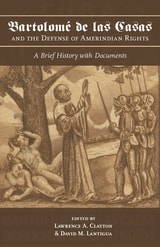
Bartolomé de las Casas and the Defense of Amerindian Rights
A Brief History with DocumentsEdited by Lawrence A. Clayton and David M. Lantigua
University of Alabama Press, 2020
The writings of a sixteenth-century advocate who challenged empire in defense of Indigenous peoples.
With the exception of Christopher Columbus, Bartolomé de las Casas is arguably the most notable figure of the Encounter Age. He is remembered principally as the creator of the Black Legend, as well as the protector of American Indians. He was one of the pioneers of the human rights movement, and a Christian activist who invoked law and Biblical scripture to challenge European colonialism in the great age of the Encounter. He was also one of the first and most thorough chroniclers of the conquest, and a biographer who saved the diary of Columbus’s first voyage for posterity by transcribing it in his History of the Indies before the diary was lost.
Bartolomé de las Casas and the Defense of Amerindian Rights: A Brief History with Documents provides the most wide-ranging and concise anthology of Las Casas’s writings, in translation, ever made available. It contains not only excerpts from his most well-known texts, but also his largely unavailable writings on political philosophy and law, and addresses the underappreciated aspects of his thought. Fifteen of the twenty-six documents are entirely new translations of Las Casas’s writings, a number of them appearing in English for the first time.
This volume focuses on his historical, political, and legal writings that address the deeply conflicted and violent sixteenth-century encounter between Europeans and indigenous peoples of the Americas. It also presents Las Casas as a more comprehensive and systematic philosophical and legal thinker than he is typically given credit for. The introduction by Lawrence A. Clayton and David M. Lantigua places these writings into a synthetic whole, tracing his advocacy for indigenous peoples throughout his career. By considering Las Casas’s ideas, actions, and even regrets in tandem, readers will understand the historical dynamics of Spanish imperialism more acutely within the social-political context of the times.
Before Intimacy
Asocial Sexuality in Early Modern EnglandDaniel Juan Gil
University of Minnesota Press, 2006
Engaging the poems of Wyatt, Sidney’s Astrophil and Stella, Spenser’s Amoretti and The Faerie Queene, and Shakespeare’s Troilus and Cressida and the Sonnets, Gil demonstrates how sexuality was conceived as a relationship system inhabited by men and women interchangeably—set apart from the “norm” and not institutionalized in a private or domestic realm. Going beyond the sodomy-as-transgression analytic, he asserts the existence of socially inconsequential sexual bonds while recognizing the pleasurable effects of violating the supposed traditional modes of bonding and ideals of universal humanity and social hierarchy.
Celebrating the ability of corporeal emotions to interpret connections between people who share nothing in terms of societal structure, Before Intimacy shows how these works of early modern literature provide a discourse of sexuality that strives to understand status differences in erotic contexts and thereby question key assumptions of modernity.
Daniel Juan Gil is assistant professor of English at TCU.
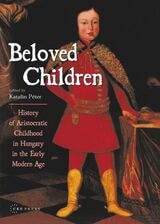
Beloved Children
History of Aristocratic Childhood in Hungary in the Early Modern AgeKatalin Peter
Central European University Press, 2001
Drawing on evidence from a wide collection of surviving family papers, Beloved Children is a valuable contribution to literature available concerning childhood history in pre-industrial Central Europe.
With the aid of detailed case studies, the volume illustrates every aspect of Hungarian childhood in the early modern age from a variety of contrasting perspectives—birth, care, education, marriage, orphanhood and death. The book also includes a unique portrayal of family life in the Hungarian aristocracy.
Beloved Children is a comprehensive study examining topics such as family intimacy, paternal and maternal attitudes, providing the reader with a valuable insight into a child’s life in Hungary during the sixteenth and seventeenth centuries.
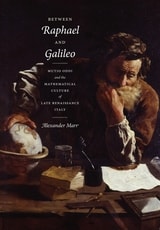
Between Raphael and Galileo
Mutio Oddi and the Mathematical Culture of Late Renaissance ItalyAlexander Marr
University of Chicago Press, 2011
Although largely unknown today, during his lifetime Mutio Oddi of Urbino (1569–1639) was a highly esteemed scholar, teacher, and practitioner of a wide range of disciplines related to mathematics. A prime example of the artisan-scholar so prevalent in the late Renaissance, Oddi was also accomplished in the fields of civil and military architecture and the design and retail of mathematical instruments, as well as writing and publishing.
In Between Raphael and Galileo, Alexander Marr resurrects the career and achievements of Oddi in order to examine the ways in which mathematics, material culture, and the book shaped knowledge, society, and the visual arts in late Renaissance Italy. Marr scrutinizes the extensive archive of Oddi papers, documenting Oddi’s collaboration with prominent intellectuals and officials and shedding new light on the practice of science and art during his day. What becomes clear is that Oddi, precisely because he was not spectacularly innovative and did not attain the status of a hero in modern science, is characteristic of the majority of scientific practitioners and educators active in this formative age, particularly those whose energetic popularization of mathematics laid the foundations for the Scientific Revolution. Marr also demonstrates that scientific change in this era was multivalent and contested, governed as much by friendship as by principle and determined as much by places as by purpose.
Plunging the reader into Oddi’s world, Between Raphael and Galileo is a finely wrought and meticulously researched tale of science, art, commerce, and society in the late sixteenth and early seventeenth century. It will become required reading for any scholar interested in the history of science, visual art, and print culture of the Early Modern period.
Birth Figures
Early Modern Prints and the Pregnant BodyRebecca Whiteley
University of Chicago Press, 2023
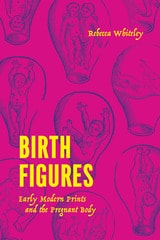
Birth figures are printed images of the pregnant womb, always shown in series, that depict the variety of ways in which a fetus can present for birth. Historian Rebecca Whiteley coined the term and here offers the first systematic analysis of the images’ creation, use, and impact. Whiteley reveals their origins in ancient medicine and explores their inclusion in many medieval gynecological manuscripts, focusing on their explosion in printed midwifery and surgical books in Western Europe from the mid-sixteenth to the mid-eighteenth century. During this period, birth figures formed a key part of the visual culture of medicine and midwifery and were widely produced. They reflected and shaped how the pregnant body was known and treated. And by providing crucial bodily knowledge to midwives and surgeons, birth figures were also deeply entangled with wider cultural preoccupations with generation and creativity, female power and agency, knowledge and its dissemination, and even the condition of the human in the universe.
Birth Figures studies how different kinds of people understood childbirth and engaged with midwifery manuals, from learned physicians to midwives to illiterate listeners. Rich and detailed, this vital history reveals the importance of birth figures in how midwifery was practiced and in how people, both medical professionals and lay readers, envisioned and understood the mysterious state of pregnancy.
Blood Relations
Christian and Jew in The Merchant of VeniceJanet Adelman
University of Chicago Press, 2008
Adelman locates the promise—or threat—of Jewish conversion as a particular site of tension in the play. Drawing on a variety of cultural materials, she demonstrates that, despite the triumph of its Christians, The Merchant of Venice reflects Christian anxiety and guilt about its simultaneous dependence on and disavowal of Judaism. In this startling psycho-theological analysis, both the insistence that Shylock’s daughter Jessica remain racially bound to her father after her conversion and the depiction of Shylock as a bloody-minded monster are understood as antidotes to Christian uneasiness about a Judaism it can neither own nor disown.
In taking seriously the religious discourse of The Merchant of Venice, Adelman offers in Blood Relations an indispensable book on the play and on the fascinating question of Jews and Judaism in Renaissance England and beyond.
Blood, Milk, Ink, Gold
Abundance and Excess in the French RenaissanceRebecca Zorach
University of Chicago Press, 2005
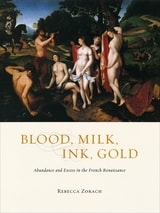
Throughout the book, abundance and excess flow in liquids-blood, milk, ink, and gold-that highlight the materiality of objects and the human body, and explore the value (and values) accorded to them. The arts of the lavish royal court at Fontainebleau and in urban centers are here explored in a vibrant tableau that illuminates our own contemporary relationship to excess and desire.
From marvelous works by Francois Clouet to oversexed ornamental prints to Benvenuto Cellini's golden saltcellar fashioned for Francis I, Blood, Milk, Ink, Gold covers an astounding range of subjects with precision and panache, producing the most lucid, well-rounded portrait of the cultural politics of the French Renaissance to date.
Bloody Numbers
The Early Atlantic Slave Trade and the Invention of Modern CorporealityPablo F. Gómez
University of Chicago Press, 2026
Upends current thinking about how early modern people started to conceptualize human beings in terms of populations.
Bloody Numbers is a provocative account of the violent world of the sixteenth- and seventeenth-century South Atlantic slave-trading societies, where traders, financiers, officials, surgeons, notaries, ship captains, and others began thinking about human bodies as aggregate populations understood through numbers: measurements, averages, and calculations of risk and value assessed through the tabulation of heights, weights, tumors, scars, and other characteristics. Pablo F. Gómez explores how figures within the world of slave trading used this model for understanding human bodies to generalize about behavior and disease in ways that foreshadowed the work of modern epidemiologists and public health officials—though they employed their calculations with the aim of protecting their financial interests rather than of caring for enslaved people. The ruthlessness inherent in these practices became ingrained in the modern corporeal mathematics that emerged from the early slave trade and diffused through its vast political, financial, logistical, and intellectual networks.
A pathbreaking work, Bloody Numbers reveals the historical actions that rendered populations quantifiable. In doing so, it shows that confronting these origins is essential to understanding the violent political, legal, economic, and scientific practices that ascribe numbers to our own bodies.
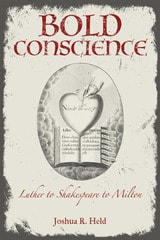
Bold Conscience
Luther to Shakespeare to MiltonJoshua R. Held
University of Alabama Press, 2023
Traces how conscience—inner moral conviction—came to shape public life, fueling martyrdom, free speech, and political revolts
Bold Conscience: Luther to Shakespeare to Milton is a sweeping, original study of how conscience became one of the most powerful ideas in early modern England. Tracing the emergence of what Joshua R. Held calls the “bold conscience,” the book shows how inner moral conviction moved from the realm of private guilt to public action, fueling debates about authority, obedience, free speech, and resistance. By placing conscience at the center of literary, religious, and political conflict, Bold Conscience reveals a vital intellectual throughline linking the Reformation to the birth of modern ideas of liberty and toleration.
The book unfolds chronologically, beginning with Martin Luther and Henry VIII and moving through Shakespeare’s Hamlet and Henry VIII, John Donne’s court sermons, and John Milton’s polemical and poetic works, including Areopagitica and Paradise Lost. Each chapter combines close literary reading with historical and theological analysis, showing how conscience operates across genres—drama, sermon, pamphlet, and epic poetry. Joshua R. Held is a distinguished scholar of early modern literature whose work bridges literary criticism, intellectual history, and religious studies, bringing clarity and narrative energy to complex debates.
Bold Conscience will appeal to scholars and students of early modern literature, Shakespeare, Milton, and Reformation history, as well as readers interested in the origins of religious freedom and political dissent. It will also engage anyone concerned with how moral conviction shapes public life then and now.
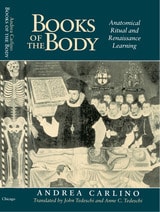
Books of the Body
Anatomical Ritual and Renaissance LearningAndrea Carlino
University of Chicago Press, 1999
In Books of the Body, Andrea Carlino explores the nature and causes of this intellectual inertia. On the one hand, anatomical practice was constrained by a reverence for classical texts and the belief that the study of anatomy was more properly part of natural philosophy than of medicine. On the other hand, cultural resistance to dissection and dismemberment of the human body, as well as moral and social norms that governed access to cadavers and the ritual of their public display in the anatomy theater, also delayed anatomy's development.
A fascinating history of both Renaissance anatomists and the bodies they dissected, this book will interest anyone studying Renaissance science, medicine, art, religion, and society.
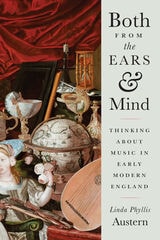
Both from the Ears and Mind
Thinking about Music in Early Modern EnglandLinda Phyllis Austern
University of Chicago Press, 2020