Results by title
58 books match the query '1865-1950' and 8 start with b
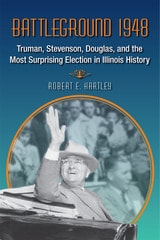
Battleground 1948
Truman, Stevenson, Douglas, and the Most Surprising Election in Illinois HistoryRobert E. Hartley
Southern Illinois University Press, 2013
The election year of 1948 remains to this day one of the most astonishing in U.S. political history. During this first general election after World War II, Americans looked to their governments for change. As the battle for the nation’s highest office came to a head in Illinois, the state was embroiled in its own partisan showdowns—elections that would prove critical in the course of state and national history.
In Battleground 1948, Robert E. Hartley offers the first comprehensive chronicle of this historic election year and its consequences, which still resonate today. Focusing on the races that ushered Adlai Stevenson, Paul Douglas, and Harry Truman into office—the last by the slimmest of margins—Battleground 1948 details the pivotal events that played out in the state of Illinois, from the newspaper wars in Chicago to tragedy in the mine at Centralia.
In addition to in-depth revelations on the saga of the American election machine in 1948, Hartley probes the dark underbelly of Illinois politics in the 1930s and 1940s to set the stage, spotlight key party players, and expose the behind-the-scenes influences of media, money, corruption, and crime. In doing so, he draws powerful parallels between the politics of the past and those of the present. Above all, Battleground 1948 tells the story of grassroots change writ large on the American political landscape—change that helped a nation move past an era of conflict and depression, and forever transformed Illinois and the U.S. government.
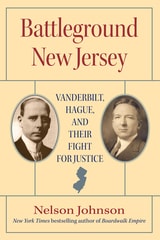
Battleground New Jersey
Vanderbilt, Hague, and Their Fight for JusticeJohnson, Nelson
Rutgers University Press, 2014
Vanderbilt’s power came through mastering the law, serving as dean of New York University Law School, preaching court reform as president of the American Bar Association, and organizing suburban voters before other politicians recognized their importance. Hague, a remarkably successful sixth-grade dropout, amassed his power by exploiting people’s foibles, crushing his rivals, accumulating a fortune through extortion, subverting the law, and taking care of business in his own backyard. They were different ethnically, culturally, and temperamentally, but they shared the goals of power.
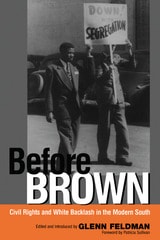
Before Brown
Civil Rights and White Backlash in the Modern SouthGlenn Feldman
University of Alabama Press, 2004
Details the ferment in civil rights that took place across the South before the momentous Brown vs. Board of Education decision in 1954
This collection refutes the notion that the movement began with the Supreme Court decision, and suggests, rather, that the movement originated in the 1930s and earlier, spurred by the Great Depression and, later, World War II—events that would radically shape the course of politics in the South and the nation into the next century.
This work explores the growth of the movement through its various manifestations—the activities of politicians, civil rights leaders, religious figures, labor unionists, and grass-roots activists—throughout the 1940s and 1950s. It discusses the critical leadership roles played by women and offers a new perspective on the relationship between the NAACP and the Communist Party.
Before Brown shows clearly that, as the drive toward racial equality advanced and national political attitudes shifted, the validity of white supremacy came increasingly into question. Institutionalized racism in the South had always offered white citizens material advantages by preserving their economic superiority and making them feel part of a privileged class. When these rewards were threatened by the civil rights movement, a white backlash occurred.
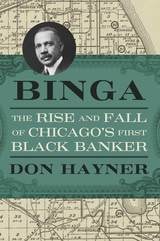
Binga
The Rise and Fall of Chicago's First Black BankerDon Hayner
Northwestern University Press, 2020
Binga is the definitive full-length biography of Jesse Binga, the first black banker in Chicago. Born into a large family in Detroit, Binga arrived in Chicago in 1892 in his late twenties with virtually nothing. Through his wits and resourcefulness, he rose to wealth and influence as a real estate broker, and in 1908 he founded the Binga Bank, the first black-owned bank in the city. But his achievements were followed by an equally notable downfall. Binga recounts this gripping story about race, history, politics, and finance.
The Black Belt, where Binga’s bank was located, was a segregated neighborhood on Chicago’s South Side—a burgeoning city within a city—and its growth can be traced through the arc of Binga’s career. He preached and embodied an American gospel of self-help and accrued wealth while expanding housing options and business opportunities for blacks. Devout Roman Catholics, he and his wife Eudora supported church activities and various cultural and artistic organizations; their annual Christmas party was the Black Belt’s social event of the year. But Binga’s success came at the price of a vicious backlash. After he moved his family into a white neighborhood in 1917, their house was bombed multiple times, his offices were attacked twice, and he became a lightning rod for the worst race riots in Chicago history, which took place in 1919. Binga persevered, but, starting with the stock market crash of October 1929, a string of reversals cost him his bank, his property, and his fortune.
A quintessentially Chicago story, Binga tells the history of racial change in one of the most segregated cities in America and how an extraordinary man stood as a symbol of hope in a community isolated by racial animosity.
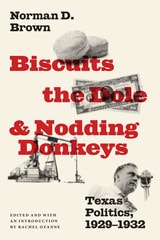
Biscuits, the Dole, and Nodding Donkeys
Texas Politics, 1929-1932By Norman D. Brown, edited and with an introduction by Rachel Ozanne
University of Texas Press, 2019
When the venerable historian Norman D. Brown published Hood, Bonnet, and Little Brown Jug in 1984, he earned national acclaim for revealing the audacious tactics at play in Texas politics during the Roaring Twenties, detailing the effects of the Ku Klux Klan, newly enfranchised women, and Prohibition. Shortly before his death in 2015, Brown completed Biscuits, the Dole, and Nodding Donkeys, which picks up just as the Democratic Party was poised for a bruising fight in the 1930 primary. Charting the governorships of Dan Moody, Ross Sterling, Miriam “Ma” Ferguson in her second term, and James V. Allred, this engrossing sequel takes its title from the notion that Texas politicians should give voters what they want (“When you cease to deliver the biscuits they will not be for you any longer,” said Jim “Pa” Ferguson) while remaining wary of federal assistance (the dole) in a state where the economy is fueled by oil pump jacks (nodding donkeys).
Taking readers to an era when a self-serving group of Texas politicians operated in a system that was closed to anyone outside the state’s white, wealthy echelons, Brown unearths a riveting, little-known history whose impact continues to ripple at the capitol.
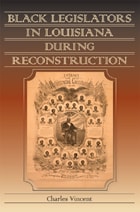
Black Legislators in Louisiana during Reconstruction
Charles Vincent
Southern Illinois University Press, 2011
Now updated with a new preface, this volume endures as an important work that illustrates the strength of minorities in state government during Reconstruction. It focuses on the achievements of the black representatives and senators in the Louisiana legislature who, through tireless fighting, were able to push forward many progressive reforms, such as universal public education, and social programs for the less fortunate.
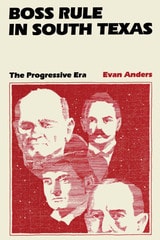
Boss Rule in South Texas
The Progressive EraBy Evan Anders
University of Texas Press, 1982
Four men played leading roles in the political drama that unfolded in South Texas during the first decades of this century:
- James B. Wells, who ruled as boss of Cameron County and served as leading conservative spokesman of the Democratic Party in Texas;
- Archer (Archie) Parr, whose ruthless tactics and misuse of public funds in Duval County established him as one of the most notoriously corrupt politicians in Texas history;
- Manuel Guerra, Mexican American rancher and merchant whose domination of Starr County mirrored the rule of his Anglo counterparts in the border region;
- John Nance Garner, who served the interests of these bosses of South Texas as he set forth on the road that would lead him to the United States vice-presidency.
Evan Anders's Boss Rule in South Texas tells the story of these men and the county rings they shaped in South Texas during the Progressive Era.
Power was the byword of the bosses of the Lower Rio Grande Valley, and Anders explores the sources of that power. These politicos did not shirk from using corrupt and even violent means to attain their goals, but Anders demonstrates that their keen sensitivity to the needs of their diverse constituency was key to their long-term success. Patronage and other political services were their lifeblood, and the allies gained by these ranged from developers and businessmen to ranchers and Mexican Americans, wealthy and poor.
Besides examining the workings of the Democratic machines of four South Texas counties, Anders explores the role of the Hispanic populace in shaping the politics of the border region, the economic development of the Lower Rio Grande Valley and its political repercussions, the emergence and nature of progressive movements at both local and state levels, and the part played by the Texas Rangers in supporting bossism in South Texas.
Bourbon Democracy in Alabama, 1874–1890
Allen Johnston Going
University of Alabama Press, 1951
A definitive study of the political forces that reshaped Alabama after Reconstruction.
In Bourbon Democracy in Alabama, 1874-1890, historian Johnston Allen Going offers a seminal examination of the political transformation of Alabama during the years following Reconstruction. Focusing on the rise of Bourbon Democratic leadership, Going explores how a new political elite consolidated power, reshaped state institutions, and directed Alabama's economic and social development during a pivotal period in Southern history.
Drawing on extensive historical research, the book traces the efforts of Democratic leaders to restore political control after Reconstruction while promoting policies associated with the emerging New South. Going analyzes the complex interplay of political ideology, economic modernization, class interests, and racial dynamics that influenced governance and public life between 1874 and 1890. Through detailed accounts of elections, legislative initiatives, and political struggles, the study reveals how Alabama's leaders sought to balance progress, stability, and authority in a rapidly changing society.
A landmark contribution to both Alabama history and the broader study of the post-Reconstruction South, Bourbon Democracy in Alabama provides critical insight into the forces that shaped regional politics and helped define the course of Southern development in the late nineteenth century. Essential for understanding the origins of modern Alabama politics, this book is a valuable resource for historians, students, political scientists, genealogists, and anyone interested in Southern history and government.