Results by title
51 books match the query '1941-' and 5 start with b
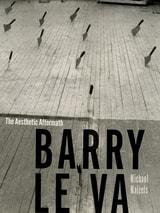
Barry Le Va
The Aesthetic AftermathMichael Maizels
University of Minnesota Press, 2015
Of the conceptual artists who began their careers in the 1960s and 1970s—Bruce Nauman, Chris Burden, Vito Acconci, and Mel Bochner among them—Barry Le Va may be the most elusive. As this first study of his work reveals, his rigorously planned art was instigated to mask its creator’s intentions and methods, presenting itself as an “aftermath” of modernism’s claim to permanency and civil society’s preferred mode of monumentalism.
For Michael Maizels, Le Va’s work constitutes a particularly productive subject of inquiry because it clearly articulates the interconnection between the avant-garde’s distrust of autonomous art objects, two decades of social unrest, the emergence of information theory, and lingering notions of scientific objectivity. Barry Le Va: The Aesthetic Aftermath explores how Le Va used such materials as shattered glass, spent bullets, sound recordings, scattered flour, and meat cleavers embedded in a floor to challenge the interlocking assumptions behind blind faith in lasting beauty, just government, and perfectible knowledge. Taking inspiration from popular crime novels as well as contemporary art theory, Le Va charged his viewers to attempt, like detectives at a crime scene, to decipher an order underlying the apparent chaos.
Le Va’s installations were designed to erode not simply the presumed autonomy of the art object but also the economic and political authority of the art establishment. In his concluding chapter, Maizels looks at the more fixed work of the past two decades in which Le Va turned to architectural themes and cast concrete to probe the limits of dynamism and the idea of permanence.
Blood in the Tracks
The Minnesota Musicians behind Dylan's MasterpiecePaul Metsa
University of Minnesota Press, 2023
The story of the Minneapolis musicians who were unexpectedly summoned to re-record half of the songs on Bob Dylan's most acclaimed album
When Bob Dylan recorded Blood on the Tracks in New York in September 1974, it was a great album. But it was not the album now ranked by Rolling Stone as one of the ten best of all time. “When something’s not right, it’s wrong,” as Dylan puts it in “You’re Gonna Make Me Lonesome When You Go”—and something about that original recording led him to a studio in his native Minnesota to re-record five songs, including “Idiot Wind” and “Tangled Up in Blue.” Six Minnesota musicians participated in that two-night recording session at Sound 80, bringing their unique sound to some of Dylan’s best-known songs—only to have their names left off the album and their contribution unacknowledged for more than forty years. This book tells the story of those two nights in Minneapolis, introduces the musicians who gave the album so much of its ultimate form and sound, and describes their decades-long fight for recognition.
Blood in the Tracks takes readers behind the scenes with these “mystery” Minnesota musicians: twenty-one-year-old mandolin virtuoso Peter Ostroushko; drummer Bill Berg and bass player Billy Peterson, the house rhythm section at Sound 80; progressive rock keyboardist Gregg Inhofer; guitarist Chris Weber, who owned The Podium guitar shop in Dinkytown; and Kevin Odegard, whose own career as a singer-songwriter had paralleled Dylan’s until he had to take a job as a railroad brakeman to make ends meet. Through in-depth interviews and assiduous research, Paul Metsa and Rick Shefchik trace the twists of fate that brought these musicians together and then set them on different paths in its wake: their musical experiences leading up to the December 1974 recording session, the divergent careers that followed, and the painstaking work required to finally obtain the official credit that they were due.
A rare look at the making—or remaking—of an all-time great album, and a long overdue recognition of the musicians who made it happen, Blood in the Tracks brings to life a transformative moment in the history of rock and roll, for the first time in its true context and with its complete cast of players.
Bob Dylan in the Attic
The Artist as HistorianFreddy Cristóbal Domínguez
University of Massachusetts Press, 2022
Bob Dylan is an iconic American artist, whose music and performances have long reflected different musical genres and time periods. His songs tell tales of the Civil War, harken back to 1930s labor struggles, and address racial violence at the height of the civil rights movement, helping listeners to think about history, and history making, in new ways. While Dylan was warned by his early mentor, Dave Van Ronk, that, “You’re just going to be a history book writer if you do those things. An anachronism,” the musician has continued to traffic in history and engage with a range of source material—ancient and modern—over the course of his career.
In this beautifully crafted book, Freddy Cristóbal Domínguez makes a provocative case for Dylan as a historian, offering a deep consideration of the musician’s historical influences and practices. Utilizing interviews, speeches, and the close analysis of lyrics and live performances, Bob Dylan in the Attic is the first book to consider Dylan’s work from the point of view of historiography.
Brightening Glance
Art and LifePat Lipsky
University of Iowa Press, 2025
Brightening Glance offers a stunningly self-revealing portrait of the struggles and sacrifices, joys and excitement inherent in a modern painter’s life, and captures the evergreen allure of New York’s art world between 1970 and 2010. In stripped down, elegant prose, Lipsky summons a New York that no longer exists and ponders why we love (and hate) the art world. Ultimately, it’s a story of a contemporary woman, a mother, and a painter, who dares a career in a field where only a handful of women have succeeded.

Broken Pieces
Michael Gorman
American Library Association, 2011