53 books match the query '1970-' and 4 start with b

cover of Bearing the Bad News: Contemporary American Literature and Culture

Bearing the Bad News

Contemporary American Literature and Culture

Sanford Pinsker

University of Iowa Press, 1990
For a number of years Sanford Pinsker has been one of our most incisive and spirited observers of contemporary American literature. His books have been widely and enthusiastically reviewed and his essays have appeared regularly in such intellectual quarterlies as the Georgia Review, the Virginia Quarterly Review, and the Gettysburg Review.
Now Pinsker focuses on the current American world of letters in this volume of essays to explore what literary culture in America was and what it too often has become, the ways in which cultural politics shapes our sense of contemporary values, and how the resources of American humor and the work of our best writers can help us maintain our equilibrium in “what can only be described as a bad cultural patch.”
The eleven essays in this insightful volume take on such subjects as the decline and fall of "formative reading"; the difficulties of identifying themes that unify American literature; the cultural value of such humorists as Robert Benchley, Lenny Bruce, and Woody Allen; versions of cultural politics—from the rise of the neoconservatives to the steady course held by social critics such as Irving Howe; and the place of the college novel in American literature. Pinsker concludes with some sobering thoughts about the current state of American intellectuals.
Ultimately, Bearing the Bad News reaffirms certain principles that have come under powerful attack during the last few decades—for example, that literature is a human and humanistic enterprise, one which speaks both to individual moral value and to our larger cultural health. It reflects Pinsker's commitment to the clarity and significance of the literary essay and his belief that what we read, and what we say about what we read, matters deeply.
[more]
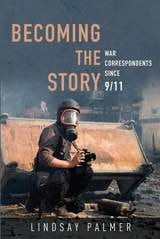
cover of Becoming the Story: War Correspondents since 9/11

Becoming the Story

War Correspondents since 9/11

Lindsay Palmer

University of Illinois Press, 2018

The September 11 attacks produced great changes in journalism and the lives of the people who practiced it. Foreign reporters felt surrounded by the hate of American colleagues for "the enemy." Americans in combat areas became literal targets of anti–U.S. sentiment. Behind the lines, editors and bureau chiefs scrambled to reorient priorities while feeling the pressure of sending others into danger.

Becoming the Story examines the transformation of war reporting in the decade after 9/11. Lindsay Palmer delves into times when print or television correspondents themselves received intense public scrutiny because of an incident associated with the work of war reporting. Such instances include Daniel Pearl’s kidnapping and murder; Bob Woodruff’s near-fatal injury in Iraq; the expulsions of Maziar Bahari and Nazila Fathi from Iran in 2009; the sexual assault of Lara Logan; and Marie Colvin’s 2012 death in Syria. Merging analysis with in-depth interviews of Woodruff and others, Palmer shows what these events say about how post-9/11 conflicts transformed the day-to-day labor of reporting. But they also illuminate how journalists’ work became entangled with issues ranging from digitization processes to unprecedented hostility from all sides to the political logic of the War on Terror.

[more]
cover of Biblical Porn: Affect, Labor, and Pastor Mark Driscoll's Evangelical Empire

Biblical Porn

Affect, Labor, and Pastor Mark Driscoll's Evangelical Empire

Jessica Johnson

Duke University Press, 2018
Between 1996 and 2014, Mark Driscoll's Mars Hill Church multiplied from its base in Seattle into fifteen facilities spread across five states with 13,000 attendees. When it closed, the church was beset by scandal, with former attendees testifying to spiritual abuse, emotional manipulation, and financial exploitation. In Biblical Porn Jessica Johnson examines how Mars Hill's congregants became entangled in processes of religious conviction. Johnson shows how they were affectively recruited into sexualized and militarized dynamics of power through the mobilization of what she calls "biblical porn"—the affective labor of communicating, promoting, and embodying Driscoll's teaching on biblical masculinity, femininity, and sexuality, which simultaneously worked as a marketing strategy, social imaginary, and biopolitical instrument. Johnson theorizes religious conviction as a social process through which Mars Hill's congregants circulated and amplified feelings of hope, joy, shame, and paranoia as affective value that the church capitalized on to grow at all costs.
[more]
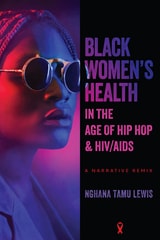
cover of Black Women’s Health in the Age of Hip Hop and HIV/AIDS: A Narrative Remix

Black Women’s Health in the Age of Hip Hop and HIV/AIDS

A Narrative Remix

Nghana tamu Lewis

The Ohio State University Press, 2025

In Black Women’s Health in the Age of Hip Hop and HIV/AIDS, Nghana tamu Lewis chronicles the work of five black women creators to demonstrate how hip hop feminism operates as a vital tool for interpreting and building knowledge about the lived experiences of black women and girls. Between 1996 and 2006, novelists Sapphire and Sister Souljah, television producer Mara Brock Akil, and playwrights Nikkole Salter and Danai Gurira addressed the neglect of black women’s health in mainstream biomedical and public health discourses. At a time when responses to the HIV/AIDS epidemic largely focused on gay white men, Lewis argues, these creators deployed the strategies of hip hop feminism to frame and untangle issues of self-care, risk, and the ways that caregiving roles place black women and girls at disproportionate risk of adverse health outcomes. Building on previous intersectionality and social justice advocacy scholarship, Lewis argues that Sapphire, Souljah, Brock Akil, and Salter and Gurira both documented the effects of the epidemic on black women and girls and equipped the masses with solutions-oriented responses to the crisis, thus intervening in ways that mainstream biomedical and public health research has yet to do.
[more]