Results by title
8642 books match the query '20th century' and 437 start with b

BEYOND SCHENKERISM
Eugene Narmour
University of Chicago Press, 1977
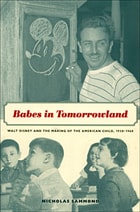
Babes in Tomorrowland
Walt Disney and the Making of the American Child, 1930–1960Nicholas Sammond
Duke University Press, 2005
In vivid detail, Sammond describes how the latest thinking about human development was translated into the practice of child-rearing and how magazines and parenting manuals characterized the child as the crucible of an ideal American culture. He chronicles how Walt Disney Productions’ greatest creation—the image of Walt Disney himself—was made to embody evolving ideas of what was best for the child and for society. Bringing popular child-rearing manuals, periodicals, advertisements, and mainstream sociological texts together with the films, tv programs, ancillary products, and public relations materials of Walt Disney Productions, Babes in Tomorrowland reveals a child that was as much the necessary precursor of popular media as the victim of its excesses.

Bachelor Bess
The Homesteading Letters of Elizabeth Corey, 1909-1919Philip L. Gerber
University of Iowa Press, 1990
In July 1909 twenty-one-year-old Elizabeth Corey left her Iowa farm to stake her claim to a South Dakota homestead. Over the next ten years, as she continued her schoolteaching career and carved out a home for herself in this inhospitable territory, she sent a steady stream of letters to her family back in Iowa. From the edge of modern America, Bess wrote long, gossipy accounts—"our own continuing adventure story," according to her brother Paul—of frontier life on the high plains west of the Missouri River. Irrepressible, independent-minded, and evidently fearless, the self-styled Bachelor Bess gives us a firsthand, almost daily account of her homesteading adventures. We can all stake a claim in her energetic letters.

Bachelors and Bunnies
The Sexual Politics of PlayboyCarrie Pitzulo
University of Chicago Press, 2011
For a lot of people, thoughts about the sexual politics of Playboy run along the lines of what Gloria Steinem reportedly once told Hugh Hefner: “A woman reading Playboy feels a little like a Jew reading a Nazi manual.” Hefner’s magazine celebrates men as swinging bachelors and women as objects of desire; ergo, it’s sexist.
Not so fast, says Carrie Pitzulo. With Bachelors and Bunnies, she delves into the history of the magazine to reveal its surprisingly strong record of support for women’s rights and the modernization of sexual and gender roles. Taking readers behind the scenes of Playboy’s heyday, Pitzulo shows how Hefner’s own complicated but thoughtful perspective on modern manhood, sexual liberation, and feminism played into debates—both in the editorial offices and on the magazine’s pages—about how Playboy’s trademark “girl next door” appeal could accommodate, acknowledge, and even honor the changing roles and new aspirations of women in postwar America. Revealing interviews with Hugh Hefner and his daughter (and later Playboy CEO) Christie Hefner, as well as with a number of editors and even Playmates, show that even as the magazine continued to present a romanticized notion of gender difference, it again and again demonstrated a commitment to equality and expanded opportunities for women.
Offering a surprising new take on a twentieth-century icon, Bachelors and Bunnies goes beyond the smoking jacket and the centerfold to uncover an unlikely ally for the feminist cause.

Back of the Yards
The Making of a Local DemocracyRobert A. Slayton
University of Chicago Press, 1986

Back to the Breast
Natural Motherhood and Breastfeeding in AmericaJessica Martucci
University of Chicago Press, 2015
That movement—in which the personal and political were inextricably linked—effectively challenged midcentury norms of sexuality, gender, and consumption, and articulated early environmental concerns about chemical and nuclear contamination of foods, bodies, and breast milk. In its groundbreaking chronicle of the breastfeeding movement, Back to the Breast provides a welcome and vital account of what it has meant, and what it means today, to breastfeed in modern America.
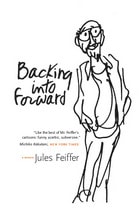
Backing into Forward
A MemoirJules Feiffer
University of Chicago Press, 2012
Subversive, funny, and effortlessly droll, Jules Feiffer’s cartoons were all over New York in the 1960s and ’70s—featured in the Village Voice, but also cut out and pinned to bulletin boards in offices and on refrigerators at home. Feiffer describes himself as “lucking into the zeitgeist,” and there’s some truth to the sentiment; Feiffer’s brand of satire reflected Americans’ ambivalence about the Vietnam War, changing social mores, and much more.
Feiffer’s memoir, Backing into Forward, like his cartoons, is sharply perceptive with a distinctive bite of mordant humor. Beginning with his childhood in Brooklyn, Feiffer paints a picture of a troubled kid with an overbearing mother and a host of crippling anxieties. From there, he discusses his apprenticeship with his hero, Will Eisner, and his time serving in the military during the Korean War, which saw him both feigning a breakdown and penning a cartoon narrative called “Munro” that solidified his distinctive aesthetic as an artist. While Feiffer’s voice grounds the book, the sheer scope of his artistic accomplishment, from his cartoons turning up in the New Yorker, Playboy, and the Nation to his plays and film scripts, is remarkable and keeps the narrative bouncing along at a speedy clip. A compelling combination of a natural sense of humor and a ruthless dedication to authenticity, Backing into Forward is full of wit and verve, often moving but never sentimental.
“Jules Feiffer’s original and neurotic voice. . . . reinvented comics in the 1950s and made possible what’s now called the ‘graphic novel.’ His engaging new memoir is told in that same witty and perceptive New York cadence, mellowed and laced with wisdom. He’s an inspiration.”—Art Spiegelman
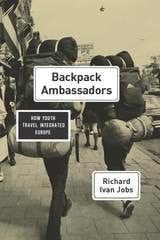
Backpack Ambassadors
How Youth Travel Integrated EuropeRichard Ivan Jobs
University of Chicago Press, 2017
From the Berlin Wall to the beaches of Spain, the Spanish Steps in Rome to the Pudding Shop in Istanbul, Jobs tells the stories of backpackers whose personal desire for freedom of movement brought the people and places of Europe into ever-closer contact. As greater and greater numbers of young people trekked around the continent, and a truly international youth culture began to emerge, the result was a Europe that, even in the midst of Cold War tensions, found its people more and more connected, their lives more and more integrated. Drawing on archival work in eight countries and five languages, and featuring trenchant commentary on the relevance of this period for contemporary concerns about borders and migration, Backpack Ambassadors brilliantly recreates a movement that was far more influential and important than its footsore travelers could ever have realized.
Backroom Bargaining
Racketeering and Rebellion in New York City's Labor UnionsJane LaTour
University of Illinois Press, 2026
Backstaging Modern Chinese Theatre
Intellectuals, Amateurs, and Cultural Entrepreneurs, 1910s–1940sMan He
University of Michigan Press, 2025

Backtalk
Women Writers Speak OutDonna Perry
Rutgers University Press, 1993
Agents or victims, liberated or oppressed, "bad girls" or "good girls." What do these labels mean and do they further or hinder women's progress? How are today's visions of female sexuality and power like or unlike those of the past? How do younger women define feminism? Isn't the personal still political?
Dismayed by the media's tendency to reduce the feminist enterprise to labels and superstars, Donna Perry and Nan Bauer Maglin decided to find out what a diverse group of feminists think about women, sex, and power in the nineties. The result is a provocative and varied collection of twenty-four essays by second- and third-wave feminists; artists and activists; professors and graduate students; professional journalists and just-published writers; mothers and daughters. By focusing on society's construction, containment, and exploitation of female sexuality, in particular, these essays offer fresh perspectives on women's agency or lack of it.
The contributors focus on the oversimplifications and false dichotomies in current discussions of female sexuality, as well as the privileged perspective and individualism that currently dominate the popularized feminist message. Individual writers--including Emma Amos, bell hooks, Ann Jones, Lisa Jones, Paula Kamen, Matuschka, Marge Piercy, Katha Pollitt, Anna Quindlen, Elayne Rapping, Lillian S. Robinson, and Ellen Willis--reexamine women's empowerment in the light of issues like AIDS, battering, acquaintance rape, narratives of childhood sexual abuse, and pornography. Several draw political conclusions from their personal struggles, while others read stories and texts--from history, the art world, the media, popular culture, and social science research--in new and controversial ways.
Bad Blood
Freedom and Death in the White MountainsCasey Sherman
University Press of New England, 2012
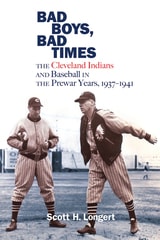
Bad Boys, Bad Times
The Cleveland Indians and Baseball in the Prewar Years, 1937–1941Scott H. Longert
Ohio University Press, 2019
In 1937, the Great Depression was still lingering, but at baseball parks across the country there was a sense of optimism. Major League attendance was on a sharp rise. Tickets to an Indians game at League Park on Lexington and East 66th were $1.60 for box seats, $1.35 for reserve seats, and $.55 for the bleachers. Cleveland fans were particularly upbeat—Bob Feller, the teenage phenomenon, was a farm boy with a blistering fast ball. Night games were an exciting development. Better days were ahead.
But there were mounting issues facing the Indians. For one thing, it was rumored that the team had illegally signed Feller. Baseball Commissioner Judge Kenesaw Mountain Landis was looking into that matter and one other. Issues with an alcoholic catcher, dugout fights, bats thrown into stands, injuries, and a player revolt kept things lively.
In Bad Boys, Bad Times: The Cleveland Indians and Baseball in the Prewar Years, 1937–1941—the follow-up to his No Money, No Beer, No Pennants: The Cleveland Indians and Baseball in the Great Depression—baseball historian Scott H. Longert writes about an exciting period for the team, with details and anecdotes that will please fans all over.
Bad Company and Burnt Powder
Justice and Injustice in the Old SouthwestBob Alexander
University of North Texas Press, 2014
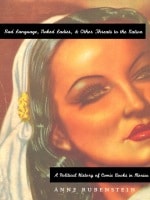
Bad Language, Naked Ladies, and Other Threats to the Nation
A Political History of Comic Books in MexicoAnne Rubenstein
Duke University Press, 1998
Since their first appearance in 1934, comic books enjoyed wide readership, often serving as a practical guide to life in booming new cities. Conservative protest against the so-called immorality of these publications, of mass media generally, and of Mexican modernity itself, however, led the Mexican government to establish a censorship office that, while having little impact on the content of comic books, succeeded in directing conservative ire away from government policies and toward the Mexican media. Bad Language, Naked Ladies, and Other Threats to the Nation examines the complex dynamics of the politics of censorship occasioned by Mexican comic books, including the conservative political campaigns against them, government and industrial responses to such campaigns, and the publishers’ championing of Mexican nationalism and their efforts to preserve their publishing empires through informal influence over government policies. Rubenstein’s analysis suggests a new Mexican history after the revolution, one in which negotiation over cultural questions replaced open conflict and mass-media narrative helped ensure political stability.
This book will engage readers with an interest in Mexican history, Latin American studies, cultural studies, and popular culture.

Bad Medicine
Settler Colonialism and the Institutionalization of American IndiansSarah A. Whitt
Duke University Press, 2025

Bad Modernisms
Douglas Mao and Rebecca L. Walkowitz, eds.
Duke University Press, 2006
Bad Modernisms thus builds on and extends the “new modernist studies,” recent work marked by the application of diverse methods and attention to texts and artists not usually labeled as modernist. In this collection, these developments are exemplified by essays ranging from a reading of dandyism in 1920s Harlem as a performance of a “bad” black modernist imaginary to a consideration of Filipino American modernism in the context of anticolonialism. The contributors reconsider familiar figures—such as Virginia Woolf, D. H. Lawrence, Josef von Sternberg, Ludwig Wittgenstein, W. H. Auden, and Wyndham Lewis—and bring to light the work of lesser-known artists, including the writer Carlos Bulosan and the experimental filmmaker Len Lye. Examining cultural artifacts ranging from novels to manifestos, from philosophical treatises to movie musicals, and from anthropological essays to advertising campaigns, these essays signal the capaciousness and energy galvanizing the new modernist studies.
Contributors. Lisa Fluet, Laura Frost, Michael LeMahieu, Heather K. Love, Douglas Mao, Jesse Matz, Joshua L. Miller, Monica L. Miller, Sianne Ngai, Martin Puchner, Rebecca L. Walkowitz

Bad Objects
Essays Popular and UnpopularNaomi Schor
Duke University Press, 1995
Written in a distinctive personal and self-reflective mode, this collection offers new unpublished work and brings together for the first time some of Schor’s best-known and most influential essays. These engagements with Anglo-American feminist theory, Freud and psychoanalytic theory, French poststructuralists such as Barthes, Foucault, and Irigaray, and French fiction by or about women—especially of the nineteenth century—also address such issues as bilingual identity, professional controversies, female fetishism, and literature and gender. Schor then concludes with a provocative meditation on the future of feminism.
As they read Bad Objects, Anglo-American theoreticians who have been mainly preoccupied with French feminism will find themselves drawn into French literary and cultural history, while French literary critics and historians will be placed in contact with feminist debate.

Badiou and Politics
Bruno Bosteels
Duke University Press, 2011
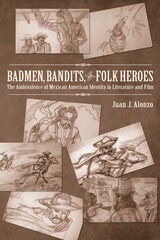
Badmen, Bandits, and Folk Heroes
The Ambivalence of Mexican American Identity in Literature and FilmJuan J. Alonzo
University of Arizona Press, 2009
Alonzo opens his provocative study with a fresh look at the adventure stories of Stephen Crane and the silent Western movies of D. W. Griffith. He also investigates the conflation of the greaser, the bandit, and the Mexican revolutionary into one villainous figure in early Western movies and, more broadly, traces the development of the badman in Westerns. He newly interrogates the writings of Américo Paredes regarding the makeup of Mexican masculinity, and productively trains his analytic eye on the recent films of Jim Mendiola and the contemporary poetry of Evangelina Vigil.
Throughout Badmen, Bandits, and Folk Heroes, Alonzo convincingly demonstrates how fiction and films that formerly appeared one-dimensional in their treatment of Mexicans and Mexican Americans actually offer surprisingly multifarious and ambivalent representations. At the same time, his valuation of indeterminacy, contingency, and hybridity in contemporary cultural production creates new possibilities for understanding identity formation.

Baking Powder Wars
The Cutthroat Food Fight that Revolutionized CookingLinda Civitello
University of Illinois Press, 2017
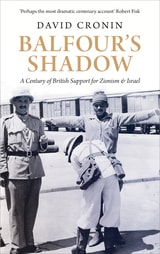
Balfour's Shadow
A Century of British Support for Zionism and IsraelDavid Cronin
Pluto Press, 2017
This is the infamous Balfour Declaration, which began one hundred years of conflict with the Palestinian people. Penned in 1917 by British Foreign Secretary Arthur James Balfour, these words had an immense impact on history that still emanates a century later. In the controversial, fast-paced Balfour’s Shadow, David Cronin traces the story of the rhetorical and practical assistance that Britain has given to the Zionist movement and the state of Israel since that day. Skillfully and engagingly written, Balfour’s Shadow uses previously unreleased sources and archives to reveal a new side to an old story. Cronin focuses on important historical events such as the Arab Revolt, the Nakba and establishment of the state, the ‘56 and ‘67 wars, the Cold War, and controversial public figures like Tony Blair. Marking the 100th anniversary of the Balfour Declaration, Cronin provides a fascinating take on this oft-maligned, important history.

Ballad Hunting with Max Hunter
Stories of an Ozark Folksong CollectorSarah Jane Nelson; Foreword by Robert Cochran
University of Illinois Press, 2023
Sarah Jane Nelson chronicles Hunter’s song collecting adventures alongside portraits of the singers and mentors he met along the way. The guitar-strumming Hunter picked up the recording habit to expand his repertoire but almost immediately embraced the role of song preservationist. Being a local allowed Hunter to merge his native Ozark earthiness with sharp observational skills to connect--often more than once--with his singers. Hunter’s own ability to be present added to that sense of connection. Despite his painstaking approach, ballad collecting was also a source of pleasure for Hunter. Ultimately, his dedication to capturing Ozarks song culture in its natural state brought Hunter into contact with people like Vance Randolph, Mary Parler, and non-academic folklorists who shared his values.
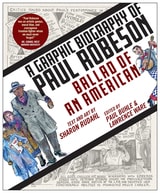
Ballad of an American
A Graphic Biography of Paul RobesonSharon Rudahl
Rutgers University Press, 2021
The first-ever graphic biography of Paul Robeson, Ballad of an American, charts Robeson’s career as a singer, actor, scholar, athlete, and activist who achieved global fame. Through his films, concerts, and records, he became a potent symbol representing the promise of a multicultural, multiracial American democracy at a time when, despite his stardom, he was denied personal access to his many audiences.
Robeson was a major figure in the rise of anti-colonialism in Africa and elsewhere, and a tireless campaigner for internationalism, peace, and human rights. Later in life, he embraced the civil rights and antiwar movements with the hope that new generations would attain his ideals of a peaceful and abundant world. Ballad of an American features beautifully drawn chapters by artist Sharon Rudahl, a compelling narrative about his life, and an afterword on the lasting impact of Robeson’s work in both the arts and politics. This graphic biography will enable all kinds of readers—especially newer generations who may be unfamiliar with him—to understand his life’s story and everlasting global significance.
Ballad of an American: A Graphic Biography of Paul Robeson is published in conjunction with Rutgers University’s centennial commemoration of Robeson’s 1919 graduation from the university.
Study guide for Ballad of an American: A Graphic Biography of Paul Robeson (https://d3tto5i5w9ogdd.cloudfront.net/wp-content/uploads/2021/05/10201015/YA_Adult-Study-Guide-for-A-Graphic-Biography-of-Paul-Robeson.pdf).
View the blad for Ballad of an American.
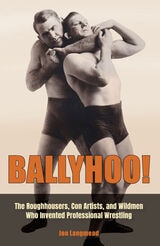
Ballyhoo!
The Roughhousers, Con Artists, and Wildmen Who Invented Professional WrestlingJon Langmead
University of Missouri Press, 2024
Ballyhoo! The Roughhousers, Con Artists, and Wildmen Who Invented Professional Wrestling is a history of professional wrestling’s formative period in the U.S., from roughly 1874 to 1941, and the contested interplay of wrestlers and promoters who built the “sport” as we know it. During this period, the major conventions that would define wrestling to the present day were perfected and codified, as wrestling morphed from a rough sport practiced on farms and at town gatherings to melodramatic mass entertainment that reliably drew large crowds in cities across the nation.
The narrative uses the life and career of Jack Curley—a boxing promoter whose fortune took a turn for the better when he began promoting wrestling matches—as a compass as it charts the development of wrestling. By the late 1910s, Curley’s shows were selling out Madison Square Garden monthly. Ballyhoo chronicles his competition with the other promoters, as well as the lives of colorful athletes like “Strangler” Ed Lewis, Frank Gotch, the “Masked Marvel,” Jim Londos, “Gorgeous George” Wagner, “Farmer” Martin Burns, and “Dynamite” Gus Sonnenberg.

Ballymurphy and the Irish War
Ciaran de Baroid
Pluto Press, 2000
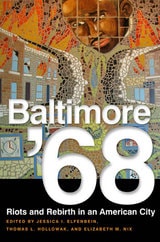
Baltimore '68
Riots and Rebirth in an American CityEdited by Jessica I. Elfenbein, Thomas L. Hollowak and Elizabeth M. Nix
Temple University Press, 2011
In 1968, Baltimore was home to a variety of ethnic, religious, and racial communities that, like those in other American cities, were confronting a quickly declining industrial base. In April of that year, disturbances broke the urban landscape along lines of race and class.
This book offers chapters on events leading up to the turmoil, the riots, and the aftermath as well as four rigorously edited and annotated oral histories of members of the Baltimore community. The combination of new scholarship and first-person accounts provides a comprehensive case study of this period of civil unrest four decades later.
This engaging, broad-based public history lays bare the diverse experiences of 1968 and their effects, emphasizing the role of specific human actions. By reflecting on the stories and analysis presented in this anthology, readers may feel empowered to pursue informed, responsible civic action of their own.
Baltimore '68 is the book component of a larger public history project, "Baltimore '68 Riots: Riots and Rebirth." The project's companion website (http://archives.ubalt.edu/bsr/index.html ) offers many more oral histories plus photos, art, and links to archival sources. The book and the website together make up an invaluable teaching resource on cities, social unrest, and racial politics in the 1960s. The project was the corecipient of the 2009 Outstanding Public History Project Award from the National Council on Public History.

Bangkok after Dark
Maurice Rocco, Transnational Nightlife, and the Making of Cold War IntimaciesBenjamin Tausig
Duke University Press, 2025
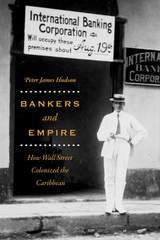
Bankers and Empire
How Wall Street Colonized the CaribbeanPeter James Hudson
University of Chicago Press, 2017

Bankrupt in America
A History of Debtors, Their Creditors, and the Law in the Twentieth CenturyMary Eschelbach Hansen and Bradley A. Hansen
University of Chicago Press, 2020
Interweaving careful legal history and rigorous economic analysis, Bankrupt in America is the first work to trace how bankruptcy was transformed from an intermittently used constitutional provision, to an indispensable tool for business, to a central element of the social safety net for ordinary Americans. To do this, the authors track federal bankruptcy law, as well as related state and federal laws, examining the interaction between changes in the laws and changes in how people in each state used the bankruptcy law. In this thorough investigation, Hansen and Hansen reach novel conclusions about the causes and consequences of bankruptcy, adding nuance to the discussion of the relationship between bankruptcy rates and economic performance.
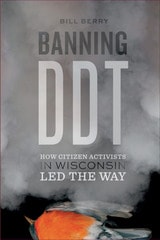
Banning DDT
How Citizen Activists in Wisconsin Led the WayBill Berry
Wisconsin Historical Society Press, 2014
On a December day in 1968, DDT went on trial in Madison, Wisconsin. In Banning DDT: How Citizen Activists in Wisconsin Led the Way, Bill Berry details how the citizens, scientists, reporters, and traditional conservationists drew attention to the harmful effects of “the miracle pesticide” DDT, which was being used to control Dutch elm disease.
Berry tells of the hunters and fishers, bird-watchers, and garden-club ladies like Lorrie Otto, who dropped off twenty-eight dead robins at the Bayside village offices. He tells of university professors and scientists like Joseph Hickey, a professor and researcher in the Department of Wildlife Management in at the University of Wisconsin–Madison, who, years after the fact, wept about the suppression of some of his early DDT research. And he tells of activists like Senator Gaylord Nelson and members of the state’s Citizens Natural Resources who rallied the cause.
The Madison trial was one of the first for the Environmental Defense Fund. The National Audubon Society helped secure the more than $52,000 in donations that offset the environmentalists’ costs associated with the hearing. Today, virtually every reference to the history of DDT mentions the impact of Wisconsin’s battles.
The six-month-long DDT hearing was one of the first chapters in citizen activism in the modern environmental era. Banning DDT is a compelling story of how citizen activism, science, and law merged in Wisconsin’s DDT battles to forge a new way to accomplish public policy. These citizen activists were motivated by the belief that we all deserve a voice on the health of the land and water that sustain us.
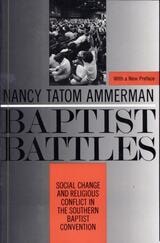
Baptist Battles
Social Change and Religious Conflict in the Southern Baptist ConventionNancy Tatom Ammerman
Rutgers University Press, 1990
Since 1979 Southern Baptists have been noisily struggling to agree on symbols, beliefs, and practices as they attempt to make sense of their changing social world. Nancy Ammerman has carefully documented their struggle. She tells the story of the Baptist reversal from a moderate to a fundamentalist outlook and speculates on the future of the denomination.
Ammerman places change among the Southern Baptists in the context of the cultural and economic changes that have transformed the South from its rural past into an urbanizing, culturally diverse region. Not only did the South change; Southern Baptists did as well. Reflecting this diversity, the Southern Baptist bureaucracy was relatively progressive. During the 1960s and 1970s, moderate sentiments prevailed, while fundamentalists remained on the margins. These two were, however, becoming increasingly divergent in what they considered important about being a Baptist, in their views about the Bible, in their attitudes on the origination of women, on Christian morals, and on national politics.
Late in the 1970s, a fundamentalist coalition emerged, followed by unsuccessful efforts by moderates to oppose it. The battles escalated until 1985, when 45,000 Baptists gathered in Dallas to decide between contending presidential candidates. That dramatic event illustrated the extent to which organized political resources were determining the course of the conflict. Ammerman studies these strategies and resources as well.
Examining how this tension affected Baptists, Ammerman begins with case studies of the change it is producing in Baptist agencies. But she also brings us back to the local churches and individual believers who are renegotiating their relationships within their denomination. She asks whether the denomination’s polity can accommodate an increasingly diverse group of Baptists, of whether the only way dissidents can have a voice is through schism.
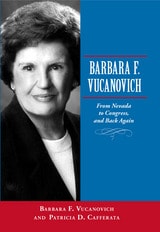
Barbara F. Vucanovich
From Nevada to Congress, and Back AgainBarbara F. Vucanovich
University of Nevada Press, 2014
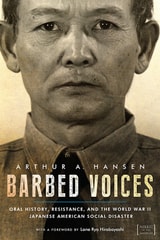
Barbed Voices
Oral History, Resistance, and the World War II Japanese American Social DisasterArthur A. Hansen
University Press of Colorado, 2021
What historically was benignly termed the “Japanese American Evacuation” was in fact a social disaster, which, unlike a natural disaster, is man-made. Examining the emotional implications of targeted systemic incarceration, Hansen highlights the psychological traumas that transformed Japanese American identity and culture for generations after the war. While many accounts of Japanese American incarceration rely heavily on government documents and analytic texts, Hansen’s focus on first-person Nikkei testimonies gathered through powerful oral history interviews gives expression to the resistance to this social disaster.
Analyzing the evolving historical memory of the effects of wartime incarceration, Barbed Voices presents a new scholarly framework of enduring value. It will be of interest to students and scholars of oral history, US history, public history, and ethnic studies as well as the general public interested in the WWII experience and civil rights.
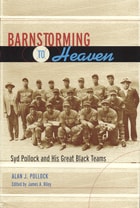
Barnstorming to Heaven
Syd Pollock and His Great Black TeamsAlan J. Pollock
University of Alabama Press, 2006
The Indianapolis Clowns were a black touring baseball team that featured an entertaining mix of comedy, showmanship, and skill. Sometimes referred to as the Harlem Globetrotters of baseball—though many of the Globetrotters’ routines were borrowed directly from the Clowns—they captured the affection of Americans of all ethnicities and classes. Author Alan Pollock was the son of the Clowns' owner Syd Pollock, who owned a series of black barnstorming teams that crisscrossed the country from the late 1920s until the mid-1960s. They played every venue imaginable, from little league fields to Yankee Stadium, and toured the South, the Northeast, the Midwest, the Canadian Rockies, the Dakotas, the Southwest, the Far West—anywhere there was a crowd willing to shell out a few dollars for an unforgettable evening.
Alan grew up around the team and describes in vivid detail the comedy routines of Richard “King Tut” King, “Spec Bebob” Bell, Reece “Goose” Tatum; the “warpaint” and outlandish costumes worn by players in the early days; and the crowd-pleasing displays of amazing skill known as pepperball and shadowball. These men were entertainers, but they were also among the most gifted athletes of their day, making a living in sports the only way a black man could. They played to win.
More than just a baseball story, these recollections tell the story of great societal changes in America from the roaring twenties, through the years of the Great Depression and World War II, and into the Civil Rights era.
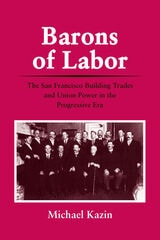
Barons of Labor
The San Francisco Building Trades and Union Power in the Progressive EraMichael Kazin
University of Illinois Press, 1989

Barricade
Utpal Dutt
Seagull Books, 2022
Although Utpal Dutt is acknowledged as a trailblazer of post-Independence Indian theater, English readers have not had access to the range and wealth of his drama. Barricade is a political play that stages the Nazi takeover of Germany in 1933 with an eye on India. Today, the surge to power of far-right parties and fundamentalist fanaticism across the world means that the co-option of democracy and civil society that led to Nazi fascism can happen again—or indeed has already happened—granting Barricade its immediate urgency. Equipped with an introduction analyzing its historical context, this translation of Barricade is also a very rare product in dramatic literature, collating both the printed original as well as a documented performance of the production directed by Dutt.

Barrier of a Common Language
An American Looks at Contemporary British PoetryDana Gioia
University of Michigan Press, 2003

Barrio Princess
Growing Up in TexasConsuelo Samarripa
Parkhurst Brothers, Inc., 2014
"Made in Mexico, born in America," Barrio Princess shares heartwarming family stories, cultural tradition stories, learning English by total immersion, socialization as a minority, education, stories of her mother as a single parent, and women’s stories from a minority point of view.
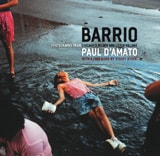
Barrio
Photographs from Chicago's Pilsen and Little VillagePaul D'Amato
University of Chicago Press, 2006
Barrio collects ninety of these striking color images along with D’Amato’s fascinating account of his time photographing Mexican Chicago and his acceptance—often grudging, after threatened violence—into the heart of the city’s Mexican community. Some of the photos here are beautifully composed and startling—visual narratives that are surreal and dreamlike, haunting and mythic. Others, like those D’Amato took while shadowing graffiti artists in the subway, are far more immediate and improvisational. With a foreword by author Stuart Dybek that places D’Amato’s work in the context of the Pilsen and Little Village that Dybek has elsewhere captured so memorably, this book offers a penetrating, evocative, and overall streetwise portrait of two iconic and enduring Hispanic neighborhoods.

Barrios Norteños
St. Paul and Midwestern Mexican Communities in the Twentieth CenturyBy Dionicio Nodín Valdés
University of Texas Press, 2000
Mexican communities in the Midwestern United States have a history that extends back to the turn of the twentieth century, when a demand for workers in several mass industries brought Mexican agricultural laborers to jobs and homes in the cities. This book offers a comprehensive social, labor, and cultural history of these workers and their descendants, using the Mexican barrio of "San Pablo" (St. Paul) Minnesota as a window on the region.
Through extensive archival research and numerous interviews, Dennis Valdés explores how Mexicans created ethnic spaces in Midwestern cities and how their lives and communities have changed over the course of the twentieth century. He examines the process of community building before World War II, the assimilation of Mexicans into the industrial working class after the war, the Chicano Movement of the 1960s and 1970s, and more recent changes resulting from industrial restructuring and unprecedented migration and population growth. Throughout, Valdés pays particular attention to Midwestern Mexicans' experiences of inequality and struggles against domination and compares them to Mexicans' experiences in other regions of the U.S.

Barry Goldwater and the Remaking of the American Political Landscape
Edited by Elizabeth Tandy Shermer
University of Arizona Press, 2013
Since Goldwater’s death in 1998, politicians, pundits, and academics have been assessing his achievements and his shortcomings. The twelve essays in this volume thoroughly examine the life, times, and impact of “Mr. Conservative.” Scrutinizing the transformation of a Phoenix department store owner into a politician, de facto political philosopher, and five-time US senator, contributors highlight the importance of power, showcasing the relationship between the nascent conservative movement’s cadre of elite businessmen, newsmen, and intellectuals and their followers at the grassroots—or sagebrush—level.
Goldwater, who was born in the Arizona Territory in 1909, was deeply influenced by his Western upbringing. With his appearance on the national stage in 1964, he not only articulated a new brand of conservatism but gave a voice to many Americans who were not enamored with the social and political changes of the era. He may have lost the battle for the presidency, but he energized a coalition of journalists, publishers, women’s groups, and Southerners to band together in a movement that reshaped the nation.

Basque Nationalism and the Spanish State
Andre Lecours
University of Nevada Press, 2016
An examination of Basque nationalism from a historical perspective. Basque nationalism has been extensively examined from the perspectives of Basque culture and internal conditions in the Basque Country, but André Lecours is among the first to demonstrate how Basque nationalism was shaped by the many forms and historical phases of the Spanish state. His discussion employs one of the most debated approaches in the social sciences—historical institutionalism—and it includes an up-to-date examination of the circumstances for, and consequences of, recent events such as ETA's announcement in 2006 of a permanent cease-fire. Lecours also analyzes other aspects of Basque nationalism, including the international relations of the Basque Autonomous Government, as well as the responses of the contemporary Spanish state and how it deploys its own brand of nationalism. Finally, the book offers a comparative discussion of Basque, Catalan, Scottish, Flemish, and Quebecois nationalist movements, suggesting that nationalism in the Basque Country, despite the historical presence of violence, is in many ways similar to nationalism in other industrialized democracies. Basque Nationalism and the Spanish State is an original and provocative discussion that is essential reading for anyone interested in the Basques or in the development of modern nationalist movements.
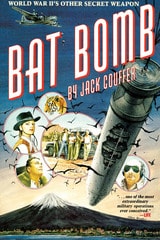
Bat Bomb
World War II's Other Secret WeaponBy Jack Couffer
University of Texas Press, 1992
It was a crazy way to win World War II in the Pacific—
All the United States had to do was to attach small incendiary bombs to millions of bats and release them over Japan's major cities. As the bats went to roost, a million fires would flare up in remote crannies of the wood and paper buildings common throughout Japan. When their cities were reduced to ashes, the Japanese would surely capitulate...
The plan made sense to a handful of eccentric promoters and researchers, who convinced top military brass and even President Roosevelt to back the scheme. It might have worked, except that another secret weapon—something to do with atoms—was chosen to end the war.
Told here by the youngest member of the team, this is the story of the bat bomb project, or Project X-Ray, as it was officially known. In scenes worthy of a Capra or Hawks comedy, Jack Couffer recounts the unorthodox experiments carried out in the secrecy of Bandera, Texas; Carlsbad, New Mexico; and El Centro, California, in 1942-1943 by "Doc" Adams' private army. This oddball cast of characters included an eccentric inventor, a distinguished Harvard scientist, a biologist with a chip on his shoulder, a movie star, a Texas guano collector, a crusty Marine Corps colonel, a Maine lobster fisherman, an ex-mobster, and a tiger.
Not to be defeated by minor logistical hurdles, the bat bomb researchers risked life and limb to explore uncharted bat caves and "recruit" thousands of bats to serve their country. Through months of personality conflicts, military snafus, and technical failures the team pressed on, certain that bats could end the war with Japan. And they might have—in their first airborne test, the bat bombers burned an entire brand-new military airfield to the ground.
For everyone who relishes true tales of action and adventure, Bat Bomb is a must-read. Bat enthusiasts will also discover the beginnings of the scientific study of bats.

Bath Massacre
America's First School BombingArnie Bernstein
University of Michigan Press, 2009
---Gregg Olsen, New York Times best-selling author of Starvation Heights
"A chilling and historic character study of the unfathomable suffering that desperation and fury, once unleashed inside a twisted mind, can wreak on a small town. Contemporary mass murderers Timothy McVeigh, Columbine's Dylan Klebold, and Virginia Tech's Seung-Hui Cho can each trace their horrific genealogy of terror to one man: Bath school bomber Andrew Kehoe."
---Mardi Link, author of When Evil Came to Good Hart
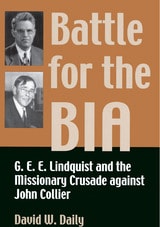
Battle for the BIA
G. E. E. Lindquist and the Missionary Crusade against John CollierDavid W. Daily
University of Arizona Press, 2004
Battleground 1948
Truman, Stevenson, Douglas, and the Most Surprising Election in Illinois HistoryRobert E. Hartley
Southern Illinois University Press, 2013
The election year of 1948 remains to this day one of the most astonishing in U.S. political history. During this first general election after World War II, Americans looked to their governments for change. As the battle for the nation’s highest office came to a head in Illinois, the state was embroiled in its own partisan showdowns—elections that would prove critical in the course of state and national history.
In Battleground 1948, Robert E. Hartley offers the first comprehensive chronicle of this historic election year and its consequences, which still resonate today. Focusing on the races that ushered Adlai Stevenson, Paul Douglas, and Harry Truman into office—the last by the slimmest of margins—Battleground 1948 details the pivotal events that played out in the state of Illinois, from the newspaper wars in Chicago to tragedy in the mine at Centralia.
In addition to in-depth revelations on the saga of the American election machine in 1948, Hartley probes the dark underbelly of Illinois politics in the 1930s and 1940s to set the stage, spotlight key party players, and expose the behind-the-scenes influences of media, money, corruption, and crime. In doing so, he draws powerful parallels between the politics of the past and those of the present. Above all, Battleground 1948 tells the story of grassroots change writ large on the American political landscape—change that helped a nation move past an era of conflict and depression, and forever transformed Illinois and the U.S. government.
Battleground Chicago
The Police and the 1968 Democratic National ConventionFrank Kusch
University of Chicago Press, 2008
Working from interviews with eighty former Chicago police officers who were on the scene, Frank Kusch uncovers the other side of the story of ’68, deepening our understanding of a turbulent decade.
“Frank Kusch’s compelling account of the clash between Mayor Richard Daley’s men in blue and anti-war rebels reveals why the 1960s was such a painful era for many Americans. . . . to his great credit, [Kusch] allows ‘the pigs’ to speak up for themselves.”—Michael Kazin
“Kusch’s history of white Chicago policemen and the 1968 Democratic National Convention is a solid addition to a growing literature on the cultural sensibility and political perspective of the conservative white working class in the last third of the twentieth century.”—David Farber, Journal of American History

Battles of the North Country
Wilderness Politics and Recreational Development in the Adirondack State Park, 1920-1980Jonathan D. Anzalone
University of Massachusetts Press, 2018
Through a series of case studies, historian Jonathan D. Anzalone highlights the role of public and private interests in the region and shows how partnerships frayed and realigned in the course of several key developments: the rise of camping in the 1920s and 1930s; the 1932 Lake Placid Olympics; the construction of a highway to the top of Whiteface Mountain; the postwar rise of downhill skiing; the completion of I-87 and the resulting demand for second homes; and the 1980 Lake Placid Olympics. Battles of the North Country reveals how class, economic self-interest, state power, and a wide range of environmental concerns have shaped modern politics in the Adirondacks and beyond.
Battling over the Balkans
Historiographical Questions and ControversiesJohn R. Lampe
Central European University Press, 2020