Results by title
187 books match the query 'African American women' and 32 start with b
Beyond Image and Convention
Explorations in Southern Women's HistoryEdited by Janet L. Coryell, Martha H. Swain, Sandra Goioa Treadway, & ElizabethHayes Turner
University of Missouri Press, 1998
Despite their prevailing image and stereotype, southern women have often gone "beyond convention," living on their own terms within a society that revered tradition and compliance. Spanning the colonial era to the mid-twentieth century, Beyond Image and Convention documents women from widely varied social, economic, religious, and ethnic backgrounds who acted outside the accepted gender boundaries of their day.
Reflecting the quality and breadth of current scholarship in the field of southern women's history, this collection of essays relies upon previously untapped documentary evidence and, in the process, crafts provocative new interpretations of our collective past. The essays explore the historical experience of black and white southern women across nearly three centuries, including a white woman's sexual misconduct in colonial North Carolina, one slave woman's successful attempt to carve out an autonomous existence in southwestern Virginia, an ex-slave's fight for freedom in postbellum Missouri, and the civil rights activism of two white southern women—Sarah Patton Boyle of Virginia and Alice Norwood Spearman of South Carolina.
Breaking new ground in the study of women's history, Beyond Image and Convention provides valuable insights for both specialists and general readers.
Beyond Respectability
The Intellectual Thought of Race WomenBrittney C. Cooper
University of Illinois Press, 2017
Beyond the Black Lady
Sexuality and the New African American Middle ClassLisa B. Thompson
University of Illinois Press, 2012
Birthing Black Mothers
Jennifer C. Nash
Duke University Press, 2021
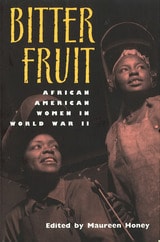
Bitter Fruit
African American Women in World War IIEdited by Maureen Honey
University of Missouri Press, 1999
Despite the participation of African American women in all aspects of home-front activity during World War II, advertisements, recruitment posters, and newsreels portrayed largely white women as army nurses, defense plant workers, concerned mothers, and steadfast wives. This sea of white faces left for posterity images such as Rosie the Riveter, obscuring the contributions that African American women made to the war effort. In Bitter Fruit, Maureen Honey corrects this distorted picture of women's roles in World War II by collecting photos, essays, fiction, and poetry by and about black women from the four leading African American periodicals of the war period: Negro Digest, The Crisis, Opportunity, and Negro Story.
Mostly appearing for the first time since their original publication, the materials in Bitter Fruit feature black women operating technical machinery, working in army uniforms, entertaining audiences, and pursuing a college education. The articles praise the women's accomplishments as pioneers working toward racial equality; the fiction and poetry depict female characters in roles other than domestic servants and give voice to the bitterness arising from discrimination that many women felt. With these various images, Honey masterfully presents the roots of the postwar civil rights movement and the leading roles black women played in it.
Containing works from eighty writers, this anthology includes forty African American women authors, most of whose work has not been published since the war. Of particular note are poems and short stories anthologized for the first time, including Ann Petry's first story, Octavia Wynbush's last work of fiction, and three poems by Harlem Renaissance writer Georgia Douglas Johnson. Uniting these various writers was their desire to write in the midst of a worldwide military conflict with dramatic potential for ending segregation and opening doors for women at home.
Traditional anthologies of African American literature jump from the Harlem Renaissance to the 1960s with little or no reference to the decades between those periods. Bitter Fruit not only illuminates the literature of these decades but also presents an image of black women as community activists that undercuts gender stereotypes of the era. As Honey concludes in her introduction, "African American women found an empowered voice during the war, one that anticipates the fruit of their wartime effort to break silence, to challenge limits, and to change forever the terms of their lives."
Black Diamond Queens
African American Women and Rock and RollMaureen Mahon
Duke University Press, 2020
Black Female Sexualities
Melancon, Trimiko
Rutgers University Press, 2015
Black Girl Autopoetics
Agency in Everyday Digital PracticeAshleigh Greene Wade
Duke University Press, 2024
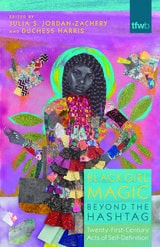
Black Girl Magic Beyond the Hashtag
Twenty-First-Century Acts of Self-DefinitionEdited by Julia S. Jordan-Zachery and Duchess Harris; Foreword by Janell Hobson; Afterword by Tammy Owens
University of Arizona Press, 2019
The essays in this volume move us beyond social media. They offer critical analyses and representations of the multiplicities of Black femmes’, girls’, and women’s lived experiences. Together the chapters demonstrate how Black girl magic is embodied by four elements enacted both on- and offline: building community, challenging dehumanizing representations, increasing visibility, and offering restorative justice for violence.
Black Girl Magic Beyond the Hashtag shows how Black girls and women foster community, counter invisibility, engage in restorative acts, and create spaces for freedom. Intersectional and interdisciplinary, the contributions in this volume bridge generations and collectively push the boundaries of Black feminist thought.

Black Hunger
Soul Food And AmericaDoris Witt
University of Minnesota Press, 2004
Explores the complex relationship between food and African American history
In 1889, the owners of a pancake mix witnessed the vaudeville performance of a white man in blackface and drag playing a character called Aunt Jemima. This character went on to become one of the most pervasive stereotypes of black women in the United States, embodying not only the pancakes she was appropriated to market but also post–Civil War race and gender hierarchies—including the subordination of African American women as servants and white fantasies of the nurturing mammy.
Using the history of Aunt Jemima as a springboard for exploring the relationship between food and African Americans, Black Hunger focuses on debates over soul food since the 1960s to illuminate a complex web of political, economic, religious, sexual, and racial tensions between whites and blacks and within the black community itself. Celebrated by many African Americans as a sacramental emblem of slavery and protest, soul food was simultaneously rejected by others as a manifestation of middle-class black “slumming.”
Highlighting the importance of food for men as well as women, Doris Witt traces the promotion of soul food by New York Times food writer Craig Claiborne and its prohibition by Nation of Islam leader Elijah Muhammad and comedian-turned-diet guru Dick Gregory. A discussion of cookbook author Vertamae Grosvenor, who distanced herself from the myth of plantation mammy by reimagining soul food as "vibration cooking," sets the stage for Witt's concluding argument that the bodies and appetites of African American women should be viewed as central to contemporary conversations about eating disorders and reproductive rights.
Witt draws on vaudeville, literature, film, visual art, and cookbooks to explore how food has been used both to perpetuate and to challenge racial stereotypes. Raising her fist in a Black Power salute, wielding her spatula like a sword, Aunt Jemima steps off the pancake box in a righteous fury.
Black Internationalist Feminism
Women Writers of the Black Left, 1945-1995Cheryl Higashida
University of Illinois Press, 2013
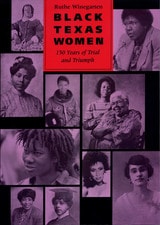
Black Texas Women
150 Years of Trial and TriumphBy Ruthe Winegarten, Janet G. Humphrey & Frieda Werden, consulting editors
University of Texas Press, 1994
Women of all colors have shaped families, communities, institutions, and societies throughout history, but only in recent decades have their contributions been widely recognized, described, and celebrated. This book presents the first comprehensive history of black Texas women, a previously neglected group whose 150 years of continued struggle and some successes against the oppression of racism and sexism deserve to be better known and understood.
Beginning with slave and free women of color during the Texas colonial period and concluding with contemporary women who serve in the Texas legislature and the United States Congress, Ruthe Winegarten organizes her history both chronologically and topically. Her narrative sparkles with the life stories of individual women and their contributions to the work force, education, religion, the club movement, community building, politics, civil rights, and culture. The product of extensive archival and oral research and illustrated with over 200 photographs, this groundbreaking work will be equally appealing to general readers and to scholars of women's history, black history, American studies, and Texas history.
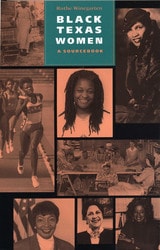
Black Texas Women
A SourcebookBy Ruthe Winegarten
University of Texas Press, 1994
When Black Texas Women: 150 Years of Trial and Triumph was published in 1995, it was acclaimed as the first comprehensive history of black women's struggles and achievements. This companion volume contains the original source materials that Ruthe Winegarten uncovered during her extensive research.
Like a time capsule of black women's history, A Sourcebook includes petitions from free women of color, lawsuits, slave testimonies, wills, plantation journals, club minutes, autobiographies, ads, congressional reports, contracts, prison records, college catalogues, newspaper clippings, protest letters, and much more.
In addition to the documents, a biographical section highlights the lives of women from various walks of life. The book concludes with a timeline that begins in 1777 and reaches to 1992. This wealth of original material will be a treasure trove for scholars and general readers interested in the emerging field of black women's history.
Black Woman in Green
Gloria Brown and the Unmarked Trail to Forest Service LeadershipGloria D. Brown
Oregon State University Press, 2020
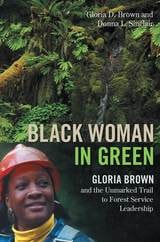
As scholars awaken to the racist history of public land management and the ways that people of color have been excluded from contemporary notions of nature and wilderness, Brown’s story provides valuable insight into the roles that African Americans have carved out in the outdoors generally and in the field of environmental policy and public lands management specifically. Drawing on her powerful communication and listening skills, her sense of humor, and her willingness to believe in the basic goodness of humanity, Brown conducted civil rights trainings and shattered glass ceilings, all while raising her children alone.
Written in an engaging and accessible style with historian Donna Sinclair, Brown’s story provides a fascinating case study for public administration and contributes to a deeper understanding of the environmental and civil rights movements of the twentieth century, particularly the role that racial discrimination has played in national forests, parks, and other wilderness spaces. It also highlights issues of representation in the federal government, women’s history, the history of the American West, and literature associated with African American experiences in predominately white societies.
Black Women Legacies
Public History Sites Seen and UnseenAlexandria Russell
University of Illinois Press, 2024
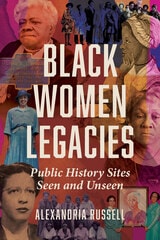
Intersectional and original, Black Women Legacies explores the memorialization of African American women and its distinctive impact on physical and cultural landscapes throughout the United States.
Black Women Writing Autobiography
A Tradition Within a TraditionJoanne Braxton
Temple University Press, 1990
Black Women and Music
More Than the BluesEdited by Eileen M. Hayes and Linda F. Williams
University of Illinois Press, 2006
Individual essays concern the experiences of black women in classical music and in contemporary blues, the history of black female gospel-inflected voices in the Broadway musical, and "hip-hop feminism" and its complications. Focusing on under-examined contexts, authors introduce readers to the work of a prominent gospel announcer, women’s music festivals (predominantly lesbian), and to women’s involvement in an early avant-garde black music collective. In contradistinction to a compilation of biographies, this volume critically illuminates themes of black authenticity, sexual politics, access, racial uplift through music, and the challenges of writing (black) feminist biography. Black Women and Music is a strong reminder that black women have been and are both social actors and artists contributing to African American thought.
Black Women and Politics in New York City
Julie A. Gallagher
University of Illinois Press, 2014
Historian and human rights activist Julie A. Gallagher deftly examines how race, gender, and the structure of the state itself shape outcomes, and exposes the layers of power and discrimination at work in American society. She combines her analysis with a look at the career of Shirley Chisholm, the first black woman elected to Congress and the first to run for president on a national party ticket. In so doing, she rewrites twentieth-century women's history and the dominant narrative arcs of feminist history that hitherto ignored African American women and their accomplishments.
Black Women in America
Social Science PerspectivesEdited by Micheline R. Malson, Elisabeth Mudimbe-Boyi, Jean F. O'Barr, and Mary
University of Chicago Press, 1990
An eloquent introduction to the development of Black feminist thought, Black Women in America encourages the discussion of broader issues, such as the treatment of cultural diversity in American higher education.
Black Women's Lives
Stories of Power and Pain — Twenty Years LaterKristal Brent Zook
Rutgers University Press, 2027
When author Kristal Brent Zook first published Black Women’s Lives: Stories of Power and Pain, nearly 20 years ago, the reality of so many Black women's lived experiences was not widely discussed in mainstream media. Two decades later, after much social change in the United States, including national media attention on Black women following the police murder of Breonna Taylor and the #SayHerName movement, the election of the first Black female vice president, Kamala Harris, and massive political and social backlash because of these gains, the timing for a refreshed look at these women's lives has never been better.
The stories in this collection invite readers into the intimate spaces of ten African American women from all walks of life, in cities and towns across the country. Twenty years later, we revisit them to learn how their lives have evolved. There are fresh new codas at the end of each chapter that illustrate how the women have fared over the last two decades. Did they achieve their dreams? What twists and turns did they meet along the way? These stories highlight the complex, nuanced, and passionate lives that Black women lead, often requiring ambition, ingenuity, and creativity to survive and thrive in the United States. This collection is a testament to the fact that the past repeats — and we remain, each of us, still, connected.
Black Women, Identity, and Cultural Theory
(Un)Becoming the SubjectKevin Everod Quashie
Rutgers University Press, 2004
In Black Women, Identity, and Cultural Theory, Kevin Everod Quashie explores the metaphor of the “girlfriend” as a new way of understanding three central concepts of cultural studies: self, memory, and language. He considers how the work of writers such as Toni Morrison, Ama Ata Aidoo, Dionne Brand, photographer Lorna Simpson, and many others, inform debates over the concept of identity. Quashie argues that these authors and artists replace the notion of a stable, singular identity with the concept of the self developing in a process both communal and perpetually fluid, a relationship that functions in much the same way that an adult woman negotiates with her girlfriend(s). He suggests that memory itself is corporeal, a literal body that is crucial to the process of becoming. Quashie also explores the problem language poses for the black woman artist and her commitment to a mastery that neither colonizes nor excludes.
The analysis throughout interacts with schools of thought such as psychoanalysis, postmodernism, and post-colonialism, but ultimately moves beyond these to propose a new cultural aesthetic, one that ultimately aims to center black women and their philosophies.
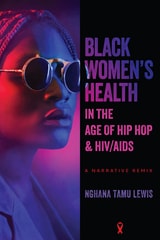
Black Women’s Health in the Age of Hip Hop and HIV/AIDS
A Narrative RemixNghana tamu Lewis
The Ohio State University Press, 2025
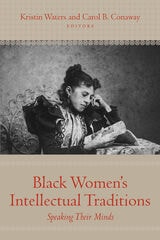
Black Women’s Intellectual Traditions
Speaking Their MindsEdited by Kristin B. Waters and Carol B. Conaway
University Press of New England, 2007
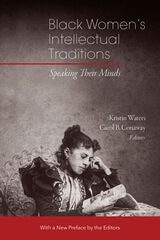
Black Women’s Intellectual Traditions
Speaking Their MindsEdited by Kristin Waters and Carol B. Conaway
Brandeis University Press, 2022
An astonishing wealth of literary and intellectual work by nineteenth-century Black women is being rediscovered and restored to print in scholarly and popular editions. In Kristin Waters’s and Carol B. Conaway’s landmark edited collection, Black Women’s Intellectual Traditions: Speaking Their Minds, sophisticated commentary on this rich body of work chronicles a powerful and interwoven legacy of activism based in social and political theories that helped shape the history of North America. The book meticulously reclaims this American legacy, providing a collection of critical analyses of the primary sources and their vital traditions. Written by leading scholars, Black Women’s Intellectual Traditions is particularly powerful in its exploration of the pioneering thought and action of the nineteenth-century Black woman lecturer and essayist Maria W. Stewart, abolitionist Sojourner Truth, novelist and poet Frances Ellen Watkins Harper, educator Anna Julia Cooper, newspaper editor Mary Ann Shadd Cary, and activist Ida B. Wells. The distinguished contributors are Hazel V. Carby, Patricia Hill Collins, Karen Baker-Fletcher, Kristin Waters, R. Dianne Bartlow, Carol B. Conaway, Olga Idriss Davis, Vanessa Holford Diana, Evelyn Simien, Janice W. Fernheimer, Michelle N. Garfield, Joy James, Valerie Palmer-Mehta, Carla L. Peterson, Marilyn Richardson, Evelyn M. Simien, Ebony A. Utley, Mary Helen Washington, Melina Abdullah, and Lena Ampadu. The volume will interest scholars and readers of African-American and women’s studies, history, rhetoric, literature, poetry, sociology, political science, and philosophy. This updated edition features a new preface by the editors in the light of new developments in current scholarship.
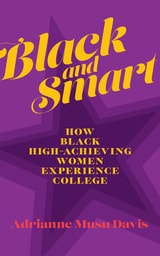
Black and Smart
How Black High-Achieving Women Experience CollegeAdrianne Musu Davis
Rutgers University Press, 2023
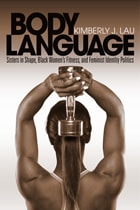
Body Language
Sisters in Shape, Black Women's Fitness, and Feminist Identity PoliticsKimberly J. Lau
Temple University Press, 2011
In her evocative ethnographic study, Body Language, Kimberly Lau traces the multiple ways in which the success of an innovative fitness program illuminates what identity means to its Black female clientele and how their group interaction provides a new perspective on feminist theories of identity politics—especially regarding the significance of identity to political activism and social change.
Sisters in Shape, Inc., Fitness Consultants (SIS), a Philadelphia company, promotes balance in physical, mental, and spiritual health. Its program goes beyond workouts, as it educates and motivates women to make health and fitness a priority. Discussing the obstacles at home and the importance of the group's solidarity to their ability to stay focused on their goals, the women speak to the ways in which their commitment to reshaping their bodies is a commitment to an alternative future.
Body Language shows how the group's explorations of black women's identity open new possibilities for identity-based claims to recognition, justice, and social change.
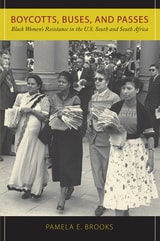
Boycotts, Buses, and Passes
Black Women's Resistance in the U.S. South and South AfricaPamela E. Brooks
University of Massachusetts Press, 2008
In the mid-1950s, as many developing nations sought independence from colonial rule, black women in the American South and in South Africa launched parallel campaigns to end racial injustice within their respective communities. Just as the dignified obstinacy of Mrs. Rosa Parks sparked the Montgomery bus boycott in 1955, the 20,000 South African women who marched in Pretoria a year later to protest the pass laws signaled a new wave of resistance to the system of apartheid. In both places women who had previously been consigned to subordinate roles brought fresh leadership to the struggle for political freedom and social equality.
In this book, Pamela E. Brooks tells their story, documenting the extraordinary achievements of otherwise ordinary women. In comparing the experiences of black women activists in two different parts of the African diaspora, Brooks draws heavily on oral histories that provide clear, and often painful, insight into their backgrounds, their motives, their hopes, and their fears. We learn how black women from all walks of life—domestic and factory workers, householders, teachers, union organizers, churchwomen, clubwomen, rural and urban dwellers alike—had to overcome their class differences and work through the often difficult gender relations within their families and communities. Yet eventually they came together to forge their own political organizations, such as the Women's Political Council and the Federation of South African Women, or joined orga-nizations of women and men, such as the Montgomery Improvement Association and the African National Congress, to advance the common agenda of black liberation.By tracing the dual rise of political consciousness and activism among the black women of the U.S. South and South Africa, Brooks not only illuminates patterns that have long been overlooked but places that shared history within the context of a larger global struggle to bring an end to the vestiges of European colonialism.
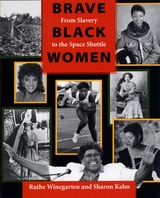
Brave Black Women
From Slavery to the Space ShuttleBy Ruthe Winegarten and Sharon Kahn
University of Texas Press, 1997
Brave black women have played important roles in American history. Before the Emancipation Proclamation in 1863, black women bore the bonds of slavery with courage and strength. Since Emancipation, black women have supported schools, churches, and civic organizations, entered many professions, and helped to build strong communities. This book dramatizes their impressive story and celebrates their achievements.
Writing especially for students in grades four through eight, Ruthe Winegarten and Sharon Kahn trace the history of black women from slavery until today. Their story includes many heroines, from Emily Morgan, "the Yellow Rose of Texas," to pioneer aviator Bessie Coleman, astronaut Mae Jemison, opera singer Barbara Conrad, actresses Phylicia Rashad and Debbie Allen, and Congresswoman Barbara Jordan, whose life story forms the final chapter.
In addition to these famous black women, the book also profiles teachers, businesswomen, civil rights leaders, community activists, doctors, nurses, athletes, musicians, artists, and political leaders. Adapted from the award-winning Black Texas Women: 150 Years of Trial and Triumph, it will be fascinating reading for children and their parents and grandparents, teachers, and librarians.
Brave Humanism
Black Women Rewriting the Human in the Age of Jane CrowMollie Godfrey
The Ohio State University Press, 2025
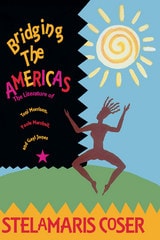
Bridging The Americas
The Literature of Paule Marshall, Toni Morrison, and Gayl JonesStelamaris Coser
Temple University Press, 1994
A literary study of three important black women writers, this book examines the "inter-American" characteristics in the work of Marshall, Morrison, and Jones, including detailed discussions of Morrison's Song of Solomon and Tar Baby, Jones's Corregidora and Song of Anninho, and Marshall's The Chose Place, The Timeless People.
Coser defines the inter-American characteristics in these authors' novels as a connection based on a common African heritage and a shared legacy of colonialism and racism. These three authors redefine the boundaries between the Americas, bridging the "extended Caribbean" that stretches from the U.S. Atlantic coast to Brazil. Their work reinterprets ethnic and sexual identity. Issues of race, class, and nationality overlap. History and identity are reinvented.
To explore the collective forms of resistance and cultural processes in Brazil, the Caribbean, and the United States, Coser also makes provocative connections between the visibility of black women writers and the popularity of male Latin American novelists like Carlos Fuentes and Gabriel Garcia Marquéz.

Broken Silences
Interviews with Black and White Women WritersEdited by Shirley M Jordan
Rutgers University Press, 1993
In these 20 interviews with women writers of fiction, Jordan, who teaches at Hampton University in Virginia, attempts to plumb the relations between black and white women in fiction and in life, and to explore the creative process. Although the book suffers from lengthy discussions of somewhat obscure work, the interviewees, most of whom have portrayed female characters of a race other than their own, offer intriguing, often conflicting observations about the primacy of race, gender or class. Kaye Gibbons ( Ellen Foster ) suggests that rural locations offer commonality to black and white Southern women; Marita Golden ( Long Distance Life ) observes that white writers emphasize female beauty while black writers focus on character. This book may be a useful supplement to literature courses.
From Library Journal
The message derived from the candid and articulate women interviewed here is, as Belva Plain states, "you learn as you live together." Editor Jordan (Hampton Univ., Virginia) has opened a dialog on writing and race relations by publishing these interviews with 20 significant contemporary black and white women writers, from Alice Childress and Joyce Carol Oates to Mildred Pitts Walker. The substance of these writers' thoughts is that the commonality of women's experience informs the genuine portrayal of a character as much as does the writer's understanding of her blackness or whiteness. This special book, so different from others that examine the writing process, is likely to stimulate dialog among women and to provoke serious study of many excellent women writers working today. Recommended for all collections supporting the study of literature, women's studies, and race relations.
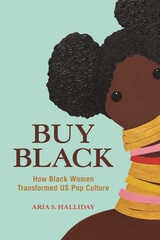
Buy Black
How Black Women Transformed US Pop CultureAria S. Halliday
University of Illinois Press, 2022
Far-ranging and bold, Buy Black reveals what attitudes inform a contemporary Black sensibility based in representation and consumerism. It also traces the parameters of Black symbolic power, mapping the sites where intraracial ideals of blackness, womanhood, beauty, play, and sexuality meet and mix in consumer and popular culture.