Results by title
61 books match the query 'American West' and 6 start with b
Basques of the American West
New and Collected Essays on History and EthnicityRichard W. Etulain
University of Nevada Press, 2026
This collection offers readers a thoughtful and engaging look at the enduring presence and influence of Basques across the cultural and historical landscape of the American West.
Battle Against Extinction
Native Fish Management in the American WestEdited by W. L. Minckley and James E. Deacon; Foreword by Stewart L. Udall
University of Arizona Press, 1991
Nearly a third of the native fish fauna of North America lives in the arid West; this book traces their decline toward extinction as a result of human interference and the threat to their genetic diversity posed by decreases in their populations. What can be done to slow or end this tragedy? As the most comprehensive treatment ever attempted on the subject, Battle Against Extinction shows how conservation efforts have been or can be used to reverse these trends.
In covering fishes in arid lands west of the Mississippi Valley, the contributors provide a species-by-species appraisal of their status and potential for recovery, bringing together in one volume nearly all of the scattered literature on western fishes to produce a monumental work in conservation biology. They also ponder ethical considerations related to the issue, ask why conservation efforts have not proceeded at a proper pace, and suggest how native fish protection relates to other aspects of biodiversity planetwide. Their insights will allow scientific and public agencies to evaluate future management of these animal populations and will offer additional guidance for those active in water rights and conservation biology.
First published in 1991, Battle Against Extinction is now back in print and available as an open-access e-book thanks to the Desert Fishes Council.

Battle Against Extinction
Native Fish Management in the American WestEdited by W. L. Minckley and James E. Deacon; Foreword by Stewart L. Udall
University of Arizona Press, 1991
Nearly a third of the native fish fauna of North America lives in the arid West; this book traces their decline toward extinction as a result of human interference and the threat to their genetic diversity posed by decreases in their populations. What can be done to slow or end this tragedy? As the most comprehensive treatment ever attempted on the subject, Battle Against Extinction shows how conservation efforts have been or can be used to reverse these trends.
In covering fishes in arid lands west of the Mississippi Valley, the contributors provide a species-by-species appraisal of their status and potential for recovery, bringing together in one volume nearly all of the scattered literature on western fishes to produce a monumental work in conservation biology. They also ponder ethical considerations related to the issue, ask why conservation efforts have not proceeded at a proper pace, and suggest how native fish protection relates to other aspects of biodiversity planetwide. Their insights will allow scientific and public agencies to evaluate future management of these animal populations and will offer additional guidance for those active in water rights and conservation biology.
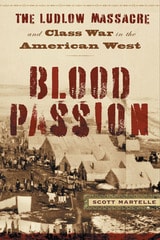
Blood Passion
The Ludlow Massacre and Class War in the American West, First Paperback EditionScott Martelle
Rutgers University Press, 2008
By early April 1914, Colorado Governor Elias Ammons thought the violence in his state’s strike-bound southern coal district had eased enough that he could begin withdrawing the Colorado National Guard, deployed six months earlier as military occupiers. But Ammons misread the signals, and on April 20, 1914, a full-scale battle erupted between the remaining militiamen and armed strikers living in a tent colony at the small railroad town of Ludlow. Eight men were killed in the fighting, which culminated in the burning of the colony. The next day, the bodies of two women and eleven children were found suffocated in a below-ground shelter. The “Ludlow Massacre,” as it quickly became known, launched a national call-to-arms for union supporters to join a ten-day guerrilla war along more than two hundred miles of the eastern Rockies. The convulsion of arson and violence killed more than thirty people and didn’t end until President Woodrow Wilson sent in the U.S. Army. Overall at least seventy-five men, women, and children were killed in seven months, likely the nation’s deadliest labor struggle.
In Blood Passion, journalist Scott Martelle explores this little-noted tale of political corruption and repression and immigrants’ struggles against dominant social codes of race, ethnicity, and class. More than a simple labor dispute, the events surrounding Ludlow embraced some of the most volatile social movements of the early twentieth century, pitting labor activists, socialists, and anarchists against the era’s powerful business class, including John D. Rockefeller, Jr., and helped give rise to the modern twins of corporate public relations and political “spin.” But at its heart, Blood Passion is the dramatic story of small lives merging into a movement for change and of the human struggle for freedom and dignity.
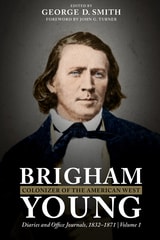
Brigham Young, Colonizer of the American West
Diaries and Office Journals, 1832–1871George D. Smith
Signature Books, 2019
Thus, by 1877, some 400 Mormon settlements spanned the western frontier from Salt Lake City to outposts in Idaho, Nevada, Arizona, Wyoming, and California. As prophet of the LDS Church and governor of the proposed State of Deseret, Young led several campaigns for Utah statehood while defending polygamy and local sovereignty. His skillful and authoritarian leadership led historian Bernard de Voto to classify him as an “American genius,” responsible for turning Joseph Smith’s visions “into the seed of life.”
Young’s diaries and journals reveal a man dedicated to his church, defensive of his spiritual and temporal claims to authority, and determined to create a modern Zion within the Utah desert. Editor George D. Smith’s careful organization and annotation of Young’s personal writings provide insights into the mind of Mormonism’s dynamic church leader and frontier statesman.
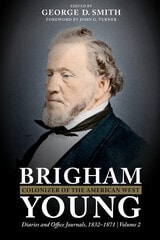
Brigham Young, Colonizer of the American West
Diaries and Office Journals, 1832–1871: Volume 2George D. Smith
Signature Books, 2021
Thus, by 1877, some 400 Mormon settlements spanned the western frontier from Salt Lake City to outposts in Idaho, Nevada, Arizona, Wyoming, and California. As prophet of the LDS Church and governor of the proposed State of Deseret, Young led several campaigns for Utah statehood while defending polygamy and local sovereignty. His skillful and authoritarian leadership led historian Bernard de Voto to classify him as an “American genius,” responsible for turning Joseph Smith’s visions “into the seed of life.”
Young’s diaries and journals reveal a man dedicated to his church, defensive of his spiritual and temporal claims to authority, and determined to create a modern Zion within the Utah desert. Editor George D. Smith’s careful organization and annotation of Young’s personal writings provide insights into the mind of Mormonism’s dynamic church leader and frontier statesman.