64 books match the query 'American prose literature' and 3 start with b
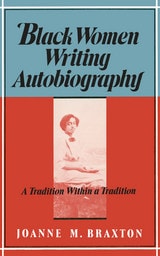
cover of Black Women Writing Autobiography: A Tradition Within a Tradition

Black Women Writing Autobiography

A Tradition Within a Tradition

Joanne Braxton

Temple University Press, 1990
"In this illuminating study Joanne Braxton shows the continuity and tradition in the writing of Afra-American women. An important work for teachers and students of Literature, History, and Women's Studies." --Gerda Lerner "As black American women, we are born into a mystic sisterhood, and we live our lives within a magic circle, a realm of shared language, reference, and allusion within the veil of our blackness and our femaleness. We have been as invisible to the dominant culture as rain; we have been knowers, but we have not been known." Joanne Braxton argues for a redefinition of the genre of black American autobiography to include the images of women as well as their memoirs, reminiscences, diaries, and journals--as a corrective to both black and feminist literary criticism. Beginning with slave narratives and concluding with modern autobiography, she deals with individual works as representing stages in a continuum and situates these works in the context of other writings by both black and white writers. Braxton demonstrates that the criteria used to define the slave narrative genre are inadequate for analyzing Harriet "Linda Brent" Jacobs's pseudonymously published Incidents in the Life of a Slave Girl: Written by Herself (1861). She examines "sass" as a mode of women's discourse and a weapon of self-defense, and she introduces the "outraged mother" as a parallel to the articulate hero archetype. Not even emancipation authorized black women to define themselves or address an audience. Late-nineteenth-century accounts in the form of confessional spiritual autobiographies, travelogue/adventure stories, and slave memoirs enabled such women as Jarena Lee, Rebecca Cox Jackson, Elizabeth Keckley, Susie King Taylor, as well as Harriet Tubman and Sojourner Truth to tell their own extraordinary stories and to shed light on the thousands of lives obscured by illiteracy and sexual and racial oppression. In her diaries, Charlotte Forten Grimké, the gifted poet, epitomizes the problems faced by a well-educated, extremely articulate black woman attempting to find a public voice in America. Moving into the twentieth century, Braxton analyzes the memoir of Ida B. Wells, journalist and anti-lynching activist, and the work of Zora Neale Hurston and Era Bell Thompson. They represent the first generation of black female autobiographers who did not continually come into contact with former slaves and who transcended the essential struggle for survival that occupied earlier writings. For the contemporary black woman autobiographer, the quest for personal fulfillment is the central theme. Braxton concludes with Maya Angelou's I Know Why the Caged Bird Sings (1996), which represents the black woman of the 1960s who has found the place to recreate the self in her own image--the place all the others had been searching for. "Braxton's book is scrupulously researched. She has been creative in finding resources and courageous in analyzing and interpreting her finds. This is the word of a diligent mind. The material is mountainous, yet the book sings. Braxton is a poet. Thank goodness." --Maya Angelou "Joanne Braxton's essays on black women's autobiographies delineate and illuminate the personal and historical dimension of an important literary tradition. Emphasizing the distinct character of Afra-American women's experience and relations with each other, she ground their writing of their lives in the struggles and triumphs of the lives they actually led." --Elizabeth Fox-Genovese "In this compelling and lucid study examining the content, context, and continuum of black women autobiographers, Braxton clears the place for it in the curriculum: at the center of black and feminist studies." --Paula Giddings "This is the fullest and most sympathetic study of black American autobiographers I know. By paying close attention to private and public history, to social networks and literary kinships, to narrative structures and patterns of imagery, Braxton leads her readers to see the black woman 'at the center of her own [written] experiences.' At once scholarly and passionate, Braxton's critique will immediately secure her a place among the leading analysts of black American autobiography." --Albert E. Stone "A highly readable and original contribution to the important fields of Afro-American studies, feminist criticism, and autobiographical narrative." --Elaine Showalter "Rich in empathy and insight, Joanne M. Braxton's trailblazing study attends to both the textual and historical dimensions of a powerful literary inheritance. She brings to bear a keen sense of the departures and continuities of which any tradition consists; and an appreciation of the distinctive Afro-American dynamic between literary convention and a vernacular substrate. Braxton doesn't just read--she listens." --Henry Louis Gates, Jr. "Joanne Braxton makes a unique contribution to the scholarship of American autobiography. Her focus on the outraged mother as a figure of rebellion is a significant challenge to our conventional understanding of autobiographical acts." --Hazel Carby "This is the most inclusive and thoughtful literary history of black American women's autobiography in existence…It is not just a collection of essays; it is well knit together and displays multiple traditions as they evolved and are in the process of evolving still." --William L. Andrews "This book marks another milestone in the critical appraisal of American autobiographical writings. In tracing the evolution of a tradition of black women in autobiography in America, Braxton takes us on the first journey of this kind: the black American woman's search for a dignified, self-defining identity through the rejection of traditional female roles. This book sets the tone for future studies of black women's autobiographies." --Nellie McKay
[more]
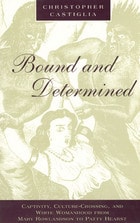
cover of Bound and Determined: Captivity, Culture-Crossing, and White Womanhood from Mary Rowlandson to Patty Hearst

Bound and Determined

Captivity, Culture-Crossing, and White Womanhood from Mary Rowlandson to Patty Hearst

Christopher Castiglia

University of Chicago Press, 1996

In Bound and Determined, Christopher Castiglia gives shape for the first time to a tradition of American women's captivity narrative that ranges across three centuries, from Puritan colonist Mary Rowlandson's abduction by Narragansett Indians to Patty Hearst's kidnapping by the Symbionese Liberation Army.

Examining more than sixty accounts by women captives, as well as novels ranging from Susanna Rowson's eighteenth-century classic Rueben and Rachel to today's mass-market romances, Castiglia investigates paradoxes central to the genre. In captivity, women often find freedom from stereotypical roles as helpless, dependent, sexually vulnerable, and xenophobic. In their condemnations of their non-white captors, they defy assumptions about race that undergird their own societies. Castiglia questions critical conceptions of captivity stories as primarily an appeal to racism and misogyny, and instead finds in them an appeal of a much different nature: as all-too-rare stories of imaginative challenges to rigid gender roles and racial ideologies.

Whether the women of these stories resist or escape captivity, endure until they are released, or eventually choose to live among their captors, they end up with the power to be critical of both cultures. Castiglia shows that these compelling narratives, with their boundary crossings and persistent explorations of cultural divisions and differences, have significant implications for current critical investigations into the construction of gender, race, and nation.
[more]
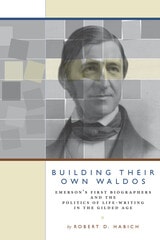
cover of Building Their Own Waldos: Emerson’s First Biographers and the Politics of Life-Writing in the Gilded Age

Building Their Own Waldos

Emerson’s First Biographers and the Politics of Life-Writing in the Gilded Age

Robert D. Habich

University of Iowa Press, 2011

@font-face { font-family: "Calibri";}p.MsoNormal, li.MsoNormal, div.MsoNormal { margin: 0in 0in 0.0001pt; font-size: 12pt; font-family: "Times New Roman"; }h4 { margin: 12pt 0in 3pt; page-break-after: avoid; font-size: 14pt; font-family: "Times New Roman"; }span.Heading4Char { font-family: Calibri; font-weight: bold; }div.Section1 { page: Section1; }

By the end of the nineteenth century, Ralph Waldo Emerson was well on his way to becoming the “Wisest American” and the “Sage of Concord,” a literary celebrity and a national icon. With that fame came what Robert Habich describes as a blandly sanctified version of Emerson held widely by the reading public. Building Their Own Waldos sets out to understand the dilemma faced by Emerson’s early biographers: how to represent a figure whose subversive individualism had been eclipsed by his celebrity, making him less a representative of his age than a caricature of it.

Drawing on never-before-published letters, diaries, drafts, business records, and private documents, Habich Emerson’s First Biographers explores the making of a cultural hero through the stories of Emerson’s first biographers—George Willis Cooke, a minister most recently from Indianapolis who considered himself a disciple; the English reformer and newspaper mogul Alexander Ireland, a friend for half a century; Moncure D. Conway, a Southern abolitionist then residing in London, who called Emerson his “spiritual father and intellectual teacher”; the poet and medical professor Oliver Wendell Holmes, with Emerson a member of Boston’s gathering of literary elite, the Saturday Club; James Elliot Cabot, the family’s authorized biographer, an architect and amateur philosopher with unlimited access to Emerson’s unpublished papers; and Emerson’s son Edward, a physician and painter whose father had passed over him as literary executor in favor of Cabot.

Just as their biographies reveal a complex, socially engaged Emerson, so too do the biographers’ own stories illustrate the real-world perils, challenges, and motives of life-writing in the late nineteenth century, when biographers were routinely vilified as ghoulish and disreputable and biography as a genre underwent a profound redefinition. Building Their Own Waldos is at once a revealing look at Emerson’s constructed reputation, a case study in the rewards and dangers of Victorian life-writing, and the story of six authors struggling amidst personal misfortunes and shifting expectations to capture the elusive character of America’s “representative man,” as they knew him and as they needed him to be.

[more]