Results by title
85 books match the query 'Americas' and 6 start with b

Banana Wars
Power, Production, and History in the AmericasSteve Striffler and Mark Moberg, eds.
Duke University Press, 2003
Bringing together the work of anthropologists, sociologists, economists, historians, and geographers, this collection reveals how the banana industry marshaled workers of differing nationalities, ethnicities, and languages and, in so doing, created unprecedented potential for conflict throughout Latin American and the Caribbean. The frequently abusive conditions that banana workers experienced, the contributors point out, gave rise to one of Latin America’s earliest and most militant labor movements. Responding to both the demands of workers’ organizations and the power of U.S. capital, Latin American governments were inevitably affected by banana production. Banana Wars explores how these governments sometimes asserted their sovereignty over foreign fruit companies, but more often became their willing accomplices. With several essays focusing on the operations of the extraordinarily powerful United Fruit Company, the collection also examines the strategies and reactions of the American and European corporations seeking to profit from the sale of bananas grown by people of different cultures working in varied agricultural and economic environments.
Contributors. Philippe Bourgois, Marcelo Bucheli, Dario Euraque, Cindy Forster, Lawrence Grossman, Mark Moberg, Laura T. Raynolds, Karla Slocum, John Soluri, Steve Striffler, Allen Wells
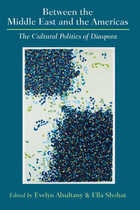
Between the Middle East and the Americas
The Cultural Politics of DiasporaEdited by Evelyn Alsultany and Ella Shohat
University of Michigan Press, 2013
Between the Middle East and the Americas: The Cultural Politics of Diaspora traces the production and circulation of discourses about "the Middle East" across various cultural sites, against the historical backdrop of cross-Atlantic Mahjar flows. The book highlights the fraught and ambivalent situation of Arabs/Muslims in the Americas, where they are at once celebrated and demonized, integrated and marginalized, simultaneously invisible and spectacularly visible. The essays cover such themes as Arab hip-hop's transnational imaginary; gender/sexuality and the Muslim digital diaspora; patriotic drama and the media's War on Terror; the global negotiation of the Prophet Mohammad cartoons controversy; the Latin American paradoxes of Turcophobia/Turcophilia; the ambiguities of the bellydancing fad; French and American commodification of Rumi spirituality; the reception of Iranian memoirs as cultural domestication; and the politics of translation of Turkish novels into English. Taken together, the essays analyze the hegemonic discourses that position "the Middle East" as a consumable exoticized object, while also developing complex understandings of self-representation in literature, cinema/TV, music, performance, visual culture, and digital spaces. Charting the shifting significations of differing and overlapping forms of Orientalism, the volume addresses Middle Eastern diasporic practices from a transnational perspective that brings postcolonial cultural studies methods to bear on Arab American studies, Middle Eastern studies, and Latin American studies. Between the Middle East and the Americas disentangles the conventional separation of regions, moving beyond the binarist notion of "here" and "there" to imaginatively reveal the thorough interconnectedness of cultural geographies.

Beyond Bondage
Free Women of Color in the AmericasEdited by David Barry Gaspar and Darlene Clark Hine
University of Illinois Press, 2004
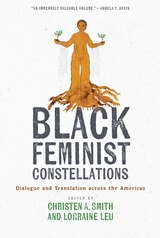
Black Feminist Constellations
Dialogue and Translation across the AmericasEdited by Christen A. Smith and Lorraine Leu
University of Texas Press, 2023
A collection of essays, interviews, and conversations by and between scholars, activists, and artists from Latin America and the Caribbean that paints a portrait of Black women's experiences across the region.
Black women in Latin America and the Caribbean suffer a triple erasure: as Black people, as women, and as non-English speakers in a global environment dominated by the Anglophone North. Black Feminist Constellations is a passionate and necessary corrective. Focused on and written by Black women of the southern Americas, the original works composing this volume make legible the epistemologies that sustain radical scholarship, art, and political organizing by Black women everywhere.
In essays, poems, and dialogues, the writers in Black Feminist Constellations reimagine liberation from the perspectives of radical South American and Caribbean Black women thinkers. The volume’s methodologically innovative approach reflects how Black women come together to theorize the world and challenges the notion that the university is the only site where knowledge can emerge. A major work of intellectual history, Black Feminist Constellations amplifies rarely heard voices, centers the uncanonized, and celebrates the overlooked work of Black women.
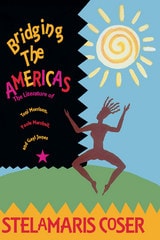
Bridging The Americas
The Literature of Paule Marshall, Toni Morrison, and Gayl JonesStelamaris Coser
Temple University Press, 1994
A literary study of three important black women writers, this book examines the "inter-American" characteristics in the work of Marshall, Morrison, and Jones, including detailed discussions of Morrison's Song of Solomon and Tar Baby, Jones's Corregidora and Song of Anninho, and Marshall's The Chose Place, The Timeless People.
Coser defines the inter-American characteristics in these authors' novels as a connection based on a common African heritage and a shared legacy of colonialism and racism. These three authors redefine the boundaries between the Americas, bridging the "extended Caribbean" that stretches from the U.S. Atlantic coast to Brazil. Their work reinterprets ethnic and sexual identity. Issues of race, class, and nationality overlap. History and identity are reinvented.
To explore the collective forms of resistance and cultural processes in Brazil, the Caribbean, and the United States, Coser also makes provocative connections between the visibility of black women writers and the popularity of male Latin American novelists like Carlos Fuentes and Gabriel Garcia Marquéz.

Building Partnerships in the Americas
A Guide for Global Health WorkersEdited by Margo J. Krasnoff
Dartmouth College Press, 2013