Results by title
653 books match the query 'Animals' and 45 start with b
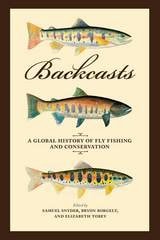
Backcasts
A Global History of Fly Fishing and ConservationEdited by Samuel Snyder, Bryon Borgelt, and Elizabeth Tobey
University of Chicago Press, 2016
Though Maclean writes of an age-old focus of all anglers—the day’s catch—he may as well be speaking to another, deeper accomplishment of the best fishermen and fisherwomen: the preservation of natural resources.
Backcasts celebrates this centuries-old confluence of fly fishing and conservation. However religious, however patiently spiritual the tying and casting of the fly may be, no angler wishes to wade into rivers of industrial runoff or cast into waters devoid of fish or full of invasive species like the Asian carp. So it comes as no surprise that those who fish have long played an active, foundational role in the preservation, management, and restoration of the world’s coldwater fisheries. With sections covering the history of fly fishing; the sport’s global evolution, from the rivers of South Africa to Japan; the journeys of both native and nonnative trout; and the work of conservation organizations such as the Federation of Fly Fishers and Trout Unlimited, Backcasts casts wide.
Highlighting the historical significance of outdoor recreation and sports to conservation in a collection important for fly anglers and scholars of fisheries ecology, conservation history, and environmental ethics, Backcasts explores both the problems anglers and their organizations face and how they might serve as models of conservation—in the individual trout streams, watersheds, and landscapes through which these waters flow.
Bacula of North American Mammals
William Henry Burt
University of Michigan Press, 1960
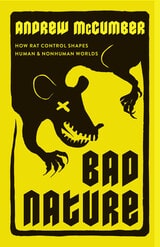
Bad Nature
How Rat Control Shapes Human and Nonhuman WorldsAndrew McCumber
University of Chicago Press, 2025
Apart from the occasional pet owner who has rats, most people regard rats as disease-carrying nocturnal pests, scurrying around dumpsters and dragging slices of pizza through New York City subways. Since rats are seemingly omnipresent in human life, why do we harbor such negative feelings about them, and why are they among the creatures most frequently targeted for systematic extermination?
In Bad Nature, sociologist Andrew McCumber draws out the cultural underpinnings of rat extermination across three countries and two continents. Drawing from ethnographic, interview, and textual data from the frigid prairie of Alberta, Canada; the heart of downtown Los Angeles, California; and the iconic Galápagos Islands of Ecuador, McCumber studies how humans have sought to suppress and exterminate rat populations in a variety of environmental, social, and political situations. He shows how, in these disparate locations, rat control is a social practice that draws and clarifies the spatial and symbolic boundaries between “good” and “bad” forms of nature. Rats are near the bottom of a symbolic hierarchy of species that places human life at the top, companion animals and majestic wildlife just below them, and the “invasive species” that call for systematic extermination at the very bottom. This hierarchy of living things that places rats at the bottom, McCumber argues, mirrors human systems of social inequalities and power dynamics.
Both original and engaging, Bad Nature urges readers to consider, when charting a just and sustainable future, where will the rats be placed in the worlds we envision?
Bad Nature
How Rat Control Shapes Human and Nonhuman WorldsAndrew McCumber
University of Chicago Press, 2025
Offers insights into the social and cultural implications of humans’ relationships with rats and the natural world.
Apart from the occasional pet owner who has rats, most people regard rats as disease-carrying nocturnal pests, scurrying around dumpsters and dragging slices of pizza through New York City subways. Since rats are seemingly omnipresent in human life, why do we harbor such negative feelings about them, and why are they among the creatures most frequently targeted for systematic extermination?
In Bad Nature, sociologist Andrew McCumber draws out the cultural underpinnings of rat extermination across three countries and two continents. Drawing from ethnographic, interview, and textual data from the frigid prairie of Alberta, Canada; the heart of downtown Los Angeles, California; and the iconic Galápagos Islands of Ecuador, McCumber studies how humans have sought to suppress and exterminate rat populations in a variety of environmental, social, and political situations. He shows how, in these disparate locations, rat control is a social practice that draws and clarifies the spatial and symbolic boundaries between “good” and “bad” forms of nature. Rats are near the bottom of a symbolic hierarchy of species that places human life at the top, companion animals and majestic wildlife just below them, and the “invasive species” that call for systematic extermination at the very bottom. This hierarchy of living things that places rats at the bottom, McCumber argues, mirrors human systems of social inequalities and power dynamics.
Both original and engaging, Bad Nature urges readers to consider, when charting a just and sustainable future, where will the rats be placed in the worlds we envision?
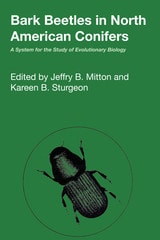
Bark Beetles in North American Conifers
A System for the Study of Evolutionary BiologyEdited by Jeffry B. Mitton and Kareen B. Sturgeon
University of Texas Press, 1982
Because they prey upon a wide variety of conifers, bark beetles have a major impact upon western forests. In most of the western states, for example, we have witnessed bark beetles in epidemic outbreaks, attacking and damaging ponderosa pine, limber pine, and other hosts.
The ecosystem of bark beetle and host tree is a highly coevolved community of organisms in which the evolution of one member of the community significantly influences the evolution of the other. Largely because of the enormous economic impact these insects exert on the management of our forests, few other such communities have been studied so extensively. Bark Beetles in North American Conifers brings together in one volume both theory and a wealth of empirical data gathered by researchers from all the fields in which bark beetles are studied: ecology, evolutionary biology, population genetics, entomology, and forestry.
Topics covered include the life cycle of bark beetles and their population dynamics, their genetic variation and evolutionary mechanisms, the evolution and systematics of the major groups of bark beetles, pheromone production and its implications for coevolution among these organisms, the interaction between bark beetles and their predators, host resistance and susceptibility, the relationship of parasites and symbiotic micro-organisms in general, and management and control of bark beetles based on sound ecological and evolutionary concepts. The concluding section of the book summarizes the dynamics of the coevolved system of bark beetle and host tree and discusses controversial issues for which this system may provide important answers.
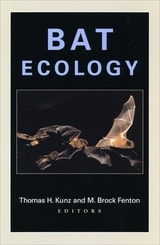
Bat Ecology
Edited by Thomas H. Kunz and M. Brock Fenton
University of Chicago Press, 2003
The first part of the book covers the life history and behavioral ecology of bats, from migration to sperm competition and natural selection. The next section focuses on functional ecology, including ecomorphology, feeding, and physiology. In the third section, contributors explore macroecological issues such as the evolution of ecological diversity, range size, and infectious diseases (including rabies) in bats. A final chapter discusses conservation challenges facing these fascinating flying mammals.
Bat Ecology is the most comprehensive state-of-the-field collection for scientists and researchers.
Contributors:
John D. Altringham, Robert M. R. Barclay, Tenley M. Conway, Elizabeth R. Dumont, Peggy Eby, Abigail C. Entwistle, Theodore H. Fleming, Patricia W. Freeman, Lawrence D. Harder, Gareth Jones, Linda F. Lumsden, Gary F. McCracken, Sharon L. Messenger, Bruce D. Patterson, Paul A. Racey, Jens Rydell, Charles E. Rupprecht, Nancy B. Simmons, Jean S. Smith, John R. Speakman, Richard D. Stevens, Elizabeth F. Stockwell, Sharon M. Swartz, Donald W. Thomas, Otto von Helversen, Gerald S. Wilkinson, Michael R. Willig, York Winter
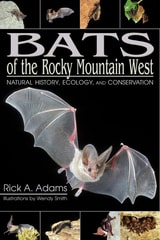
Bats of the Rocky Mountain West
Natural History, Ecology, and ConservationRick A. Adams
University Press of Colorado, 2003
Bats of the Rocky Mountain West begins with a general discussion of bat biology and evolution as well as regional physiography and zoogeography. In addition, Adams describes - based on the results of extensive research - the behavior and ecology of the 31 species of bats found in Montana, Idaho, Wyoming, Utah, Colorado, New Mexico, and Arizona. Naturalists and biologists alike will benefit from the detailed species descriptions, color photographs and illustrations, distribution maps, and echolocation sonograms. Bats of the Rocky Mountain West is a unique and valuable reference for professional bat biologists, naturalists, and wildlife enthusiasts interested in the conservation and ecology of bats in the region.
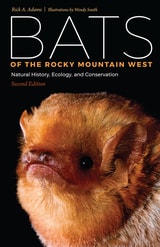
Bats of the Rocky Mountain West
Natural History, Ecology, and ConservationRick A. Adams
University Press of Colorado, 2025
In the twenty years since the original publication of Bats of the Rocky Mountain West, chiropterology (bat science) has exploded, significantly altering our understanding of the ecology, behavior, distribution, and conservation of one of the world's most enigmatic mammals. This notably updated second edition further brings to life the wonderful world of bats with beautiful illustrations and photography that grip the imagination and reveal the magnificent natural history of the only true flying mammal. In addition, thirty-two accounts of regional species with photographs, range maps, and echolocation sonograms report informative and thoroughly revised findings on bats now living in the Rocky Mountain West. Leave any preconceived notions behind and learn the real-life biology of bats, which eclipses the fabled tales of the crypt and macabre.
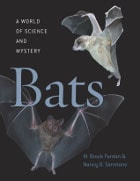
Bats
A World of Science and MysteryM. Brock Fenton and Nancy B. Simmons
University of Chicago Press, 2015
Bats: A World of Science and Mystery presents these fascinating nocturnal creatures in a new light. Lush, full-color photographs portray bats in flight, feeding, and mating in views that show them in exceptional detail. The photos also take the reader into the roosts of bats, from caves and mines to the tents some bats build out of leaves. A comprehensive guide to what scientists know about the world of bats, the book begins with a look at bats’ origins and evolution. The book goes on to address a host of questions related to flight, diet, habitat, reproduction, and social structure: Why do some bats live alone and others in large colonies? When do bats reproduce and care for their young? How has the ability to fly—unique among mammals—influenced bats’ mating behavior? A chapter on biosonar, or echolocation, takes readers through the system of high-pitched calls bats emit to navigate and catch prey. More than half of the world’s bat species are either in decline or already considered endangered, and the book concludes with suggestions for what we can do to protect these species for future generations to benefit from and enjoy.
From the tiny “bumblebee bat”—the world’s smallest mammal—to the Giant Golden-Crowned Flying Fox, whose wingspan exceeds five feet, A Battery of Bats presents a panoramic view of one of the world’s most fascinating yet least-understood species.
Bear Man of Admiralty Island
A Biography of Allen E. HasselborgJohn Howe
University of Alaska Press, 1996
Beasts of the Earth
Animals, Humans, and DiseaseTorrey, E. Fuller
Rutgers University Press, 2014
Humans have lived in close proximity to other animals for thousands of years. Recent scientific studies have even shown that the presence of animals has a positive effect on our physical and mental health. People with pets typically have lower blood pressure, show fewer symptoms of depression, and tend to get more exercise.
But there is a darker side to the relationship between animals and humans. Animals are carriers of harmful infectious agents and the source of a myriad of human diseases. In recent years, the emergence of high-profile illnesses such as AIDS, SARS, West Nile virus, and bird flu has drawn much public attention, but as E. Fuller Torrey and Robert H. Yolken reveal, the transfer of deadly microbes from animals to humans is neither a new nor an easily avoided problem.
Beginning with the domestication of farm animals nearly 10,000 years ago, Beasts of the Earth traces the ways that human-animal contact has evolved over time. Today, shared living quarters, overlapping ecosystems, and experimental surgical practices where organs or tissues are transplanted from non-humans into humans continue to open new avenues for the transmission of infectious agents. Other changes in human behavior like increased air travel, automated food processing, and threats of bioterrorism are increasing the contagion factor by transporting microbes further distances and to larger populations in virtually no time at all.
While the authors urge that a better understanding of past diseases may help us lessen the severity of some illnesses, they also warn that, given our increasingly crowded planet, it is not a question of if but when and how often animal-transmitted diseases will pose serious challenges to human health in the future.
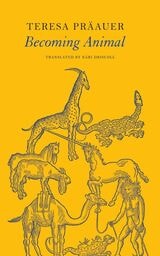
Becoming Animal
Teresa Präauer
Seagull Books, 2024
In this gripping philosophical and cultural exploration, Teresa Präauer sets out to investigate figures of transformation, transmission, and translation—across languages, cultures, genres, media, species, and spaces. Hybrids, chimeras, monsters, and liminal creatures of all sorts inhabit these pages, as indeed they do the pages of the cultural archive from Antiquity and the Middle Ages to the present day: everything from the harpies, ape-men, and cynocephali that inhabit the edges of medieval maps and taxonomies to the Krampuses and Furries that roam through Alpine villages and convention centers today. Yet these chimeras are not aberrations; rather, they reveal an essential truth about culture and artistic expression.
What emerges in Becoming Animal is a kaleidoscopic image of culture as the constant probing of the limits of the sayable, as an unending process of attempting to capture in words and symbols that which cannot be pinned down.

Best of Companions
Henry Ford and the Protection of Birdlife in AmericaRick Simek
University of Michigan Press, 2027
Immediately following the success of the Model T, Henry Ford turned to how he could apply his newfound wealth toward protecting birdlife on his new rural acreage in Dearborn, Michigan. Best of Companions weaves Henry Ford’s personal and very public participation in bird protection into the overall national push to save disappearing North American birdlife in the early twentieth century.
Acting on his love of birds, Ford formed acquaintances and friendships with some of the most prominent North American wildlife conservation activists of the time. Michigan Audubon Society President Jefferson Butler was recruited to plan, establish, and promote an expansive, visionary bird protection project known as Henry Ford’s Bird Farm. Highlighting the economic benefit of birds, the farm modeled how farmers could use both natural and artificial means to boost populations of native insectivorous bird species on their land, reducing crop damage from insects and increasing agricultural productivity. Best of Companions takes readers on an exciting journey through Ford’s ambitious efforts to secure passage of the first federal bird protection law in the United States, to support the Migratory Bird Treaty with Canada, and to improve the lives of farmers.
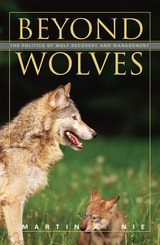
Beyond Wolves
The Politics Of Wolf Recovery And ManagementMartin A. Nie
University of Minnesota Press, 2003
Looks at the next stages of the controversy over wolf recovery
Since 1995, when the U.S. Fish and Wildlife Service released Canadian gray wolves into Yellowstone National Park as part of its wolf recovery program, reintroduction has been widely challenged in public forums and sensationalized in the media. This conflict has pitted western ranchers and property rights activists against environmental groups, highlighting starkly contrasting political perspectives. In this informed account, Martin A. Nie examines not only the future of wolf recovery but also the issues that will define debates around the politics of wildlife management, animal rights issues, and other flash points. The result is a revelatory look at the way the democratic process works when the subject is an environmental hot-button issue.
Examining the wolf recovery program from a policy-making perspective, Nie looks at programs in Alaska, the Lake Superior region, the Northern Rockies, the Southwest, and New England and upstate New York. He analyzes the social, political, and cultural backdrop in the areas in which wolves have been reintroduced and explores such contentious issues as the role of science in public policy; the struggle between wilderness protection, resource management, and private property; and the use of stakeholders in environmental conflicts.For Nie, the debate over wolf recovery is above all a value-based political conflict that should take place in a more inclusive, participatory, and representative democratic arena. Wolves, Nie writes, are an important indicator species both biologically and politically, and in Beyond Wolves, he tells an important story of wolves and people, place and politics, that resonates far beyond the fate of America’s most misunderstood inhabitants.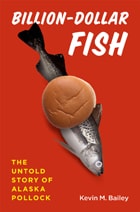
Billion-Dollar Fish
The Untold Story of Alaska PollockKevin M. Bailey
University of Chicago Press, 2013
In Billion-Dollar Fish, Kevin M. Bailey combines his years of firsthand pollock research with a remarkable talent for storytelling to offer the first natural history of Alaska pollock. Crucial to understanding the pollock fishery, he shows, is recognizing what aspects of its natural history make pollock so very desirable to fish, while at the same time making it resilient, yet highly vulnerable to overfishing. Bailey delves into the science, politics, and economics surrounding Alaska pollock in the Bering Sea, detailing the development of the fishery, the various political machinations that have led to its current management, and, perhaps most important, its impending demise. He approaches his subject from multiple angles, bringing in the perspectives of fishermen, politicians, environmentalists, and biologists, and drawing on revealing interviews with players who range from Greenpeace activists to fishing industry lawyers.
Seamlessly weaving the biology and ecology of pollock with the history and politics of the fishery, as well as Bailey’s own often raucous tales about life at sea, Billion-Dollar Fish is a book for every person interested in the troubled relationship between fish and humans, from the depths of the sea to the dinner plate.
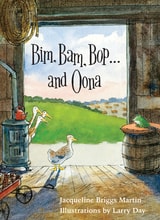
Bim, Bam, Bop . . . and Oona
Jacqueline Briggs Martin
University of Minnesota Press, 2019
An irresistible read-aloud picture book, in which a little odd-duck-out discovers her unique strengths
When these ducks go to the pond, it is Bim, Bam, Bop . . . and Oona, always last. They’re all ducks, but Bim, Bam, and Bop are runners, and Oona’s a waddler. “Last is a blot on my life,” she says to her frog friend, Roy. “I don’t feel as big as a duck should feel.” But she’s good with gizmos, Roy reminds her. So Oona tinkers with things, scraps, and strings, and eventually creates just the right gadget to get her to the pond first.
Spunky Oona will inspire and delight all who see her final triumphant creation. With its fun read-aloud words (from Brrrrrring to OOO-hoolie-hoo!), her story is wonderful to hear. Its charming illustrations invite readers to imagine our own new gizmos, and her victory reminds us to look for our own special gifts. A tale about being true to yourself, building confidence, and finding friendship, Bim, Bam, Bop . . . and Oona is sure to bring smiles to readers and listeners of all ages.
Biogeography of Reptiles and Amphibians in the Gomez Farias Region, Tamaulipas, Mexico
Paul S. Martin
University of Michigan Press, 1958
Biomechanics
An Approach to Vertebrate BiologyCarl Gans
University of Michigan Press, 1980
Biostratigraphic and Geological Significance of Planktonic Foraminifera
Marcelle K. BouDagher-Fadel
University College London, 2015
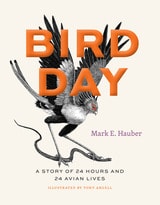
Bird Day
A Story of 24 Hours and 24 Avian LivesMark E. Hauber
University of Chicago Press, 2023
From morning to night and from the Antarctic to the equator, birds have busy days. In this short book, ornithologist Mark E. Hauber shows readers exactly how birds spend their time. Each chapter covers a single bird during a single hour, highlighting twenty-four different bird species from around the globe, from the tropics through the temperate zones to the polar regions. We encounter owls and nightjars hunting at night and kiwis and petrels finding their way in the dark. As the sun rises, we witness the beautiful songs of the “dawn chorus.” At eleven o’clock in the morning, we float alongside a common pochard, a duck resting with one eye open to avoid predators. At eight that evening, we spot a hawk swallowing bats whole, gorging on up to fifteen in rapid succession before retreating into the darkness.
For each chapter, award-winning artist Tony Angell has depicted these scenes with his signature pen and ink illustrations, which grow increasingly light and then dark as our bird day passes. Working closely together to narrate and illustrate these unique moments in time, Hauber and Angell have created an engaging read that is a perfect way to spend an hour or two—and a true gift for readers, amateur scientists, and birdwatchers.
Bird Student
An AutobiographyAn Autobiography by George Miksch Sutton
University of Texas Press, 1980
At thirteen, George Miksch Sutton planned a school of ornithology centered around his collection of bird skins, feathers, bones, nests, eggs, and a prized stuffed crow. As an adult, he became one of the most prominent ornithologists and bird artists of the twentieth century. He describes his metamorphosis from amateur to professional in Bird Student.
Born in 1898, Sutton gives us his clearest memories of his boyhood in Nebraska, Minnesota, Oregon, Illinois, Texas, and West Virginia with his closely knit family. Recognizing birds, identifying them correctly, drawing them, and writing about them became more and more important to him. His intense admiration for Louis Agassiz Fuertes had a good deal to do with his beginning to draw birds in earnest, and his correspondence and his 1916 summer visit with the generous Fuertes taught him to look at birds with the eyes of a professional artist and to consider the possibility of making ornithology his career.
By 1918, Sutton had talked himself into a job at the Carnegie Museum of Natural History in Pittsburgh, which gave him fresh opportunities to learn and travel, and his 1920 field trip to the Labrador Peninsula stimulated his lifelong interest in arctic birds. Further expeditions to James Bay, the east coast of Hudson Bay—on leave from his job as state ornithologist of Pennsylvania—and Southampton Island at the north end of Hudson Bay, in search of the elusive blue goose and its nesting grounds, give us glimpses of field methods before the days of sophisticated equipment. Sutton ends his autobiography in 1935, with an account of his graduate days at Cornell University and his position as curator of the Fuertes Memorial Collection of Birds.
Bird Student is about raising young roadrunners and owls and prairie dogs, sailing (and being stranded) in arctic waters, preparing specimens in the hold of a ship, hunting birds and caribou and bears in almost inaccessible regions, canoeing in the Far North, camping in Florida, and delivering speeches in Pennsylvania. Sutton's gift for mixing facts and philosophy lets us see the evolution of a naturalist, as his inherent curiosity and innocent enjoyment of beauty led to a permanent desire to preserve this beauty.
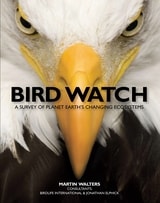
Bird Watch
A Survey of Planet Earth's Changing EcosystemsMartin Walters
University of Chicago Press, 2011
From the tufted puffin in the Pacific Northwest to the hook-billed hermit in the Brazilian rainforest, birds suffer from the effects of climate change in every corner of the globe. Scientists have found declines of up to 90 percent in some troubled bird populations and unprecedented reproductive failure in others. The most recent studies suggest dire prospects: 1,227 avian species are threatened with extinction and an additional 838 near-threatened species are urgent priorities for conservation action.
As much an indispensable guide as a timely call to action, Bird Watch is an illustrated tour of these endangered birds and their habitats. Encyclopedic in scope, this book features all 1,227 species on the International Union for Conservation of Nature (IUCN) Red List, thoroughly detailing the environmental pressures and conservation prescriptions that hold their futures in the balance. After introducing readers to the main threats to birds and regions at high risk, Bird Watch presents a visually stunning and scientifically accurate flight over the major bird habitats, including tropical forests; temperate and northern forests; deserts; mountains; grasslands; and Mediterranean, marine, freshwater, and oceanic islands. The volume concludes with an overview of bird species by region—categorized by family within each region, and a guide to the world’s best birding sites. Produced in cooperation with BirdLife International, Bird Watch is a celebration of the beauty and diversity of birds and their habitats—and a warning of the dangers they face around the world.
Birding English
Exploring the History of a Language Through 50 BirdsJeremy Withers
University of Iowa Press, 2026
Birds and Beasts of Ancient Mesoamerica
Animal Symbolism in the Postclassic PeriodSusan Milbrath
University Press of Colorado, 2025
Representations of animal deities in Mesoamerica can be traced back at least to Middle Preclassic Olmec murals, stone carvings, and portable art such as lapidary work and ceramics. Throughout the history of Mesoamerica real animals were merged with fantastical creatures, creating zoological oddities not unlike medieval European bestiaries. According to Spanish chroniclers, the Aztec emperor was known to keep exotic animals in royal aviaries and zoos. The Postclassic period was characterized by an iconography that was shared from central Mexico to the Yucatan peninsula and south to Belize. In addition to highlighting the symbolic importance of nonhuman creatures in general, this volume focuses on the importance of the calendrical and astronomical symbolism associated with animals and birds.
Inspired by and dedicated to the work of Mesoamerican scholar Cecelia Klein and featuring imagery from painted books, monumental sculpture, portable arts, and archaeological evidence from the field of zooarchaeology, Birds and Beasts of Ancient Mesoamerica highlights the significance of the animal world in Postclassic and early colonial Mesoamerica. It will be important to students and scholars studying Mesoamerican art history, archaeology, ethnohistory, and zoology.
Birds and Other Wildlife of South Central Texas
A HandbookBy Edward A. Kutac and S. Christopher Caran
University of Texas Press, 1993
Nature takes a surprising turn in the heart of Texas. The flat Gulf Coastal Plains, which become the fertile Blackland Prairies in Central Texas, end abruptly at the Balcones Escarpment, one of the state’s most dramatic geological features, and the rolling, more sparsely vegetated Hill Country begins. The animal life varies as dramatically as the land. More than 400 species of birds alone, nearly three-fourths of all Texas birds, can be spotted in the region.
This handbook offers a concise natural history of Central Texas and a complete checklist of all native and naturalized vertebrate animals, including birds, mammals, reptiles, amphibians, and fish, as well as invertebrates that include butterflies and land snails. The listings cite both scientific and common names for each species, relative abundance in the region, and preferred habitats.
A distinguishing feature of the handbook is its list of parks and recreational areas in the region, which includes the counties of Bastrop, Bell, Bexar, Blanco, Burleson, Burnet, Caldwell, Comal, Fayette, Gillespie, Gonzales, Guadalupe, Hays, Kendall, Lee, Llano, Milam, Travis, and Williamson. The authors describe the recreational facilities available in each park and list the animal species likely to be encountered there.
For birdwatchers, naturalists, visitors, and residents alike, this popular handbook will be the essential "where-to-find-it" reference.
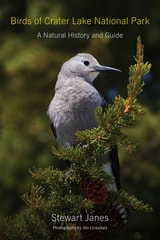
Birds of Crater Lake National Park
A Natural History and GuideStewart Janes
Oregon State University Press, 2026
From the Clark’s Nutcracker to the White-crowned Sparrow, the guide provides species accounts of the most characteristic birds found in the park. Accompanied by detailed color photographs, each entry also includes the scientific name, description, and distribution along with a short narrative.
With essays focusing on the history, climate, geology, and geography of the region, this guide offers a strong foundation to greater understanding of the birds of Crater Lake. Plus, chapters like “Birds Beyond Crater Lake National Park” and “Some Places to Bird in Crater Lake National Park,” along with a birding checklist, offer invaluable resources to beginner and skilled birders alike.
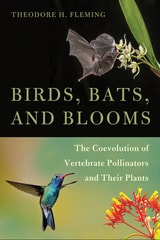
Birds, Bats, and Blooms
The Coevolution of Vertebrate Pollinators and Their PlantsTheodore H. Fleming
University of Arizona Press, 2024
Vertebrate pollinators like bats and birds are keystone species of the Sonoran Desert. Biologist Theodore H. Fleming uses these species—found in the desert around his home—to address two big questions dealing with the evolution of life on Earth: How did these animals evolve, and how did they coevolve with their food plants?
A deeply thoughtful and researched dive into evolutionary history, Birds, Bats, and Blooms offers an engaging trip across evolutionary trajectories as it discusses nectar-feeding birds and bats and their coevolution as pollinators with flowering plants. The primary focus is on New World birds such as hummingbirds and their chiropteran counterparts (nectar-feeding bats in the family Phyllostomidae). It also discusses their Old World ecological counterparts, including sunbirds, honeyeaters, lorikeets, and nectar-feeding bats in the Pteropodidae family. Fleming also addresses the conservation status of these beautiful animals.
Through engaging prose, Fleming pulls together the most recent research in evolutionary biology and pairs it with accounts of his personal interactions with bats and birds. His account includes fourteen color photographs taken by the author during his research trips around the world.
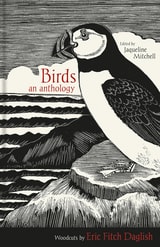
Birds
An AnthologyEdited by Jaqueline Mitchell
Bodleian Library Publishing, 2020
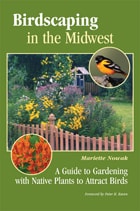
Birdscaping in the Midwest
A Guide to Gardening with Native Plants to Attract BirdsMariette Nowak; Foreword by Peter H. Raven
University of Wisconsin Press, 2012
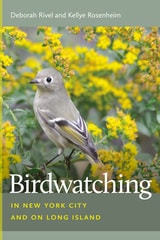
Birdwatching in New York City and on Long Island
Deborah Rivel and Kellye Rosenheim
University Press of New England, 2016
This easy-to-use guide gives seasonal information for both popular birding sites and those off the beaten path. Precise directions to the best viewing locations within the region’s diverse habitats enable birdwatchers to efficiently explore urban and wild birding hotspots. Over 500 species of birds can be seen in New York City’s five boroughs and on Long Island, one of the most densely populated and urbanized regions in North America, which also happens to be situated directly on the Atlantic Flyway. In this fragmented environment of scarce resources, birds concentrate on what’s available. This means that high numbers of birds are found in small spaces. In fact, Central Park alone attracts over 225 species of birds, which birders from around the world flock to see during spring and fall migration. Beyond Central Park, the five boroughs and Long Island have numerous wildlife refuges of extraordinary scenic beauty where resident and migratory birds inhabit forests, wetlands, grasslands, and beaches. These special places present an opportunity to see a wide array of songbirds, endangered nesting shorebirds, raptors, and an unprecedented number and variety of waterfowl. Including the latest information on the seasonal status and distribution of more than 400 species, with 39 maps and over 50 photographs, this full-color guide features information essential to planning a birding visit. It will become the go-to book for both the region’s longtime birders and those exploring the area for the first time.

Bits and Pieces
Screening Animal Life and DeathSarah O'Brien
University of Michigan Press, 2023
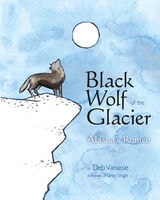
Black Wolf of the Glacier
Alaska's RomeoDeb Vanasse
University of Alaska Press, 2013
Black Wolf of the Glacier tells the story of this beloved legend through the eyes of Shawna, whose dog becomes best friends with Romeo. While initially afraid, Shawna ultimately learns to love the benevolent wolf. When Romeo goes missing, Shawna begins a determined search to find him, bringing readers along for the adventure.
Blood Ties
A Story of Falconry and FatherhoodBen Crane
University of Chicago Press, 2020
In this artful and moving memoir, we follow Crane on his remarkable journey of flight and return. Traveling from the United Kingdom to Pakistan, we learn first about the history and practice of falconry, a beautiful and brutal partnership between humans and birds that has persisted for thousands of years. And as Crane’s personal story unfolds, we come to understand how he found solace and insight through his relationships with these animals. “I saw that my feelings toward nature, and birds of prey in particular, ran in parallel with my feelings for my son,” Crane writes. “I worked out that they were, in fact, two sides of the same coin—the deep love of one could, with gentle observation, inform and unlock the deep love for the other. . . . Perhaps this then is the central theme of my story.”
Many of us rely upon animal companions to provide a sense of joy, compassion, and empathy. But as Blood Ties teaches us, our relationships with the creatures among us can also transform us, illuminating what it means both to be human and to be part of the greater wild—what it means to be alive.
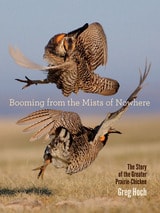
Booming from the Mists of Nowhere
The Story of the Greater Prairie-ChickenGreg Hoch
University of Iowa Press, 2015
Skillfully interweaving lyrical accounts from early settlers, hunters, and pioneer naturalists with recent scientific research on the grouse and its favored grasslands, Hoch reveals that the prairie-chicken played a key role in the American settlement of the Midwest. Many hungry pioneers regularly shot and ate the bird, as well as trapping hundreds of thousands, shipping them eastward by the trainload for coastal suppers. As a result of both hunting and habitat loss, the bird’s numbers plummeted to extinction across 90 percent of its original habitat. Iowa, whose tallgrass prairies formed the very center of the greater prairie-chicken’s range, no longer supports a native population of the bird most symbolic of prairie habitat.
The steep decline in the prairie-chicken population is one of the great tragedies of twentieth-century wildlife management and agricultural practices. However, Hoch gives us reason for optimism. These birds can thrive in agriculturally productive grasslands. Careful grazing, reduced use of pesticides, well-placed wildlife corridors, planned burning, higher plant, animal, and insect diversity: these are the keys. If enough blocks of healthy grasslands are scattered over the midwestern landscape, there will be prairie-chickens—and many of their fellow creatures of the tall grasses. Farmers, ranchers, conservationists, and citizens can reverse the decline of grassland birds and insure that future generations will hear the booming of the prairie-chicken.
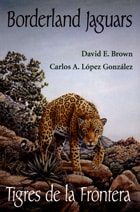
Borderland Jaguars
Tigres de la FronteraDavid E. Brown
University of Utah Press, 2001
"What is it about these borderland cats which has so fired up people? Scarcity combined with beauty explains some of the appeal. So does the animal’s legendary strength and power as befits its role as the region’s top predator. The jaguar’s neotropical origins also add to its mystique...But there is something more. That such a large cat is out there somewhere...invokes the depths of our imagination. Nor does it matter one whit that the chance of any one individual actually seeing one is almost nil. The thought of such a cat’s presence is enough in itself."—from the book
In 1996 a rancher hunting mountain lions just north of the Arizona-Mexico border treed a jaguar. Instead of reaching for a rifle, the rancher went for his camera. Later that year another party photographed a jaguar in Arizona’s Baboquivari Mountains. These compelling photographs sparked public interest in jaguars and have resulted in calls for listing jaguars as an endangered species.
Borderland Jaguars documents the human-jaguar contact in the Southwest and presents jaguar folklore from both sides of the border. But the book is primarily a natural history of the jaguar, and discusses its distribution, habitats, and hunting and breeding characteristics before concluding with a section on the status and management of borderland jaguars, and a proposed conservation plan. Written in an engaging style, and replete with a wealth of photographs, Borderland Jaguars is a wonderful introduction to this elusive resident of the Southwest.

Born to Pull
The Glory of Sled DogsBob Cary
University of Minnesota Press, 1999
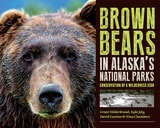
Brown Bears in Alaska's National Parks
Conservation of a Wilderness IconGrant V. Hilderbrand
University of Alaska Press, 2025
Brown bears are powerful symbols of wilderness, thriving in the vast, untamed ecosystems of Alaska’s remote national parks. Brown Bears in Alaska’s National Parks is a unique and thorough exploration of the conservation, ecology, and management of brown bears in these parks, including examinations of bear biology, human-bear interactions, population estimation methods, and the effects of climate change on bear populations. This lavishly illustrated volume offers fresh perspectives about the complex challenges that bears and humans face as they navigate coexistence in the evolving wilderness of Alaska.
Through park-specific chapters, the authors clearly present the current understanding of brown bear ecology across a wide range of ecosystems—from the sparse and frigid Gates of the Arctic, entirely above the Arctic Circle, to the bountiful coast of Katmai, where the marine and terrestrial systems converge. In Glacier Bay, bears roam newly exposed ecosystems shaped by retreating glaciers, while the interior landscapes of Lake Clark and Denali provide a mix of boreal forests, tundra, rivers, and towering mountains.
Brown bears—and the many species that share their habitats—face numerous challenges, with climate change among the greatest threats. The warming climate intensifies other pressures, such as industrial development, both within and around park boundaries. Management actions may also reduce native brown bear populations and, in turn, threaten healthy and naturally functioning ecosystems. The adaptability of brown bears, in concert with thoughtful and science-based management, is essential for the conservation of these majestic creatures and the wilderness landscapes on which they depend.
Written by the wildlife biologists and anthropologists who have dedicated their careers to studying brown (grizzly) bears and their relationship to people, Brown Bears in Alaska’s National Parks is a premier reference for bear enthusiasts, biologists, managers, and academics, as well as advocates for wild things and wild places.

Brownie the War Dog
Veterans’ Best FriendKelly Nelson
Wisconsin Historical Society Press, 2024
During World War II, families all over the country volunteered their pet dogs to serve in the Dogs for Defense Program. This beautifully illustrated picture book tells the true story of a family and their beloved dog, Brownie, who served alongside the troops and returned home to become a companion to wounded vets.
At first Brownie's boy, Oren, isn’t sure he wants to send his boisterous best friend to war. But with the help of his parents, Oren decides that Brownie could do a lot of good. Brownie serves faithfully on the frontlines until an injury sends him home from the Pacific islands. His family welcomes him back with open arms. But Brownie is not content sitting around at home—he needs a job. He begins to accompany Oren's mother to the Veterans Home in King, Wisconsin, where she works. There, Brownie finds a way to serve his fellow veterans just as he served his fellow soldiers.
Lovingly illustrated by Aaron Boyd, this heartwarming story gives poignant new meaning to the phrase "man's best friend" and will be a favorite for children and their grownups.
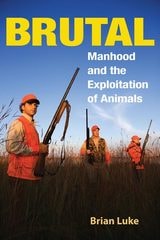
Brutal
Manhood and the Exploitation of AnimalsBrian Luke
University of Illinois Press, 2007
In Brutal, Brian Luke explores the gender divide over our treatment of animals, exposing the central role of masculinity in systems of animal exploitation. Employing philosophical analysis, reference to empirical research, and relevant personal experience, Luke develops a new theory of how exploitative institutions do not work to promote human flourishing but instead merely act as support for a particular construction of manhood. The resulting work is of significant interest both to animal advocates and opponents of sexism.

Butterflies in Your Pocket
A Guide to the Butterflies of the Upper MidwestSteve & Diane Hendrix & Debinski
University of Iowa Press, 2003
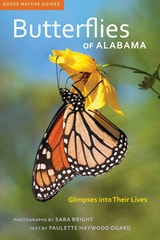
Butterflies of Alabama
Glimpses into Their LivesPaulette H. Ogard, Sara C. Bright
University of Alabama Press, 2010
Capture Every Stage of Alabama’s Butterfly Wonder.
Butterflies of Alabama is a full-color, richly illustrated guide to the 84 known species of “true” butterflies (Papilionoidea) found within the state’s borders. For more than 14 years, the authors have made a close study of these showy, winged stars of the insect world, pursuing them in a great variety of habitats, rearing them, and photographing their remarkable life cycle stages—egg, larva (caterpillar), pupa (chrysalid or “cocoon”), and adult.
Each species account is accompanied by color photographs of live subjects in their natural habitats. Close-ups reveal fascinating details of camouflage, mimicry, coloration, and warning devices. The engaging text explains the highly evolved relationships between butterflies and the plants upon which they depend as well as the specialized adaptations that enable their survival within specific environmental niches. Included are range maps, flight times, caterpillar host plants, adult nectar sources, and identification tips—abundant information to tantalize budding as well as experienced butterfly watchers. In addition, pertinent conservation issues are addressed and appendices provide an annotated checklist of the state’s butterflies, a list of accidentals and strays, information on butterfly organizations, and recommended further reading.
With its non-technical language, simple format, and beautiful images, Butterflies of Alabama is accessible and appealing to anyone who appreciates Alabama’s amazing natural wealth.
Publication is supported in part by the Citizens of the City of Selma, Alabama's Butterfly Capital.
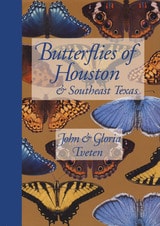
Butterflies of Houston and Southeast Texas
By John and Gloria Tveten
University of Texas Press, 1996
All across the country, butterflies are becoming as popular as birds and wildflowers, especially among people seeking to enjoy the rich natural resources that Texas possesses. John and Gloria Tveten have been studying butterflies in Southeast Texas for thirty-five years, and here they offer their considerable knowledge to everyone who shares their passion for butterflies.
In this easy-to-use field guide, the Tvetens describe and illustrate more than 100 species of butterflies that live in Southeast Texas and can often be found across the state. Striking color photographs of living butterflies and caterpillars (a unique addition) show the key marks and characteristics necessary for field identification. The Tvetens' enjoyable and authoritative text describes each species' life history, habits, flight patterns, and characteristic markings.
An account of the different butterfly families, from swallowtails to longwings to skippers, precedes the descriptions of the species within each family. The Tvetens also include an interesting discussion of butterfly biology, a complete checklist of area butterflies, an index of butterfly-attracting plants, and pointers to other butterfly resources.
This field guide is the first to focus exclusively on Southeast Texas butterflies. It will be the essential reference for everyone seeking a reliable way to identify these butterflies, from field observers to apartment dwellers who wonder what is fluttering around the pot plants on the balcony.
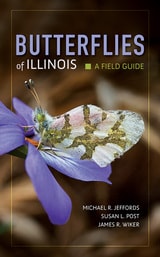
Butterflies of Illinois
A Field GuideMichael R. Jeffords, Susan L. Post, and James R. Wiker
University of Illinois Press, 2019
- identification quick guides depicting the tops and undersides of all butterfly species
- scientific information and photos that explain life cycles, habitats, and ecology
- range maps
- flight period charts
- key characteristics relevant to field identification
- descriptions of rarely seen butterflies and irregular visitors from nearby states
- supplemental information on various species, including collection records and unusual sightings
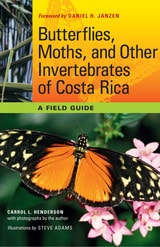
Butterflies, Moths, and Other Invertebrates of Costa Rica
A Field GuideBy Carrol L. Henderson, with photographs by the author
University of Texas Press, 2010
At the biological crossroads of the Americas, Costa Rica hosts an astonishing array of plants and animals—over half a million species! Ecotourists, birders, and biologists come from around the world, drawn by the likelihood of seeing more than three or four hundred species of birds and other animals during even a short stay. To help all these visitors, as well as local residents, identify and enjoy the wildlife of Costa Rica, Carrol Henderson published Field Guide to the Wildlife of Costa Rica in 2002, and it instantly became the indispensable guide.
Now Henderson has created a dedicated field guide to more than one hundred tropical butterflies, moths, and other invertebrates that travelers are most likely to see while exploring the wild lands of Costa Rica. He includes fascinating information on their natural history, ecology, identification, and behavior gleaned from his forty years of travels and wildlife viewing, as well as details on where to see these remarkable and beautiful creatures. The butterflies, moths, and other invertebrates are illustrated by over 180 stunning and colorful photographs—most of which were taken in the wild by Henderson. A detailed and invaluable appendix that identifies many of Costa Rica's best wildlife-watching destinations, lodges, and contact information for trip-planning purposes completes the volume.
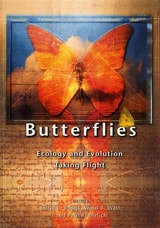
Butterflies
Ecology and Evolution Taking FlightEdited by Carol L. Boggs, Ward B. Watt, and Paul R. Ehrlich
University of Chicago Press, 2003
The first international synthesis of butterfly biology in two decades, Butterflies: Ecology and Evolution Taking Flight offers students, scientists, and amateur naturalists a concise overview of the latest developments in the field. Furthermore, it articulates an exciting new perspective of the whole group of approximately 15,000 species of butterflies as a comprehensive model system for all the sciences concerned with biodiversity and its preservation.
Contributors:
Carol L. Boggs, Paul M. Brakefield, Adriana D. Briscoe, Dana L. Campbell, Elizabeth E. Crone, Mark Deering, Henri Descimon, Erika I. Deinert, Paul R. Ehrlich, John P. Fay, Richard ffrench-Constant, Sherri Fownes, Lawrence E. Gilbert, André Gilles, Ilkka Hanski, Jane K. Hill, Brian Huntley, Niklas Janz, Greg Kareofelas, Nusha Keyghobadi, P. Bernhard Koch, Claire Kremen, David C. Lees, Jean-François Martin, Antónia Monteiro, Paulo César Motta, Camille Parmesan, William D. Patterson, Naomi E. Pierce, Robert A. Raguso, Charles Lee Remington, Jens Roland, Ronald L. Rutowski, Cheryl B. Schultz, J. Mark Scriber, Arthur M. Shapiro, Michael C. Singer, Felix Sperling, Curtis Strobeck, Aram Stump, Chris D. Thomas, Richard VanBuskirk, Hans Van Dyck, Richard I. Vane-Wright, Ward B. Watt, Christer Wiklund, and Mark A. Willis