95 books match the query 'Arab-Israeli conflict' and 5 start with b
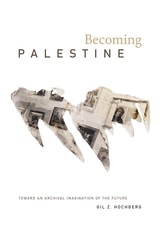
cover of Becoming Palestine: Toward an Archival Imagination of the Future

Becoming Palestine

Toward an Archival Imagination of the Future

Gil Z. Hochberg

Duke University Press, 2021

In Becoming Palestine, Gil Z. Hochberg examines how contemporary Palestinian artists, filmmakers, dancers, and activists use the archive in order to radically imagine Palestine's future. She shows how artists such as Jumana Manna, Kamal Aljafari, Larissa Sansour, Farah Saleh, Basel Abbas, and Ruanne Abou-Rahme reimagine the archive, approaching it not through the desire to unearth hidden knowledge, but to sever the identification of the archive with the past. In their use of archaeology, musical traditions, and archival film and cinematic footage, these artists imagine a Palestinian future unbounded from colonial space and time. By urging readers to think about archives as a break from history rather than as history's repository, Hochberg presents a fundamental reconceptualization of the archive's liberatory potential.
[more]
cover of Between Jew and Arab: The Lost Voice of Simon Rawidowicz

Between Jew and Arab

The Lost Voice of Simon Rawidowicz

David N. Myers

Brandeis University Press, 2009

This book brings new attention to Simon Rawidowicz (1897–1957), the wide-ranging Jewish thinker and scholar who taught at Brandeis University in the 1950s. At the heart of Myers’ book is a chapter that Rawidowicz wrote as a coda to his Hebrew tome Babylon and Jerusalem (1957) but never published. In it, Rawidowicz shifted his decades-long preoccupation with the “Jewish Question” to what he called the “Arab Question.” Asserting that the “Arab Question” had become a most urgent political and moral matter for Jews after 1948, Rawidowicz called for an end to discrimination against Arabs resident in Israel—and more provocatively, for the repatriation of Arab refugees from 1948. Myers’ book is divided into two main sections. Part I introduces the life and intellectual development of Rawidowicz. It traces the evolution of his thinking about the “Jewish Question,” namely, the status of Jews as a national minority in the Diaspora. Part II concentrates on the shift occasioned by the creation of the State of Israel, when Jews assumed political sovereignty and entered into a new relationship with the native Arab population. Myers analyzes the structure, content, and context of Rawidowicz’s unpublished chapter on the “Arab Question,” paying particular attention to Rawidowicz’s calls for an end to discrimination against Arabs in Israel, on the one hand, and for the repatriation of those refugees who left Palestine in 1948, on the other. The volume also includes a full English translation of “Between Jew and Arab,” a timeline of significant events, and an appendix of official legal documents from Israel and the international community pertaining to the conflict.
[more]
cover of Beyond Occupation: Apartheid, Colonialism and International Law in the Occupied Palestinian Territories

Beyond Occupation

Apartheid, Colonialism and International Law in the Occupied Palestinian Territories

Edited by Virginia Tilley

Pluto Press, 2012

Beyond Occupation looks at three contentious terms that regularly arise in contemporary arguments about Israel's practices towards Palestinians in the occupied territories – occupation, colonialism and apartheid – and considers whether their meanings in international law truly apply to Israel's policies. This analysis is timely and urgent – colonialism and apartheid are serious breaches of human rights law and apartheid is a crime against humanity under the Rome Statute of the International Criminal Court.

The contributors present conclusive evidence that Israel’s administration of the Palestinian territories is consistent with colonialism and apartheid, as these regimes are defined in human rights law. Their analysis further shows that these practices are deliberate Israeli state policies, imposed on the Palestinian civilian population under military occupation.

These findings raise serious implications for the legality and legitimacy of Israel's continuing occupation of the Palestinian territories and the responsibility of the entire international community to challenge practices considered contrary to fundamental values of the international legal order.
[more]
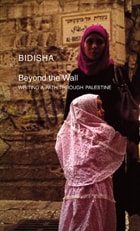
cover of Beyond the Wall: Writing a Path through Palestine

Beyond the Wall

Writing a Path through Palestine

Bidisha

Seagull Books, 2012

Their voices come from Bethlehem and Hebron. You can hear them from Jerusalem to Nazareth, and witness their protests in Gaza and Ramallah. From the refugee camps in the West Bank, you can hear the voices of the Palestinian people call out to demand self-determination and a better quality of life. But outside of Israel and the occupied territories, these individual voices are rarely heard—until now.
 
In Beyond the Wall: Writing a Path through Palestine, internationally renowned feminist critic and writer Bidisha collects the testimonies of an occupied people—ordinary citizens, activists, children—alongside those of international aid workers and foreign visitors for a revelatory look at a population on the margins.
 
Called “beautifully belligerent, [and] fiercely intelligent” by The Independent and a “dazzlingly creative writer” by the LondonTimes, Bidisha amplifies the voices of the Palestinian people in this book and lends to them her own considerable strength.
[more]
cover of Blood and Religion: The Unmasking of the Jewish and Democratic State

Blood and Religion

The Unmasking of the Jewish and Democratic State

Jonathan Cook

Pluto Press, 2006

"Timely and important . . . by far the most penetrarting and comprehensive [book] on the subject to date. . . . This work should be required reading." --Nur Masalha, Director of Holy Land Studies, St. Mary's College, University of Surrey, and author of The Politics of Denial

"An original and powerful book." --Ilan Pappe, Senior Lecturer in Political Science, Haifa University, and author of A Modern History of Palestine

"Very impressive. . . . Some of his findings will astound even the knowledgeable reader." --Salim Tamari, Director, Institute of Jerusalem Studies

What is Israel hoping to achieve with its recent withdrawal from Gaza and the buildiing of a 700 km wall? Journalist Jonathan Cook presents a lucid account of the motives. The heart of the issue, he argues, is demography. Israel fears the moment when the region's Palestinians--Israel's own Palestinian citizens and those in the Occupied Territories--become a majority. Inevitable omparisons with apartheid in South Africa will be drawn. The book charts Israel's increasingly desperate responses, including military repression of Palestinian dissent; a ban on marriages between Israel's Palestinian population and Palestinians living under occupation to prevent a right of return "through the back door;" and the redrawing of the Green Line to create an expanded state. Ultimately, the author concludes, these abuses will lead to a third, far deadlier intifada.

Jonathan Cook, a former staff journalist of the Guardian newspaper, has written for the Times, Le Monde diplomatique, the International Herald Tribune, al-Ahram Weekly, and Aljazeera.net. He is based in Nazareth.
[more]