Results by title
51 books match the query 'Atrocities' and 2 start with b
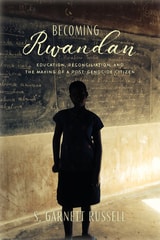
Becoming Rwandan
Education, Reconciliation, and the Making of a Post-Genocide CitizenS. Garnett Russell
Rutgers University Press, 2020
In the aftermath of the genocide, the Rwandan government has attempted to use the education system in order to sustain peace and shape a new generation of Rwandans. Their hope is to create a generation focused on a unified and patriotic future rather than the ethnically divisive past. Yet, the government’s efforts to manipulate global models around citizenship, human rights, and reconciliation to serve its national goals have had mixed results, with new tensions emerging across social groups. Becoming Rwandan argues that although the Rwandan government utilizes global discourses in national policy documents, the way in which teachers and students engage with these global models distorts the intention of the government, resulting in unintended consequences and undermining a sustainable peace.
[more]
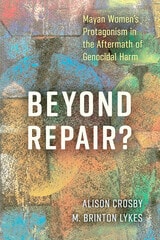
Beyond Repair?
Mayan Women’s Protagonism in the Aftermath of Genocidal HarmAlison Crosby
Rutgers University Press, 2019
Winner of the 2021 Raphael Lemkin Book Award from the Institute for the Study of Genocide
Honorable Mention, 2020 CALACS Book Prize
Beyond Repair? explores Mayan women’s agency in the search for redress for harm suffered during the genocidal violence perpetrated by the Guatemalan state in the early 1980s at the height of the thirty-six-year armed conflict. The book draws on eight years of feminist participatory action research conducted with fifty-four Q’eqchi’, Kaqchikel, Chuj, and Mam women who are seeking truth, justice, and reparation for the violence they experienced during the war, and the women’s rights activists, lawyers, psychologists, Mayan rights activists, and researchers who have accompanied them as intermediaries for over a decade. Alison Crosby and M. Brinton Lykes use the concept of “protagonism” to deconstruct dominant psychological discursive constructions of women as “victims,” “survivors,” “selves,” “individuals,” and/or “subjects.” They argue that at different moments Mayan women have been actively engaged as protagonists in constructivist and discursive performances through which they have narrated new, mobile meanings of “Mayan woman,” repositioning themselves at the interstices of multiple communities and in their pursuit of redress for harm suffered.
[more]