Results by title
72 books match the query 'Blues' and 18 start with b
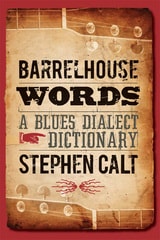
Barrelhouse Words
A Blues Dialect DictionaryStephen Calt
University of Illinois Press, 2009
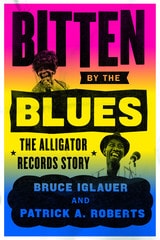
Bitten by the Blues
The Alligator Records StoryBruce Iglauer and Patrick A. Roberts
University of Chicago Press, 2018
Bitten by the Blues is Iglauer’s memoir of a life immersed in the blues—and the business of the blues. No one person was present at the creation of more great contemporary blues music than Iglauer: he produced albums by Koko Taylor, Albert Collins, Professor Longhair, Johnny Winter, Lonnie Mack, Son Seals, Roy Buchanan, Shemekia Copeland, and many other major figures. In this book, Iglauer takes us behind the scenes, offering unforgettable stories of those charismatic musicians and classic sessions, delivering an intimate and unvarnished look at what it’s like to work with the greats of the blues. It’s a vivid portrait of some of the extraordinary musicians and larger-than-life personalities who brought America’s music to life in the clubs of Chicago’s South and West Sides. Bitten by the Blues is also an expansive history of half a century of blues in Chicago and around the world, tracing the blues recording business through massive transitions, as a genre of music originally created by and for black southerners adapted to an influx of white fans and musicians and found a worldwide audience.
Most of the smoky bars and packed clubs that fostered the Chicago blues scene have long since disappeared. But their soul lives on, and so does their sound. As real and audacious as the music that shaped it, Bitten by the Blues is a raucous journey through the world of Genuine Houserockin’ Music.
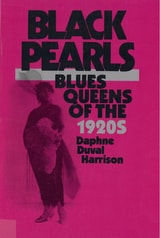
Black Pearls
Blues Queens of the 1920sDaphne Duval Harrison
Rutgers University Press, 1990
Blues music spawned legendary performers whose influence has been felt in many musical forms here and around the world. Until now the important role of the great women blues singers has largely gone unexplored. This book tells of the cultural and social impact of the blues during the 1920s when the genre was dominated by women, both on stage and on record. Harrison (Afro-American Studies Department, University of Maryland) writes with authority, focusing particularly on Sippie Wallace, Edith Wilson, Victoria Spivey, and Alberta Hunter as she analyzes the music and the collective black experience out of which it grew. A significant book, particularly for collections of music history, black studies, and women's studies. -- Library Journal
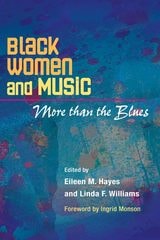
Black Women and Music
More Than the BluesEdited by Eileen M. Hayes and Linda F. Williams
University of Illinois Press, 2006
Individual essays concern the experiences of black women in classical music and in contemporary blues, the history of black female gospel-inflected voices in the Broadway musical, and "hip-hop feminism" and its complications. Focusing on under-examined contexts, authors introduce readers to the work of a prominent gospel announcer, women’s music festivals (predominantly lesbian), and to women’s involvement in an early avant-garde black music collective. In contradistinction to a compilation of biographies, this volume critically illuminates themes of black authenticity, sexual politics, access, racial uplift through music, and the challenges of writing (black) feminist biography. Black Women and Music is a strong reminder that black women have been and are both social actors and artists contributing to African American thought.
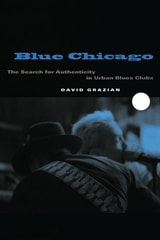
Blue Chicago
The Search for Authenticity in Urban Blues ClubsDavid Grazian
University of Chicago Press, 2003
For any music lover, that image captures the essence of an authentic experience of the blues. In Blue Chicago, David Grazian takes us inside the world of contemporary urban blues clubs to uncover how such images are manufactured and sold to music fans and audiences. Drawing on countless nights in dozens of blues clubs throughout Chicago, Grazian shows how this quest for authenticity has transformed the very shape of the blues experience. He explores the ways in which professional and amateur musicians, club owners, and city boosters define authenticity and dish it out to tourists and bar regulars. He also tracks the changing relations between race and the blues over the past several decades, including the increased frustrations of black musicians forced to slog through the same set of overplayed blues standards for mainly white audiences night after night. In the end, Grazian finds that authenticity lies in the eye of the beholder: a nocturnal fantasy to some, an essential way of life to others, and a frustrating burden to the rest.
From B.L.U.E.S. and the Checkerboard Lounge to the Chicago Blues Festival itself, Grazian's gritty and often sobering tour in Blue Chicago shows us not what the blues is all about, but why we care so much about that question.
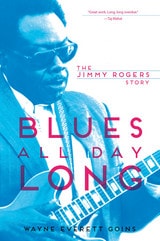
Blues All Day Long
The Jimmy Rogers StoryWayne Everett Goins, foreword by Kim Wilson
University of Illinois Press, 2014
In Blues All Day Long, Wayne Everett Goins mines seventy-five hours of interviews with Rogers' family, collaborators, and peers to follow a life spent in the blues. Goins' account takes Rogers from recording Chess classics and barnstorming across the South to a late-in-life renaissance that included new music, entry into the Blues Hall of Fame, and high profile tours with Eric Clapton and the Rolling Stones. Informed and definitive, Blues All Day Long fills a gap in twentieth century music history with the story of one of the blues' eminent figures and one of the genre's seminal bands.
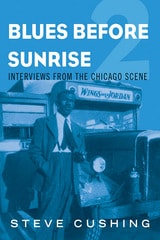
Blues Before Sunrise 2
Interviews from the Chicago SceneSteve Cushing
University of Illinois Press, 2019
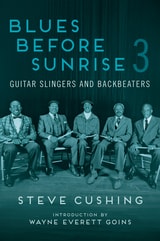
Blues Before Sunrise 3
Guitar Slingers and BackbeatersSteve Cushing. Introduction by Wayne Everett Goins
University of Illinois Press, 2025
Steve Cushing’s third volume of interviews from Blues Before Sunrise puts fans face-to-face with music legends and industry figures. The volume kicks off with a roundtable featuring drumming all-stars Earl Phillips, S.P. Leary, Odie Payne, Clifton James, and Fred Below discussing their lives and craft. Cushing segues to one-on-one interviews with Howlin’ Wolf sideman Phillips; Leary, a fellow Wolf alum and player with Sonny Boy Williamson II; Payne, known for his kick drum technique; longtime Muddy Waters drummer Willie “Big Eyes” Smith; next-generation standard bearer and session mainstay Casey Jones; and King Records house drummer Phillip Paul.
Interviews with guitarists include talks with Honeyboy Edwards, whose friendships with innumerable Chicago blues legends (and Robert Johnson) predated the Great Migration; jazz player turned bluesman Guitar Shorty; and figures like Texas native Roy Gaines, Johnny Heartsman of Oakland, and Memphis-born Floyd Murphy. A final section offers interviews with vocalists, record label founders, and other figures. Music scholar Wayne Everett Goins provides an introduction on blues history, blues style, and the careers of the featured artists.
Interviews: Joel Dorn, Honeyboy Edwards, Slim Gaillard, Roy Gaines, Johnny Heartsman, Franz Jackson, Casey Jones, S.P. Leary, Floyd Murphy, Jimmy “T-99” Nelson, Johnny Parth, Phillip Paul, Odie Payne, Earl Phillips, Art Sheridan, Guitar Shorty, Willie “Big Eyes” Smith, and Norvel Taborn
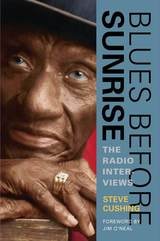
Blues Before Sunrise
The Radio InterviewsSteve Cushing, Foreword by Jim O'Neal
University of Illinois Press, 2010
This collection assembles the best interviews from Steve Cushing's long-running radio program Blues Before Sunrise, the nationally syndicated, award-winning program focusing on vintage blues and R&B. As both an observer and performer, Cushing has been involved with the blues scene in Chicago for decades. His candid, colorful interviews with prominent blues players, producers, and deejays reveal the behind-the-scenes world of the formative years of recorded blues. Many of these oral histories detail the careers of lesser-known but greatly influential blues performers and promoters.
The book focuses in particular on pre–World War II blues singers, performers active in 1950s Chicago, and nonperformers who contributed to the early blues world. Interviewees include Alberta Hunter, one of the earliest African American singers to transition from Chicago's Bronzeville nightlife to the international spotlight, and Ralph Bass, one of the greatest R&B producers of his era. Blues expert, writer, record producer, and cofounder of Living Blues Magazine Jim O'Neal provides the book's foreword.
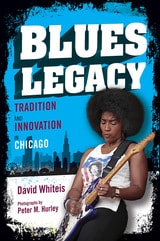
Blues Legacy
Tradition and Innovation in ChicagoDavid Whiteis
University of Illinois Press, 2019
David Whiteis delves into how the current and upcoming Chicago blues generations carry on this legacy. Drawing on in-person interviews, Whiteis places the artists within the ongoing social and cultural reality their work reflects and helps create. Beginning with James Cotton, Eddie Shaw, and other bequeathers, he moves through an all-star council of elders like Otis Rush and Buddy Guy and on to inheritors and today's heirs apparent like Ronnie Baker Brooks, Shemekia Copeland, and Nellie "Tiger" Travis.
Insightful and wide-ranging, Blues Legacy reveals a constantly adapting art form that, whatever the challenges, maintains its links to a rich musical past.
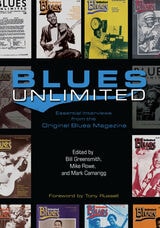
Blues Unlimited
Essential Interviews from the Original Blues MagazineEdited by Bill Greensmith, Mike Rowe, and Mark Camarigg
University of Illinois Press, 2015
Blues and Roots/Rue and Bluets
A Garland for the Southern AppalachiansJonathan Williams
Duke University Press, 1985
Blues in Black and White
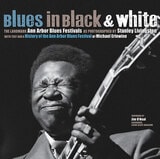
The Landmark Ann Arbor Blues FestivalsAs photographed by Stanley Livingston with Text and a History of the Ann Arbor Blues Festival by Michael Erlewine
University of Michigan Press, 2010
"This was really the first time that blues music, especially Chicago/urban blues, was showcased in this way. Sadly, the festivals were not recorded professionally. So Mr. Livingston's photos are the best record of the festivals."
---Michael Jewett, longtime weekday afternoon host of 89.1 Jazz and host of "Blues & Some Uthuh Stuff"
"The photos are works of art. It is great to see photos of musicians such as Buddy Guy and James Cotton looking so young and vibrant. And it is great to see photos of blues legends such as John Lee Hooker, Roosevelt Sykes, Howlin' Wolf, and Son House, who have long since passed away."
---Peter Madcat Ruth, Grammy-winning blues harmonica player
"If Woodstock was one of the Fifty Moments That Changed Rock 'n' Roll History, as honored in Rolling Stone magazine, then the Ann Arbor Blues Festival was the coronation for the blues roots that sired rock to begin with. . . . finally we have this amazing book of Stanley Livingston's priceless images, along with Michael Erlewine's detailed chronology."
---From the foreword by Jim O'Neal, Cofounder, Living Blues Magazine
In 1969 and 1970, the first Ann Arbor Blues Festivals brought together the greatest-ever selection of blues performers---an enormous blues party that seemed to feature every big name in the world of blues.
The Ann Arbor Blues Festival was just that: a festival and celebration of city blues. It helped to mark the discovery of modern blues music (and the musicians who made that music) by a much larger audience. The festival, however, was something more than just a white audience discovering black music.
Never before had such a far-reaching list of performers been assembled, including the grandfathers of southern country blues and the hottest electric bands from Chicago. These groundbreaking festivals were the seed that grew into the Ann Arbor Blues and Jazz Festival, which was continued annually for many years. To name just a few of the dozens of artists who performed at the festival: Luther Allison, John Lee Hooker, Howlin' Wolf, B.B. King, Muddy Waters, Otis Rush, Hound Dog Taylor, Big Mama Thorton, T-Bone Walker, Sippie Wallace, Junior Wells, and Mighty Joe Young.
Stanley Livingston, a professional photographer from Ann Arbor, captured these legendary performances onstage---as well as the goings-on backstage. Livingston's thousands of photographs from these festivals, previously unpublished and known only to a few, are among the finest candid blues shots ever taken. Together with editor and archivist Michael Erlewine's text accompaniments, these photographs, reproduced here as high-quality duotones, comprise a visual history and important keepsake for blues aficionados everywhere.
Stanley Livingston was an award-winning photographer living and working in Ann Arbor until he passed away in 2010, after the book was released.
Michael Erlewine, also from Ann Arbor, is a renowned archivist of popular culture and founder of the All-Music Guide (allmusic.com) and editor of a number of books on blues and jazz.
Cover photo of B.B. King by Stanley Livingston

Blues in the Blood
Julien Delmaire
Seagull Books, 2023
Blues in the Blood is an ode to the spring of 1932 in the Mississippi delta, when stifling heat crushed the countryside and threatened the harvest, pervasive injustice ruled the day, and ghostly riders of the Ku Klux Klan spread terror. A panoramic historical and musical portrait, Blues in the Blood follows a poor young Black couple who believe their love for each other will save them from this devastation. Julien Delmaire introduces us to a gallery of figures: Blacks, Whites, Native Americans, mulattos, landowners, itinerant bluesmen, preachers, witches, corrupt politicians, prisoners, bootleggers, and Legba, the voodoo god, “master of crossroads,” who, like an otherworldly detective, watches over people’s destinies. As the story unfolds, a world is reborn: the delta, the birthplace of the blues, in which oppressed women and men rediscover the voices and rhythms of their humanity.
Blues of a Lifetime
Autobiography of Cornell WoolrichEdited by Mark T. Bassett
University of Wisconsin Press, 1991
Blues, How Do You Do?
Paul Oliver and the Transatlantic Story of the BluesChristian O’Connell
University of Michigan Press, 2015

Blues, Ideology, and Afro-American Literature
A Vernacular TheoryHouston A. Baker Jr.
University of Chicago Press, 1987
BluesSpeak
Best of the Original Chicago Blues AnnualLincoln T. Beauchamp, Jr.
University of Illinois Press, 2010
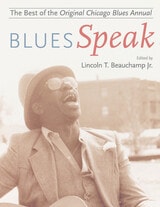
This incomparable anthology collects articles, interviews, fiction, and poetry from the Original Chicago Blues Annual, one of music history's most significant periodical blues publications. Founded and operated from 1989 to 1995 by African American musician and entrepreneur Lincoln T. Beauchamp Jr., OCBA gave voice to the blues community and often frankly addressed contentious issues within the blues such as race, identity, prejudice, wealth, gender, and inequity.
OCBA often expressed an explicitly black perspective, but its contributors were a mix of black and white, American and international. Likewise, although OCBA's roots and main focus were in Chicago, Beauchamp's vision for the publication (and his own activities as a blues performer and promoter) embraced an international dimension, reflecting a broad diversity of blues audiences and activities in locations as farflung as Iceland, Poland, France, Italy, and South Africa.
This volume includes key selections from OCBA's seven issues and features candid interviews with blues luminaries such as Koko Taylor, Eddie Boyd, Famoudou Don Moye, Big Daddy Kinsey, Lester Bowie, Junior Wells, Billy Boy Arnold, Herb Kent, Barry Dolins, and many more. Also featured are heartfelt memorials to bygone blues artists, insightful observations on the state of the blues in Chicago and beyond, and dozens of photographs of performers, promoters, and other participants in the worldwide blues scene.