Results by title
96 books match the query 'Buddhism' and 7 start with b

Beautiful Work
A Meditation on PainSharon Cameron
Duke University Press, 2000
In order to understand the nature of pain, Anna undertakes a meditation practice. We tend to think of pain as self-absorbing and exclusively our own ("my pain," "I am in pain"). In distinction, Sharon Cameron’s Anna comes to explore pain as common property, and as the basis for a radically reconceived selfhood. Resisting the limitations of memoir, Beautiful Work speaks from experience and simultaneously releases it from the closed shell of personal ownership. Outside of the not quite inevitable stories we tell about it, experience is less protected, less compromised, and more vivid than could be supposed.
Beautiful Work brings to bear the same interest in consciousness and intersubjectivity that characterizes Cameron’s other work.

Bonds of the Dead
Temples, Burial, and the Transformation of Contemporary Japanese BuddhismMark Michael Rowe
University of Chicago Press, 2011
Despite popular images of priests seeking enlightenment in snow-covered mountain temples, the central concern of Japanese Buddhism is death. For that reason, Japanese Buddhism’s social and economic base has long been in mortuary services—a base now threatened by public debate over the status, treatment, and location of the dead. Bonds of the Dead explores the crisis brought on by this debate and investigates what changing burial forms reveal about the ways temple Buddhism is perceived and propagated in contemporary Japan.
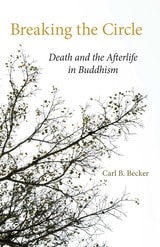
Breaking the Circle
Death and the Afterlife in BuddhismCarl B. Becker
Southern Illinois University Press, 1993
In this much-needed examination of Buddhist views of death and the afterlife, Carl B. Becker bridges the gap between books on death in the West and books on Buddhism in the East.
Other Western writers have addressed the mysteries surrounding death and the afterlife, but few have approached the topic from a Buddhist perspective. Here, Becker resolves questions that have troubled scholars since the beginning of Buddhism: How can Buddhism reconcile its belief in karma and rebirth with its denial of a permanent soul? What is reborn? And when, exactly, is the moment of death?
By systematically tracing Buddhism’s migration from India through China, Japan, and Tibet, Becker demonstrates how culture and environment affect Buddhist religious tradition.
In addition to discussing historical Buddhism, Becker shows how Buddhism resolves controversial current issues as well. In the face of modern medicine’s trend toward depersonalization, traditional Buddhist practices imbue the dying process with respect and dignity. At the same time, Buddhist tradition offers documented precedents for decision making in cases of suicide and euthanasia.

Buddhism Betrayed?
Religion, Politics, and Violence in Sri LankaStanley Jeyaraja Tambiah
University of Chicago Press, 1992
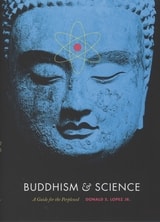
Buddhism and Science
A Guide for the PerplexedDonald S. Lopez Jr.
University of Chicago Press, 2008
In Buddhism and Science, Donald S. Lopez Jr. is less interested in evaluating the accuracy of such claims than in exploring how and why these two seemingly disparate modes of understanding the inner and outer universe have been so persistently linked. Lopez opens with an account of the rise and fall of Mount Meru, the great peak that stands at the center of the flat earth of Buddhist cosmography—and which was interpreted anew once it proved incompatible with modern geography. From there, he analyzes the way in which Buddhist concepts of spiritual nobility were enlisted to support the notorious science of race in the nineteenth century. Bringing the story to the present, Lopez explores the Dalai Lama’s interest in scientific discoveries, as well as the implications of research on meditation for neuroscience.
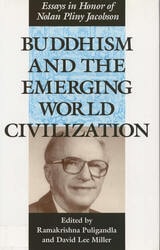
Buddhism and the Emerging World Civilization
Essays in Honor of Nolan Pliny JacobsonRamakrishna Puligandla
Southern Illinois University Press, 1996
This captivating new book, a milestone in Buddhist and comparative studies, is a compilation of seventeen essays celebrating the work and thought of Nolan Pliny Jacobson.
A profoundly motivated interdisciplinary thinker, Jacobson sought to discover, clarify, and synthesize points of similarity among leading thinkers of different Oriental and Western cultures. For almost half a century, he articulated his vision of an emerging world civilization, one in which all people can feel and express their creative, constructive powers for the benefit of others as well as for themselves.
Jacobson believed that philosophy and the works of philosophers should be understood as a vital force enriching all civilizational experience. His own philosophic perspective was rooted in the conviction that novelty is the source of all experience and the center of a creativity that lives beyond words, arguments, and rational paradigms. Throughout his career, Jacobson explored Buddhist texts and personalities, spending much time in the Orient, particularly Myanmar and Japan. He also closely studied the works of numerous Western philosophers, including Whitehead, Dewey, Peirce, James, Hartshorne, and Wieman. Jacobson believed that American philosophy and Buddhism concurred in many ways, with the potential to form a powerful basis for the development of a world civilization.
The essays in this volume are organized around Jacobson’s activities, publications, and interests. Authored by an impressive selection of scholars, the essays are grouped into four sections—"Historical Context," "Central Issues," "Practical Implications," and "The Japan Emphasis." Hajime Nakamura, Charles Hartshorne, Kenneth K. Inada, Seizo Oho, and numerous others discuss freedom, creativity, and Buddhism’s self-corrective nature, setting forth their reasons for sharing Jacobson’s ideas and visions.
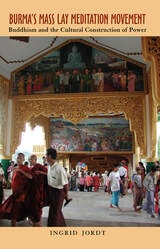
Burma’s Mass Lay Meditation Movement
Buddhism and the Cultural Construction of PowerIngrid Jordt
Ohio University Press, 2007
Burma's Mass Lay Meditation Movement: Buddhism and the Cultural Construction of Power describes a transformation in Buddhist practice in contemporary Burma. This revitalization movement has had real consequences for how the oppressive military junta, in power since the early 1960s, governs the country.
Drawing on more than ten years of extensive fieldwork in Burma, Ingrid Jordt explains how vipassanā meditation has brought about a change of worldview for millions of individuals, enabling them to think and act independently of the totalitarian regime. She addresses human rights as well as the relationship between politics and religion in a country in which neither the government nor the people clearly separates the two. Jordt explains how the movement has been successful in its challenge to the Burmese military dictatorship where democratically inspired resistance movements have failed.
Jordt's unsurpassed access to the centers of political and religious power in Burma becomes the reader's opportunity to witness the political workings of one of the world's most secretive and tyrannically ruled countries. Burma's Mass Lay Meditation Movement is a valuable contribution to Buddhist studies as well as anthropology, religious studies, and political science.