Results by title
122 books match the query 'Business Aspects' and 9 start with b

Bach Perspectives, Volume 2
J. S. Bach, the Breitkopfs, and Eighteenth-Century Music TradeEdited by George B. Stauffer
University of Illinois Press, 2025
Launched in 1995, Bach Perspectives has become the premier English-language serial book series dedicated to cutting-edge Bach scholarship. The University of Illinois Press now offers the first four volumes in open access editions available for free to all interested readers.
From 1727 to 1787, the Bach and the Breitkopf families enjoyed close professional ties forged by the growing trade between music composers and music printers. The second volume of Bach Perspectives examines the inventive and far-flung activities of the Breitkopf firm from the vantage point of its commerce with J. S. Bach and his relatives.
Contributors: Gregory G. Butler, Robert M. Cammarota, Peggy Daub, Andreas Glöckner, George R. Hill, Yoshitake Kobayashi, Ortrun Landmann, Ernest May, Hans-Joachim Schulze, George B. Stauffer, and Neal Zaslaw
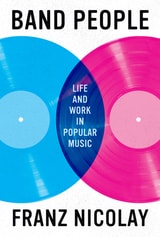
Band People
Life and Work in Popular MusicFranz Nicolay
University of Texas Press, 2024
A close look at the lives of working musicians who aren’t the center of their stage.
Secret (and not-so-secret) weapons, side-of-the-stagers, rhythm and horn sections, backup singers, accompanists—these and other “band people” are the anonymous but irreplaceable character actors of popular music. Through interviews and incisive cultural critique, writer and musician Franz Nicolay provides a portrait of the musical middle class. Artists talk frankly about their careers and attitudes toward their craft, work environment, and group dynamics, and shed light on how support musicians make sense of the weird combination of friend group, gang, small business consortium, long-term creative collaboration, and chosen family that constitutes a band. Is it more important to be a good hang or a virtuoso player? Do bands work best as democracies or autocracies? How do musicians with children balance their personal and professional lives? How much money is too little? And how does it feel to play on hundreds of records, with none released under your name? In exploring these and other questions, Band People gives voice to those who collaborate to create and dissects what it means to be a laborer in the culture industry.
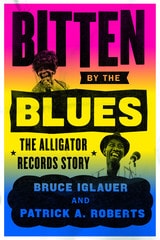
Bitten by the Blues
The Alligator Records StoryBruce Iglauer and Patrick A. Roberts
University of Chicago Press, 2018
Bitten by the Blues is Iglauer’s memoir of a life immersed in the blues—and the business of the blues. No one person was present at the creation of more great contemporary blues music than Iglauer: he produced albums by Koko Taylor, Albert Collins, Professor Longhair, Johnny Winter, Lonnie Mack, Son Seals, Roy Buchanan, Shemekia Copeland, and many other major figures. In this book, Iglauer takes us behind the scenes, offering unforgettable stories of those charismatic musicians and classic sessions, delivering an intimate and unvarnished look at what it’s like to work with the greats of the blues. It’s a vivid portrait of some of the extraordinary musicians and larger-than-life personalities who brought America’s music to life in the clubs of Chicago’s South and West Sides. Bitten by the Blues is also an expansive history of half a century of blues in Chicago and around the world, tracing the blues recording business through massive transitions, as a genre of music originally created by and for black southerners adapted to an influx of white fans and musicians and found a worldwide audience.
Most of the smoky bars and packed clubs that fostered the Chicago blues scene have long since disappeared. But their soul lives on, and so does their sound. As real and audacious as the music that shaped it, Bitten by the Blues is a raucous journey through the world of Genuine Houserockin’ Music.

Body Factory
Exploiting University Athletes' Healthcare for Profit in the Training RoomKaitlin Pericak
Temple University Press, 2025
Body Factory enters an NCAA Division I athletic training room to examine the disconnect between what the NCAA states as its goal of athlete healthcare and what is actually happening. Kaitlin Pericak conducts observations in this space and interviews injured athletes and sports medicine staff members to show how institutional control over “best interests” often ends up exploiting the individual athlete. The influences at work are part of a neoliberal paradigm that explains why interest in an athlete’s care is greatly diminished once they are injured and can no longer play.
Body Factory considers how race, gender, and health before and after injury are deciding factors in these university training centers. The bureaucratic organization has a goal of maintaining power to generate profit, and Pericak shows this is almost always at the expense of the athlete.
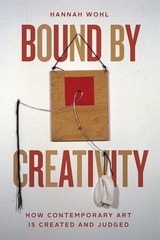
Bound by Creativity
How Contemporary Art Is Created and JudgedHannah Wohl
University of Chicago Press, 2021
Bound by Creativity reveals how artists develop conceptions of their distinctive creative visions through experimentation and social interactions. Ultimately, we come to appreciate how judgment is integral to the creative process, both resulting in the creation of original works while also limiting an artist’s ability to break new ground. Exploring creativity through the lens of judgment sheds new light on the production of cultural objects, markets, and prestige.
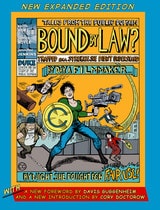
Bound by Law?
Tales from the Public Domain, New Expanded EditionKeith Aoki, James Boyle, and Jennifer Jenkins
Duke University Press, 2008

Building Successful and Sustainable Film and Television Businesses
A Cross-National PerspectiveEdited by Eva Bakoy, Roel Puijk, and Andrew Spicer
Intellect Books, 2017
Building Successful and Sustainable Film and Television Businesses provides a truly cross-national, comparative dialogue that is vital to the field of media industry studies today.
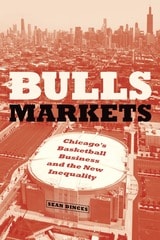
Bulls Markets
Chicago's Basketball Business and the New InequalitySean Dinces
University of Chicago Press, 2018
The 1990s were a glorious time for the Chicago Bulls, an age of historic championships and all-time basketball greats like Scottie Pippen and Michael Jordan. It seemed only fitting that city, county, and state officials would assist the team owners in constructing a sparkling new venue to house this incredible team that was identified worldwide with Chicago. That arena, the United Center, is the focus of Bulls Markets, an unvarnished look at the economic and political choices that forever reshaped one of America’s largest cities—arguably for the worse.
Sean Dinces shows how the construction of the United Center reveals the fundamental problems with neoliberal urban development. The pitch for building the arena was fueled by promises of private funding and equitable revitalization in a long-blighted neighborhood. However, the effort was funded in large part by municipal tax breaks that few ordinary Chicagoans knew about, and that wound up exacerbating the rising problems of gentrification and wealth stratification. In this portrait of the construction of the United Center and the urban life that developed around it, Dinces starkly depicts a pattern of inequity that has become emblematic of contemporary American cities: governments and sports franchises collude to provide amenities for the wealthy at the expense of poorer citizens, diminishing their experiences as fans and—far worse—creating an urban environment that is regulated and surveilled for the comfort and protection of that same moneyed elite.
Business Plans for Filmmakers
John W. Cones
Southern Illinois University Press, 2010
The practical and legal aspects of writing a business plan for a film venture can be daunting to navigate without a firm grasp of know-how. With this in mind, John W. Cones's Business Plans for Filmmakers arms independent movie-makers and students with everything they need to successfully tackle the confusing intersection of law, business, and art when creating a business plan for a movie. This pragmatic volume offers plenty of examples and strategies for success, sharing straightforward insight into some of the toughest challenges independent filmmakers face when encountering these documents.
With simple yet thorough detail and clarity, Cones outlines the legal requirements affecting movie proposals, including ways to evaluate the necessity for a business plan or a securities disclosure document, as well as the legal definition of "an active investor." Also addressed are the numerous subjects filmmakers and students must consider before a film offering, including the efficacy of a business plan to fund the development, production, and distribution phases of a film; common elements of fraud of which fledgling filmmakers should beware; the intricacies of revenue sharing; and how to render financial projections. Cones also imparts useful distinctions between such industry terms as "company financing" versus "project financing," along with many others.
This bookalso includes in-depth guidance through the murky paths of investor analysis and key strategies to find and attract parties interested in financing film. Drawing upon his many years as a securities and entertainment attorney, and his experiences advising independent film producers, Cones offers the tools necessary not only to understand investors' motivations but also to use that knowledge to the filmmaker's advantage. Also provided are perceptive studies of the investment vehicles commonly used in business plans seeking investors, with analysis of each method's pros and cons. Throughout the volume, Cones uses sample plans to offer a real-world grasp of the intricacies of the business.
In the business of this art, knowledge is power. Business Plans for Filmmakers dispels the myths and misinformation circulating among filmmakers to provide accurate and useful advice.