Results by title
69 books match the query 'Capital' and 3 start with b

Bengal in Global Concept History
Culturalism in the Age of CapitalAndrew Sartori
University of Chicago Press, 2008
Sartori weaves the narrative of Bengal’s embrace of culturalism into a worldwide history of the concept, from its origins in eighteenth-century Germany, through its adoption in England in the early 1800s, to its appearance in distinct local guises across the non-Western world. The impetus for the concept’s dissemination was capitalism, Sartori argues, as its spread across the globe initiated the need to celebrate the local and the communal. Therefore, Sartori concludes, the use of the culture concept in non-Western sites was driven not by slavish imitation of colonizing powers, but by the same problems that repeatedly followed the advance of modern capitalism. This remarkable interdisciplinary study will be of significant interest to historians and anthropologists, as well as scholars of South Asia and colonialism.

Black Sexual Economies
Race and Sex in a Culture of CapitalEdited by Adrienne D. Davis and the BSE Collective
University of Illinois Press, 2019
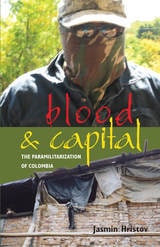
Blood and Capital
The Paramilitarization of ColombiaJasmin Hristov
Ohio University Press, 2009
WOLA-Duke Book Award Finalist
In Blood and Capital: The Paramilitarization of Colombia, Jasmin Hristov examines the complexities, dynamics, and contradictions of present-day armed conflict in Colombia. She conducts an in-depth inquiry into the restructuring of the state’s coercive apparatus and the phenomenon of paramilitarism by looking at its military, political, and legal dimensions. Hristov demonstrates how various interrelated forms of violence by state forces, paramilitary groups, and organized crime are instrumental to the process of capital accumulation by the local elite as well as the exercise of political power by foreign enterprises. She addresses, as well, issues of forced displacement, proletarianization of peasants, concentration of landownership, growth in urban and rural poverty, and human rights violations in relation to the use of legal means and extralegal armed force by local dominant groups and foreign companies.
Hristov documents the penetration of major state institutions by right-wing armed groups and the persistence of human rights violations against social movements and sectors of the low-income population. Blood and Capital raises crucial questions about the promised dismantling of paramilitarism in Colombia and the validity of the so-called demobilization of paramilitary groups, both of which have been widely considered by North American and some European governments as proof of Colombian president Álvaro Uribe’s advances in the wars on terror and drugs.