Results by title
975 books match the query 'Case studies' and 45 start with b

Back of the Yards
The Making of a Local DemocracyRobert A. Slayton
University of Chicago Press, 1986
Bargaining and Learning in Recurring Crises
The Soviet-American, Egyptian-Israeli, and Indo-Pakistani RivalriesRussell J. Leng
University of Michigan Press, 2000
The author uses theoretical work on learning and the role of belief systems on foreign policy-making as the basis to explore the history of each rivalry. Detailed narrative accounts of each of the crises are augmented by tables and figures describing the escalation of each crisis and the behavior of participant states. The approach allows for comparisons of behavior and learning across the three rivalries, as well as a consideration of the influence that the Soviet-American rivalry exerted on the Middle East and South Asian rivalries. The concluding chapter illustrates how the influence of realpolitik beliefs on learning across the three rivalries predisposed policymakers to draw lessons from their crisis experience that weakened conflict management in subsequent crises. The author also shows how superpower mediation in Middle East and South Asian crises and wars had the perverse effect of encouraging greater risk-taking by the participant states in subsequent crises.
The book will be of particular interest to political scientists and historians who study international relations, as well as those interested in decision-making and learning by policymakers.
Russell J. Leng is Professor of Political Science, Middlebury College, and the author of Interstate Crisis Behavior 1816-1980: Realism versus Reciprocity and numerous articles.
Barrios Norteños
St. Paul and Midwestern Mexican Communities in the Twentieth CenturyBy Dionicio Nodín Valdés
University of Texas Press, 2000
Mexican communities in the Midwestern United States have a history that extends back to the turn of the twentieth century, when a demand for workers in several mass industries brought Mexican agricultural laborers to jobs and homes in the cities. This book offers a comprehensive social, labor, and cultural history of these workers and their descendants, using the Mexican barrio of "San Pablo" (St. Paul) Minnesota as a window on the region.
Through extensive archival research and numerous interviews, Dennis Valdés explores how Mexicans created ethnic spaces in Midwestern cities and how their lives and communities have changed over the course of the twentieth century. He examines the process of community building before World War II, the assimilation of Mexicans into the industrial working class after the war, the Chicano Movement of the 1960s and 1970s, and more recent changes resulting from industrial restructuring and unprecedented migration and population growth. Throughout, Valdés pays particular attention to Midwestern Mexicans' experiences of inequality and struggles against domination and compares them to Mexicans' experiences in other regions of the U.S.

Beautiful Struggle
How One American High School Took on Systemic RacismSharon M. Chubbuck and Cynthia M. Ellwood
University of Chicago Press, 2026
An in-depth look at how one high school addressed racial inequality head-on.
The new superintendent stood before the faculty of “Oakmont High,” a large, diverse public school, and spoke a cold truth about American education. He described seeing the vibrant mix of students in the school’s hallways disperse into racially segregated classrooms when the bell rang. The fact was that students were sorted into tracks—supposedly race-neutral, “ability-based” pathways—that led to sharply unequal experiences and opportunities throughout high school and often their whole lives. “Why is it fair for white kids to have a better education than Black kids?” the superintendent asked his faculty. “It’s racism pure and simple, and it’s going to stop!”
Racial inequality persists because racism is systemic, baked into countless interlacing beliefs, practices, and structures that make up the way we do school. Tracking is one of many such practices. In Beautiful Struggle, Sharon M. Chubbuck and Cynthia M. Ellwood examine eleven years of transformation by administrators, teachers, students, and others as they tackled systemic racism head-on, starting with tracking. The people of OHS encountered intense resistance and made extraordinary inroads. They fought inequality with hard conversations and concrete steps. They dramatically increased Black and brown students’ access to rich, rigorous learning from the moment students entered as freshmen. They questioned and restructured the interconnected web of policy and practices in every aspect of the school. Students themselves propelled major changes in academic opportunity and the very culture of the school.
Chubbuck and Ellwood argue that taking on racial inequality requires an unrelenting focus on racial justice, challenging systems on every front, broad collective leadership across race and role, and the will to navigate difference and conflict. The story within Beautiful Struggle offers a hopeful though sobering path forward.

Becoming Alcoholic
Alcoholics Anonymous and the Reality of AlcoholismDavid R. Rudy. Foreword by Norman K. Denzin
Southern Illinois University Press, 1986
Affiliation with Alcoholics Anonymous parallels religious conversion, according to David R. Rudy in this timely study of the most famous self-help organization in the world.
Drinkers who commit themselves to Alcoholics Anonymous embrace the radically different life-style, the altered world of the convert.
To understand this conversion and, more important, to get a grip on the even deeper mystery of alcoholism itself, Rudy sought to answer these three questions: What processes are involved in becoming alcoholic? How does the alcoholic affiliate with, and become committed to, A. A.’s belief system? What is the relationship between the world of A. A. members and that constructed by alcohologists?
Rudy establishes the history and structure of A. A. and examines the organization’s relationship to dominant sociological models, theories, and definitions of alcoholism.

Becoming an Embedded Librarian
Making Connections in the ClassroomMichelle Reale
American Library Association, 2015

Before Shaughnessy
Basic Writing at Yale and Harvard, 1920-1960Kelly Ritter
Southern Illinois University Press, 2009
In Before Shaughnessy: Basic Writing at Yale and Harvard, 1920–1960, Kelly Ritter uses materials from the archives at Harvard and Yale and contemporary theories of writing instruction to reconsider the definition of basic writing and basic writers within a socio-historical context. Ritter challenges the association of basic writing with only poorly funded institutions and poorly prepared students.
Using Yale and Harvard as two sample case studies, Ritter shows that basic writing courses were alive and well, even in the Ivy League, in the early twentieth century. She argues not only that basic writers exist across institutional types and diverse student populations, but that the prevalence of these writers has existed far more historically than we generally acknowledge.
Uncovering this forgotten history of basic writing at elite institutions, Ritter contends that the politics and problems of the identification and the definition of basic writers and basic writing began long before the work of Mina Shaughnessy in Errors and Expectations and the rise of open admissions. Indeed, she illustrates how the problems and politics have been with us since the advent of English A at Harvard and the heightened consumer-based policies that resulted in the new admissions criteria of the early twentieth-century American university. In order to recognize this long-standing reality of basic writing, we must now reconsider whether the nearly standardized, nationalized definition of “basic” is any longer a beneficial one for the positive growth and democratic development of our first-year writing programs and students.
Beggars and Thieves
Lives of Urban Street CriminalsMark S. Fleisher
University of Wisconsin Press, 1995
As the incidence of violent crime rises in the United States, so does the public demand for a solution. But what will work?
Mark S. Fleisher has spent years among inmates in jails and prisons and on the streets with thieves, gang members, addicts, and life-long criminals in Seattle and other cities across the country. In Beggars and Thieves, he writes about how and why they become and remain offenders, and about the actual role of jails and prisons in efforts to deter crime and rehabilitate criminals. Fleisher shows, with wrenching firsthand accounts, that parents who are addicts, abusers, and criminals beget irreversibly damaged children who become addicts, abusers, and criminals. Further, Fleisher contends that many well-intentioned educational and vocational training programs are wasted because they are offered too late to help. And, he provides sobering evidence that many youthful and adult offenders find themselves better off in prison—with work to do, medical care, a clean place to sleep, regular meals, and stable social ties—than they are in America’s cities.
Fleisher calls for anti-crime policies that are bold, practical, and absolutely imperative. He prescribes life terms for violent offenders, but in prisons structured as work communities, where privileges are earned through work in expanded, productive industries that reduce the financial burden of incarceration on the public. But most important, he argues that the only way to prevent street crime, cut prison growth, and reduce the waste of money and human lives is to permanently remove brutalized children from criminal, addicted, and violent parents.
Bernie Sanders and the Boundaries of Reform
Socialism in BurlingtonW. J. Conroy
Temple University Press, 2016
In his preface to this reissue of the 1990 book, Challenging the Boundaries of Reform, W. J. Conroy reflects on the recent legacy of Sanders, his Agenda for America, and his appeal to young voters. His book then looks back to identify Sanders’ experience in Burlington by examining several case studies that unfolded amidst a conservative trend nationally, an unsympathetic state government, and a hostile city council.
Ultimately, Conroy asks what lessons can be drawn from the case of Burlington that would aid the American left in its struggle to capture both government and civil society?
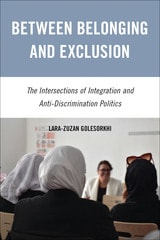
Between Belonging and Exclusion
The Intersections of Integration and Anti-Discrimination PoliticsLara-Zuzan Golesorkhi
Temple University Press, 2026
Integration and discrimination are two of the most salient yet contradictory forces shaping contemporary European politics. In Between Belonging and Exclusion Lara-Zuzan Golesorkhi asserts that this tension exists because integration politics do not facilitate non-discrimination, nor do they address experiences of discrimination. She draws on interviews with refugees and other key actors in integration politics to examine the barriers hindering refugee women’s labor market participation in Germany.
Golesorkhi introduces four explanatory tropes that reveal how and why integration efforts have often fallen short. She examines the power relations and limitations in migration governance as well as the identity narratives of Germanness/Europeanness, and the gendered and racialized mechanisms of “othering” that contribute to discrimination.
Between Belonging and Exclusion delineates what Germany and the EU “get wrong” about integration and anti-discrimination as it outlines conceptual and practical suggestions for expanding the terms of inclusion.
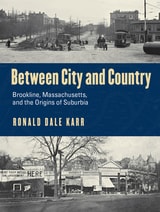
Between City and Country
Brookline, Massachusetts, and the Origins of SuburbiaRonald Dale Karr
University of Massachusetts Press, 2018
Already a fashionable retreat for wealthy Bostonians, Brookline began to suburbanize in the 1840s with the arrival of hundreds of commuter families—and significant numbers of Irish Catholic immigrants drawn by opportunities to work as laborers and servants. In Brookline the poor were segregated but not excluded altogether, as they would be from twentieth-century elite suburbs. A half century later, a distinct suburban way of life developed that combined rural activities with urban pastimes, and a political consensus emerged that sought efficient government and large expenditures on education and public works. Brookline had created the template for the concept of suburbia, not just in wealthy communities but in the less affluent communities of postwar America.
Beyond Adversary Democracy
Jane J. Mansbridge
University of Chicago Press, 1983
"Sociologists recurrently complain about how seldom it is that we produce books that combine serious theorizing about important issues of public policy with original and sensitive field research. Several rounds of enthusiastic applause, then, are due Jane Mansbridge . . . for having produced a dense and well written book whose subject is nothing less ambitious than the theory of democracy and its problems of equality, solidarity, and consensus. Beyond Adversary Democracy, however, is not simply a work of political theory; Mansbridge explores her abstract subject matter by close studies (using ethnographic, documentary, and questionnaire methods) of two small actual democracies operating at their most elemental American levels (1) a New England town meeting ("Selby," Vermont) and (2) an urban crisis center ("Helpline"), whose 41 employees shared a New Left-Counterculture belief in participatory democracy and consensual decision-making. [Mansbridge] is a force to contend with. It is in our common interest that she be widely read."—Bennett M. Berger, Contemporary Sociology
Beyond Banned Books
Defending Intellectual Freedom throughout Your LibraryKristin Pekoll
American Library Association, 2019
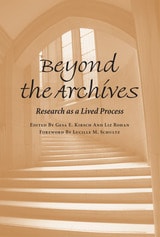
Beyond the Archives
Research as a Lived ProcessEdited by Gesa E. Kirsch and Liz Rohan Foreword by Lucille M. Schultz
Southern Illinois University Press, 2008
This collection of highly readable essays reveals that research is not restricted to library archives. When researchers pursue information and perspectives from sources beyond the archives—from existing people and places— they are often rewarded with unexpected discoveries that enrich their research and their lives.
Beyond the Archives: Research as a Lived Process presents narratives that demystify and illuminate the research process by showing how personal experiences, family history, and scholarly research intersect. Editors Gesa E. Kirsch and Liz Rohan emphasize how important it is for researchers to tap into their passions, pursuing research subjects that attract their attention with creativity and intuition without limiting themselves to traditional archival sources and research methods.
Eighteen contributors from a number of disciplines detail inspiring research opportunities that led to recently published works, while offering insights on such topics as starting and finishing research projects, using a wide range of types of sources and methods, and taking advantage of unexpected leads, chance encounters and simple clues. In addition, the narratives trace the importance of place in archival research, the parallels between the lives of research subjects and researchers, and explore archives as sites that resurrect personal, cultural, and historical memory.
Beyond the Archives sheds light on the creative, joyful, and serendipitous nature of research, addressing what attracts researchers to their subjects, as well as what inspires them to produce the most thorough, complete, and engaged scholarly work. This timely and essential volume supplements traditional-method textbooks and effectively models concrete practices of retrieving and synthesizing information by professional researchers.
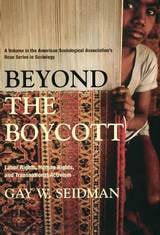
Beyond the Boycott
Labor Rights, Human Rights, and Transnational ActivismGay W. Seidman
Russell Sage Foundation, 2007

Bible Believers
Fundamentalists in the Modern WorldNancy Tatom Ammerman
Rutgers University Press, 1987
Bible believer (also Bible-believer,Bible-believing Christian,Bible-believing Church) is a self-description by conservative Christians to differentiate their teachings from others who see non- or extrabiblical tradition as higher or equal in authority.
In normal usage, "Bible believer" means an individual or organisation that believes the Christian Bible is true in some significant way. However, this combination of words is given a unique meaning in fundamentalist Protestant circles, where it is equated with the belief that the Christian Bible "contains no theological contradictions, historical discrepancies, or other such 'errors'", otherwise known as biblical inerrancy.
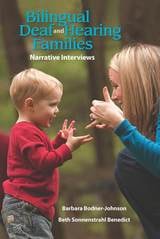
Bilingual Deaf and Hearing Families
Narrative InterviewsBarbara Bodner-Johnson
Gallaudet University Press, 2012
This study emphasizes the importance of family support for deaf members, particularly through the use of both American Sign Language (ASL) and spoken and/or written English. Research has shown how these factors influence such areas as a child’s development, performance in school, and relationships with brothers and sisters. In this volume, authors Barbara Bodner-Johnson and Beth S. Benedict concentrate on the vital, positive effects of bilingualism and how families that share their experiences with other families can enhance all of their children’s achievement and enrichment.
Bilingual Deaf and Hearing Families: Narrative Interviews describes the experiences of ten families who have at least one deaf family member. In five of the families, the parents are hearing and they have a deaf child; two of the children in these families have cochlear implants. In three families, both the parents and children are deaf. In one family, the parents are deaf and their daughter is hearing; and in one family, the parents and one child are deaf and they all have cochlear implants, and the deaf child’s twin is hearing.
The interviews were conducted in the families’ homes using set topics and questions. The family discussions cover a wide range of subjects: cochlear implants, where they live, their thoughts about family relationships, how they participate in the Deaf community, how they arrive at certain decisions, their children’s friendships, and the goals and resiliencies they have as a family.

Birth Weight and Economic Growth
Women's Living Standards in the Industrializing WestW. Peter Ward
University of Chicago Press, 1993
Drawing on clinical records from urban maternity hospitals and outpatient services, Ward compares birth weight between cities and traces changes in fetal size during a period in which some cities experienced dramatic economic development while others stagnated. Because fetal growth is strongly affected by maternal nutrition, Ward's research sheds new light on the well-being of working-class women whose living conditions have long been obscure and exceedingly difficult to examine.
This book will interest social and economic historians, as well as scholars of women's studies and the history of medicine, and its lessons on the distribution of social benefits during economic change have immidiate relevance for today's developing countries.

Birth of the Other
Rosine Lefort, in collaberation with Robert Lefort
University of Illinois Press, 1994
of the Other offers a rare look at language acquisition from a Lacanian
perspective. In 1951-52 Rosine Lefort conducted the treatment of two largely
preverbal children, guiding them through psychoanalysis and meticulously
documenting their activities. Lefort has applied her subsequent training
in Lacanian theory to these early case notes, which provide remarkably
lucid examples of exceedingly difficult concepts.
This exceptional work thus clarifies many misconceptions about psychoanalytic
theory, furnishes unique insight into what Lacan calls the "time
of analysis," and grants a clearer understanding of the relationship
between language and the unconscious.
"Anyone interested in
Lacan's psychoanalytical theories should not fail to read these revealing
clinical studies by one of Lacan's most authoritative and lucid interpreters."
-- Herman Rapaport, author of Between the Sign and the Gaze
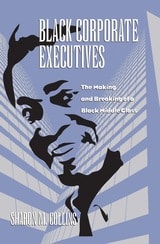
Black Corporate Executives
Sharon Collins
Temple University Press, 1996
Black Entrepreneurs in America
Stories of Struggle and SuccessMichael D Woodard
Rutgers University Press, 1996
Black Victory
The Rise and Fall of the White Primary in TexasDarlene Clark Hine & Essays by Darlene Clark Hine, Steven F. Lawson, & Merline Pitre
University of Missouri Press, 2003
Black-Brown Relations and Stereotypes
By Tatcho Mindiola, Jr., Yolanda Flores Niemann, and Nestor Rodriguez
University of Texas Press, 2002
Race relations in twenty-first-century America will not be just a black-and-white issue. The 2000 census revealed that Hispanics already slightly outnumber African Americans as the largest ethnic group, while together Blacks and Hispanics constitute the majority population in the five largest U.S. cities. Given these facts, black-brown relations could be a more significant racial issue in the decades to come than relations between minority groups and Whites.
Offering some of the first in-depth analyses of how African Americans and Hispanics perceive and interact with each other, this pathfinding study looks at black-brown relations in Houston, Texas, one of the largest U.S. cities with a majority ethnic population and one in which Hispanics outnumber African Americans. Drawing on the results of several sociological studies, the authors focus on four key issues: how each group forms and maintains stereotypes of the other, areas in which the two groups conflict and disagree, the crucial role of women in shaping their communities' racial attitudes, and areas in which Hispanics and African Americans agree and can cooperate to achieve greater political power and social justice.
Blacked Out
Dilemmas of Race, Identity, and Success at Capital HighSignithia Fordham
University of Chicago Press, 1996
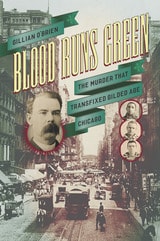
Blood Runs Green
The Murder That Transfixed Gilded Age ChicagoGillian O'Brien
University of Chicago Press, 2015
It was the biggest funeral Chicago had seen since Lincoln’s. On May 26, 1889, four thousand mourners proceeded down Michigan Avenue, followed by a crowd forty thousand strong, in a howl of protest at what commentators called one of the ghastliest and most curious crimes in civilized history. The dead man, Dr. P. H. Cronin, was a respected Irish physician, but his brutal murder uncovered a web of intrigue, secrecy, and corruption that stretched across the United States and far beyond.
Blood Runs Green tells the story of Cronin’s murder from the police investigation to the trial. It is a story of hotheaded journalists in pursuit of sensational crimes, of a bungling police force riddled with informers and spies, and of a secret revolutionary society determined to free Ireland but succeeding only in tearing itself apart. It is also the story of a booming immigrant population clamoring for power at a time of unprecedented change.
From backrooms to courtrooms, historian Gillian O’Brien deftly navigates the complexities of Irish Chicago, bringing to life a rich cast of characters and tracing the spectacular rise and fall of the secret Irish American society Clan na Gael. She draws on real-life accounts and sources from the United States, Ireland, and Britain to cast new light on Clan na Gael and reveal how Irish republicanism swept across the United States. Destined to be a true crime classic, Blood Runs Green is an enthralling tale of a murder that captivated the world and reverberated through society long after the coffin closed.

Blue Architecture
Water, Design, and Environmental FuturesBrook Muller
University of Texas Press, 2022
2023 Finalist, PROSE Award in Architecture and Urban Planning
A guide to water-focused and climate-resilient architectural and urban design.
Le Corbusier famously said, “A house is a machine for living in.” We now confront the litany of environmental challenges associated with the legacy of the architectural machine: a changing climate, massive species die-off, diminished air and water quality, and resource scarcities. Brook Muller offers an alternative: water-centric urban design that fosters sustainability, equity, and architectural creativity.
Inspired by the vernacular, such as the levadas of Madeira Island and both the arid and drenched places of the American West, Muller articulates a “hydro-logical” philosophy in which architects and planners begin by conceptualizing interactions between existing waterways and the spaces they intend to develop. From these interactions—and the new technologies and approaches enabling them—aesthetic, spatial, and experiential opportunities follow. Not content merely to work around sensitive ecology, Muller argues for genuinely climate-adapted urban landscapes in which buildings act as ecological infrastructure that actually improve watersheds while delivering functionality and beauty for diverse communities. Rich in images and practical examples, Blue Architecture will change the way we think about our designed world.

Body Factory
Exploiting University Athletes' Healthcare for Profit in the Training RoomKaitlin Pericak
Temple University Press, 2025
Body Factory enters an NCAA Division I athletic training room to examine the disconnect between what the NCAA states as its goal of athlete healthcare and what is actually happening. Kaitlin Pericak conducts observations in this space and interviews injured athletes and sports medicine staff members to show how institutional control over “best interests” often ends up exploiting the individual athlete. The influences at work are part of a neoliberal paradigm that explains why interest in an athlete’s care is greatly diminished once they are injured and can no longer play.
Body Factory considers how race, gender, and health before and after injury are deciding factors in these university training centers. The bureaucratic organization has a goal of maintaining power to generate profit, and Pericak shows this is almost always at the expense of the athlete.
Book Club Reboot
71 Creative TwistsSarah Ostman
American Library Association, 2019

Book Clubs
Women and the Uses of Reading in Everyday LifeElizabeth Long
University of Chicago Press, 2003
Book Repair
A How-To-Do-It ManualAmerican Library Association, 2011
Book of the Disappeared
The Quest for Transnational JusticeJennifer Heath and Ashraf Zahedi, Editors
University of Michigan Press, 2023
Book of the Disappeared confronts worldwide human rights violations of enforced disappearance and genocide and explores the global quest for justice with forceful, outstanding contributions by respected scholars, expert practitioners, and provocative contemporary artists. This profoundly humane book spotlights our historic inhumanity while offering insights for survival and transformation.

Border Junkies
Addiction and Survival on the Streets of Juárez and El PasoBy Scott Comar
University of Texas Press, 2011
The drug war that has turned Juárez, Mexico, into a killing field that has claimed more than 7,000 lives since 2008 captures headlines almost daily. But few accounts go all the way down to the streets to investigate the lives of individual drug users. One of those users, Scott Comar, survived years of heroin addiction and failed attempts at detox and finally cleaned up in 2003. Now a graduate student at the University of Texas at El Paso in the history department's borderlands doctoral program, Comar has written Border Junkies, a searingly honest account of his spiraling descent into heroin addiction, surrender, change, and recovery on the U.S.-Mexico border.
Border Junkies is the first book ever written about the lifestyle of active addiction on the streets of Juárez. Comar vividly describes living between the disparate Mexican and American cultures and among the fellow junkies, drug dealers, hookers, coyote smugglers, thieves, and killers who were his friends and neighbors in addiction—and the social workers, missionaries, shelter workers, and doctors who tried to help him escape. With the perspective of his anthropological training, he shows how homelessness, poverty, and addiction all fuel the use of narcotics and the rise in their consumption on the streets of Juárez and contribute to the societal decay of this Mexican urban landscape. Comar also offers significant insights into the U.S.-Mexico borderland's underground and peripheral economy and the ways in which the region's inhabitants adapt to the local economic terrain.
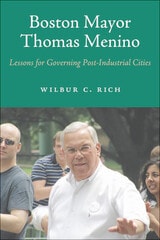
Boston Mayor Thomas Menino
Lessons for Governing Post-Industrial CitiesWilbur C. Rich
University of Massachusetts Press, 2023
Hailed as one of Boston’s most beloved mayors and its longest serving, Thomas Menino (1942–2014) deftly managed the city’s finances and transformed Boston into the hub of innovation that it is today. During his time in office, Boston embraced modern industrial growth and moved forward with noteworthy developments that altered neighborhoods, while also facing ongoing racial strife, challenges of unaffordable housing, and significant public union negotiations.
Mayors in modern American cities occupy unique positions as government leaders who need to remain active parts of their communities in addition to being tasked with fixing neighborhood issues, managing crises, and keeping schools and public infrastructure on course. Situating news coverage alongside interviews with the mayor and his administration, political scientist Wilbur C. Rich chronicles Menino’s time in office while also considering his personal and professional background, his larger-than-life personality, and his ambitions. Menino’s approach to these challenges and opportunities offers enduring lessons to anyone interested in urban government and political leadership.
Boys and Girls
Superheroes in the Doll CornerVivian Gussin Paley
University of Chicago Press, 1984
"I will admit my biases up front: having a three-year old daughter of my own made it impossible for this book to be anything but fun to read. I dare anyone who enjoys children not to enjoy this story about stories, this narrative about narratives."—Jerry Powell, Winterthur Portfolio
Boys and Girls
Superheroes in the Doll CornerVivian Gussin Paley
University of Chicago Press, 2014
For more than forty years, Boys and Girls has a classic account of the little-known world that young children create together when they play. Vivian Gussin Paley takes readers inside a kindergarten classroom to show them in detail how boys and girls play—and how, by playing and fantasizing in different ways, they work through complicated notions of gender roles and identity. The children’s own conversations, stories, playacting, and scuffles are interwoven with Paley’s observations and accounts of her vain attempts to alter their stereotyped play. In the decades since the book's original publication, play in kindergarten and early years of school has lost ground to structured teaching and even testing, which makes Paley's book, updated for a new era, more important than ever. To teach kids successfully, we must make space for play.
Brazilians Working With Americans/Brasileiros que trabalham com americanos
Cultural Case Studies/Estudos de casos culturaisBy Orlando R. Kelm and Mary E. Risner
University of Texas Press, 2006
Doing business internationally requires understanding not only other languages, but even more so the business practices and cultures of other countries. In the case of Brazilians working with Americans, a fundamental difference for all parties to understand is that Brazilian business culture is based on developing personal relationships between business partners, while American businesspeople often prefer to get down to hard "facts and figures" quickly, with fewer personal preliminaries. Negotiating such differences is crucial to creating successful business relationships between the two countries, and this book is designed to help businesspeople do just that.
Brazilians Working With Americans presents ten short case studies that effectively illustrate many of the cultural factors that come into play when North American business professionals work in Brazil. The authors summarize each case and the aspects of culture it involves, and American and Brazilian executives comment on the cultural differences highlighted by that case. A list of topics and questions for discussion also help draw out the lessons of each business situation. To make the book equally useful to Brazilians and Americans (whether businesspeople or language students), the entire text is presented in both English and Portuguese. In addition, Apple QuickTime movies of the executives' comments, which allow viewers to see and hear native speakers of both languages, are available on the Internet at www.laits.utexas.edu/orkelm/casos/intro.html.
Bridging State and Civil Society
Informal Organizations in Tajik/Afghan BadakhshanSuzanne Levi-Sanchez
University of Michigan Press, 2021
Bridging State and Civil Society provides an in-depth study of parts of Central Asia and Afghanistan that remain marginalized from the larger region. As such, the people have developed distinct ways of governing and surviving, sometimes in spite of the state and in part because of informal organizations. Suzanne Levi-Sanchez provides eight case studies, each an independent look at a particular informal organization, but each also part of a larger picture that helps the reader understand the importance and key role that informal organizations play for civil society and the state. Each case explores how informal organizations operate and investigates their structures and interactions with official state institutions, civil society, familial networks, and development organizations. As such, each chapter explores the concepts through a different lens while asking a deceptively simple question: What is the relationship between informal organizations and the state?

Bridging Worlds
Emerging Mode Ls And Practices OfRaymond Pun
Assoc of College & Research Libraries, 2016
Bright College Years
Inside the American College TodayAnne Matthews
University of Chicago Press, 1998
"Matthews writes with sympathy and substantial understanding of the dilemmas colleges face these days."—Tara Fitzpatrick, Chicago Tribune
"A wide-ranging, well-written and lively account of contemporary academia."—Christian Wiman, Dallas Morning News
"Notable Book of the Year." New York Times
"An eye-opening, startling exposé;. . . . Matthews' energetic and well-written report provides a dismal yet concise insider portrait of college life."—Booklist
Bringing the Arts into the Library
Carol Smallwood
American Library Association, 2013
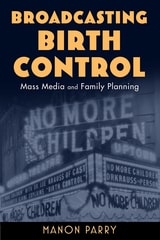
Broadcasting Birth Control
Mass Media and Family PlanningParry, Manon
Rutgers University Press, 2013
Mass media, Manon Parry contends, was critical to the birth control movement’s attempts to build support and later to publicize the idea of fertility control and the availability of contraceptive services in the United States and around the world. Though these public efforts in advertising and education were undertaken initially by leading advocates, including Margaret Sanger, increasingly a growing class of public communications experts took on the role, mimicking the efforts of commercial advertisers to promote health and contraception in short plays, cartoons, films, and soap operas. In this way, they made a private subject—fertility control—appropriate for public discussion.
Parry examines these trends to shed light on the contested nature of the motivations of birth control advocates. Acknowledging that supporters of contraception were not always motivated by the best interests of individual women, Parry concludes that family planning advocates were nonetheless convinced of women’s desire for contraception and highly aware of the ethical issues involved in the use of the media to inform and persuade.

Broker, Mediator, Patron, and Kinsman
An Historical Analysis of Key Leadership Roles in a Rural Malaysian DistrictConner Bailey
Ohio University Press, 1976
This study attempts to relate questions of rural leadership to the constantly changing social and economic environment of a rural district in Malaysia during the twentieth century. The study itself began as an effort to analyze a single instance of structural change in Malay village leadership which occurred while the author worked in Sik District as a Peace Corps Volunteer (1968–1971). A research proposal was developed positing a traditional pattern of behavior which could be identified as traditional leadership, the better to contrast this with the bureaucratic style of the district’s new penghulus (headmen of a mukim, or subdistrict).
As research progressed, it became obvious that there was in fact no single traditional leadership pattern to be discovered, but rather that over time adaptations were regularly made whenever a significant change in Sik’s social and economic environment occurred. Although the study has retained rural leadership as a primary concern, it has been found necessary to relate it to Sik’s social and economic history.
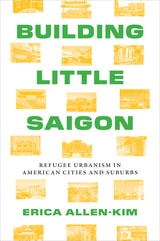
Building Little Saigon
Refugee Urbanism in American Cities and SuburbsErica Allen-Kim
University of Texas Press, 2024
2026 Spiro Kostof Book Award, Society of Architectural Historians
An in-depth look at the diverging paths of Vietnamese American communities, or “Little Saigons,” in America’s built environment.
In the final days before the fall of Saigon in 1975, 125,000 Vietnamese who were evacuated or who made their own way out of the country resettled in the United States. Finding themselves in unfamiliar places yet still connected in exile, these refugees began building their own communities as memorials to a lost homeland. Known both officially and unofficially as Little Saigons, these built landscapes offer space for everyday activities as well as the staging of cultural heritage and political events.
Building Little Saigon examines nearly fifty years of city building by Vietnamese Americans—who number over 2.2 million today. Author Erica Allen-Kim highlights architecture and planning ideas adapted by the Vietnamese communities who, in turn, have influenced planning policies and mainstream practices. Allen-Kim traveled to ten Little Saigons in the United States to visit archives, buildings, and public art and to converse with developers, community planners, artists, business owners, and Vietnam veterans. By examining everyday buildings—who made them and what they mean for those who know them—Building Little Saigon shows us the complexities of migration unfolding across lifetimes and generations.
Building a Buzz
Libraries & Word-of-Mouth MarketingPeggy Barber
American Library Association, 2010
Bureaucrats, Clients, and Geography
The Bailly Nuclear Power Plant Battle in Northern IndianaNancy J. Obermeyer
University of Chicago Press, 1989