Results by title
501 books match the query 'Catholic Church' and 22 start with b
Baptism of Desire and Christian Salvation
Anthony R. Lusvardi
Catholic University of America Press, 2024
Be Opened! The Catholic Church and Deaf Culture
Lana Portolano
Catholic University of America Press, 2021
Bearing False Witness
Debunking Centuries of Anti-Catholic HistoryRodney Stark
Templeton Press, 2016
As we all know and as many of our well-established textbooks have argued for decades, the Inquisition was one of the most frightening and bloody chapters in Western history; Pope Pius XII was anti-Semitic and rightfully called “Hitler’s Pope,” the Dark Ages were stunting the progress of knowledge to be redeemed only by the secular spirit of the Enlightenment. The religious Crusades were an early example of the rapacious Western thirst for riches and power. But what if these long held beliefs were all wrong?
In this stunning, powerful, and ultimately persuasive book, Rodney Stark, one of the most highly regarded sociologists of religion and bestselling author of The Rise of Christianity (HarperSanFrancisco 1997), argues that some of our most firmly held ideas about history, ideas that paint the Catholic Church in the least favorable light are, in fact, fiction. Why have we held these wrongheaded ideas so firmly and for so long? And if our beliefs are wrong, what is the truth?
In each chapter, Stark takes on a well-established anti-Catholic myth, gives a fascinating history of how each myth became conventional wisdom and presents a startling picture of the real truth. For example, instead of the Spanish Inquisition being an anomaly of torture and murder of innocent people persecuted for “imaginary” crimes such as witchcraft and blasphemy, Stark argues that not only did the Spanish Inquisition spill very little blood, but it was a major force in support of moderation and justice.
Stark dispels the myth of Pope Pius XII being apathetic or even helpful to the Nazi movement, such as to merit the title “Hitler’s Pope,” and instead shows that the campaign to link Pope Pius XII to Hitler was initiated by the Soviet Union, presumably in hopes of neutralizing the Vatican in post-World War II affairs. Many praised Pope Pius XIIs vigorous and devoted efforts to saving Jewish lives during the war.
Instead of understanding the Dark Ages as a millennium of ignorance and backwardness inspired by the Catholic Church’s power, Stark argues that the whole notion of the “Dark Ages” was an act of pride perpetuated by anti-religious intellectuals who were determined to claim that theirs was the era of “Enlightenment.”
In the end, readers of Bearing False Witness will have a more accurate history of the Catholic Church and will also understand why it became unfairly maligned for so long. Bearing False Witness is a compelling and sobering account of how egotism and ideology often work together to give us a false truth.
Becoming a New Self
Practices of Belief in Early Modern CatholicismMoshe Sluhovsky
University of Chicago Press, 2017
Practices such as the examination of conscience, general confession, and spiritual exercises, which until the 1400s had been restricted to monastic elites, breached the walls of monasteries in the period that followed. Thanks in large part to Franciscans and Jesuits, lay urban elites—both men and women—gained access to spiritual practices whose goal was to enhance belief and create new selves. Using Michel Foucault’s writing on the hermeneutics of the self, and the French philosopher’s intuition that the early modern period was a moment of transition in the configurations of the self, Sluhovsky offers a broad panorama of spiritual and devotional techniques of self-formation and subjectivation.
Before Amoris Laetitia
The Sources of the ControversyJaroslaw Kupczak
Catholic University of America Press, 2021

Between Church and State
The Lives of Four French Prelates in the Late Middle AgesBernard Guenée
University of Chicago Press, 1990
Guenée chooses as his frame the momentous period from the height of Saint Louis's reign in the mid-thirteenth century to the beginning of the Italian wars two hundred years later. During this time of schism in the church, of war between nascent states, and of treachery among princes, Bernard Gui (1261-1331), Gilles Le Muisit (1272-1353), Pierre D'Ailly (1351-1420), and Thomas Basin (1412-1490) all rose from modest circumstances to the dignity of office. Guenée shows us how these prelates used their talent, ambition, patrons, zeal, and experience to juggle the competing demands of obedience to church and state; to overcome competition from an upcoming new generation; and to cope with plague, war, and violence. Free of jargon yet steeped in learning, Between Church and State reveals the career patterns and politics of an era while forging a new model for points of departure in historical scholarship.
Between God and Man
Pope Innocent III
Catholic University of America Press, 2004
Between Human and Divine
The Catholic Vision in Contemporary LiteratureMary Reichardt
Catholic University of America Press, 2010
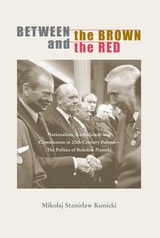
Between the Brown and the Red
Nationalism, Catholicism, and Communism in Twentieth-Century Poland—The Politics of Boleslaw PiaseckiMikolaj Stanislaw Kunicki
Ohio University Press, 2012
Between the Brown and the Red captures the multifaceted nature of church-state relations in communist Poland, relations that oscillated between mutual confrontation, accommodation, and dialogue. Ironically, under communism the bond between religion and nation in Poland grew stronger. This happened in spite of the fact that the government deployed nationalist themes in order to portray itself as more Polish than communist. Between the Brown and the Red also introduces one of the most fascinating figures in the history of twentieth-century Poland and the communist world.
In this study of the complex relationships between nationalism, communism, authoritarianism, and religion in twentieth-century Poland, Mikołaj Kunicki shows the ways in which the country’s communist rulers tried to adapt communism to local traditions, particularly ethnocentric nationalism and Catholicism. Focusing on the political career of Bolesław Piasecki, a Polish nationalist politician who began his surprising but illuminating journey as a fascist before the Second World War and ended it as a procommunist activist, Kunicki demonstrates that Polish communists reinforced an ethnocentric self-definition of Polishness and—as Piasecki’s case demonstrates—thereby prolonged the existence of Poland’s nationalist Right.
Beyond Betrayal
The Priest Sex Abuse Crisis, the Voice of the Faithful, and the Process of Collective IdentityPatricia Ewick and Marc W. Steinberg
University of Chicago Press, 2019
Beyond Betrayal charts a nationwide identity shift through the story of one chapter of Voice of the Faithful (VOTF), an organization founded in the scandal’s aftermath. VOTF had three goals: helping survivors of abuse; supporting priests who were either innocent or took risky public stands against the wrongdoers; and pursuing a broad set of structural changes in the church. Patricia Ewick and Marc W. Steinberg follow two years in the life of one of the longest-lived and most active chapters of VOTF, whose thwarted early efforts at ecclesiastical reform led them to realize that before they could change the Catholic Church, they had to change themselves. The shaping of their collective identity is at the heart of Beyond Betrayal, an ethnographic portrait of how one group reimagined their place within an institutional order and forged new ideas of faith in the wake of widespread distrust.
Biblical and Theological Foundation of the Family
Joseph C. Atkinson
Catholic University of America Press, 2014
Biomedicen and Beatitude
An Introduction to Catholic Bioethics, Second EditionNicanor Pier Giorgio Austriaco
Catholic University of America Press, 2021
Biomedicine and Beatitude
An Introduction to Catholic BioethicsNicanor Pier Giorgio AUSTRIACO
Catholic University of America Press, 2011
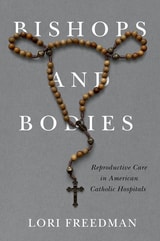
Bishops and Bodies
Reproductive Care in American Catholic HospitalsLori Freedman
Rutgers University Press, 2023
One out of every six patients in the United States is treated in a Catholic hospital that follows the policies of the U.S. Conference of Catholic Bishops. These policies prohibit abortion, sterilization, contraception, some treatments for miscarriage and gender confirmation, and other reproductive care, undermining hard-won patients’ rights to bodily autonomy and informed decision-making. Drawing on rich interviews with patients and providers, this book reveals both how the bishops’ directives operate and how people inside Catholic hospitals navigate the resulting restrictions on medical practice. In doing so, Bishops and Bodies fleshes out a vivid picture of how The Church’s stance on sex, reproduction, and “life” itself manifests in institutions that affect us all.
Bishops, Councils, and Consensus in the Visigothic Kingdom, 589-633
Rachel L. Stocking
University of Michigan Press, 2001
This eloquently presented, exhaustive study concludes that legislation, however persistently enacted, was unequal to the task of remedying a lack of unity and other social and political ills. Notions of consensus are explored as a way of maintaining community cohesion and order in the absence of strong central authorities. Other issues the author confronts are Catholic tolerance and intolerance toward heterodox and non-Christian "others;" the transformation and transmission of ancient ideals and social structures from the Roman to the later medieval worlds; and the position of medieval Spain in relation to the mainstream of western European history.
This nuanced study is a must-read for anyone interested in medieval life, politics, religion, and the precarious nature of the medieval state.
Rachel Stocking is Professor of History, Southern Illinois University at Carbondale.
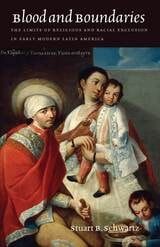
Blood and Boundaries
The Limits of Religious and Racial Exclusion in Early Modern Latin AmericaStuart B. Schwartz
Brandeis University Press, 2020
In Blood and Boundaries, Stuart B. Schwartz takes us to late medieval Latin America to show how Spain and Portugal’s policies of exclusion and discrimination based on religious origins and genealogy were transferred to their colonies in Latin America. Rather than concentrating on the three principal divisions of colonial society—Indians, Europeans, and people of African origins—as is common in studies of these colonial societies, Schwartz examines the three minority groups of moriscos, conversos, and mestizos. Muslim and Jewish converts and their descendants, he shows, posed a special problem for colonial society: they were feared and distrusted as peoples considered ethnically distinct, but at the same time their conversion to Christianity seemed to violate stable social categories and identities. This led to the creation of “cleanliness of blood” regulations that explicitly discriminated against converts. Eventually, Schwartz shows, those regulations were extended to control the subject indigenous and enslaved African populations, and over time, applied to the growing numbers of mestizos, peoples of mixed ethnic origins. Despite the efforts of civil and church and state institutions to regulate, denigrate, and exclude, members of these affected groups often found legal and practical means to ignore, circumvent, or challenge the efforts to categorize and exclude them, creating in the process the dynamic societies of Latin America that emerged in the nineteenth century.
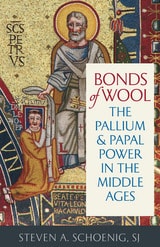
Bonds of Wool
The Pallium and Papal Power in the Middle AgesSteven A. Schoenig
Catholic University of America Press, 2016
Borders of Belief
Religious Nationalism and the Formation of Identity in Ireland and TurkeyGregory J. Goalwin
Rutgers University Press, 2022
Bound for Beatitude A Thomistic Study in Eschatology and Ethics
Reinhard Hütter
Catholic University of America Press, 2019
Bread from Heaven
An Introduction to the Theology of the EucharistBernhard Blankenhorn
Catholic University of America Press, 2021
By Those Who Knew Them
French Modernists Left, Right, and CenterHarvey Hill
Catholic University of America Press, 2008
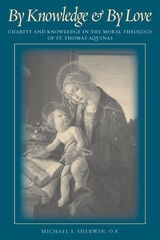
By knowledge & by love
charity and knowledge in the moral theology of St. Thomas AquinasMichael S. Sherwin
Catholic University of America Press, 2005