Results by title
66 books match the query 'Central' and 2 start with b
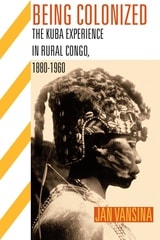
Being Colonized
The Kuba Experience in Rural Congo, 1880–1960Jan Vansina
University of Wisconsin Press, 2010
What was it like to be colonized by foreigners? Highlighting a region in central Congo, in the center of sub-Saharan Africa, Being Colonized places Africans at the heart of the story. In a richly textured history that will appeal to general readers and students as well as to scholars, the distinguished historian Jan Vansina offers not just accounts of colonial administrators, missionaries, and traders, but the varied voices of a colonized people. Vansina uncovers the history revealed in local news, customs, gossip, and even dreams, as related by African villagers through archival documents, material culture, and oral interviews.
Vansina’s case study of the colonial experience is the realm of Kuba, a kingdom in Congo about the size of New Jersey—and two-thirds the size of its colonial master, Belgium. The experience of its inhabitants is the story of colonialism, from its earliest manifestations to its tumultuous end. What happened in Kuba happened to varying degrees throughout Africa and other colonized regions: racism, economic exploitation, indirect rule, Christian conversion, modernization, disease and healing, and transformations in gender relations. The Kuba, like others, took their own active part in history, responding to the changes and calamities that colonization set in motion. Vansina follows the region’s inhabitants from the late nineteenth century to the middle of the twentieth century, when a new elite emerged on the eve of Congo’s dramatic passage to independence.
Vansina’s case study of the colonial experience is the realm of Kuba, a kingdom in Congo about the size of New Jersey—and two-thirds the size of its colonial master, Belgium. The experience of its inhabitants is the story of colonialism, from its earliest manifestations to its tumultuous end. What happened in Kuba happened to varying degrees throughout Africa and other colonized regions: racism, economic exploitation, indirect rule, Christian conversion, modernization, disease and healing, and transformations in gender relations. The Kuba, like others, took their own active part in history, responding to the changes and calamities that colonization set in motion. Vansina follows the region’s inhabitants from the late nineteenth century to the middle of the twentieth century, when a new elite emerged on the eve of Congo’s dramatic passage to independence.
[more]
Belonging, Identity, and Conflict in the Central African Republic
Gino Vlavonou
University of Wisconsin Press, 2023
Political conflict in many parts of the world has been shaped by notions of who rightfully belongs to a place. The concept of autochthony—that a true, original people are born of a land and belong to it above all others—has animated struggles across postcolonial Africa. But is this sense of rootedness from time immemorial necessary to assertions of original being and thus political supremacy? Belonging, Identity, and Conflict in the Central African Republic examines how political conflict unfolds when the language of autochthony is detached from historical land claims.
Focusing on violent struggles in the Central African Republic between 2012 and 2019, Gino Vlavonou explores the social practices, discursive strategies, and government policies that emerged in the relentless project of African state building. Conflict pitted Christian-animist communities, loosely organized as vigilante groups under the name anti-Balaka, against Muslim rebels known as the Séléka. Fighters of the anti-Balaka claimed that they were autochthonous, the “true Central Africans,” reframing their Muslim neighbors as foreigners to be expelled. While the country had previously witnessed episodes of violence, both peoples had lived together relatively peacefully and intermarried. The speed and ferocity with which identity was weaponized puzzled many observers. To understand this phenomenon, Vlavonou probes autochthony as a category of identity that differs from ethnicity in important ways. He argues that elites and ordinary citizens alike mobilize the language of original belonging as “identity capital,” a resource to be deployed. The value of that capital is lodged in what people say and do every day to give meaning to their identity, and its content changes across time and space.
Focusing on violent struggles in the Central African Republic between 2012 and 2019, Gino Vlavonou explores the social practices, discursive strategies, and government policies that emerged in the relentless project of African state building. Conflict pitted Christian-animist communities, loosely organized as vigilante groups under the name anti-Balaka, against Muslim rebels known as the Séléka. Fighters of the anti-Balaka claimed that they were autochthonous, the “true Central Africans,” reframing their Muslim neighbors as foreigners to be expelled. While the country had previously witnessed episodes of violence, both peoples had lived together relatively peacefully and intermarried. The speed and ferocity with which identity was weaponized puzzled many observers. To understand this phenomenon, Vlavonou probes autochthony as a category of identity that differs from ethnicity in important ways. He argues that elites and ordinary citizens alike mobilize the language of original belonging as “identity capital,” a resource to be deployed. The value of that capital is lodged in what people say and do every day to give meaning to their identity, and its content changes across time and space.
[more]