Results by title
95 books match the query 'Christian Living' and 4 start with b
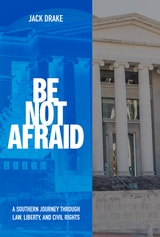
Be Not Afraid
A Southern Journey Through Law, Liberty, and Civil RightsJack Drake
University of Alabama Press, 2026
A civil rights attorney’s unflinching memoir about the fight against segregation and systemic racism through landmark legal battles in Alabama
Be Not Afraid: A Southern Journey Through Law, Liberty, and Civil Rights is a timely and unflinching memoir from civil rights attorney Jack Drake, who has spent decades on the front lines of Alabama’s legal battles for racial justice. Raised in a segregated community in Gardendale, Alabama, Drake came of age during the civil rights movement and became a pivotal figure in cases that reshaped the state’s legal and moral landscape.
Drake helped reform Alabama’s grossly inadequate mental health system and supported voting rights efforts throughout Alabama. His career underscores the crucial role private attorneys and grassroots advocates played in enforcing civil rights laws long after their passage.
Through vivid recollections of courtroom battles, civil rights alliances, and personal transformation, Be Not Afraid offers an intimate view into the persistence and courage required to challenge systemic injustice. At a time when debates over equity and democracy remain pressing, Drake’s story is both a powerful reflection on the past and a call to action for the present. It speaks to the enduring importance of legal advocacy and community solidarity in the fight for a more just society, making it essential reading for those engaged in civil rights history, law, or social change.
Before Amoris Laetitia
The Sources of the ControversyJaroslaw Kupczak
Catholic University of America Press, 2021
Being Generous
Theodore Roosevelt Malloch
Templeton Press, 2010
Through the ages, the world’s cultures and great religions have in profound, though different, ways sought to answer the big question: how should we live? Part of the answer has to do with how we ought to treat others, particularly those who are most in need. Ample evidence suggests that giving selflessly to others lies at the heart of what it means to be a thoughtful and moral human being. In Being Generous, author Theodore Roosevelt Malloch leads an exploration of this important concept of generous giving.
He begins by examining how generosity fits into the various spiritual traditions, philosophical schools, and economic systems. Further chapters illustrate how generosity need not always be about money, showing how it might also involve the sharing of time and talent. Elsewhere, Malloch explores the science behind generosity, looking, for example, at the relationship between various chemicals in the brain and generous behavior. Beyond the theory and the science of generosity, readers will also find a wealth of inspiration in a collection of profiles of past and present icons of generosity.
Being Generous concludes with a practical action plan that lays out concrete steps to guide readers toward lives of greater giving.

Born Again
The Christian Right GlobalizedJennifer S. Butler
Pluto Press, 2006
This book reveals how Christian conservative groups are able to shape policy in every corner of the world. Drawing on interviews with religious leaders, it reveals how today's most powerful Christian Right organisations are building interfaith coalitions, connecting Catholic, Mormon and Muslim allies to advance a conservative agenda.
The US under Bush Jr. has given them a significant voice in shaping US policy on issues including women's rights, reproductive health, human cloning, children's rights and AIDS.
In short, the Christian Right is globalising -- a phenomenon that promises to challenge progressive social policy on a world-wide scale - as well as transform the Christian Right itself.