Results by title
172 books match the query 'Citizenship' and 13 start with b

Banning Queer Blood
Rhetorics of Citizenship, Contagion, and ResistanceJeffrey A. Bennett
University of Alabama Press, 2009
In Banning Queer Blood, Jeffrey Bennett frames blood donation as a performance of civic identity closely linked to the meaning of citizenship. However, with the advent of HIV came the notion of blood donation as a potentially dangerous process. Bennett argues that the Food and Drug Administration, by employing images that specifically depict gay men as contagious, has categorized gay men as a menace to the nation. The FDA's ban on blood donation by gay men served to propagate the social misconceptions about gay men that continue to circulate within both the straight and LGBT/Queer communities.
Bennett explores the role of scientific research cited by these banned-blood policies and its disquieting relationship to government agencies, including the FDA. Bennett draws parallels between the FDA's position on homosexuality and the historical precedents of discrimination by government agencies against racial minorities. The author concludes by describing the resistance posed by queer donors, who either lie in order to donate blood or protest discrimination at donation sites, and by calling for these prejudiced policies to be abolished.
Beauvoir and Her Sisters
The Politics of Women's Bodies in FranceSandra Reineke
University of Illinois Press, 2011
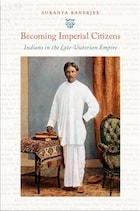
Becoming Imperial Citizens
Indians in the Late-Victorian EmpireSukanya Banerjee
Duke University Press, 2010
Interpreting autobiography, fiction, election speeches, economic analyses, parliamentary documents, and government correspondence, Banerjee foregrounds the narrative logic sustaining the unprecedented claims to citizenship advanced by racialized colonial subjects. She focuses on the writings of figures such as Dadabhai Naoroji, known as the first Asian to be elected to the British Parliament; Surendranath Banerjea, among the earliest Indians admitted into the Indian Civil Service; Cornelia Sorabji, the first woman to study law in Oxford and the first woman lawyer in India; and Mohandas K. Gandhi, who lived in South Africa for nearly twenty-one years prior to his involvement in Indian nationalist politics. In her analysis of the unexpected registers through which they carved out a language of formal equality, Banerjee draws extensively from discussions in both late-colonial India and Victorian Britain on political economy, indentured labor, female professionalism, and bureaucratic modernity. Signaling the centrality of these discussions to the formulations of citizenship, Becoming Imperial Citizens discloses a vibrant transnational space of political action and subjecthood, and it sheds new light on the complex mutations of the category of citizenship.
Becoming Rwandan
Education, Reconciliation, and the Making of a Post-Genocide CitizenS. Garnett Russell
Rutgers University Press, 2020
Being Political
Genealogies of CitizenshipEngin F. Isin
University of Minnesota Press, 2002
A provocative counterhistory-and a bold new approach-to notions of citizenship.
What does it mean to be political? Every age has based its answer on citizenship, bequeathing us such indelible images as that of the Greek citizen exercising his rights and obligations in the agora, the Roman citizen conducting himself in the forum, medieval citizens receiving their charter before the guildhall. Being Political disrupts these images by approaching citizenship as otherness, presenting a powerful critique of universalistic and orientalist interpretations of the origins of citizenship and a persuasive alternative history of the present struggles over citizenship.
Who were the strangers and outsiders of citizenship? What strategies and technologies were invented for constituting those forms of otherness? Focusing on these questions, rather than on the images conveyed by history’s victors, Being Political offers a series of genealogies of citizenship as otherness. Engin F. Isin invokes the city as a "difference machine," recovering slaves, peasants, artisans, prostitutes, vagabonds, savages, flextimers, and squeegee men in the streets of the polis, civitas, metropolis, and cosmopolis. The result is a challenge to think in bolder terms about citizenship at a time when the nature of citizenship is an increasingly open question.
Between Care and Criminality
Marriage, Citizenship, and Family in Australian Social WelfareHelena Zeweri
Rutgers University Press, 2024

Blood and Culture
Youth, Right-Wing Extremism, and National Belonging in Contemporary GermanyCynthia Miller-Idriss
Duke University Press, 2009
Miller-Idriss describes a new understanding of national belonging emerging among young Germans—one in which cultural assimilation takes precedence over blood or ethnic heritage. Moreover, she argues that teachers’ well-intentioned, state-sanctioned efforts to counter nationalist pride often create a backlash, making radical right-wing groups more appealing to their students. Miller-Idriss argues that the state’s efforts to shape national identity are always tempered and potentially transformed as each generation reacts to the official conception of what the nation “ought” to be.
Border Rhetorics
Citizenship and Identity on the US-Mexico FrontierEdited by D. Robert DeChaine
University of Alabama Press, 2012
Undertakes a wide-ranging examination of the US-Mexico border as it functions in the rhetorical production of civic unity in the United States
A “border” is a powerful and versatile concept, variously invoked as the delineation of geographical territories, as a judicial marker of citizenship, and as an ideological trope for defining inclusion and exclusion. It has implications for both the empowerment and subjugation of any given populace. Both real and imagined, the border separates a zone of physical and symbolic exchange whose geographical, political, economic, and cultural interactions bear profoundly on popular understandings and experiences of citizenship and identity.
The border’s rhetorical significance is nowhere more apparent, nor its effects more concentrated, than on the frontier between the United States and Mexico. Often understood as an unruly boundary in dire need of containment from the ravages of criminals, illegal aliens, and other undesirable threats to the national body, this geopolitical locus exemplifies how normative constructions of “proper”; border relations reinforce definitions of US citizenship, which in turn can lead to anxiety, unrest, and violence centered around the struggle to define what it means to be a member of a national political community.
Border Thinking
Latinx Youth Decolonizing CitizenshipAndrea Dyrness
University of Minnesota Press, 2020
Rich accounts of how Latinx migrant youth experience belonging across borders
As anti-immigrant nationalist discourses escalate globally, Border Thinking offers critical insights into how young people in the Latinx diaspora experience belonging, make sense of racism, and long for change. Every year thousands of youth leave Latin America for the United States and Europe, and often the young migrants are portrayed as invaders and, if able to stay, told to integrate into their new society. Border Thinking asks not how to help the diaspora youth assimilate but what the United States and Europe can learn about citizenship from these diasporic youth.
Working in the United States, Spain, and El Salvador, Andrea Dyrness and Enrique Sepúlveda III use participatory action research to collaborate with these young people to analyze how they make sense of their experiences in the borderlands. Dyrness and Sepúlveda engage them in reflecting on their feelings of belonging in multiple places—including some places that treat them as outsiders and criminals. Because of their transnational existence and connections to both home and host countries, diaspora youth have a critical perspective on national citizenship and yearn for new forms of belonging not restricted to national borders. The authors demonstrate how acompañamiento—spaces for solidarity and community-building among migrants—allow youth to critically reflect on their experiences and create support among one another.
Even as national borders grow more restricted and the subject of immigration becomes ever more politically fraught, young people’s identities are increasingly diasporic. As the so-called migrant crisis continues, change in how citizenship and belonging are constructed is necessary, and urgent, to create inclusive and sustainable futures. In Border Thinking, Dyrness and Sepúlveda decouple citizenship from the nation-state, calling for new understandings of civic engagement and belonging.
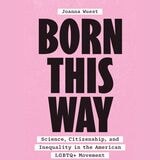
Born This Way
Science, Citizenship, and Inequality in the American LGBTQ+ MovementJoanna Wuest
University of Chicago Press, 2023
The story of how a biologically driven understanding of gender and sexuality became central to US LGBTQ+ political and legal advocacy.
Across protests and courtrooms, LGBTQ+ advocates argue that sexual and gender identities are innate. Oppositely, conservatives incite panic over “groomers” and a contagious “gender ideology” that corrupts susceptible children. Yet, as this debate rages on, the history of what first compelled the hunt for homosexuality’s biological origin story may hold answers for the queer rights movement’s future.
Born This Way tells the story of how a biologically based understanding of gender and sexuality became central to LGBTQ+ advocacy. Starting in the 1950s, activists sought out mental health experts to combat the pathologizing of homosexuality. As Joanna Wuest shows, these relationships were forged in subsequent decades alongside two broader, concurrent developments: the rise of an interest-group model of rights advocacy and an explosion of biogenetic and bio-based psychological research. The result is essential reading to fully understand LGBTQ+ activism today and how clashes over science remain crucial to equal rights struggles.
Born This Way
Science, Citizenship, and Inequality in the American LGBTQ+ MovementJoanna Wuest
University of Chicago Press, 2023
This is an auto-narrated audiobook version of this book.
The story of how a biologically driven understanding of gender and sexuality became central to US LGBTQ+ political and legal advocacy.
Across protests and courtrooms, LGBTQ+ advocates argue that sexual and gender identities are innate. Oppositely, conservatives incite panic over “groomers” and a contagious “gender ideology” that corrupts susceptible children. Yet, as this debate rages on, the history of what first compelled the hunt for homosexuality’s biological origin story may hold answers for the queer rights movement’s future.
Born This Way tells the story of how a biologically based understanding of gender and sexuality became central to LGBTQ+ advocacy. Starting in the 1950s, activists sought out mental health experts to combat the pathologizing of homosexuality. As Joanna Wuest shows, these relationships were forged in subsequent decades alongside two broader, concurrent developments: the rise of an interest-group model of rights advocacy and an explosion of biogenetic and bio-based psychological research. The result is essential reading to fully understand LGBTQ+ activism today and how clashes over science remain crucial to equal rights struggles.

Brazilian Popular Music and Citizenship
Idelber Avelar and Christopher Dunn, eds.
Duke University Press, 2011
Contributors. Idelber Avelar, Christopher Dunn, João Freire Filho, Goli Guerreiro, Micael Herschmann, Ari Lima, Aaron Lorenz, Shanna Lorenz, Angélica Madeira, Malcolm K. McNee, Frederick Moehn, Flávio Oliveira, Adalberto Paranhos, Derek Pardue, Marco Aurélio Paz Tella, Osmundo Pinho, Carlos Sandroni, Daniel Sharp, Hermano Vianna, Wivian Weller

Brown Threat
Identification in the Security StateKumarini Silva
University of Minnesota Press, 2016
What is “brown” in—and beyond—the context of American identity politics? How has the concept changed since 9/11? In the most sustained examination of these questions to date, Kumarini Silva argues that “brown” is no longer conceived of solely as a cultural, ethnic, or political identity. Instead, after 9/11, the Patriot Act, and the wars in Iran, Iraq, and Afghanistan, it has also become a concept and, indeed, a strategy of identification—one rooted in xenophobic, imperialistic, and racist ideologies to target those who do not neatly fit or subscribe to ideas of nationhood.
Interweaving personal narratives, ethnographic research, analyses of popular events like the Miss America pageant, and films and TV shows such as the Harold and Kumar franchise and Black-ish, Silva maps junctures where the ideological, political, and mediated terrain intersect, resulting in an appetite for all things “brown” (especially South Asian brown) by U.S. consumers, while political and nationalist discourses and legal structures (immigration, emigration, migration, outsourcing, incarceration) conspire to control brown bodies both within and outside the United States.
Silva explores this contradictory relationship between representation and reality, arguing that the representation mediates and manages the anxieties that come from contemporary global realities, in which brown spaces, like India, Pakistan, and the Middle East pose key economic, security, and political challenges to the United States. While racism is hardly new, what makes this iteration of brown new is that anyone or any group, at any time, can be branded as deviant, as a threat.