Results by title
808 books match the query 'Civilization' and 43 start with b
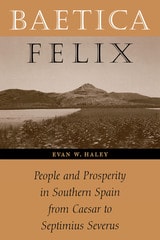
Baetica Felix
People and Prosperity in Southern Spain from Caesar to Septimius SeverusBy Evan W. Haley
University of Texas Press, 2003
Baetica, the present-day region of Andalusia in southern Spain, was the wealthiest province of the Roman Empire. Its society was dynamic and marked by upward social and economic mobility, as the imperial peace allowed the emergence of a substantial middle social and economic stratum. Indeed, so mutually beneficial was the imposition of Roman rule on the local population of Baetica that it demands a new understanding of the relationship between Imperial Rome and its provinces.
Baetica Felix builds a new model of Roman-provincial relations through a socio-economic history of the province from Julius Caesar to the end of the second century A.D. Describing and analyzing the impact of Roman rule on a core province, Evan Haley addresses two broad questions: what effect did Roman rule have on patterns of settlement and production in Baetica, and how did it contribute to wealth generation and social mobility? His findings conclusively demonstrate that meeting the multiple demands of the Roman state created a substantial freeborn and ex-slave "middle stratum" of the population that outnumbered both the super-rich elite and the destitute poor.

Bearing the Bad News
Contemporary American Literature and CultureSanford Pinsker
University of Iowa Press, 1990

Beautiful Cosmos
Performance and Belonging in the Caribbean DiasporaTina K. Ramnarine
Pluto Press, 2007
Beautiful Democracy
Aesthetics and Anarchy in a Global EraRuss Castronovo
University of Chicago Press, 2007
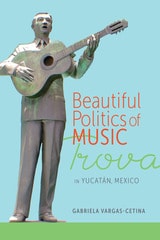
Beautiful Politics of Music
Trova in Yucatán, MexicoGabriela Vargas-Cetina
University of Alabama Press, 2017
An exploration into the history and practice of trova, a genre of music that is the soul of Yucatán.
Yucatecan trova is a music genre comprising a type of romantic song that is considered “the soul of Yucatán and Yucatecans.” This first book on Yucatecan trova offers an insider’s view of the history and practice of a treasured cultural heritage. A central theme of Gabriela Vargas-Cetina’s ethnography is what she refers to as the “beautiful politics of music” practiced by Yucatecan trova patrons and organizations, which is a way of asserting the importance of groups and issues through nonconfrontational means.
Trova emerged on the peninsula at the end of the nineteenth century and continues to be part of the general urban soundscape in the states of Yucatán and Campeche. Until the 1920s, this music was little known outside Yucatán and became absorbed into the larger Latin American Bolero genre, making it difficult to perceive its uniqueness and relation to life in Yucatán.
Vargas-Cetina, a native Yucatecan and trova musician, offers ethnographic insight into the local music scene. With family connections, she embedded herself as a trovadora, and her fieldwork—singing, playing the guitar in a trova group, and extensively researching the genre and talking with fellow enthusiasts and experts—ensued. Trova, like other types of artistic endeavors, is the result of collaboration and social milieu. She describes the dedicated trova clubs, cultural institutions, the Yucatecan economy of agricultural exports, and identity politics that helped the music come about and have maintained it today.
Positioned in the larger context of the music of Mexico and Latin America and engaging with theories of modernity and cosmopolitanism, experimental ethnography, and the anthropology of organizations, Beautiful Politics of Music consists of rigorous scholarship. It is also a warm tribute to performers and songs that have inspired many people around the world for more than two centuries.
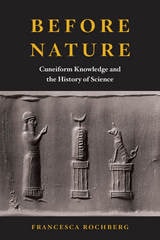
Before Nature
Cuneiform Knowledge and the History of ScienceFrancesca Rochberg
University of Chicago Press, 2016
Before the concept of nature formed over the long history of European philosophy and science, our ancestors in ancient Assyria and Babylonia developed an inquiry into the world in a way that is kindred to our modern science. With Before Nature, Francesca Rochberg explores that Assyro-Babylonian knowledge tradition and shows how it relates to the entire history of science. From a modern, Western perspective, a world not conceived somehow within the framework of physical nature is difficult—if not impossible—to imagine. Yet, as Rochberg lays out, ancient investigations of regularity and irregularity, norms and anomalies clearly established an axis of knowledge between the knower and an intelligible, ordered world. Rochberg is the first scholar to make a case for how exactly we can understand cuneiform knowledge, observation, prediction, and explanation in relation to science—without recourse to later ideas of nature. Systematically examining the whole of Mesopotamian science with a distinctive historical and methodological approach, Before Nature will open up surprising new pathways for studying the history of science.
Bengal in Global Concept History
Culturalism in the Age of CapitalAndrew Sartori
University of Chicago Press, 2008
Sartori weaves the narrative of Bengal’s embrace of culturalism into a worldwide history of the concept, from its origins in eighteenth-century Germany, through its adoption in England in the early 1800s, to its appearance in distinct local guises across the non-Western world. The impetus for the concept’s dissemination was capitalism, Sartori argues, as its spread across the globe initiated the need to celebrate the local and the communal. Therefore, Sartori concludes, the use of the culture concept in non-Western sites was driven not by slavish imitation of colonizing powers, but by the same problems that repeatedly followed the advance of modern capitalism. This remarkable interdisciplinary study will be of significant interest to historians and anthropologists, as well as scholars of South Asia and colonialism.
Between Race and Empire
African-Americans and Cubans before the Cuban RevolutionLisa Brock
Temple University Press, 1998
The eleven essays gathered here, written by scholars from both countries, heighten our appreciation of African-Americans as international actors and challenge the notion that Cubans had little or no race consciousness. This is the first study of the world capitalist system to track the international consciousness of working peoples, peoples of color, and women. With a focus on two sets of peoples not in state power, Between Race and Empire expands our understanding of "history from below," and reflects current trends in PanAfricanist and African Diaspora studies by tracing a little-studied linkage between two peoples of African descent.
Between the Eagle and the Sun
Traces of JapanIhab Hassan
University of Alabama Press, 1996
A fascinating memoir by Egypt-born American literary theorist and writer Ihab Hassan about his life in Japan. Part recollection, part cultural perception, Between the Eagle and the Sun records his journey, living and seeing himself sometimes as another, assaying always to read the hieroglyphs of his past in the scripts of Japan. As lucid as it is intensely felt, at once lyrical and critical, the work offers a beguiling vision of Japan and, by tacit contrast, of America. For writing, the author says, is more than praise or blame, it is also knowledge, empathy, and delight. These attributes are evident in Hassan's treatment of Japanese culture, its people and scenes. Indeed, the people, rendered in vibrant portraits throughout the book, abide when all the shadows of romance and exasperation have fled.
True to its moment, the work also reinvests the forms of memoir, travel, and quest. Cultural essays, travel anecdotes, autobiographical meditations, portraits of Japanese friends, a section titled "Entries, A to Z," fit into a tight frame, with clear transitions from one section to another. The style, however, alters subtly to suit topic, occasion, and mood.
Japan may not hold the key to this planet's future; no single nation does. Yet the continuing interest in its history, society, and people and the incresed awareness of its recent trends and growing global impact engage an expanding audience. Avoiding cliches, sympathetic to its subject yet analytical, unflinching in judgment, and withal highly personal, Between the Eagle and the Sun offers a unique image of its subject by a distinguished and well-traveled critic, at home in several cultures.
Between the Lines
South Asians and Postcolonialityedited by Deepika Bahri and Mary Vasudeva
Temple University Press, 1996
This ground-breaking collection of new interviews, critical essays, and commentary explores South Asian identity and culture. Sensitive to the false homogeneity implied by "South Asian," "diaspora," "postcolonial," and "Asian American," the contributors attempt to unpack these terms. By examining the social, economic, and historical particularities of people who live "between the lines"—on and between borders—they reinstate questions of power and privilege, agency and resistance. As South Asians living in the United States and Canada, each to some degree must reflect on the interaction of the personal "I," the collective "we," and the world beyond.
The South Asian scholars gathered together in this volume speak from a variety of theoretical perspectives; in the essays and interviews that cross the boundaries of conventional academic disciplines, they engage in intense, sometimes contentious, debate.
Contributors: Meena Alexander, Gauri Viswanathan, Gayatri Chakravorty Spivak, Amritjit Singh, M. G. Vassanji, Sohail Inayatullah, Ranita Chatterjee, Benita Mehta, Sanjoy Majumder, Mahasveta Barua, Sukeshi Kamra, Samir Dayal, Pushpa Naidu Parekh, Indrani Mitra, Huma Ibrahim, Amitava Kumar, Shantanu DuttaAhmed, Uma Parameswaran.
In the series Asian American History and Culture, edited by Sucheng Chan, David Palumbo-Liu, Michael Omi, K. Scott Wong, and Linda Trinh Võ.
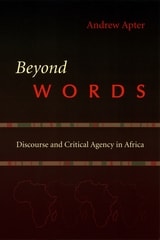
Beyond Words
Discourse and Critical Agency in AfricaAndrew Apter
University of Chicago Press, 2007
Even within anthropology, a discipline that strives to overcome misrepresentations of peoples and cultures, colonialist depictions of the so-called Dark Continent run deep. The grand narratives, tribal tropes, distorted images, and “natural” histories that forged the foundations of discourse about Africa remain firmly entrenched. In Beyond Words, Andrew Apter explores how anthropology can come to terms with the “colonial library” and begin to develop an ethnographic practice that transcends the politics of Africa’s imperial past.
The way out of the colonial library, Apter argues, is by listening to critical discourses in Africa that reframe the social and political contexts in which they are embedded. Apter develops a model of critical agency, focusing on a variety of language genres in Africa situated in rituals that transform sociopolitical relations by self-consciously deploying the power of language itself. To break the cycle of Western illusions in discursive constructions of Africa, he shows, we must listen to African voices in ways that are culturally and locally informed. In doing so, Apter brings forth what promises to be a powerful and influential theory in contemporary anthropology.
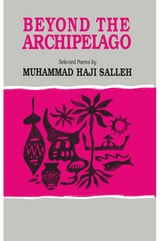
Beyond the Archipelago
Selected PoemsMuhammad Haji Salleh
Ohio University Press, 1994
A collections of 70 poems from one of Malaya’s leading poets, that depict longing, loneliness, modernization, and insights in Malaysian culture.
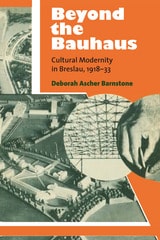
Beyond the Bauhaus
Cultural Modernity in Breslau, 1918-33Deborah Ascher Barnstone
University of Michigan Press, 2016
This richly illustrated volume is the first book in English to address this history, constituting an invaluable addition to the literature on the Weimar period. Its readership includes scholars of German history, art, architecture, urban design, planning, collecting, and exhibition history; of the avant-garde, and of the development of arts academies and arts pedagogy.
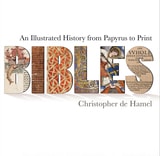
Bibles
An Illustrated History from Papyrus to PrintChristopher de Hamel
Bodleian Library Publishing, 2011
A unique visual history of the world’s best-selling book of all time, Bibles provides a rich snapshot of the biblical bookmaking tradition through images from fifty rare and important Bibles. As the captivating and colorful images collected here reveal, in many ways the history of the Bible mirrors the history of the book and publishing.
Presented chronologically, the Bibles provide a fascinating look into the book making techniques and characteristics of their time. From the fragile papyrus fragments of the ancient world to medieval illuminated manuscripts and glorious modern printed editions, each image is accompanied by a caption which explains its particular significance. In addition, each chapter includes a short introduction that contextualizes each book within its time period. Featuring many unusual examples—some of which have never been illustrated in print before—Bibles includes many of the great biblical texts of the Eastern and Western traditions, including the Magdalen Papyrus, the Laudian Acts, the Anglo-Saxon Exodus, St Margaret’s Gospel-book, the Douce Apocalypse, the Bible Moralisée (MS. Bodley 270b), the Kennicott Bible, the Guttenberg Bible, and the King James Bible.
Drawing exclusively from one of the finest collections of Bibles in the world, which is held at the Bodleian Library at Oxford University, this book tells the remarkable story of the development of the Bible across media, language, and provenance.
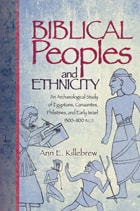
Biblical Peoples and Ethnicity
An Archaeological Study of Egyptians, CanaaniteAnn E. Killebrew
SBL Press, 2005

Big Wild Soul of Terrence Cole
An Eclectic Collection to Honor Alaska’s Public HistorianEdited by Frank Soos and Mary Ehrlander
University of Alaska Press, 2019
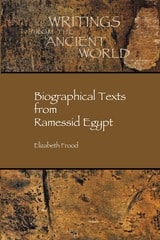
Biographical Texts from Ramessid Egypt
Elizabeth Frood
SBL Press, 2007
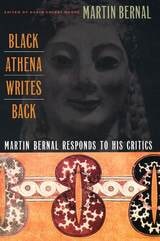
Black Athena Writes Back
Martin Bernal Responds to His CriticsMartin Bernal
Duke University Press, 2001
The subsequent rancor among classicists over Bernal’s theory and accusations was picked up in the popular media, and his suggestion that Greek culture had its origin in Africa was widely derided. In a report on 60 Minutes, for example, it was suggested that Bernal’s hypothesis was essentially an attempt to provide blacks with self-esteem so that they would feel included in the march of progress.
In Black Athena Writes Back Bernal provides additional documentation to back up his thesis, as well as offering persuasive explanations of why traditional scholarship on the subject remains inaccurate and why specific arguments lobbed against his theories are themselves faulty.
Black Athena Writes Back requires no prior familiarity with either the Black Athena hypothesis or with the arguments advanced against it. It will be essential reading for those who have been following this long-running debate, as well as for those just discovering this fascinating subject.
Black Athena
Afroasiatic Roots of Classical Civilization, Volume I: The Fabrication of Ancient Greece, 1785-1985Edited by Martin Bernal
Rutgers University Press, 1987
Could Greek philosophy be rooted in Egyptian thought? Is it possible that the Pythagorean theory was conceived on the shores of the Nile and the Euphrates rather than in ancient Greece? Could it be that much of Western civilization was formed on the “Dark Continent”? For almost two centuries, Western scholars have given little credence to the possibility of such scenarios.
In Black Athena, an audacious three-volume series that strikes at the heart of today’s most heated culture wars, Martin Bernal challenges Eurocentric attitudes by calling into question two of the longest-established explanations for the origins of classical civilization. To use his terms, the Aryan Model, which is current today, claims that Greek culture arose as the result of the conquest from the north by Indo-European speakers, or “Aryans,” of the native “pre-Hellenes.” The Ancient Model, which was maintained in Classical Greece, held that the native population of Greece had initially been civilized by Egyptian and Phoenician colonists and that additional Near Eastern culture had been introduced to Greece by Greeks studying in Egypt and Southwest Asia. Moving beyond these prevailing models, Bernal proposes a Revised Ancient Model, which suggests that classical civilization in fact had deep roots in Afroasiatic cultures.
This long-awaited third and final volume of the series is concerned with the linguistic evidence that contradicts the Aryan Model of ancient Greece. Bernal shows how nearly 40 percent of the Greek vocabulary has been plausibly derived from two Afroasiatic languages—Ancient Egyptian and West Semitic. He also reveals how these derivations are not limited to matters of trade, but extended to the sophisticated language of politics, religion, and philosophy. This evidence, according to Bernal, greatly strengthens the hypothesis that in Greece an Indo-European–speaking population was culturally dominated by Ancient Egyptian and West Semitic speakers
Provocative, passionate, and colossal in scope, this volume caps a thoughtful rewriting of history that has been stirring academic and political controversy since the publication of the first volume.
Black Athena
Afroasiatic Roots of Classical Civilization, Volume II: The Archaeological and Documentary EvidenceBernal, Martin
Rutgers University Press, 1991
This volume is the second in a projected four-part series concerned with the competition between two historical models for the origins of Greek civilization. The model current today is the Aryan Model, according to which Greek culture arose as the result of the conquest from the north by Indo-European speakers or "Aryans" of the native "pre-Hellenes." The Ancient Model, which was the model maintained in Classical Greece, held that the native population of Greece had initially been civilized by Egyptian and Phoenician colonists and that more Near Eastern culture had been introduced to Greece by Greeks studying in Egypt and Southwest Asia. In these and later volumes, Martin Bernal proposes a Revised Ancient Model. According to this, the Indo-European aspects of Greek language and culture should be recognized as fundamental and the considerable non-Indo-European elements should be seen largely as Egyptian and Levantine additions to this basis.
Volume II is concerned with the archaeological and documentary evidence for contacts between Egypt and the Levant on the one hand and the Aegean on the other, during the Bronze Age from c. 3400 B.C. to c. 1100 B.C. These approaches are supplemented by information from later Greek myths, legends, religious cults, and language. The author concludes that contact between the two regions was far more extensive and influential than is generally believed. In the introduction to this volume, Bernal also responds to some reviews and criticisms of Volume I of Black Athena.
Martin Bernal is Professor of Government at Cornell University.
Black Athena
The Afroasiatic Roots of Classical Civilation Volume III: The Linguistic EvidenceMartin Bernal
Rutgers University Press, 2020
What is classical about Classical civilization? In one of the most audacious works of scholarship ever written, Martin Bernal challenges the foundation of our thinking about this question. Classical civilization, he argues, has deep roots in Afroasiatic cultures. But these Afroasiatic influences have been systematically ignored, denied or suppressed since the eighteenth century—chiefly for racist reasons.
The popular view is that Greek civilization was the result of the conquest of a sophisticated but weak native population by vigorous Indo-European speakers—Aryans—from the North. But the Classical Greeks, Bernal argues, knew nothing of this “Aryan model.” They did not see their institutions as original, but as derived from the East and from Egypt in particular.
This long-awaited third and final volume of the series is concerned with the linguistic evidence that contradicts the Aryan Model of ancient Greece. Bernal shows how nearly 40 percent of the Greek vocabulary has been plausibly derived from two Afroasiatic languages – Ancient Egyptian and West Semitic. He also reveals how these derivations are not limited to matters of trade, but extended to the sophisticated language of politics, religion, and philosophy. This evidence, according to Bernal, greatly strengthens the hypothesis that in Greece an Indo-European-speaking population was culturally dominated by Ancient Egyptian and West Semitic speakers.
Provocative, passionate, and colossal in scope, this volume caps a thoughtful rewriting of history that has been stirring academic and political controversy since the publication of the first volume.
Black Athena
The Afroasiatic Roots of Classical Civilization Volume I: The Fabrication of Ancient Greece 1785-1985Martin Bernal
Rutgers University Press, 2020
What is classical about Classical civilization? In one of the most audacious works of scholarship ever written, Martin Bernal challenges the foundation of our thinking about this question. Classical civilization, he argues, has deep roots in Afroasiatic cultures. But these Afroasiatic influences have been systematically ignored, denied or suppressed since the eighteenth century—chiefly for racist reasons.
The popular view is that Greek civilization was the result of the conquest of a sophisticated but weak native population by vigorous Indo-European speakers—Aryans—from the North. But the Classical Greeks, Bernal argues, knew nothing of this “Aryan model.” They did not see their institutions as original, but as derived from the East and from Egypt in particular.
In an unprecedented tour de force, Bernal links a wide range of areas and disciplines—drama, poetry, myth, theological controversy, esoteric religion, philosophy, biography, language, historical narrative, and the emergence of “modern scholarship.”
Black Athena
The Afroasiatic Roots of Classical Civilization Volume II: The Archaeological and Documentary EvidenceMartin Bernal
Rutgers University Press, 2020
What is classical about Classical civilization? In one of the most audacious works of scholarship ever written, Martin Bernal challenges the foundation of our thinking about this question. Classical civilization, he argues, has deep roots in Afroasiatic cultures. But these Afroasiatic influences have been systematically ignored, denied or suppressed since the eighteenth century—chiefly for racist reasons.
The popular view is that Greek civilization was the result of the conquest of a sophisticated but weak native population by vigorous Indo-European speakers—Aryans—from the North. But the Classical Greeks, Bernal argues, knew nothing of this “Aryan model.” They did not see their institutions as original, but as derived from the East and from Egypt in particular.
In an unprecedented tour de force, Bernal links a wide range of areas and disciplines—drama, poetry, myth, theological controversy, esoteric religion, philosophy, biography, language, historical narrative, and the emergence of “modern scholarship.”
This volume is the second in a three-part series concerned with the competition between two historical models for the origins of Greek civilization. Volume II is concerned with the archaeological and documentary evidence for contacts between Egypt and the Levant on the one hand, and the Aegean on the other, during the Bronze Age from c. 34000 BC to c. 1100 BC. These approaches are supplemented by information from later Greek myths, legends, religious cults, and language. The author concludes that contact between the two regions was far more extensive and influential than is generally believed. In the introduction to this volume, Bernal also responds to some reviews and criticism of Volume I of Black Athena.

Black British Cultural Studies
A ReaderEdited by Houston A. Baker, Jr., Manthia Diawara, and Ruth H. Lindeborg
University of Chicago Press, 1996
From Stuart Hall's classic study of racially structured societies to an interview by Manthia Diawara with Sonia Boyce, a leading figure in the Black British arts movement, the papers included here have transformed cultural studies through their sustained focus on the issue of race. Much of the book centers on Black British arts, especially film, ranging from a historical overview of Black British cinema to a weighing of the costly burden on Black artists of representing their communities. Other essays consider such topics as race and representation and colonial and postcolonial discourse.
This anthology will be an invaluable and timely resource for everyone interested in cultural studies. It also has much to offer students of anthropology, sociology, media and film studies, and literary criticism.
Black Europe and the African Diaspora
Edited by Darlene Clark Hine, Trica Danielle Keaton, and Stephen Small
University of Illinois Press, 2009
The presence of Blacks in a number of European societies has drawn increasing interest from scholars, policymakers, and the general public. This interdisciplinary and multi-disciplinary collection penetrates the multifaceted Black presence in Europe, and, in so doing, complicates the notions of race, belonging, desire, and identities assumed and presumed in revealing portraits of Black experiences in a European context. In focusing on contemporary intellectual currents and themes, the contributors theorize and re-imagine a range of historical and contemporary issues related to the broader questions of blackness, diaspora, hegemony, transnationalism, and "Black Europe" itself as lived and perceived realities.
Contributors are Allison Blakely, Jacqueline Nassy Brown, Tina Campt, Fred Constant, Alessandra Di Maio, Philomena Essed, Terri Francis, Barnor Hesse, Darlene Clark Hine, Dienke Hondius, Eileen Julien, Trica Danielle Keaton, Kwame Nimako, Tiffany Ruby Patterson, T. Denean Sharpley-Whiting, Stephen Small, Tyler Stovall, Alexander G. Weheliye, Gloria Wekker, and Michelle M. Wright.
Black and Green
Afro-Colombians, Development, and Nature in the Pacific LowlandsKiran Asher
Duke University Press, 2009
The Pacific region had yet to be overrun by drug traffickers, guerrillas, and paramilitary forces in the early 1990s. It was better known as the largest area of black culture in the country (90 percent of the region’s population is Afro-Colombian) and as a supplier of natural resources, including timber, gold, platinum, and silver. Colombia’s Law 70, passed in 1993, promised ethnic and cultural rights, collective land ownership, and socioeconomic development to Afro-Colombian communities. At the same time that various constituencies sought to interpret and implement Law 70, the state was moving ahead with large-scale development initiatives intended to modernize the economically backward coastal lowlands. Meanwhile national and international conservation organizations were attempting to protect the region’s rich biodiversity. Asher explores this juxtaposition of black rights, economic development, and conservation—and the tensions it catalyzed. She analyzes the meanings attached to “culture,” “nature,” and “development” by the Colombian state and Afro-Colombian social movements, including women’s groups. In so doing, she shows that the appropriation of development and conservation discourses by the social movements had a paradoxical effect. It legitimized the presence of state, development, and conservation agencies in the Pacific region even as it influenced those agencies’ visions and plans.
Blood in the Arena
The Spectacle of Roman PowerBy Alison Futrell
University of Texas Press, 1997
From the center of Imperial Rome to the farthest reaches of ancient Britain, Gaul, and Spain, amphitheaters marked the landscape of the Western Roman Empire. Built to bring Roman institutions and the spectacle of Roman power to conquered peoples, many still remain as witnesses to the extent and control of the empire.
In this book, Alison Futrell explores the arena as a key social and political institution for binding Rome and its provinces. She begins with the origins of the gladiatorial contest and shows how it came to play an important role in restructuring Roman authority in the later Republic. She then traces the spread of amphitheaters across the Western Empire as a means of transmitting and maintaining Roman culture and control in the provinces.
Futrell also examines the larger implications of the arena as a venue for the ritualized mass slaughter of human beings, showing how the gladiatorial contest took on both religious and political overtones. This wide-ranging study, which draws insights from archaeology and anthropology, as well as Classics, broadens our understanding of the gladiatorial contest and its place within the highly politicized cult practice of the Roman Empire.
Blood, Ink, and Culture
Miseries and Splendors of the Post-Mexican ConditionRoger Bartra
Duke University Press, 2002
Written with verve over a period of twenty years, these essays—most translated into English here for the first time—suggest why Bartra has become one of Latin America’s leading public intellectuals. The essays cover a broad range of topics, from the canonical forms of Mexican culture to the meaning of postnational identity in a globalizing age, from the repercussions of the 1994 Zapatista uprising to the 2000 election of Vicente Fox and the end of the PRI’s seven-decade rule. Across this range of topics, Bartra imparts astute insights into a critical period of transition in Mexican history, stressing throughout the importance of democracy, the complexity of identity, and the vibrancy of the Left. In Blood, Ink, and Culture, he provides a stimulating inside look at political and intellectual life in the southern reaches of North America.
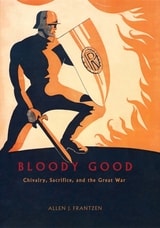
Bloody Good
Chivalry, Sacrifice, and the Great WarAllen J. Frantzen
University of Chicago Press, 2003
Here for the first time, Allen J. Frantzen traces these chivalric ideals from the Great War back to their origins in the Middle Ages and shows how they resulted in highly influential models of behavior for men in combat. Drawing on a wide selection of literature and images from the medieval period, along with photographs, memorials, postcards, war posters, and film from both sides of the front, Frantzen shows how such media shaped a chivalric ideal of male sacrifice based on the Passion of Jesus Christ. He demonstrates, for instance, how the wounded body of Christ became the inspiration for heroic male suffering in battle. For some men, the Crucifixion inspired a culture of revenge, one in which Christ's bleeding wounds were venerated as badges of valor and honor. For others, Christ's sacrifice inspired action more in line with his teachings—a daring stay of hands or reason not to visit death upon one's enemies.
Lavishly illustrated and eloquently written, Bloody Good will be must reading for anyone interested in World War I and the influence of Christian ideas on modern life.
Bluestocking Feminism and British-German Cultural Transfer, 1750-1837
Alessa Johns
University of Michigan Press, 2014
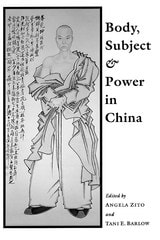
Body, Subject, and Power in China
Edited by Angela Zito and Tani E. Barlow
University of Chicago Press, 1994
Contributors investigate problems of bodiliness, engendered subjectivities, and discourses of power through a variety of sources that include written texts, paintings, buildings, interviews, and observations. Taken together, the essays show that bodies in China have been classified, represented, discussed, ritualized, gendered, and eroticized in ways as rich and multiple as those described in critical histories of the West. Silk robes, rocks, winds, gestures of bowing, yin yang hierarchies, and cross-dressing have helped create experiences of the body specific to Chinese historical life. By pointing to multiple examples of reimagining subjectivity and renegotiating power, the essays encourage scholars to avoid making broad generalizations about China and to rethink traditional notions of power, subject, and bodiliness in light of actual Chinese practices. Body, Subject, and Power in China is at once an example of the changing face of China studies and a work of importance to the entire discipline of cultural studies.
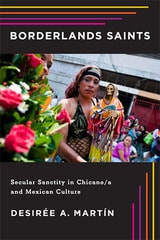
Borderlands Saints
Secular Sanctity in Chicano/a and Mexican CultureMartín, Desirée A
Rutgers University Press, 2013
Winner of the 2014 Latina/o Studies Section - LASA Outstanding Book Award
In Borderlands Saints, Desirée A. Martín examines the rise and fall of popular saints and saint-like figures in the borderlands of the United States and Mexico. Focusing specifically on Teresa Urrea (La Santa de Cabora), Pancho Villa, César Chávez, Subcomandante Marcos, and Santa Muerte, she traces the intersections of these figures, their devotees, artistic representations, and dominant institutions with an eye for the ways in which such unofficial saints mirror traditional spiritual practices and serve specific cultural needs.
Popular spirituality of this kind engages the use and exchange of relics, faith healing, pilgrimages, and spirit possession, exemplifying the contradictions between high and popular culture, human and divine, and secular and sacred. Martín focuses upon a wide range of Mexican and Chicano/a cultural works drawn from the nineteenth century to the present, covering such diverse genres as the novel, the communiqué, drama, the essay or crónica, film, and contemporary digital media. She argues that spiritual practice is often represented as narrative, while narrative—whether literary, historical, visual, or oral—may modify or even function as devotional practice.
Borders of Chinese Civilization
Geography and History at Empire's EndD. R. Howland
Duke University Press, 1996
With Japan’s decision in the 1870s to modernize and westernize, China’s relationship with Japan underwent a crucial change—one that resulted in its decisive separation from Chinese civilization and, according to Howland, a destabilization of China’s worldview. His examination of the ways in which Chinese perceptions of Japan altered in the 1880s reveals the crucial choice faced by the Chinese of whether to interact with Japan as “kin,” based on geographical proximity and the existence of common cultural threads, or as a “barbarian,” an alien force molded by European influence.
By probing China’s poetic and expository modes of portraying Japan, Borders of Chinese Civilization exposes the changing world of the nineteenth century and China’s comprehension of it. This broadly appealing work will engage scholars in the fields of Asian studies, Chinese literature, history, and geography, as well as those interested in theoretical reflections on travel or modernism.
Boston Mass-Mediated
Urban Space and Culture in the Digital AgeStanley Corkin
University of Massachusetts Press, 2024
In the mid-nineteenth century, Boston fashioned itself as a global hub. By the early 1970s, it was barely a dot on the national picture. It had gained a reputation as a decaying city rife with crime and dysfunctional politics, as well as decidedly retrograde race relations, prominently exemplified by white resistance to school integration. Despite this historical ebb in its national and international presence, it still possessed the infrastructure—superb educational institutions such as Harvard and MIT, world-class sports teams like the Celtics and Red Sox, powerful media outlets like The Boston Globe, and extensive shipping capacity—required to eventually thrive in an age of global trade and mass communication.
In Boston Mass-Mediated, Stanley Corkin explores the power of mass media to define a place. He examines the tensions between the emergent and prosperous city of the late twentieth and early twenty-first centuries and its representation in a range of media genres such as news journalism, professional sports broadcasting, and popular films like Mystic River and The Departed. This mass media, with its ever-increasing digital reach, has emphasized a city restricted by tropes suggestive of an earlier Boston—racism, white ethnic crime, Catholicism, and a pre-modern insularity—even as it becomes increasingly international and multicultural. These tropes mediate our understanding and experience of the city. Using Boston as a case study, Corkin contends that our contemporary sense of place occurs through a media saturated world, a world created by the explosion of digital technology that is steeped in preconceptions.
Branding Texas
Performing Culture in the Lone Star StateBy Leigh Clemons
University of Texas Press, 2008
Ask anyone to name an archetypal Texan, and you're likely to get a larger-than-life character from film or television (say John Wayne's Davy Crockett or J. R. Ewing of TV's Dallas) or a politician with that certain swagger (think LBJ or George W. Bush). That all of these figures are white and male and bursting with self-confidence is no accident, asserts Leigh Clemons. In this thoughtful study of what makes a "Texan," she reveals how Texan identity grew out of the history—and, even more, the myth—of the heroic deeds performed by Anglo men during the Texas Revolution and the years of the Republic and how this identity is constructed and maintained by theatre and other representational practices.
Clemons looks at a wide range of venues in which "Texanness" is performed, including historic sites such as the Alamo, the battlefield at Goliad, and the San Jacinto Monument; museums such as the Bob Bullock Texas State History Museum; seasonal outdoor dramas such as Texas! at Palo Duro Canyon; films such as John Wayne's The Alamo and the IMAX's Alamo: The Price of Freedom; plays and TV shows such as the Tuna trilogy, Dallas, and King of the Hill; and the Cavalcade of Texas performance at the 1936 Texas Centennial. She persuasively demonstrates that these performances have created a Texan identity that has become a brand, a commodity that can be sold to the public and even manipulated for political purposes.

Brazil Imagined
1500 to the PresentBy Darlene J. Sadlier
University of Texas Press, 2008
The first comprehensive cultural history of Brazil to be written in English, Brazil Imagined: 1500 to the Present captures the role of the artistic imaginary in shaping Brazil's national identity. Analyzing representations of Brazil throughout the world, this ambitious survey demonstrates the ways in which life in one of the world's largest nations has been conceived and revised in visual arts, literature, film, and a variety of other media.
Beginning with the first explorations of Brazil by the Portuguese, Darlene J. Sadlier incorporates extensive source material, including paintings, historiographies, letters, poetry, novels, architecture, and mass media to trace the nation's shifting sense of its own history. Topics include the oscillating themes of Edenic and cannibal encounters, Dutch representations of Brazil, regal constructs, the literary imaginary, Modernist utopias, "good neighbor" protocols, and filmmakers' revolutionary and dystopian images of Brazil. A magnificent panoramic study of race, imperialism, natural resources, and other themes in the Brazilian experience, this landmark work is a boon to the field.
Brazil and the Dialectic of Colonization
Alfredo Bosi
University of Illinois Press, 2015
Portugal extracted wealth from its Brazilian colony. Slaves--first indigenous peoples, later Africans--mined its ore and cut its sugarcane. From the customs of the colonists and the aspirations of the enslaved rose Brazil. Bosi scrutinizes signal points in the creation of Brazilian culture--the plays and poetry, the sermons of missionaries and Jesuit priests, the Indian novels of José de Alencar and the Voices of Africa of poet Castro Alves. His portrait of the country's response to the pressures of colonial conformity offers a groundbreaking appraisal of Brazilian culture as it emerged from the tensions between imposed colonial control and the African and Amerindian cults--including the Catholic-influenced ones--that resisted it.
Brutalism
Achille Mbembe
Duke University Press, 2024
Budapest and New York
Studies in Metropolitan Transformation, 1870-1930Thomas Bender
Russell Sage Foundation, 1994
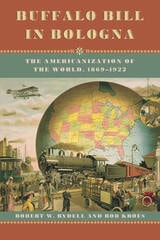
Buffalo Bill in Bologna
The Americanization of the World, 1869-1922Robert W. Rydell and Rob Kroes
University of Chicago Press, 2005
Buffalo Bill in Bologna reveals that the process of globalizing American mass culture began as early as the mid-nineteenth century. In fact, by the end of World War I, the United States already boasted an advanced network of culture industries that served to promote American values. Rydell and Kroes narrate how the circuses, amusement parks, vaudeville, mail-order catalogs, dime novels, and movies developed after the Civil War—tools central to hastening the reconstruction of the country—actually doubled as agents of American cultural diplomacy abroad. As symbols of America's version of the "good life," cultural products became a primary means for people around the world, especially in Europe, to reimagine both America and themselves in the context of America's growing global sphere of influence. Paying special attention to the role of the world's fairs, the exporting of Buffalo Bill's Wild West show to Europe, the release of The Birth of a Nation, and Woodrow Wilson's creation of the Committee on Public Information, Rydell and Kroes offer an absorbing tour through America's cultural expansion at the turn of the century. Buffalo Bill in Bologna is thus a tour de force that recasts what has been popularly understood about this period of American and global history.

Bulls, Bullfighting, and Spanish Identities
Carrie B. Douglass
University of Arizona Press, 1997
In talking about bulls and bullfighting, observes Douglass, one ends up talking not only about differences in region, class, and politics in Spain but also about that country's ongoing struggle between modernity and tradition. She relates how Spaniards and outsiders see bullfighting as representative of a traditional, irrational Spain contrasted with a more civilized Europe, and she shows how Spaniards' ambivalence about bullfighting is actually a way of expressing ambivalence about the loss of traditional culture in a modern world. To fully explore the symbolism of bulls and bullfighting, Douglass offers an overview of Spain's fiesta cycle, in which the bull is central. She broadly and meticulously details three different fiestas through ethnographic fieldwork conducted over a number of years, delineating the differences in festivals held in different regions.
She also shows how a cycle of these fiestas may hold the key to resolving some of Spain's fundamental political contradictions by uniting the different regions of Spain and reconciling opposing political camps--the right, which holds that there is one Spain, and the left, which contends that there are many. Bulls, Bullfighting, and Spanish Identities is an intriguing study of symbolism used to examine the broader anthropological issues of identity and nationhood. Through its focus on the political discourse of bulls and bullfighting, it makes an original contribution to understanding not only Spanish politics but also Spain's place in the modern world.
Buyers Beware
Insurgency and Consumption in Caribbean Popular CulturePatricia Joan Saunders
Rutgers University Press, 2022
Buying Time
Debt and Mobility in the Western Indian OceanThomas F. McDow
Ohio University Press, 2018
In Buying Time, Thomas F. McDow synthesizes Indian Ocean, Middle Eastern, and East African studies as well as economic and social history to explain how, in the nineteenth century, credit, mobility, and kinship knit together a vast interconnected Indian Ocean region. That vibrant and enormously influential swath extended from the desert fringes of Arabia to Zanzibar and the Swahili coast and on to the Congo River watershed.
In the half century before European colonization, Africans and Arabs from coasts and hinterlands used newfound sources of credit to seek out opportunities, establish new outposts in distant places, and maintain families in a rapidly changing economy. They used temporizing strategies to escape drought in Oman, join ivory caravans in the African interior, and build new settlements.
The key to McDow’s analysis is a previously unstudied trove of Arabic business deeds that show complex variations on the financial transactions that underwrote the trade economy across the region. The documents list names, genealogies, statuses, and clan names of a wide variety of people—Africans, Indians, and Arabs; men and women; free and slave—who bought, sold, and mortgaged property. Through unprecedented use of these sources, McDow moves the historical analysis of the Indian Ocean beyond connected port cities to reveal the roles of previously invisible people.