Results by title
440 books match the query 'Colonialism & Post-Colonialism' and 24 start with b
Bangkok after Dark
Maurice Rocco, Transnational Nightlife, and the Making of Cold War IntimaciesBenjamin Tausig
Duke University Press, 2025
Being Colonized
The Kuba Experience in Rural Congo, 1880–1960Jan Vansina
University of Wisconsin Press, 2010
Vansina’s case study of the colonial experience is the realm of Kuba, a kingdom in Congo about the size of New Jersey—and two-thirds the size of its colonial master, Belgium. The experience of its inhabitants is the story of colonialism, from its earliest manifestations to its tumultuous end. What happened in Kuba happened to varying degrees throughout Africa and other colonized regions: racism, economic exploitation, indirect rule, Christian conversion, modernization, disease and healing, and transformations in gender relations. The Kuba, like others, took their own active part in history, responding to the changes and calamities that colonization set in motion. Vansina follows the region’s inhabitants from the late nineteenth century to the middle of the twentieth century, when a new elite emerged on the eve of Congo’s dramatic passage to independence.
Being Together in Place
Indigenous Coexistence in a More Than Human WorldSoren C. Larsen
University of Minnesota Press, 2017
Being Together in Place explores the landscapes that convene Native and non-Native people into sustained and difficult negotiations over their radically different interests and concerns. Grounded in three sites—the Cheslatta-Carrier traditional territory in British Columbia; the Wakarusa Wetlands in northeastern Kansas; and the Waitangi Treaty Grounds in Aotearoa/New Zealand—this book highlights the challenging, tentative, and provisional work of coexistence around such contested spaces as wetlands, treaty grounds, fishing spots, recreation areas, cemeteries, heritage trails, and traditional village sites. At these sites, activists learn how to articulate and defend their intrinsic and life-supportive ways of being, particularly to those who are intent on damaging or destroying these places.
Using ethnographic research and a geographic perspective, Soren C. Larsen and Jay T. Johnson show how the communities in these regions challenge the power relations that structure the ongoing (post)colonial encounter in liberal democratic settler-states. Emerging from their conversations with activists was a distinctive sense that the places for which they cared had agency, a “call” that pulled them into dialogue, relationships, and action with human and nonhuman others. This being-together-in-place, they find, speaks in a powerful way to the vitalities of coexistence: where humans and nonhumans are working to decolonize their relationships; where reciprocal guardianship is being stitched back together in new and unanticipated ways; and where a new kind of “place thinking” is emerging on the borders of colonial power.
Belated Travelers
Orientalism in the Age of Colonial DissolutionAli Behdad
Duke University Press, 1994
Through readings of Flaubert, Nerval, Kipling, Blunt, and Eberhardt, and following the transition in travel literature from travelog to tourist guide, Belated Travelers addresses the specific historical conditions of late nineteenth-century orientalism implicated in the discourses of desire and power. Behdad also views a broad range of issues in addition to nostalgia and tourism, including transvestism and melancholia, to specifically demonstrate the ways in which the heterogeneity of orientalism and the plurality of its practice is an enabling force in the production and transformation of colonial power.
An exceptional work that provides an important critique of issues at the forefront of critical practice today, Belated Travelers will be eagerly awaited by specialists in nineteenth-century British and French literatures, and all concerned with colonial and postcolonial discourse.
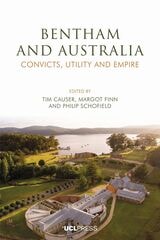
Bentham and Australia
Convicts, Utility and EmpireEdited by Tim Causer, Margot Finn, and Philip Schofield
University College London, 2022
This volume considers Jeremy Bentham’s Australian writings. In the first part of the volume, Bentham’s works are placed in their historical contexts, while the second part provides a critical assessment of the historical accuracy and plausibility of Bentham’s arguments against transportation from the British Isles. In the third part, attention turns to Bentham’s claim that New South Wales was founded illegally and to the imperial and colonial constitutional ramifications of that claim. The authors also discuss Bentham’s work of 1831 in which he supports the establishment of a free colony on the southern coast of Australia. In the final part, the authors shed light on the history of Bentham’s panopticon penitentiary scheme, his views on the punishment and reform of criminals and what role, if any, religion had to play in that regard, and discuss apparently panopticon-inspired institutions built in the Australian colonies.
This collection will appeal to readers interested in Bentham’s life and thought, the history of transportation from the British Isles and of British penal policy more generally, colonial and imperial history, Indigenous history, legal and constitutional history, and religious history.
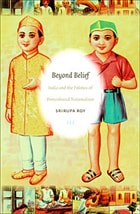
Beyond Belief
India and the Politics of Postcolonial NationalismSrirupa Roy
Duke University Press, 2007
Roy considers several different ways that identification with the Indian nation-state was produced and consolidated during the 1950s and 1960s. She looks at how the Films Division of India, a state-owned documentary and newsreel production agency, allowed national audiences to “see the state”; how the “unity in diversity” formation of nationhood was reinforced in commemorations of India’s annual Republic Day; and how the government produced a policy discourse claiming that scientific development was the ultimate national need and the most pressing priority for the state to address. She also analyzes the fate of the steel towns—industrial townships built to house the workers of nationalized steel plants—which were upheld as the exemplary national spaces of the new India. By prioritizing the role of actual manifestations of and encounters with the state, Roy moves beyond theories of nationalism and state formation based on collective belief.

Beyond Boundaries
C.L.R. James and Postnational StudiesEdited by Christopher Gair
Pluto Press, 2006
Invaluable for students of post-colonial studies, the book examines points where James crosses with other theorists, such as Lacan and Gramsci. Racial identity and cultural politics are key themes in his work, not to mention his unique writings on cricket. Contributors including Donald E Pease, Nicole King, Christopher Gair and Anthony Bogues illuminate the key themes in James's writing, and put forward the idea that the breath of James's thinking can be identified as the beginning of 'post-national' studies.
Christopher Gair is a lecturer in the Department of American and Canadian Studies, University of Birmingham. He is the author of Complicity and Resistance in Jack London¹ s Novels (Edwin Mullen Press, 1997), of The American Counterculture (forthcoming, Edinburgh University Press, 2006), and of numerous essays on American literature and culture. He is the editor of the journal Symbiosis.
Beyond Disaster
Building Collective Futures in Puerto RicoMelissa L. Rosario
Northwestern University Press, 2025
An alternative view of Puerto Rico’s past, present, and future
How do we map the pathways to liberation where we have been taught to see only trauma, suffering, and lack? Melissa L. Rosario offers an alternative view of Puerto Rico, America’s oldest colony, removing readers from the framework of crisis to consider the deeper legacies of its current impasse. Beyond Disaster: Building Collective Futures in Puerto Rico is an intimate portrait, weaving insights from the author’s own life, research, and organizing work as a scholar in the diaspora who rematriated. Rosario bridges the genres of social history and memoir to unsettle the meaning of resistance and freedom, underscoring the deep wounds of colonialism while still uplifting the profound possibilities of embodied alternatives.
Beyond Disaster critiques the framework of debt and crisis by examining the psychological, emotional, and spiritual effects of colonialism. Rosario highlights key examples of organizing efforts to defend land and education against total enclosure, protecting life amid loss. This book offers a series of microhistories, vignettes, and prose poetry to foreground the daily practices necessary to anchor the ecological and political landscapes of our collective future.

Beyond Inhabitation
Housing and Ordinary Desire at the EdgeMichele Lancione and AbdouMaliq Simone
Duke University Press, 2027
Beyond Sanctuary
The Humanism of a World in MotionAnanya Roy and Veronika Zablotsky, editors
Duke University Press, 2025
Contributors. Leisy Abrego, Damon Azali-Rojas, Amy Sara Carroll, Sharad Chari, Nicholas De Genova, Ricardo Dominguez, Lorgia García-Peña, Sarah Haley, Gaye Theresa Johnson, Moon-Kie Jung, Maria Kaika, Saree Makdisi, Kyle T. Mays, Ananya Roy, Charles Sepulveda, SA Smythe, Vanessa E. Thompson, Charalampos Tsavdaroglou, João H. Costa Vargas, Rinaldo Walcott, Veronika Zablotsky, Maite Zubiaurre
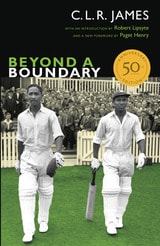
Beyond a Boundary
50th Anniversary EditionC. L .R. James
Duke University Press, 2013
Named one of the Top 50 Sports Books of All Time by Sports Illustrated
"Beyond a Boundary . . . should find its place on the team with Izaak Walton, Ivan Turgenev, A. J. Liebling, and Ernest Hemingway."—Derek Walcott, The New York Times Book Review
"As a player, James the writer was able to see in cricket a metaphor for art and politics, the collective experience providing a focus for group effort and individual performance. . . . [In] his scintillating memoir of his life in cricket, Beyond a Boundary (1963), James devoted some of his finest pages to this theme."—Edward Said, The Washington Post
"A work of double reverence—for the resilient, elegant ritualism of cricket and for the black people of the world."—Whitney Balliett, The New Yorker
"Beyond a Boundary is a book of remarkable richness and force, which vastly expands our understanding of sports as an element of popular culture in the Western and colonial world."—Mark Naison, The Nation
"Everything James has done has had the mark of originality, of his own flexible, sensitive, and deeply cultured intelligence. He conveys not a rigid doctrine but a delight and curiosity in all the manifestations of life, and the clue to everything lies in his proper appreciation of the game of cricket."—E. P. Thompson, author of The Making of the English Working Class
"Beyond a Boundary is . . . first and foremost an autobiography of a living legend—probably the greatest social theorist of our times."—Manning Marable, Journal of Sport & Social Issues
"The great triumph of Beyond a Boundary is its ability to rise above genre and in its very form explore the complex nature of colonial West Indian society."—Caryl Phillips, The New Republic
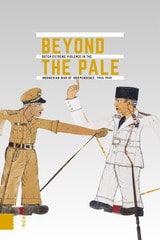
Beyond the Pale
Dutch Extreme Violence in the Indonesian War of Independence, 1945-1949Kon. Inst. v. Taal-, Land- en Volkenkunde (KITLV)
Amsterdam University Press, 2022
In 2005, the Dutch government declared that the Netherlands should never have waged the war. The government’s 1969 position on the violence used by the Dutch armed forces during the war remained unchanged, however: although there had been ‘excesses’, on the whole the armed forces had behaved ‘correctly’. As the indications of Dutch extreme violence mounted, this official position proved increasingly difficult to maintain. In 2016, the Dutch government therefore decided to fund a broad study on the dynamics of the violence. The most important conclusions of that research programme are summarized in this book. The authors show that the Dutch armed forces used extreme violence on a structural basis, and that this was concealed both at the time and for many years after the war by the Dutch government and by society more broadly. All of this – like the entire colonial history – is at odds with the rose-tinted self-image of the Netherlands.

Birthmark
Stephen Clingman
University of Massachusetts Press, 2016
Not only was the operation unsuccessful, it affected his vision, and his eyes came to see differently from each other. Birthmark explores the questions raised by living with divided vision in a divided world—the world of South Africa under apartheid, where every view was governed by the markings of birth, the accidents of color, race, and skin. But what were the effects on the mind? Clingman's book engages a number of questions. How, in such circumstances, can we come to a deeper kind of vision? How can we achieve wholeness and acceptance? How can we find our place in the midst of turmoil and change?
In a beguiling narrative set on three continents, this is a story that is personal, painful, comic, and ultimately uplifting: a book not so much of the coming of age but the coming of perspective.
Black Enlightenment
Surya Parekh
Duke University Press, 2023
Black Environmentalisms
Cajetan Iheka and Jonathan Howard, editors
Duke University Press, 2027
Black Feminist Anthropology
Theory, Politics, Praxis, and PoeticsMcClaurin, Irma
Rutgers University Press, 2001
In this volume, Irma McClaurin has collected-for the first time-essays that explore the role and contributions of black feminist anthropologists. She has asked her contributors to disclose how their experiences as black women have influenced their anthropological practice in Africa, the Caribbean, and the United States, and how anthropology has influenced their development as black feminists. Every chapter is a unique journey that enables the reader to see how scholars are made. The writers present material from their own fieldwork to demonstrate how these experiences were shaped by their identities. Finally, each essay suggests how the author's field experiences have influenced the theoretical and methodological choices she has made throughout her career.
Not since Diane Wolf's Feminist Dilemmas in the Field or Hortense Powdermaker's Stranger and Friend have we had such a breadth of women anthropologists discussing the critical (and personal) issues that emerge when doing ethnographic research.
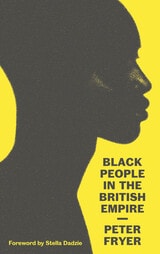
Black People in the British Empire
Peter Fryer
Pluto Press, 2021
Black People in the British Empire is a challenge to the official version of British history. It tells the story of Britain's exploitation and oppression of its subject peoples in its colonies, and in particular the people of Africa, Asia and Australasia
Peter Fryer reveals how the ideology of racism was used as justification for acquiring and expanding the Empire; how the British Industrial Revolution developed out of profits from the slave trade; and how the colonies were deliberately de-industrialised to create a market for British manufacturers.
In describing the frequency and the scale of revolts by subject peoples against slavery and foreign domination - and the brutality used in crushing them - Peter Fryer exposes the true history of colonialism, and restores to Black people their central role in Britain's past.
Black People in the British Empire
Peter Fryer
Pluto Press, 2021
'Fantastic … the most important book on Black British history’ - Akala
Black People in the British Empire is a challenge to the official version of British history. It tells the story of Britain's exploitation and oppression of its subject peoples in its colonies, and in particular the people of Africa, Asia and Australasia
Peter Fryer reveals how the ideology of racism was used as justification for acquiring and expanding the Empire; how the British Industrial Revolution developed out of profits from the slave trade; and how the colonies were deliberately de-industrialised to create a market for British manufacturers.
In describing the frequency and the scale of revolts by subject peoples against slavery and foreign domination - and the brutality used in crushing them - Peter Fryer exposes the true history of colonialism, and restores to Black people their central role in Britain's past.
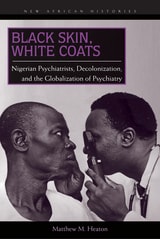
Black Skin, White Coats
Nigerian Psychiatrists, Decolonization, and the Globalization of PsychiatryMatthew M. Heaton
Ohio University Press, 2013
Black Skin, White Coats is a history of psychiatry in Nigeria from the 1950s to the 1980s. Working in the contexts of decolonization and anticolonial nationalism, Nigerian psychiatrists sought to replace racist colonial psychiatric theories about the psychological inferiority of Africans with a universal and egalitarian model focusing on broad psychological similarities across cultural and racial boundaries. Particular emphasis is placed on Dr. T. Adeoye Lambo, the first indigenous Nigerian to earn a specialty degree in psychiatry in the United Kingdom in 1954. Lambo returned to Nigeria to become the medical superintendent of the newly founded Aro Mental Hospital in Abeokuta, Nigeria’s first “modern” mental hospital. At Aro, Lambo began to revolutionize psychiatric research and clinical practice in Nigeria, working to integrate “modern” western medical theory and technologies with “traditional” cultural understandings of mental illness. Lambo’s research focused on deracializing psychiatric thinking and redefining mental illness in terms of a model of universal human similarities that crossed racial and cultural divides.
Black Skin, White Coats is the first work to focus primarily on black Africans as producers of psychiatric knowledge and as definers of mental illness in their own right. By examining the ways that Nigerian psychiatrists worked to integrate their psychiatric training with their indigenous backgrounds and cultural and civic nationalisms, Black Skin, White Coats provides a foil to Frantz Fanon’s widely publicized reactionary articulations of the relationship between colonialism and psychiatry. Black Skin, White Coats is also on the cutting edge of histories of psychiatry that are increasingly drawing connections between local and national developments in late-colonial and postcolonial settings and international scientific networks. Heaton argues that Nigerian psychiatrists were intimately aware of the need to engage in international discourses as part and parcel of the transformation of psychiatry at home.
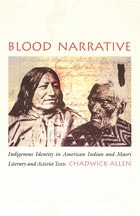
Blood Narrative
Indigenous Identity in American Indian and Maori Literary and Activist TextsChadwick Allen
Duke University Press, 2002
Allen shows how both Maori and Native Americans resisted the assimilationist tide rising out of World War II and how, in the 1960s and 1970s, they each experienced a renaissance of political and cultural activism and literary production that culminated in the formation of the first general assembly of the World Council of Indigenous Peoples. He focuses his comparison on two fronts: first, the blood/land/memory complex that refers to these groups' struggles to define indigeneity and to be freed from the definitions of authenticity imposed by dominant settler cultures. Allen's second focus is on the discourse of treaties between American Indians and the U.S. government and between Maori and Great Britain, which he contends offers strong legal and moral bases from which these indigenous minorities can argue land and resource rights as well as cultural and identity politics.
With its implicit critique of multiculturalism and of postcolonial studies that have tended to neglect the colonized status of indigenous First World minorities, Blood Narrative will appeal to students and scholars of literature, American and European history, multiculturalism, postcolonialism, and comparative cultural studies.
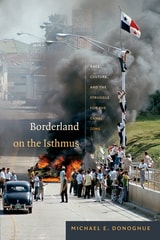
Borderland on the Isthmus
Race, Culture, and the Struggle for the Canal ZoneMichael E. Donoghue
Duke University Press, 2014
Britain and World Power since 1945
Constructing a Nation's Role in International PoliticsDavid M. McCourt
University of Michigan Press, 2014
Brown Skin, White Masks
Hamid Dabashi
Pluto Press, 2011
In this unprecedented study, Hamid Dabashi provides a critical examination of the role that immigrant "comprador intellectuals" play in facilitating the global domination of American imperialism.
In his pioneering book about the relationship between race and colonialism, Black Skin, White Masks, Frantz Fanon explored the traumatic consequences of the sense of inferiority that colonized people felt, and how this often led them to identify with the ideology of the colonial agency. Brown Skin, White Masks picks up where Frantz Fanon left off. Dabashi extends Fanon’s insights as they apply to today's world.
Dabashi shows how intellectuals who migrate to the West are often used by the imperial powers to misrepresent their home countries. Just as many Iraqi exiles were used to justify the invasion of Iraq, Dabashi demonstrates that this is a common phenomenon, and examines why and how so many immigrant intellectuals help to sustain imperialism.
The book radically alters Edward Said’s notion of the “intellectual exile,” in order to show the negative impact of intellectual migration. Dabashi examines the ideology of cultural superiority, and provides a passionate account of how these immigrant intellectuals—rootless compradors, and guns for hire–continue to betray any notion of home or country in order to manufacture consent for imperial projects.
Brutal Fantasies
Imagining North Korea in the Long Cold WarChristine Kim
Duke University Press, 2025