Results by title
355 books match the query 'Communism, Post-Communism & Socialism' and 13 start with b

Bad Marxism
Capitalism and Cultural StudiesJohn Hutnyk
Pluto Press, 2004
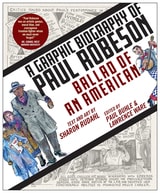
Ballad of an American
A Graphic Biography of Paul RobesonSharon Rudahl
Rutgers University Press, 2021
The first-ever graphic biography of Paul Robeson, Ballad of an American, charts Robeson’s career as a singer, actor, scholar, athlete, and activist who achieved global fame. Through his films, concerts, and records, he became a potent symbol representing the promise of a multicultural, multiracial American democracy at a time when, despite his stardom, he was denied personal access to his many audiences.
Robeson was a major figure in the rise of anti-colonialism in Africa and elsewhere, and a tireless campaigner for internationalism, peace, and human rights. Later in life, he embraced the civil rights and antiwar movements with the hope that new generations would attain his ideals of a peaceful and abundant world. Ballad of an American features beautifully drawn chapters by artist Sharon Rudahl, a compelling narrative about his life, and an afterword on the lasting impact of Robeson’s work in both the arts and politics. This graphic biography will enable all kinds of readers—especially newer generations who may be unfamiliar with him—to understand his life’s story and everlasting global significance.
Ballad of an American: A Graphic Biography of Paul Robeson is published in conjunction with Rutgers University’s centennial commemoration of Robeson’s 1919 graduation from the university.
Study guide for Ballad of an American: A Graphic Biography of Paul Robeson (https://d3tto5i5w9ogdd.cloudfront.net/wp-content/uploads/2021/05/10201015/YA_Adult-Study-Guide-for-A-Graphic-Biography-of-Paul-Robeson.pdf).
View the blad for Ballad of an American.

Bazhanov and the Damnation of Stalin
Boris Bazhanov
Ohio University Press, 1990
Before the Nation
Kokugaku and the Imagining of Community in Early Modern JapanSusan L. Burns
Duke University Press, 2003
Central to Burns's analysis is Motoori Norinaga’s Kojikiden, arguably the most important intellectual work of Japan's early modern period. Burns situates the Kojikiden as one in a series of attempts to analyze and interpret the mythohistories dating from the early eighth century, the Kojiki and Nihon shoki. Norinaga saw these texts as keys to an original, authentic, and idyllic Japan that existed before being tainted by "flawed" foreign influences, notably Confucianism and Buddhism. Hailed in the nineteenth century as the begetter of a new national consciousness, Norinaga's Kojikiden was later condemned by some as a source of Japan's twentieth-century descent into militarism, war, and defeat. Burns looks in depth at three kokugaku writers—Ueda Akinari, Fujitani Mitsue, and Tachibana Moribe—who contested Norinaga's interpretations and produced competing readings of the mythohistories that offered new theories of community as the basis for Japanese social and cultural identity. Though relegated to the footnotes by a later generation of scholars, these writers were quite influential in their day, and by recovering their arguments, Burns reveals kokugaku as a complex debate—involving history, language, and subjectivity—with repercussions extending well into the modern era.
Behind the Wall
An American in East Germany, 1988-89Paul Gleye
Southern Illinois University Press, 1991
Standing in long lines in the shops, coaxing clean laundry from an outdated washing machine, traveling despite unpredictable train schedules, and being without hot water, fruit, and vegetables through the gray winter months failed to dull Paul Gleye’s perceptions during the year he lived in Weimar, East Germany. Day by day Gleye documented his varied observations and experiences, unaware that they would prove a unique record of what would soon be an extinct society.
Gleye was in East Germany as a Fulbright lecturer. Living beyond the capital city of East Berlin and traveling and conversing freely, Gleye gained access to people and places that had been almost completely closed to Americans and other Westerners for decades.
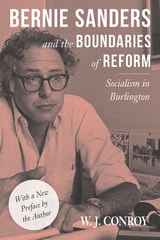
Bernie Sanders and the Boundaries of Reform
Socialism in BurlingtonW. J. Conroy
Temple University Press, 2016
In his preface to this reissue of the 1990 book, Challenging the Boundaries of Reform, W. J. Conroy reflects on the recent legacy of Sanders, his Agenda for America, and his appeal to young voters. His book then looks back to identify Sanders’ experience in Burlington by examining several case studies that unfolded amidst a conservative trend nationally, an unsympathetic state government, and a hostile city council.
Ultimately, Conroy asks what lessons can be drawn from the case of Burlington that would aid the American left in its struggle to capture both government and civil society?
Between Hollywood and Moscow
The Italian Communists and the Challenge of Mass Culture, 1943-1991Stephen Gundle
Duke University Press, 2000
Gundle focuses on the theme of cultural policy, examining how the PCI’s political strategies incorporated cultural policies and activities that were intended to respond to the Americanization of daily life in Italy. In formulating this policy, Gundle contends, the Italian Communists were torn between loyalty to the alternative values generated by the Communist tradition and adaptation to the dominant influences of Italian modernization. This equilibrium eventually faltered because the attractive aspects of Americanization and pop culture proved more influential than the PCI’s intellectual and political traditions.
The first analysis in English of the cultural policies and activities of the PCI, this book will appeal to readers with an interest in modern Italy, the European left, political science, and media studies.
Between Past and Future
The Revolution of 1989 and Their AftermathSorin Antohi
Central European University Press, 2000
Between the Brown and the Red
Nationalism, Catholicism, and Communism in Twentieth-Century Poland—The Politics of Boleslaw PiaseckiMikolaj Stanislaw Kunicki
Ohio University Press, 2012
Between the Brown and the Red captures the multifaceted nature of church-state relations in communist Poland, relations that oscillated between mutual confrontation, accommodation, and dialogue. Ironically, under communism the bond between religion and nation in Poland grew stronger. This happened in spite of the fact that the government deployed nationalist themes in order to portray itself as more Polish than communist. Between the Brown and the Red also introduces one of the most fascinating figures in the history of twentieth-century Poland and the communist world.
In this study of the complex relationships between nationalism, communism, authoritarianism, and religion in twentieth-century Poland, Mikołaj Kunicki shows the ways in which the country’s communist rulers tried to adapt communism to local traditions, particularly ethnocentric nationalism and Catholicism. Focusing on the political career of Bolesław Piasecki, a Polish nationalist politician who began his surprising but illuminating journey as a fascist before the Second World War and ended it as a procommunist activist, Kunicki demonstrates that Polish communists reinforced an ethnocentric self-definition of Polishness and—as Piasecki’s case demonstrates—thereby prolonged the existence of Poland’s nationalist Right.
Beyond Boundaries
C.L.R. James and Postnational StudiesEdited by Christopher Gair
Pluto Press, 2006
Invaluable for students of post-colonial studies, the book examines points where James crosses with other theorists, such as Lacan and Gramsci. Racial identity and cultural politics are key themes in his work, not to mention his unique writings on cricket. Contributors including Donald E Pease, Nicole King, Christopher Gair and Anthony Bogues illuminate the key themes in James's writing, and put forward the idea that the breath of James's thinking can be identified as the beginning of 'post-national' studies.
Christopher Gair is a lecturer in the Department of American and Canadian Studies, University of Birmingham. He is the author of Complicity and Resistance in Jack London¹ s Novels (Edwin Mullen Press, 1997), of The American Counterculture (forthcoming, Edinburgh University Press, 2006), and of numerous essays on American literature and culture. He is the editor of the journal Symbiosis.
Beyond the Color Line and the Iron Curtain
Reading Encounters between Black and Red, 1922-1963Kate A. Baldwin
Duke University Press, 2002
Langston Hughes, W. E. B. Du Bois, Claude McKay, and Paul Robeson each lived or traveled extensively in the Soviet Union between the 1920s and the 1960s, and each reflected on Communism and Soviet life in works that have been largely unavailable, overlooked, or understudied. Kate A. Baldwin takes up these writings, as well as considerable material from Soviet sources—including articles in Pravda and Ogonek, political cartoons, Russian translations of unpublished manuscripts now lost, and mistranslations of major texts—to consider how these writers influenced and were influenced by both Soviet and American culture. Her work demonstrates how the construction of a new Soviet citizen attracted African Americans to the Soviet Union, where they could explore a national identity putatively free of class, gender, and racial biases. While Hughes and McKay later renounced their affiliations with the Soviet Union, Baldwin shows how, in different ways, both Hughes and McKay, as well as Du Bois and Robeson, used their encounters with the U. S. S. R. and Soviet models to rethink the exclusionary practices of citizenship and national belonging in the United States, and to move toward an internationalism that was a dynamic mix of antiracism, anticolonialism, social democracy, and international socialism.
Recovering what Baldwin terms the "Soviet archive of Black America," this book forces a rereading of some of the most important African American writers and of the transnational circuits of black modernism.
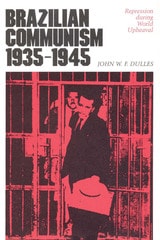
Brazilian Communism, 1935-1945
Repression during World UpheavalBy John W. F. Dulles
University of Texas Press, 1983
The Brazilian Communist Party was one of the largest Communist parties in Latin America until its split and dissolution in the 1990s. Although not granted legal status as a political party of Brazil until 1985, the Partido Comunista Brasileiro (PCB) has been tolerated by that country's regime.
Such governmental tolerance of the PCB was not always the case. In the past, the regime of Getúlio Vargas practiced savage forms of repression against Brazilian leftists, whose "Red extremism" was cited by both government leaders and the press as sufficient cause for Vargas' adoption of the most extreme measures.
Brazilian Communism, 1935–1945 is an objective and remarkably comprehensive account of the Brazilian Communist Party's struggle to survive those days of repression.
From his prison cell, PCB leader Luís Carlos Prestes guided the Party's quarreling factions. All who were associated with the Left shared a common enemy: the police, who used the most brutal forms of torture to extract information about leftist activities. Young Elza Fernandes, companion of the PCB's secretary general, was one whom the police interrogated. Suspecting that she had betrayed them, the Party itself arranged her murder.
Dulles' vivid account of this violent chapter in Latin American history is based on exclusive interviews with leading activists of the period and exhaustive research in the archives of both the PCB and the Brazilian police. The results make fascinating reading for Latin Americanists, historians of World War II, and students of international Communism alike.
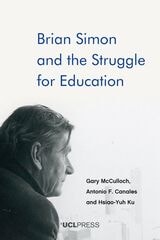
Brian Simon and the Struggle for Education
Gary McCulloch, Antonio Canales, and Hsiao-Yuh Ku
University College London, 2023
Using documentary sources that have only recently become publicly available, this book reveals the remarkably broad range of Brian Simon’s life as a student, soldier, schoolteacher, Communist Party activist, educational academic, campaigner, and reformer. In a sympathetic biography that retains critical distance, the authors analyze Simon’s contribution to Marxism and the Communist Party, explore the influence of both on his work as a historian of education, and trace the significance of his Marxist beliefs, political associations, and historical approaches to the cause of educational reform.
In so doing, they consider the full nature and limitations of Simon’s achievements in his struggle for education. Unlike many Marxist scholars, he remained loyal to the Communist Party in the 1950s, which damaged his reputation as a public intellectual. Nevertheless, his support for comprehensive education helped to promote egalitarian educational reforms in Britain, although he was later unable to provide sufficient resistance to the 1988 Education Reform Act and to a decline in the position of comprehensive schools.
In all this, the significance of Simon’s family, and especially his relationship with his wife Joan, is brought to the fore. Joan and Brian forged a formidable sixty-year partnership in politics and the Communist Party as well as in life, a partnership that lasted until Brian’s death in January 2002.