Results by title
198 books match the query 'Community' and 11 start with b
Becoming an Expert Caregiver
How Structural Flaws Shape Autism Carework and CommunityCara A. Chiaraluce
Rutgers University Press, 2025
Throughout the chapters in this book, the expert caregiver is one person who faces unbelievably daunting tasks of filling or reforming persistent institutional gaps, primarily in education and health care, and subverting ableist cultural norms. Without institutional support, answers to their questions, or pragmatic avenues to access resources, lay caregivers become the experts. Their trials and tribulations, especially when navigating the boundaries of professional/lay and private/public worlds, illuminate a type of carework that is increasingly relevant to a growing number of young families caring for neurodivergent, disabled, medically fragile, and/or chronically ill children. These stories offer a vivid picture of the often invisible complex challenges and structural forces that drive individuals to become expert caregivers in the first place.
Before the Nation
Kokugaku and the Imagining of Community in Early Modern JapanSusan L. Burns
Duke University Press, 2003
Central to Burns's analysis is Motoori Norinaga’s Kojikiden, arguably the most important intellectual work of Japan's early modern period. Burns situates the Kojikiden as one in a series of attempts to analyze and interpret the mythohistories dating from the early eighth century, the Kojiki and Nihon shoki. Norinaga saw these texts as keys to an original, authentic, and idyllic Japan that existed before being tainted by "flawed" foreign influences, notably Confucianism and Buddhism. Hailed in the nineteenth century as the begetter of a new national consciousness, Norinaga's Kojikiden was later condemned by some as a source of Japan's twentieth-century descent into militarism, war, and defeat. Burns looks in depth at three kokugaku writers—Ueda Akinari, Fujitani Mitsue, and Tachibana Moribe—who contested Norinaga's interpretations and produced competing readings of the mythohistories that offered new theories of community as the basis for Japanese social and cultural identity. Though relegated to the footnotes by a later generation of scholars, these writers were quite influential in their day, and by recovering their arguments, Burns reveals kokugaku as a complex debate—involving history, language, and subjectivity—with repercussions extending well into the modern era.
Between Self and Community
Children’s Personhood in a Globalized South KoreaJunehui Ahn
Rutgers University Press, 2023
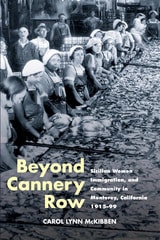
Beyond Cannery Row
Sicilian Women, Immigration, and Community in Monterey, California, 1915-99Carol Lynn McKibben
University of Illinois Press, 2005
McKibben's analysis of gender and gender roles shows that it was the women in this community who had the insight, the power, and the purpose to respond and even prosper amid changing economic conditions. Vividly evoking the immigrants' everyday experiences through first-person accounts and detailed description, McKibben demonstrates that the cannery work done by Sicilian immigrant women was crucial in terms of the identity formation and community development. These changes allowed their families to survive the challenges of political conflicts over citizenship in World War II and intermarriage with outsiders throughout the migration experience. The women formed voluntary associations and celebrated festas that effectively linked them with each other and with their home villages in Sicily. Continuous migration created a strong sense of transnationalism among Sicilians in Monterey, which has enabled them to continue as a viable ethnic community today.
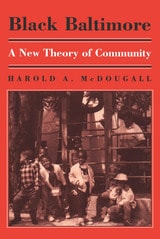
Black Baltimore
A New Theory of CommunityHarold Mcdougall
Temple University Press, 1993
Through extensive neighborhood interviews and a compelling assessment of the problems of unraveling communities in urban America, Harold McDougall reveals how, in sections of Baltimore, a "New Community" is developing. Relying more on vernacular culture, personal networking, and mutual support than on private wealth or public subsidy, the communities of black Baltimore provide an example of self-help and civic action that could and should be occurring in other inner-city areas. In this political history of Old West Baltimore, McDougall describes how "base communities"—small peer groups that share similar views, circumstances, and objectives—have helped neighborhoods respond to the failure of both government and the market to create conditions for a decent quality of life for all.
Arguing for the primacy of church leadership within the black community, the author describes how these small, flexible groups are creating the foundation of what he calls a New Community, where community-spirited organizers, clergy, public interest advocates, business people, and government workers interact and build relationships through which Baltimore's urban agenda is being developed.
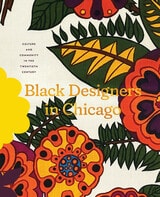
Black Designers in Chicago
Culture and Community in the Twentieth CenturyEdited by Chris Dingwall, David Hartt, and Daniel Schulman
University of Chicago Press, 2026
In twentieth-century Chicago, generations of Black artisans, craftspeople, art educators, clothing makers, commercial illustrators, sign painters, furniture makers, beauticians, graphic designers, art directors, and screen printers made and remade the city into an energetic center for modern design. Ambitious, enterprising, and resolutely modern, these Black designers were workers and intellectuals, activists and entrepreneurs. They created works for commercial and everyday use and helped to build community institutions such as the South Side Community Art Center and businesses like the Johnson Publishing Company. Their works ranged from branding and housewares for major corporations to pamphlets and posters made in the name of civil rights and Black Power. Together, they made Black Chicago into a dynamic design scene, working against racism in their professions while embracing the possibilities of design as a medium of social change.
This book is the first to chronicle their collective history while also celebrating their influence on design as well as African American culture more broadly. Based on extensive archival research and building on a major 2018 exhibition, Black Designers in Chicago presents essays by experts in African American history and design. The book features illustrations of a stunning variety of works—from graphic design to screenprints to textiles and household wares—placing African Americans at the center of modern design history, while highlighting the role of design in the cultural history of Black Chicago.
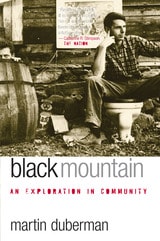
Black Mountain
An Exploration in CommunityMartin Duberman
Northwestern University Press, 2009
With faculty and alumni that included John Cage, Robert Creeley, Merce Cunningham, Buckminster Fuller, Charles Olson, Josef and Anni Albers, Paul Goodman, and Robert Rauschenberg, Black Mountain College ranked among the most important artistic and intellectual communities of the twentieth century. In his groundbreaking history, Martin Duberman uses interviews, anecdotes, and research to depict the relationships that made Black Mountain College what it was. Black Mountain documents the college’s twenty-three-year tenure, from its most brilliant moments of self-reinvention to its lowest moments of petty infighting. It records the financial difficulties that beleaguered the community throughout its existence and the determination it took to keep the college in operation. Duberman creates a nuanced portrait of this community so essential to the development of American arts and counterculture.
Black Women and da ’Rona
Community, Consciousness, and Ethics of CareEdited by Julia S. Jordan-Zachery and Shamara Wyllie Alhassan
University of Arizona Press, 2023
Recognizing that Black women have been living in pandemics as far back as colonialism and enslavement, this volume acknowledges that records of the past—from the 1918 flu pandemic to the onset of the HIV/AIDS epidemic—often erase the existence and experiences of Black women as a whole. Writing against this archival erasure, this collection consciously recenters the real-time experiences and perspectives of care, policy concerns, grief, and joy of Black women throughout the COVID-19 pandemic.
Nineteen contributors from interdisciplinary fields and diverse backgrounds explore Black feminine community, consciousness, ethics of care, spirituality, and social critique. They situate Black women’s multidimensional experiences with COVID-19 and other violences that affect their lives. The stories they tell are connected and interwoven, bound together by anti-Black gendered COVID necropolitics and commitments to creating new spaces for breathing, healing, and wellness.
Ultimately, this time-warping analysis shows how Black women imagine a more just society, rapidly adapt to changing experiences, and innovate ethics of care even in the midst of physical distancing, which can be instructive for thinking of new ways of living both during and beyond the era of COVID-19.
Contributors
Shamara Wyllie Alhassan
Sharnnia Artis
Keisha L. Bentley-Edwards
Candace S. Brown
Jenny Douglas
Kaja Dunn
Onisha Etkins
Rhonda M. Gonzales
Endia Hayes
Ashley E. Hollingshead
Kendra Jason
Julia S. Jordan-Zachery
Stacie LeSure
Janaka B. Lewis
Michelle Meggs
Nitya Mehrotra
Sherine Andreine Powerful
Marjorie Shavers
Breauna Marie Spencer
Tehia Starker Glass
Amber Walker
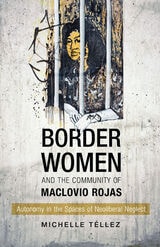
Border Women and the Community of Maclovio Rojas
Autonomy in the Spaces of Neoliberal NeglectMichelle Téllez
University of Arizona Press, 2021
Border Women and the Community of Maclovio Rojas tells the story of the community’s struggle to carve out space for survival and thriving in the shadows of the U.S.-Mexico geopolitical border. This ethnography by Michelle Téllez demonstrates the state’s neglect in providing social services and local infrastructure. This neglect exacerbates the structural violence endemic to the border region—a continuation of colonial systems of power on the urban, rural, and racialized poor. Téllez shows that in creating the community of Maclovio Rojas, residents have challenged prescriptive notions of nation and belonging. Through women’s active participation and leadership, a women’s political subjectivity has emerged—Maclovianas. These border women both contest and invoke their citizenship as they struggle to have their land rights recognized, and they transform traditional political roles into that of agency and responsibility.
This book highlights the U.S.-Mexico borderlands as a space of resistance, conviviality, agency, and creative community building where transformative politics can take place. It shows hope, struggle, and possibility in the context of gendered violences of racial capitalism on the Mexican side of the U.S.-Mexico border.
Boystown
Sex and Community in ChicagoJason Orne
University of Chicago Press, 2017
In Boystown, Orne takes readers on a detailed, lively journey through Chicago’s Boystown, which serves as a model for gayborhoods around the country. The neighborhood, he argues, has become an entertainment district—a gay Disneyland—where people get lost in the magic of the night and where straight white women can “go on safari.” In their original form, though, gayborhoods like this one don’t celebrate differences; they create them. By fostering a space outside the mainstream, gay spaces allow people to develop an alternative culture—a queer culture that celebrates sex.
Orne spent three years doing fieldwork in Boystown, searching for ways to ask new questions about the connective power of sex and about what it means to be not just gay, but queer. The result is the striking Boystown, illustrated throughout with street photography by Dylan Stuckey. In the dark backrooms of raunchy clubs where bachelorettes wouldn’t dare tread, people are hooking up and forging “naked intimacy.” Orne is your tour guide to the real Boystown, then, where sex functions as a vital center and an antidote to assimilation.

Bridging Borders
Portraits of Community and MigrationUniversity Neighborhood Partners
University of Utah Press, 2027