Results by title
80 books match the query 'Community development' and 4 start with b
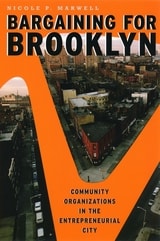
Bargaining for Brooklyn
Community Organizations in the Entrepreneurial CityNicole P. Marwell
University of Chicago Press, 2007
Through ethnographic fieldwork at eight CBOs in the Brooklyn neighborhoods of Williamsburg and Bushwick, Nicole P. Marwell discovered that the complex and contentious relationships these groups form with larger economic and political institutions outside the neighborhood have a huge and unexamined impact on the lives of the poor. Most studies of urban poverty focus on individuals or families, but Bargaining for Brooklyn widens the lens, examining the organizations whose actions and decisions collectively drive urban life.
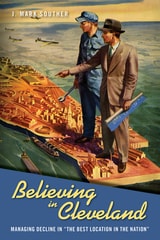
Believing in Cleveland
Managing Decline in “The Best Location in the Nation”J. Mark Souther
Temple University Press, 2017
Detractors have called it "The Mistake on the Lake." It was once America’s "Comeback City." According to author J. Mark Souther, Cleveland has long sought to defeat its perceived civic malaise. Believing in Cleveland chronicles how city leaders used imagery and rhetoric to combat and, at times, accommodate urban and economic decline.
Souther explores Cleveland's downtown revitalization efforts, its neighborhood renewal and restoration projects, and its fight against deindustrialization. He shows how the city reshaped its image when it was bolstered by sports team victories. But Cleveland was not always on the upswing. Souther places the city's history in the postwar context when the city and metropolitan area were divided by uneven growth. In the 1970s, the city-suburb division was wider than ever.
Believing in Cleveland recounts the long, difficult history of a city that entered the postwar period as America's sixth largest, then lost ground during a period of robust national growth. But rather than tell a tale of decline, Souther provides a fascinating story of resilience for what some folks called "The Best Location in the Nation."
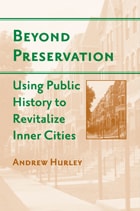
Beyond Preservation
Using Public History to Revitalize Inner CitiesAuthored by Andrew Hurley
Temple University Press, 2010
Across the United States, historic preservation has become a catalyst for urban regeneration. Entrepreneurs, urban pioneers, and veteran city dwellers have refurbished thousands of dilapidated properties and put them to productive use as shops, restaurants, nightclubs, museums, and private residences. As a result, inner-cities, once disparaged as zones of poverty, crime, and decay have been re-branded as historic districts. Although these preservation initiatives, often supported by government tax incentives and rigid architectural controls, deserve credit for bringing people back to the city, raising property values, and generating tourist revenue, they have been less successful in creating stable and harmonious communities.
Beyond Preservation proposes a framework for stabilizing and strengthening inner-city neighborhoods through the public interpretation of historic landscapes. Its central argument is that inner-city communities can best turn preserved landscapes into assets by subjecting them to public interpretation at the grass-roots. Based on an examination of successful projects in St. Louis, Missouri and other U.S. cities, Andrew Hurley demonstrates how rigorous historical analysis can help communities articulate a local identity and plan intelligently on the basis of existing cultural and social assets.
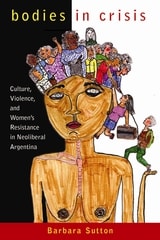
Bodies in Crisis
Culture, Violence, and Women's Resistance in Neoliberal ArgentinaSutton, Barbara
Rutgers University Press, 2010
Through the lens of women's body consciousness in a Global South country, and drawing on multifaceted stories and a politically embedded approach, Bodies in Crisis suggests that social policy, economic systems, cultural ideologies, and political resistance are ultimately fleshly matters.