Results by title
162 books match the query 'Comparative Politics' and 6 start with b
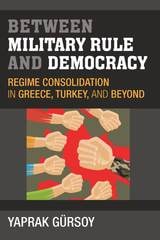
Between Military Rule and Democracy
Regime Consolidation in Greece, Turkey, and BeyondYaprak Gürsoy
University of Michigan Press, 2017
Based on more than 150 interviews with Greek and Turkish elites, Gürsoy offers a detailed analysis of both countries from the interwar period to recent regime crises. She argues that officers, politicians, and businesspeople prefer democracy, authoritarianism, or short-lived coups depending on the degree of threat they perceive to their interests from each other and the lower classes. The power of elites relative to the opposition, determined in part by the coalitions they establish with each other, affects the success of military interventions and the consolidation of regimes.
With historical and theoretical depth, Between Military Rule and Democracy will interest students of regime change and civil-military relations in Greece, Turkey, Thailand, and Egypt, as well as in countries facing similar challenges to democratization.
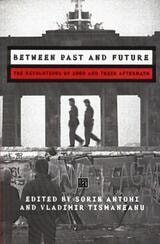
Between Past and Future
The Revolution of 1989 and Their AftermathSorin Antohi
Central European University Press, 2000
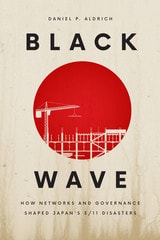
Black Wave
How Networks and Governance Shaped Japan’s 3/11 DisastersDaniel P. Aldrich
University of Chicago Press, 2019
Black Wave illuminates two critical factors that had a direct influence on why survival rates varied so much across the Tōhoku region following the 3/11 disasters and why the rebuilding process has also not moved in lockstep across the region. Individuals and communities with stronger networks and better governance, Daniel P. Aldrich shows, had higher survival rates and accelerated recoveries. Less-connected communities with fewer such ties faced harder recovery processes and lower survival rates. Beyond the individual and neighborhood levels of survival and recovery, the rebuilding process has varied greatly, as some towns and cities have sought to work independently on rebuilding plans, ignoring recommendations from the national government and moving quickly to institute their own visions, while others have followed the guidelines offered by Tokyo-based bureaucrats for economic development and rebuilding.

Brazil Since 1985
Economy, Polity and SocietyEdited by Maria D'Alva G. Kinzo and James Dunkerley
University of London Press, 2003
Contributors include Edmund Amann (School of Economic Studies, University of Manchester, UK), Maria Celi Scalon (Insituto Universitario de Pesquisas do Rio de Janeiro, Brazil), Carlos Antonio Costa Ribeiro (Universidade Federal de Minas Gerais, Brazil), Mauricio Coutinho (Universidade Estadual de Campinas, Brazil), Argelina Cheibub Figueiredo (Universidade de Sao Paulo, Brazil), James Dunkerley (Institute of Latin American Studies and Queen Mary, University of London, UK), Antonio Sergio A. Guimaraes (Universidade de Sao Paulo, Brazil), Anthony Hall (London School of Economics and Political Science, UK), Fernando Limongi (Universidade de Sao Paulo, Brazil), Fiona Macaulay (Centre for Brazilian Studies, University of Oxford and Institute of Latin American Studies, University of London, UK), Celso Martone (Universidade de Sao Paulo, Brazil), Leandro Piquet Carneiro (Universidade de Sao Paulo, Brazil), Mauro Porto (Universidade de Brasilia, Brazil), and Brasilio Sallum Jr. (Universidade de Sao Paulo, Brazil).
Brazil and South Korea
Economic Crisis and RestructuringEdited by Edmund Amann and Ha-Joon Chang
University of London Press, 2003
Contributors include Andre Averburg (United Nations Development Programme/ Banco Nacional de Desenvolvimento Economico e Social, Brazil), Fabio Giambiagi (Banco Nacional de Desenvolvimento Economico e Social), Andrea Goldstein (OECD Development Centre), Louise Haagh (Department of Politics, University of York, USA), Tat Yan Kong (School of Oriental and African Studies, University of London, UK), Jose Ricardo Ramalho (Federal University of Rio de Janeiro, Brazil), Ben Ross Schneider (Center for International and Comparative Studies, Northwestern University, USA), and Jaang-Sup Shin (Department of Economics, National University of Singapore).
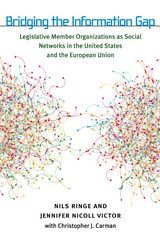
Bridging the Information Gap
Legislative Member Organizations as Social Networks in the United States and the European UnionNils Ringe and Jennifer Nicoll Victor with Christopher J. Carman
University of Michigan Press, 2013
Legislative member organizations (LMOs)—such as caucuses in the U.S. Congress and intergroups in the European Parliament—exist in lawmaking bodies around the world. Unlike parties and committees, LMOs play no obvious, predefined role in the legislative process. They provide legislators with opportunities to establish social networks with colleagues who share common interests. In turn, such networks offer valuable opportunities for the efficient exchange of policy-relevant—and sometimes otherwise unattainable—information between legislative offices. Building on classic insights from the study of social networks, the authors provide a comparative overview of LMOs across advanced, liberal democracies. In two nuanced case studies of LMOs in the European Parliament and the U.S. Congress, the authors rely on a mix of social network analysis, sophisticated statistical methods, and careful qualitative analysis of a large number of in-depth interviews.