Results by title
81 books match the query 'Composers' and 6 start with b
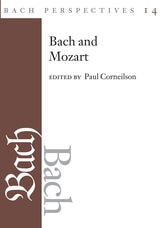
Bach Perspectives, Volume 14
Bach and Mozart: Connections, Patterns, and PathwaysEdited by Paul Corneilson
University of Illinois Press, 2022
An official publication of the American Bach Society, Bach Perspectives, Volume 14 draws on a variety of approaches and a broad range of subject matter in presenting a new wave of innovative classical musical scholarship.
Contributors: Eleanor Selfridge-Field, Yoel Greenberg, Noelle M. Heber, Michael Maul, Stephen Roe, and David Schulenberg
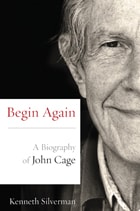
Begin Again
A Biography of John CageKenneth Silverman
Northwestern University Press, 2012
A man of extraordinary and seemingly limitless talents—musician, inventor, composer, poet, and even amateur mycologist—John Cage became a central figure of the avant-garde early in his life and remained at that pinnacle until his death in 1992 at the age of eighty. Award-winning biographer Kenneth Silverman gives us the first comprehensive life of this remarkable artist. Silverman begins with Cage’s childhood in interwar Los Angeles and his stay in Paris from 1930 to 1931, where immersion in the burgeoning new musical and artistic movements triggered an explosion of his creativity. Cage continued his studies in the United States with the seminal modern composer Arnold Schoenberg, and he soon began the experiments with sound and percussion instruments that would develop into his signature work with prepared piano, radio static, random noise, and silence. Cage’s unorthodox methods still influence artists in a wide range of genres and media. Silverman concurrently follows Cage’s rich personal life, from his early marriage to his lifelong personal and professional partnership with choreographer Merce Cunningham, as well as his friendships over the years with other composers, artists, philosophers, and writers.
Drawing on interviews with Cage’s contemporaries and friends and on the enormous archive of his letters and writings, and including photographs, facsimiles of musical scores, and Web links to illustrative sections of his compositions, Silverman gives us a biography of major significance: a revelatory portrait of one of the most important cultural figures of the twentieth century.

Berlioz and His Century
An Introduction to the Age of RomanticismJacques Barzun
University of Chicago Press, 1982
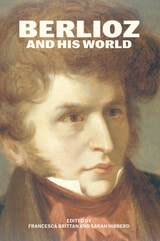
Berlioz and His World
Edited by Francesca Brittan and Sarah Hibberd
University of Chicago Press, 2024
Hector Berlioz (1803–1869) has long been a difficult figure to place and interpret. Famously, in Richard Wagner’s estimation, he hovered as a “transient, marvelous exception,” a composer woefully and willfully isolated. In the assessment of German composer Ferdinand Hiller, he was a fleeting comet who “does not belong in our musical solar system,” the likes of whom would never be seen again. For his contemporaries, as for later critics, Berlioz was simply too strange—and too noisy, too loud, too German, too literary, too cavalier with genre and form, and too difficult to analyze. He was, in many ways, a composer without a world.
Berlioz and His World takes a deep dive into the composer’s complex legacy, tracing lines between his musical and literary output and the scientific, sociological, technological, and political influences that shaped him. Comprising nine essays covering key facets of Berlioz’s contribution and six short “object lessons” meant as conversation starters, the book reveals Berlioz as a richly intersectional figure. His very difficulty, his tendency to straddle the worlds of composer, conductor, and critic, is revealed as a strength, inviting new lines of cross-disciplinary inquiry and a fresh look at his European and American reception.

Bitter Music
Collected Journals, Essays, Introductions, and LibrettosHarry Partch
University of Illinois Press, 1991
Bitter Music collects writings by one of the twentieth century's great musical iconoclasts. Rejecting the equal temperament and concert traditions that have dominated western music, Harry Partch adopted the pure intervals of just intonation and devised a 43-tone-to-the-octave scale, which in turn forced him into inventing numerous musical instruments. His compositions realize his ideal of a corporeal music that unites music, dance, and theater.
Winner of the ASCAP-Deems Taylor Award, Bitter Music includes two journals kept by Partch, one while wandering the West Coast during the Depression and the other as he hiked the rugged northern California coastline. It also includes Partch's essays on and discussions of his own compositions, as well as librettos and scenarios for six major narrative/dramatic works.
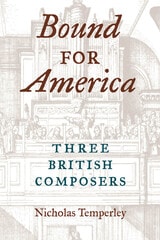
Bound for America
Three British ComposersNicholas Temperley
University of Illinois Press, 2002