Results by title
244 books match the query 'Crime' and 8 start with b
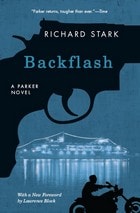
Backflash
A Parker NovelRichard Stark
University of Chicago Press, 2011
Parker embarks on one of the most complicated heists in the whole of the classic hard-boiled series, knocking over a casino floating on the Hudson
Richard Stark’s Parker novels are the hardest of hard-boiled, classic crime novels where the heists are huge, the body counts are high, and the bad guys usually win.
The Parker novels have been a huge influence on countless writers and filmmakers, including Quentin Tarantino, Stephen King, George Pelecanos, Colson Whitehead, Lucy Sante, John Banville, and many more. Their stripped-down language and hard-as-nails amorality create an unforgettable world where the next score could be the big one, but your next mistake could also be your last. There’s nothing else like them.
Parker's got a couple of rules that have helped keep him alive throughout his long career. One of those is never to work on a boat. But with a gambling boat cruising down the Hudson, stuffed to the gunwales with cash, Parker’s got a plan, a team, and a new rule: a shot at a big enough score makes any rule worth breaking. Parker and his crew hit the boat, hard, but as always, there are a lot of complications—and a lot of bodies—before this one's in the bag.
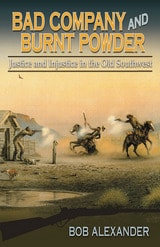
Bad Company and Burnt Powder
Justice and Injustice in the Old SouthwestBob Alexander
University of North Texas Press, 2014
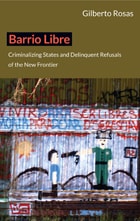
Barrio Libre
Criminalizing States and Delinquent Refusals of the New FrontierGilberto Rosas
Duke University Press, 2012
Rosas argues that although these youths participate in the victimization of others, they should not be demonized. They are complexly and adversely situated. The effects of NAFTA have forced many of them, as well as other Mexicans, to migrate to Nogales. Moving fluidly with the youths through the spaces that they inhabit and control, he shows how the militarization of the border actually destabilized the region and led Barrio Libre to turn to increasingly violent activities, including drug trafficking. By focusing on these youths and their delinquency, Rosas demonstrates how capitalism and criminality shape perceptions and experiences of race, sovereignty, and resistance along the US-Mexico border.
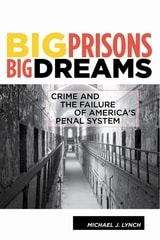
Big Prisons, Big Dreams
Crime and the Failure of America's Penal SystemMichael J. Lynch
Rutgers University Press, 2007
The American prison system has grown tenfold since the 1970s, but crime rates in the United States have not decreased. This doesn't surprise Michael J. Lynch, a critical criminologist, who argues that our oversized prison system is a product of our consumer culture, the public's inaccurate beliefs about controlling crime, and the government's criminalizing of the poor.
While deterrence and incapacitation theories suggest that imprisoning more criminals and punishing them leads to a reduction in crime, case studies, such as one focusing on the New York City jail system between 1993 and 2003, show that a reduction in crime is unrelated to the size of jail populations. Although we are locking away more people, Lynch explains that we are not targeting the worst offenders. Prison populations are comprised of the poor, and many are incarcerated for relatively minor robberies and violence. America's prison expansion focused on this group to the exclusion of corporate and white collar offenders who create hazardous workplace and environmental conditions that lead to deaths and injuries, and enormous economic crimes. If America truly wants to reduce crime, Lynch urges readers to rethink cultural values that equate bigger with better.

Bloody Williamson
A Chapter in American LawlessnessPaul M. Angle; Introduction by John Y. Simon
University of Illinois Press, 1952
"In Williamson County some men took to violence almost as a way of life. A shocking story, well told."--New Yorker
Williamson County in southern Illinois has been the scene of almost unparalleled violence, from the Bloody Vendetta between two families in the 1870s through the Herrin Massacre of 1922, Ku Klux Klan activities that ended in fatalities, and the gang war of the 1920s between the Charlie Birger and Shelton brothers gangs. Paul Angle was fascinated by this more-than-fifty-year history, and his account of this violence has become a classic.

Border State
Tonu Onnepalu
Northwestern University Press, 2000
An immediate sensation upon its 1993 publication in Europe, already translated into more than a dozen languages, Border State is a brilliantly realized account of a man in the grip of Western excess, emotionally crippled by a world that is subsuming his own and inhabiting a West in which "all countries have become imaginary deserts of ruins where crowds of nomads roam from one attraction to the other." His tale, in which disillusion and murder become inextricably linked, is a compelling exploration of scarcity, longing, and madness.
Breakout
A Parker NovelRichard Stark
University of Chicago Press, 2017
Richard Stark's Parker novels are the hardest of hard-boiled, classic crime novels where the heists are huge, the body counts are high, and the bad guys usually win.
The Parker novels have been a huge influence on countless writers and filmmakers, including Quentin Tarantino, Stephen King, George Pelecanos, Colson Whitehead, Lucy Sante, John Banville, and many more. Their stripped-down language and hard-as-nails amorality create an unforgettable world where the next score could be the big one, but your next mistake could also be your last. There's nothing else like them.
With Parker locked up and about to be unmasked, Breakout follows his Houdini-like escape from prison with a team of convicts. But when a new heist and new dangers—con artists, snitches, busybodies, eccentrics, and cops—loom among the dark alleys and old stone buildings of the big city to which they’ve fled, Parker soon learns that not all prisons have bars.
The Parker novels are pure artistry, adrenaline, and logic both brutal and brilliant. Join Parker on his jobs and read them all again or for the first time. Just don’t talk to the law.
Butcher's Moon
A Parker NovelRichard Stark
University of Chicago Press, 2011
The biggest, baddest novel in the entire Parker series, Butcher's Moon finds Parker taking on a whole mobbed-up town--and you can guess who comes out on top.
Richard Stark's Parker novels are the hardest of hard-boiled, classic crime novels where the heists are huge, the body counts are high, and the bad guys usually win.
The Parker novels have been a huge influence on countless writers and filmmakers, including Quentin Tarantino, Stephen King, George Pelecanos, Colson Whitehead, Lucy Sante, John Banville, and many more. Their stripped-down language and hard-as-nails amorality create an unforgettable world where the next score could be the big one, but your next mistake could also be your last. There's nothing else like them.
The sixteenth Parker novel, Butcher’s Moon is more than twice as long as most of the master heister’s adventures, and absolutely jammed with the action, violence, and nerve-jangling tension readers have come to expect. Back in the corrupt town where he lost his money, and nearly his life, in Slayground, Parker assembles a stunning cast of characters from throughout his career for one gigantic, blowout job: starting—and finishing—a gang war. It feels like the Parker novel to end all Parker novels, and for nearly twenty-five years that’s what it was. After its publication in 1974, Donald Westlake said, “Richard Stark proved to me that he had a life of his own by simply disappearing. He was gone.”
Featuring a new introduction by Westlake’s close friend and writing partner, Lawrence Block, this classic Parker adventure deserves a place of honor on any crime fan’s bookshelf. More than thirty-five years later, Butcher’s Moon still packs a punch: keep your calendar clear when you pick it up, because once you open it you won’t want to do anything but read until the last shot is fired.