Results by title
95 books match the query 'Crimes against' and 4 start with b
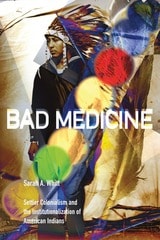
Bad Medicine
Settler Colonialism and the Institutionalization of American IndiansSarah A. Whitt
Duke University Press, 2025
In Bad Medicine, Sarah A. Whitt exposes how Native American boarding schools and other settler institutions like asylums, factories, and hospitals during the late nineteenth and early twentieth centuries worked together as a part of an interconnected system of settler domination. In so doing, Whitt centers the experiences of Indigenous youth and adults alike at the Carlisle Indian School, Canton Asylum for Insane Indians, Ford Motor Company Factory, House of the Good Shepherd, and other Progressive Era facilities. She demonstrates that in the administration of these institutions, which involved moving Indigenous people from one location to another, everyday white Americans became deputized as agents of the settler order. Bringing together Native American history, settler colonial studies, and the history of medicine, Whitt breaks new ground by showing how the confinement of Indigenous people across interlocking institutional sites helped concretize networks of white racial power—a regime that Native nations and communities continue to negotiate and actively resist today.
[more]
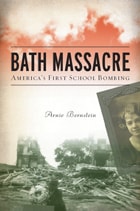
Bath Massacre
America's First School BombingArnie Bernstein
University of Michigan Press, 2009
"With the meticulous attention to detail of a historian and a storyteller's eye for human drama, Bernstein shines a beam of truth on a forgotten American tragedy. Heartbreaking and riveting."
---Gregg Olsen, New York Times best-selling author of Starvation Heights
"A chilling and historic character study of the unfathomable suffering that desperation and fury, once unleashed inside a twisted mind, can wreak on a small town. Contemporary mass murderers Timothy McVeigh, Columbine's Dylan Klebold, and Virginia Tech's Seung-Hui Cho can each trace their horrific genealogy of terror to one man: Bath school bomber Andrew Kehoe."
---Mardi Link, author of When Evil Came to Good Hart
On May 18, 1927, the small town of Bath, Michigan, was forever changed when Andrew Kehoe set off a cache of explosives concealed in the basement of the local school. Thirty-eight children and six adults were dead, among them Kehoe, who had literally blown himself to bits by setting off a dynamite charge in his car. The next day, on Kehoe's farm, what was left of his wife---burned beyond recognition after Kehoe set his property and buildings ablaze---was found tied to a handcart, her skull crushed. With seemingly endless stories of school violence and suicide bombers filling today's headlines, Bath Massacre serves as a reminder that terrorism and large-scale murder are nothing new.
[more]
Being Human
Political Modernity and Hospitality in Kurdistan-IraqFazil Moradi
Rutgers University Press, 2024
The Iraqi Baʿth state’s Anfāl operations (1987-1991) is one of the twentieth century’s ultimate acts of destruction of the possibility of being human. It remains the first and only crime of state in the Middle East to be tried under the 1948 UN Genocide Convention, the 1950 Nuremberg Principles, and the 1969 Iraqi Penal Code and to be recognized as genocide, crimes against humanity, and war crimes in Baghdad between 2006 and 2007. Being Human: Political Modernity and Hospitality in Kurdistan-Iraq offers an unprecedented pathway to the study of political violence. It is a sweeping work of anthropological hospitality, returning to the Anfāl operations as the violence of political modernity only to turn to the human survivors’ hospitality and acts of translation—testimonial narratives, law, politics, archive, poetry, artworks, museums, memorials, symbolic cemeteries, and infinite pursuit of justice in the Kurdistan Region of Iraq. Being Human gathers together social sciences, humanities, and the arts to understand modernity's violence and its living on.
[more]
Beyond Repair?
Mayan Women’s Protagonism in the Aftermath of Genocidal HarmAlison Crosby
Rutgers University Press, 2019
Winner of the 2021 Raphael Lemkin Book Award from the Institute for the Study of Genocide
Honorable Mention, 2020 CALACS Book Prize
Beyond Repair? explores Mayan women’s agency in the search for redress for harm suffered during the genocidal violence perpetrated by the Guatemalan state in the early 1980s at the height of the thirty-six-year armed conflict. The book draws on eight years of feminist participatory action research conducted with fifty-four Q’eqchi’, Kaqchikel, Chuj, and Mam women who are seeking truth, justice, and reparation for the violence they experienced during the war, and the women’s rights activists, lawyers, psychologists, Mayan rights activists, and researchers who have accompanied them as intermediaries for over a decade. Alison Crosby and M. Brinton Lykes use the concept of “protagonism” to deconstruct dominant psychological discursive constructions of women as “victims,” “survivors,” “selves,” “individuals,” and/or “subjects.” They argue that at different moments Mayan women have been actively engaged as protagonists in constructivist and discursive performances through which they have narrated new, mobile meanings of “Mayan woman,” repositioning themselves at the interstices of multiple communities and in their pursuit of redress for harm suffered.
[more]