434 books match the query 'Criticism & Theory' and 20 start with b
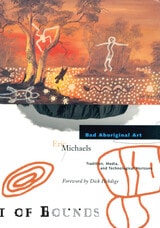
cover of Bad Aboriginal Art: Tradition, Media, and Technological Horizons

Bad Aboriginal Art

Tradition, Media, and Technological Horizons

Eric Michaels

University of Minnesota Press, 1994

Bad Aboriginal Art is the extraordinary account of Eric Michaels’ period of residence and work with the Warlpiri Aborigines of western Central Australia, where he studied the impact of television on remote Aboriginal communities.

Sharp, exact, and unrelentingly honest, Michaels records with an extraordinary combination of distance and immersion the intervention of technology into a remote Aboriginal community and that community’s forays into the technology of broadcasting. Michaels’s analyses in Bad Aboriginal Art will disrupt and redirect current debates surrounding the theory and practice of anthropology, ethnography, film and video making, communications policy, and media studies - no less than his work has already disrupted and redirected the cultural technologies of both the Warlpiri and Australian technocrats.
[more]
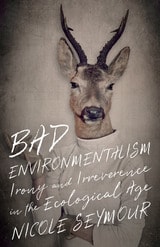
cover of Bad Environmentalism: Irony and Irreverence in the Ecological Age

Bad Environmentalism

Irony and Irreverence in the Ecological Age

Nicole Seymour

University of Minnesota Press, 2018

Traces a tradition of ironic and irreverent environmentalism, asking us to rethink the movement’s reputation for gloom and doom

Activists today strive to educate the public about climate change, but sociologists have found that the more we know about alarming issues, the less likely we are to act. Meanwhile, environmentalists have acquired a reputation as gloom-and-doom killjoys. Bad Environmentalism identifies contemporary texts that respond to these absurdities and ironies through absurdity and irony—as well as camp, frivolity, irreverence, perversity, and playfulness. 

Nicole Seymour develops the concept of “bad environmentalism”: cultural thought that employs dissident affects and sensibilities to reflect critically on our current moment and on mainstream environmental activism. From the television show Wildboyz to the short film series Green Porno, Seymour shows that this tradition of thought is widespread—spanning animation, documentary, fiction film, performance art, poetry, prose fiction, social media, and stand-up comedy since at least 1975. Seymour argues that these texts reject self-righteousness and sentimentality, undercutting public negativity toward activism and questioning basic environmentalist assumptions: that love and reverence are required for ethical relationships with the nonhuman and that knowledge is key to addressing problems like climate change.

Funny and original, Bad Environmentalism champions the practice of alternative green politics. From drag performance to Indigenous comedy, Seymour expands our understanding of how environmental art and activism can be pleasurable, even in a time of undeniable crisis.
[more]
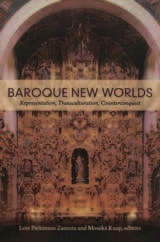
cover of Baroque New Worlds: Representation, Transculturation, Counterconquest

Baroque New Worlds

Representation, Transculturation, Counterconquest

Lois Parkinson Zamora and Monika Kaup, eds.

Duke University Press, 2010

Baroque New Worlds traces the changing nature of Baroque representation in Europe and the Americas across four centuries, from its seventeenth-century origins as a Catholic and monarchical aesthetic and ideology to its contemporary function as a postcolonial ideology aimed at disrupting entrenched power structures and perceptual categories. Baroque forms are exuberant, ample, dynamic, and porous, and in the regions colonized by Catholic Europe, the Baroque was itself eventually colonized. In the New World, its transplants immediately began to reflect the cultural perspectives and iconographies of the indigenous and African artisans who built and decorated Catholic structures, and Europe’s own cultural products were radically altered in turn. Today, under the rubric of the Neobaroque, this transculturated Baroque continues to impel artistic expression in literature, the visual arts, architecture, and popular entertainment worldwide.

Since Neobaroque reconstitutions necessarily reference the European Baroque, this volume begins with the reevaluation of the Baroque that evolved in Europe during the late nineteenth century and the early twentieth. Foundational essays by Friedrich Nietzsche, Heinrich Wölfflin, Walter Benjamin, Eugenio d’Ors, René Wellek, and Mario Praz recuperate and redefine the historical Baroque. Their essays lay the groundwork for the revisionist Latin American essays, many of which have not been translated into English until now. Authors including Alejo Carpentier, José Lezama Lima, Severo Sarduy, Édouard Glissant, Haroldo de Campos, and Carlos Fuentes understand the New World Baroque and Neobaroque as decolonizing strategies in Latin America and other postcolonial contexts. This collection moves between art history and literary criticism to provide a rich interdisciplinary discussion of the transcultural forms and functions of the Baroque.

Contributors. Dorothy Z. Baker, Walter Benjamin, Christine Buci-Glucksmann, José Pascual Buxó, Leo Cabranes-Grant, Haroldo de Campos, Alejo Carpentier, Irlemar Chiampi, William Childers, Gonzalo Celorio, Eugenio d’Ors, Jorge Ruedas de la Serna, Carlos Fuentes, Édouard Glissant, Roberto González Echevarría, Ángel Guido, Monika Kaup, José Lezama Lima, Friedrich Nietzsche, Mario Praz, Timothy J. Reiss, Alfonso Reyes, Severo Sarduy, Pedro Henríquez Ureña, Maarten van Delden, René Wellek, Christopher Winks, Heinrich Wölfflin, Lois Parkinson Zamora
[more]
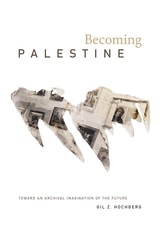
cover of Becoming Palestine: Toward an Archival Imagination of the Future

Becoming Palestine

Toward an Archival Imagination of the Future

Gil Z. Hochberg

Duke University Press, 2021
In Becoming Palestine, Gil Z. Hochberg examines how contemporary Palestinian artists, filmmakers, dancers, and activists use the archive in order to radically imagine Palestine's future. She shows how artists such as Jumana Manna, Kamal Aljafari, Larissa Sansour, Farah Saleh, Basel Abbas, and Ruanne Abou-Rahme reimagine the archive, approaching it not through the desire to unearth hidden knowledge, but to sever the identification of the archive with the past. In their use of archaeology, musical traditions, and archival film and cinematic footage, these artists imagine a Palestinian future unbounded from colonial space and time. By urging readers to think about archives as a break from history rather than as history's repository, Hochberg presents a fundamental reconceptualization of the archive's liberatory potential.
[more]
cover of Behind the Angel of History: The "Angelus Novus" and Its Interleaf

Behind the Angel of History

The "Angelus Novus" and Its Interleaf

Annie Bourneuf

University of Chicago Press, 2022

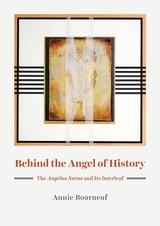
The story of artist R. H. Quaytman’s discovery of an engraving hidden behind a famous artwork by Paul Klee.
 
This book begins with artist R. H. Quaytman uncovering something startling about a picture by Paul Klee. Pasted beneath Klee’s 1920 Angelus Novus—famous for its role in the writings of its first owner, Walter Benjamin—Quaytman found that Klee had interleaved a nineteenth-century engraving of Martin Luther, leaving just enough visible to provoke questions.
 
Behind the Angel of History reveals why this hidden face matters, delving into the intertwined artistic, political, and theological issues consuming Germany in the wake of the Great War. With the Angelus Novus, Klee responded to a growing call for a new religious art. For Benjamin, Klee’s Angelus became bound up with the prospect of meaningful dialogue among religions in Germany.
 
Reflecting on Klee’s, Benjamin’s, and Quaytman’s strategies of superimposing conflicting images, Annie Bourneuf reveals new dimensions of complexity in this iconic work and the writing it inspired.

 
[more]
cover of Bernard Stiegler: Amateur Philosophy

Bernard Stiegler

Amateur Philosophy

Arne De Boever, special issue editor

Duke University Press, 2017

This issue brings together three lectures on aesthetics delivered by the French philosopher Bernard Stiegler in Los Angeles in 2011 with articles by scholars of Stiegler’s work. Aesthetics, understood as the theoretical investigation of sensibility, has been central to Stiegler’s work since the mid-1990s. The lectures featured here explicitly link Stiegler’s interest in sensibility to aesthetic theory proper as well as to art history. In “The Proletarianization of Sensibility,” “Kant, Art, and Time,” and “The Quarrel of the Amateurs,” Stiegler expounds his philosophy of technics and its effects on human sensibility, centering on how the figure of the amateur—who loves what he or she does—must be recovered from beneath the ruins of technical history. The other contributors engage the topics covered in the lectures, including the figure of the amateur, cinema, the digital, and extinction.

Contributors. Stephen Barker, Ed Cohen, Tom Cohen, Claire Colebrook, Arne De Boever, Benoît Dillet, Alexander R. Galloway, Mark B. N. Hansen, Jason R. LaRivière, Gerald Moore, Daniel Ross, Bernard Stiegler
[more]
cover of Between / Beyond / Hybrid: New Essays on Transdisciplinarity

Between / Beyond / Hybrid

New Essays on Transdisciplinarity

Edited by Hartmut von Sass

Diaphanes, 2019
For years now, academics worldwide have been pushing for more interdisciplinarity and transdisciplinarity. Yet for all that, the very concept of transdisciplinarity has proved remarkably tough to define, let alone to enact. This book brings together prominent voices from the debate on transdisciplinarity in a manner that is itself transdisciplinary: scholars present papers from their own discipline, and those are followed by critical replies from different disciplines. The result is a vivid debate, new insights, and a growing confidence that there is something to be gained by approaching a topic from the outside and bringing new approaches to bear. 
 
[more]
cover of Between Market and Myth: The Spanish Artist Novel in the Post-Transition, 1992-2014

Between Market and Myth

The Spanish Artist Novel in the Post-Transition, 1992-2014

Katie J. Vater

Bucknell University Press, 2020

In its early transition to democracy following Franco’s death in 1975, Spain rapidly embraced neoliberal practices and policies, some of which directly impacted cultural production. In a few short years, the country commercialized its art and literary markets, investing in “cultural tourism” as a tool for economic growth and urban renewal. The artist novel began to proliferate for the first time in a century, but these novels—about artists and art historians—have received little critical attention beyond the descriptive. In Between Market and Myth, Vater studies select authors—Julio Llamazares, Ángeles Caso, Clara Usón, Almudena Grandes, Nieves Herrero, Paloma Díaz-Mas, Lourdes Ortiz, and Enrique Vila-Matas—whose largely realist novels portray a clash between the myth of artistic freedom and artists’ willing recruitment or cooptation by market forces or political influence. Today, in an era of rising globalization, the artist novel proves ideal for examining authors' ambivalent notions of creative practice when political patronage and private sector investment complicate belief in artistic autonomy.

Published by Bucknell University Press. Distributed worldwide by Rutgers University Press. 
[more]
cover of Between You and Me: Queer Disclosures in the New York Art World, 1948-1963

Between You and Me

Queer Disclosures in the New York Art World, 1948-1963

Gavin Butt

Duke University Press, 2005

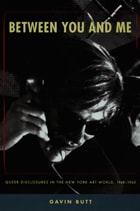
In the decades preceding the Stonewall riots—in the wake of the 1948 publication of Alfred Kinsey’s controversial report on male sexuality and in the midst of a cold war culture of suspicion and paranoia—discussions of homosexuality within the New York art world necessarily circulated via gossip and rumor. Between You and Me explores this informal, everyday talk and how it shaped artists’ lives, their work, and its reception. Revealing the “trivial” and “unserious” aspects of the postwar art scene as key to understanding queer subjectivity, Gavin Butt argues for a richer, more expansive concept of historical evidence, one that supplements the verifiable facts of traditional historical narrative with the gossipy fictions of sexual curiosity.

Focusing on the period from 1948 to 1963, Butt draws on the accusations and denials of homosexuality that appeared in the popular press, on early homophile publications such as One and the Mattachine Review, and on biographies, autobiographies, and interviews. In a stunning exposition of Larry Rivers’s work, he shows how Rivers incorporated gossip into his paintings, just as his friend and lover Frank O’Hara worked it into his poetry. He describes how the stories about Andy Warhol being too “swish” to be taken seriously as an artist changed following his breakthrough success, reconstructing him as an asexual dandy. Butt also speculates on the meanings surrounding a MoMA curator’s refusal in 1958 to buy Jasper Johns’s Target with Plaster Casts on the grounds that it was too scandalous for the museum to acquire. Between You and Me sheds new light on a pivotal moment in American cultural production as it signals new directions for art history.
[more]
cover of Beyond Representation in Contemporary Caribbean Art: Space, Politics, and the Public Sphere

Beyond Representation in Contemporary Caribbean Art

Space, Politics, and the Public Sphere

Carlos Garrido Castellano

Rutgers University Press, 2019
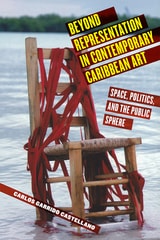
The Caribbean has been traditionally associated with externally devised mappings and categories, thus appearing as a passive entity to be consumed and categorized. Challenging these forces and representations, Carlos Garrido Castellano argues that something more must be added to the discussion in order to address contemporary Caribbean visual creativity. Beyond Representation in Contemporary Caribbean Art arises from several years of field research and curatorial activity in museums, universities, and cultural institutions of Jamaica, Trinidad, Martinique, Guadeloupe, Cuba, Dominican Republic, Puerto Rico, and the United States. This book explores the ways in which Caribbean individuals and communities have recurred to art and visual creativity to create and sustain public spaces of discussion and social interaction. The book analyzes contemporary Caribbean art in relation to broader discussions of citizenship, cultural agency, critical geography, migration, and social justice. Covering a broad range of artistic projects, including curatorial practice, socially engaged art, institutional politics, public art, and performance, this book is about the imaginative ways in which Caribbean subjects and communities rearrange the sociocultural framework(s) they inhabit and share. 
[more]
cover of Beyond the Sovereign Self: Aesthetic Autonomy from the Avant-Garde to Socially Engaged Art

Beyond the Sovereign Self

Aesthetic Autonomy from the Avant-Garde to Socially Engaged Art

Grant H. Kester

Duke University Press, 2024
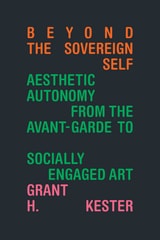
In Beyond the Sovereign Self Grant H. Kester continues the critique of aesthetic autonomy begun in The Sovereign Self, showing how socially engaged art provides an alternative aesthetic with greater possibilities for critical practice. Instead of grounding art in its distance from the social, Kester shows how socially engaged art, developed in conjunction with forms of social or political resistance, encourages the creative capacity required for collective political transformation. Among others, Kester analyzes the work of conceptual artist Adrian Piper, experimental practices associated with the escrache tradition in Argentina, and indigenous Canadian artists such as Nadia Myre and Michèle Taïna Audette, showing how socially engaged art catalyzes forms of resistance that operate beyond the institutional art world. From the Americas and Europe to Iran and South Africa, Kester presents a historical genealogy of recent engaged art practices rooted in a deep history of cultural production, beginning with nineteenth-century political struggles and continuing into contemporary anticolonial resistance and other social movements.
[more]
cover of Biennial Boom: Making Contemporary Art Global

Biennial Boom

Making Contemporary Art Global

Paloma Checa-Gismero

Duke University Press, 2024
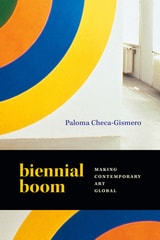
In Biennial Boom, Paloma Checa-Gismero traces an archeology of contemporary art biennials to uncover the processes that prompted these exhibitions to become the global art world’s defining events at the end of the twentieth century. Returning to the early post-Cold War years, Checa-Gismero examines the early iterations of three well-known biennials at the borders of North Atlantic liberalism: the Bienal de La Habana, inSITE, and Manifesta. She draws on archival and oral history fieldwork in Cuba, Mexico, the US/Mexico borderlands, and the Netherlands, showing how these biennials reflected a post-Cold War optimism for a pacified world by which artistic and knowledge production would help mend social, political, and cultural divisions. Checa-Gismero argues that, in reflecting this optimism, biennials facilitated the conversion of subaltern aesthetic genealogies into forms that were legible to a nascent cosmopolitan global elite—all under the pretense of cultural exchange. By outlining how early biennials set the basis for what is now recognized as “global contemporary art,” Checa-Gismero intervenes in previous accounts of the contemporary art world in order to better understand how it became the exclusionary, rarified institution of today.
[more]
cover of Big Culture: Toward an Aesthetics of Magnitude

Big Culture

Toward an Aesthetics of Magnitude

David Wittenberg

University of Chicago Press, 2025

A philosophical exploration of our relationship to large objects and their outsized psychological effects.
 

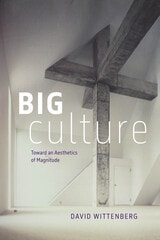
Big Culture asks a simple question: why do big things give us big feelings? Skyscrapers, disasters, and other large phenomena can elicit fear, attraction, and awe. David Wittenberg argues that these feelings cannot be explained through objects’ size alone. Instead, he contends that an encounter with bigness is a primal, even violent sensation like little else that we experience in our well-proportioned adult lives.

Drawing on examples as commonplace and as singular as atomic bombs, cinematic effects, pornographic “macrophilia,” monstrous creatures, and more, Wittenberg demonstrates how big things tap into our earliest experiences of the world, reigniting our most fundamental feelings about reality. In doing so, Wittenberg offers a new aesthetics of magnitude and of the special role that bigness plays in our everyday perception of objects and images.
[more]
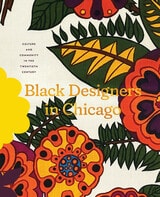
cover of Black Designers in Chicago: Culture and Community in the Twentieth Century

Black Designers in Chicago

Culture and Community in the Twentieth Century

Edited by Chris Dingwall, David Hartt, and Daniel Schulman

University of Chicago Press, 2026

A richly illustrated book focused on Black designers, how they shaped the history of modern design, and how their designs in turn influenced modern Black life.
 
In twentieth-century Chicago, generations of Black artisans, craftspeople, art educators, clothing makers, commercial illustrators, sign painters, furniture makers, beauticians, graphic designers, art directors, and screen printers made and remade the city into an energetic center for modern design. Ambitious, enterprising, and resolutely modern, these Black designers were workers and intellectuals, activists and entrepreneurs. They created works for commercial and everyday use and helped to build community institutions such as the South Side Community Art Center and businesses like the Johnson Publishing Company. Their works ranged from branding and housewares for major corporations to pamphlets and posters made in the name of civil rights and Black Power. Together, they made Black Chicago into a dynamic design scene, working against racism in their professions while embracing the possibilities of design as a medium of social change.
 
This book is the first to chronicle their collective history while also celebrating their influence on design as well as African American culture more broadly. Based on extensive archival research and building on a major 2018 exhibition, Black Designers in Chicago presents essays by experts in African American history and design. The book features illustrations of a stunning variety of works—from graphic design to screenprints to textiles and household wares—placing African Americans at the center of modern design history, while highlighting the role of design in the cultural history of Black Chicago.
 
[more]
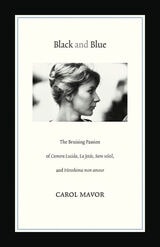
cover of Black and Blue: The Bruising Passion of Camera Lucida, La Jete, Sans soleil, and Hiroshima mon amour

Black and Blue

The Bruising Passion of Camera Lucida, La Jete, Sans soleil, and Hiroshima mon amour

Carol Mavor

Duke University Press, 2012

Audacious and genre-defying, Black and Blue is steeped in melancholy, in the feeling of being blue, or, rather, black and blue, with all the literality of bruised flesh. Roland Barthes and Marcel Proust are inspirations for and subjects of Carol Mavor's exquisite, image-filled rumination on efforts to capture fleeting moments and to comprehend the incomprehensible. At the book's heart are one book and three films—Roland Barthes's Camera Lucida, Chris Marker's La Jetée and Sans soleil, and Marguerite Duras's and Alain Resnais's Hiroshima mon amour—postwar French works that register disturbing truths about loss and regret, and violence and history, through aesthetic refinement.

Personal recollections punctuate Mavor's dazzling interpretations of these and many other works of art and criticism. Childhood memories become Proust's "small-scale contrivances," tiny sensations that open onto panoramas. Mavor's mother lost her memory to Alzheimer's, and Black and Blue is framed by the author's memories of her mother and effort to understand what it means to not be recognized by one to whom you were once so known.
[more]
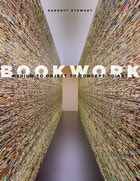
cover of Bookwork: Medium to Object to Concept to Art

Bookwork

Medium to Object to Concept to Art

Garrett Stewart

University of Chicago Press, 2011

“There they rest, inert, impertinent, in gallery space—those book forms either imitated or mutilated, replicas of reading matter or its vestiges. Strange, after its long and robust career, for the book to take early retirement in a museum, not as rare manuscript but as functionless sculpture. Readymade or constructed, such book shapes are canceled as text when deposited as gallery objects, shut off from their normal reading when not, in some yet more drastic way, dismembered or reassembled.” So begins Bookwork, which follows our passion for books to its logical extreme in artists who employ found or simulated books as a sculptural medium. Investigating the conceptual labor behind this proliferating international art practice, Garrett Stewart looks at hundreds of book-like objects, alone or as part of gallery installations, in this original account of works that force attention upon a book’s material identity and cultural resonance.

Less an inquiry into the artist’s book than an exploration of the book form’s contemporary objecthood, Stewart’s interdisciplinary approach traces the lineage of these aggressive artifacts from the 1919 Unhappy Readymade of Marcel Duchamp down to the current crisis of paper-based media in the digital era. Bookwork surveys and illustrates a stunning variety of appropriated and fabricated books alike, ranging from hacksawed discards to the giant lead folios of Anselm Kiefer. The unreadable books Stewart engages with in this timely study are found, again and again, to generate graphic metaphors for the textual experience they preclude, becoming in this sense legible after all.
[more]
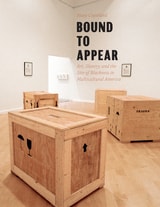
cover of Bound to Appear: Art, Slavery, and the Site of Blackness in Multicultural America

Bound to Appear

Art, Slavery, and the Site of Blackness in Multicultural America

Huey Copeland

University of Chicago Press, 2013
At the close of the twentieth century, black artists began to figure prominently in the mainstream American art world for the first time. Thanks to the social advances of the civil rights movement and the rise of multiculturalism, African American artists in the late 1980s and early ’90s enjoyed unprecedented access to established institutions of publicity and display. Yet in this moment of ostensible freedom, black cultural practitioners found themselves turning to the history of slavery.
 
Bound to Appear focuses on four of these artists—Renée Green, Glenn Ligon, Lorna Simpson, and Fred Wilson—who have dominated and shaped the field of American art over the past two decades through large-scale installations that radically departed from prior conventions for representing the enslaved. Huey Copeland shows that their projects draw on strategies associated with minimalism, conceptualism, and institutional critique to position the slave as a vexed figure—both subject and object, property and person. They also engage the visual logic of race in modernity and the challenges negotiated by black subjects in the present. As such, Copeland argues, their work reframes strategies of representation and rethinks how blackness might be imagined and felt long after the end of the “peculiar institution.” The first book to examine in depth these artists’ engagements with slavery, Bound to Appear will leave an indelible mark on modern and contemporary art.
[more]
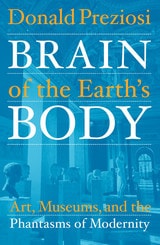
cover of Brain of the Earth’s Body: Art, Museums, and the Phantasms of Modernity

Brain of the Earth’s Body

Art, Museums, and the Phantasms of Modernity

Donald Preziosi

University of Minnesota Press, 2003
A major scholar considers the role of the museum in art history. What begins as a meditation on "the museum" by one of the world's leading art historians becomes, in this book, a far-reaching critical examination of how art history and museums have guided and controlled not only the way we look at art but the ways in which we understand modernity itself. Originally delivered as the 2001 Slade Lectures in the Fine Arts at Oxford University, the book makes its deeply complex argument remarkably accessible and powerfully clear. Concentrating on a period from the beginning of the nineteenth century to the beginning of the twentieth, Donald Preziosi presents case studies of major institutions that, he argues, have defined--and are still defining--the possible limits of museological and art historical theory and practice. These include Sir John Soane's Museum in London, preserved in its 1837 state; the Crystal Palace Exhibition of 1851; and four museums founded by Europeans in Egypt in the late nineteenth century, which divided up that country's history into "ethnically marked" aesthetic hierarchies and genealogies that accorded with Europe's construction of itself as the present of the world's past, and the "brain of the earth's body." Through this epistemological and institutional archaeology, Preziosi unearths the outlines of the more radical Enlightenment project that academic art history, professional museology, and art criticism have rendered marginal or invisible. Finally, he sketches a new theory about art, artifice, and visual signification in the cracks and around the margins of the "secular theologisms" of the globalized imperial capital called modernity. Addressed equally to the theoretical and philosophical foundations of art history, museology, history, and anthropology, this book goes to the heart of recent debates about race, ethnicity, nationality, colonialism, and multiculturalisms-and to the very foundations of modernity and modern modes of knowledge production. Donald Preziosi is professor of art history at the University of California, Los Angeles, and research associate in art history and visual culture at Oxford University. He is the author and editor of numerous books, including The Art of Art History (1998).
[more]
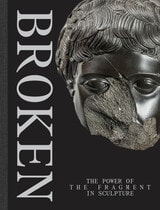
cover of Broken: The Power of the Fragment in Sculpture

Broken

The Power of the Fragment in Sculpture

Edited by C. D. Dickerson III and Andrew Sears

University of Chicago Press, 2026

A compelling exploration of fragments in sculpture across time and cultures.

Some objects draw power from the way they have been broken. Becoming beautiful abstract shapes, they provoke consideration of how destruction can create something so aesthetically appealing. Beyond the visual, these fragments are compelling because they force us to confront the often unsettling stories of their breakage.

Published in conjunction with the National Gallery of Art and accompanying a traveling exhibition, this lavishly illustrated book explores our enduring fascination with broken statues through a range of interdisciplinary perspectives, featuring contributions by scholars and artists, along with examples of striking works from around the world spanning the third millennium BCE to the present. 

Organized in three sections, Broken begins by investigating what makes fragments so intriguing and reveals the optical and neurological processes behind the strong emotions they evoke. It then moves to the act of breaking itself, exploring the forces—both natural and human—that shaped these objects, the power dynamics of iconoclastic dismantling and defacement, and how various cultures treat broken statues. The book concludes by considering one of the most powerful ways humans have responded to fragments over the course of history: by creating new works that are intentionally fractured.
[more]
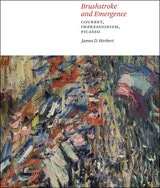
cover of Brushstroke and Emergence: Courbet, Impressionism, Picasso

Brushstroke and Emergence

Courbet, Impressionism, Picasso

James D. Herbert

University of Chicago Press, 2015

No pictorial device in nineteenth-century French painting more clearly represented the free-ranging self than the loose brushstroke. From the romantics through the impressionists and post-impressionists, the brushstroke bespoke autonomous artistic individuality and freedom from convention.

Yet the question of how much we can credit to the individual brushstroke is complicated—and in Brushstroke and Emergence, James D. Herbert uses that question as a starting point for an extended essay that draws on philosophy of mind, the science of emergence, and art history. Brushstrokes, he reminds us, are as much creatures of habit and embodied experience as they are of intent. When they gather in great numbers they take on a life of their own, out of which emerge complexity and meaning. Analyzing ten paintings by Courbet, Manet, Cézanne, Monet, Seurat, and Picasso, Herbert exposes vital relationships between intention and habit, the singular and the complex. In doing so, he uncovers a space worthy of historical and aesthetic analysis between the brushstroke and the self.
[more]