Results by title
158 books match the query 'Cultural assimilation' and 7 start with b

Battle for the Soul
Mètis Children Encounter Evangelical Protestants at Mackinaw Mission, 1823-1837Keith R. Widder
Michigan State University Press, 1999
In 1823 William and Amanda Ferry opened a boarding school for Métis children on Mackinac Island, Michigan Territory, setting in motion an intense spiritual battle to win the souls and change the lives of the children, their parents, and all others living at Mackinac. Battle for the Soul demonstrates how a group of enthusiastic missionaries, empowered by an uncompromising religious motivation, served as agents of Americanization. The Ferrys' high hopes crumbled, however, as they watched their work bring about a revival of Catholicism and their students refuse to abandon the fur trade as a way of life. The story of the Mackinaw Mission is that of people who held differing world views negotiating to create a "middle-ground," a society with room for all.
Widder's study is a welcome addition to the literature on American frontier missions. Using Richard White's "middle ground" paradigm, it focuses on the cultural interaction between French, British, American, and various native groups at the Mackinac mission in Michigan during the early 19th century. The author draws on materials from the American Board of Commissioners for Foreign Missions archives, as well as other manuscript sources, to trace not only the missionaries' efforts to Christianize and Americanize the native peoples, but the religious, social, and cultural conflicts between Protestant missionaries and Catholic priests in the region. Much attention has been given to the missionaries to the Indians in other areas of the US, but little to this region.
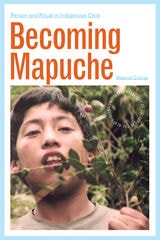
Becoming Mapuche
Person and Ritual in Indigenous ChileMagnus Course
University of Illinois Press, 2011
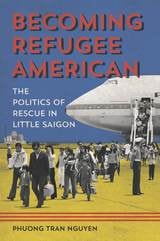
Becoming Refugee American
The Politics of Rescue in Little SaigonPhuong Nguyen
University of Illinois Press, 2017
Phuong Tran Nguyen examines the phenomenon of refugee nationalism among Vietnamese Americans in Southern California. Here, the residents of Little Saigon keep alive nostalgia for the old regime and, by extension, their claim to a lost statehood. Their refugee nationalism is less a refusal to assimilate than a mode of becoming, in essence, a distinct group of refugee Americans. Nguyen examines the factors that encouraged them to adopt this identity. His analysis also moves beyond the familiar rescue narrative to chart the intimate yet contentious relationship these Vietnamese Americans have with their adopted homeland. Nguyen sets their plight within the context of the Cold War, an era when Americans sought to atone for broken promises but also saw themselves as providing a sanctuary for people everywhere fleeing communism.
Being Chinese, Becoming Chinese American
Shehong Chen
University of Illinois Press, 2002
The 1911 revolution in China sparked debates that politicized and divided Chinese communities in the United States. People in these communities affirmed traditional Chinese values and expressed their visions of a modern China, while nationalist feelings emboldened them to stand up for their rights as an integral part of American society. When Japan threatened the China's young republic, the Chinese response in the United States revealed the limits of Chinese nationalism and the emergence of a Chinese American identity.
Shehong Chen investigates how Chinese immigrants to the United States transformed themselves into Chinese Americans during the crucial period between 1911 and 1927. Chen focuses on four essential elements of a distinct Chinese American identity: support for republicanism over the restoration of monarchy; a wish to preserve Confucianism and traditional Chinese culture; support for Christianity, despite a strong anti-Christian movement in China; and opposition to the Nationalist party's alliance with the Soviet Union and cooperation with the Chinese Communist Party.
Sensitive and enlightening, Being Chinese, Becoming Chinese American documents how Chinese immigrants survived exclusion and discrimination, envisioned and maintained Chineseness, and adapted to American society.
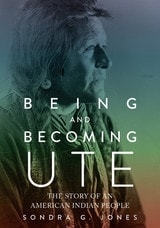
Being and Becoming Ute
The Story of an American Indian PeopleSondra G. Jones
University of Utah Press, 2019
Neither a portrait of a people frozen in a past time and place nor a tragedy in which vanishing Indians sank into oppressed oblivion, the history of the Ute people is dynamic and evolving. While it includes misfortune, injustice, and struggle, it reveals the adaptability and resilience of an American Indian people.
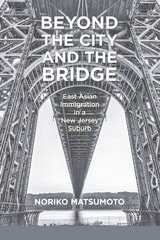
Beyond the City and the Bridge
East Asian Immigration in a New Jersey SuburbMatsumoto, Noriko
Rutgers University Press, 2018
Winner of the Richard P. McCormick Prize from the New Jersey Historical Association
Honorable Mention, 2019 American Sociological Association Book Award - Asia/Asian American Section
In recent decades, the American suburbs have become an important site for immigrant settlement. Beyond the City and the Bridge presents a case study of Fort Lee, Bergen County, on the west side of the George Washington Bridge connecting Manhattan and New Jersey. Since the 1970s, successive waves of immigrants from East Asia have transformed this formerly white community into one of the most diverse suburbs in the greater New York region. Fort Lee today has one of the largest concentrations of East Asians of any suburb on the East Coast, with Chinese, Japanese, and Koreans forming distinct communities while influencing the structure and everyday life of the borough. Noriko Matsumoto explores the rise of this multiethnic suburb—the complex processes of assimilation and reproduction of ethnicities, the changing social relationships, and the conditions under which such transformations have occurred.
Bohemia's Jews and Their Nineteenth Century
Texts, Contexts, ReassessmentsJindrich Toman
Karolinum Press, 2023
This book on Jewish culture and literature focuses on the “quiet” decades of the nineteenth century, a scarcely written-about period of time in Bohemian Jewish history. Using a myriad of sources, including travelers’ accounts, poems, essays, short stories, guides, and newspaper articles, the volume explores Jewish expression, Jewish-Czech relations, and the changing attitudes toward Jews between the 1820s and 1880s. It offers close readings of writers like Karel Havlíćek Borovský, Ján Kollár, Siegfried Kapper, and Jan Neruda, as well as lesser-known authors and sources. Combining skillful sustained analysis, judicious argumentation, and elegant writing, the book is a truly enriching reading experience.