Results by title
58 books match the query 'Dead' and 2 start with b
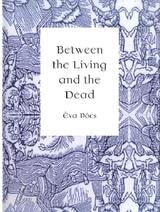
Between the Living and the Dead
A Perspective on Witches and Seers in the Early Modern AgeÉva Pócs
Central European University Press, 1998
Éva Pócs, one of the most highly respected scholars of historical anthropology, has undertaken extensive research on the history of folk beliefs connected with communication and the supernatural sphere. In this book, she examines the relics of European shamanism in early modern sources, and the techniques and belief-systems of mediators found in the records of witchcraft trials from the sixteenth to the eighteenth century. The book explores the various communication systems known to early modern Hungarians, describes the role of these systems in everyday village life, and shows how they were connected to contemporary European systems, as well as new types of mediators and systems which function right up to the twentieth century. Representing a major contribution to the most up-to-date international research, Eva Pócs draws on significant East European material and literature not previously co-ordinated with that from the West.
[more]
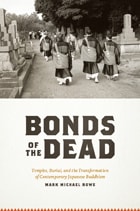
Bonds of the Dead
Temples, Burial, and the Transformation of Contemporary Japanese BuddhismMark Michael Rowe
University of Chicago Press, 2011
Despite popular images of priests seeking enlightenment in snow-covered mountain temples, the central concern of Japanese Buddhism is death. For that reason, Japanese Buddhism’s social and economic base has long been in mortuary services—a base now threatened by public debate over the status, treatment, and location of the dead. Bonds of the Dead explores the crisis brought on by this debate and investigates what changing burial forms reveal about the ways temple Buddhism is perceived and propagated in contemporary Japan.
Mark Rowe offers a crucial account of how religious, political, social, and economic forces in the twentieth century led to the emergence of new funerary practices in Japan and how, as a result, the care of the dead has become the most fundamental challenge to the continued existence of Japanese temple Buddhism. Far from marking the death of Buddhism in Japan, Rowe argues, funerary Buddhism reveals the tradition at its most vibrant. Combining ethnographic research with doctrinal considerations, this is a fascinating book for anyone interested in Japanese society and religion.
[more]