Results by title
91 books match the query 'Deaf people' and 4 start with b
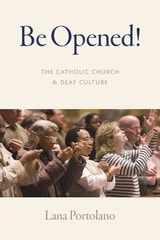
Be Opened! The Catholic Church and Deaf Culture
Lana Portolano
Catholic University of America Press, 2021
Be Opened! The Catholic Church and Deaf Culture offers readers a people’s history of deafness and sign language in the Catholic Church. Paying ample attention to the vocation stories of deaf priests and pastoral workers, Portolano traces the transformation of the Deaf Catholic community from passive recipients of mercy to an active language minority making contributions in today’s globally diverse church.
Background chapters familiarize readers with early misunderstandings about deaf people in the church and in broader society, along with social and religious issues facing deaf people throughout history. A series of connected narratives demonstrate the strong Catholic foundations of deaf education in sign language, including sixteenth-century monastic schools for deaf children and nineteenth-century French education in sign language as a missionary endeavor. The author explains how nineteenth-century schools for deaf children, especially those founded by orders of religious sisters, established small communities of Deaf Catholics around the globe. A series of portraits illustrates the work of pioneering missionaries in several different countries—“apostles to the Deaf”—who helped to establish and develop deaf culture in these communities through adult religious education and the sacraments in sign language. In several chapters focused on the twentieth century, the author describes key events that sparked a modern transformation in Deaf Catholic culture. As linguists began to recognize sign languages as true human languages, deaf people borrowed the practices of Civil Rights activists to gain equality both as citizens and as members of the church. At the same time, deaf people drew inspiration and cultural validation from key documents of Vatican II, and leadership of the Deaf Catholic community began to come from the deaf community rather than to it through missionaries. Many challenges remain, but this book clearly presents Deaf Catholic culture as an important and highly visible embodiment of Catholic heritage.
[more]
Being and Hearing
Making Intelligible Worlds in Deaf KathmanduPeter Graif
HAU, 2018
How do deaf people in different societies perceive and conceive the world around them? Drawing on three years of anthropological fieldwork in Nepali deaf communities, Being and Hearing shows how questions of cultural difference are profoundly shaped by local habits of perception. Beginning with the premise that philosophy and cultural intuition are separated only by genre and pedigree, Peter Graif argues that Nepali deaf communities—in their social sensibilities, political projects, and aesthetics of expression—present innovative answers to the very old question of what it means to be different.
From pranks and protests, to diverse acts of love and resistance, to renewed distinctions between material and immaterial, deaf communities in Nepal have crafted ways to foreground the habits of perception that shape both their own experiences and how they are experienced by the hearing people around them. By exploring these often overlooked strategies, Being and Hearing makes a unique contribution to ethnography and comparative philosophy.
From pranks and protests, to diverse acts of love and resistance, to renewed distinctions between material and immaterial, deaf communities in Nepal have crafted ways to foreground the habits of perception that shape both their own experiences and how they are experienced by the hearing people around them. By exploring these often overlooked strategies, Being and Hearing makes a unique contribution to ethnography and comparative philosophy.
[more]
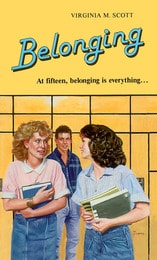
Belonging
Virginia Tibbs-Brelje
Gallaudet University Press, 1986
"A 1987 Outstanding Book for Young Adults"
--University of Iowa Poll
"Gustie Blaine is 15 when she contracts meningitis. After a long recovery period during which she loses the small amount of residual hearing she had seemed to retain, Gustie tries to pick up the pieces of her life. Her parents are unrealistic and over protective; her best friend rejects her; her teachers run the gamut from being convinced Gustie cannot function in the mainstream to being supportive... through a new boyfriend who has a deaf brother and sister-in-law, and through Gustie's visit with an understanding special education teacher to a class of predominately congenitally deaf students, readers are made aware of the tremendous range of difference among deaf and hard of hearing people, the ways in which they communicate and the technical aids available to them. Realistic and involving...[Young Adults] will identify with Gustie and her wish to belong; the book should touch them and be popular."
--School Library Journal
Virginia M. Scott is a writer. Like Gustie, the main character in her novel, Ms. Scott became deaf as an adolescent.
[more]
Between Two Worlds
My Life as a Child of Deaf AdultsDavid Sorensen
Gallaudet University Press, 2019
In his memoir, David Sorensen explores his identity as a coda, or a child of Deaf adults. He describes his experiences with the roles often placed on codas at a young age, such as interpreter, confidant, and decision-maker. His story reveals a person seeking acceptance and belonging while straddling the Deaf and hearing worlds, and shows how he found reconciliation within himself and with both worlds.
Sorensen relays the dynamics of his family life; he had a strained relationship with his father, who was an active leader and role model in the Deaf community and the Mormon Church, yet struggled to bond with his own son. Sorensen rebelled as a youth and left home as a teenager, completely detaching from the Deaf community. After struggling to establish himself as an independent adult, he discovered that he wanted to return to the Deaf world and use his ASL fluency and cultural understanding as a mental health therapist and community advocate. Now he considers himself an ambassador between the Deaf and hearing worlds, as well as between the older and younger generations of Deaf people. Between Two Worlds: My Life as a Child of Deaf Adults shares the unique experiences of a coda and passes on the rich cultural past shared by the American Deaf community.
Sorensen relays the dynamics of his family life; he had a strained relationship with his father, who was an active leader and role model in the Deaf community and the Mormon Church, yet struggled to bond with his own son. Sorensen rebelled as a youth and left home as a teenager, completely detaching from the Deaf community. After struggling to establish himself as an independent adult, he discovered that he wanted to return to the Deaf world and use his ASL fluency and cultural understanding as a mental health therapist and community advocate. Now he considers himself an ambassador between the Deaf and hearing worlds, as well as between the older and younger generations of Deaf people. Between Two Worlds: My Life as a Child of Deaf Adults shares the unique experiences of a coda and passes on the rich cultural past shared by the American Deaf community.
[more]