Results by title
304 books match the query 'Death' and 16 start with b
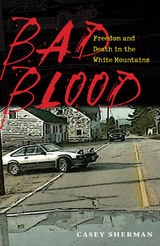
Bad Blood
Freedom and Death in the White MountainsCasey Sherman
University Press of New England, 2012

Bandido
The Death and Resurrection of Oscar "Zeta" AcostaIlan Stavans
Northwestern University Press, 2003
Hailed as "a fine, learned homage" (Kirkus), "a kaleidoscopic portrait" (Booklist), and "a game of mirrors" (The Washington Post), Bandido is a veritable tour de force. Through interviews and Acosta's writings (published and unpublished), Ilan Stavans reconstructs—even reinvents—the man behind the myth. Part biographical appraisal, part reflection on the legacy of the Civil Rights era, Bandido is an opportunity to understand the challenges and pitfalls Latinos face in finding a place of their own in America.
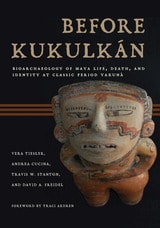
Before Kukulkán
Bioarchaeology of Maya Life, Death, and Identity at Classic Period YaxunáVera Tiesler, Andrea Cucina, Travis W. Stanton, and David A. Freidel; Foreword by Traci Ardren
University of Arizona Press, 2017
Using bioarchaeology, mortuary archaeology, and culturally sensitive mainstream archaeology, the authors create an in-depth regional understanding while also laying out broader ways of learning about the Maya past. Part 1 examines ancient lifeways among the Maya at Yaxuná, while part 2 explores different meanings of dying and cycling at the settlement and beyond: ancestral practices, royal entombment and desecration, and human sacrifice. The authors close with a discussion of the last years of occupation at Yaxuná and the role of Chichén Itzá in the abandonment of this urban center.
Before Kukulkán provides a cohesive synthesis of the evolving roles and collective identities of locals and foreigners at the settlement and their involvement in the region’s trajectory. Theoretically informed and contextualized discussions offer unique glimpses of everyday life and death in the socially fluid Maya city. These findings, in conjunction with other documented series of skeletal remains from this region, provide a nuanced picture of the social and biocultural dynamics that operated successfully for centuries before the arrival of the Itzá.
Before Their Time
Mary Stimming
Temple University Press, 1998
Each of these survivors faces the common difficulties associated with losing a loved one by suicide. They also experience difficulties specific to their status as both adult and child. Topics such as the impact of the parent's suicide on adult children's personal and professional choices, marriages and parenting, sibling and surviving parent relationships are explored with sensitivity and insight. Various coping skills, including humor, are described.
The writers describe feelings of regret and responsibility related to their parent's suicide. They express concern about other family members' vulnerability to suicide. They speak openly about the fears and stresses they face and how they cope with them.
The authors ranged in age from nineteen to thirty-six at the time of the parent's death. Between one and twenty-five years have passed since that tragedy.
In addition to the first-person narratives, the book includes a resource section with a national listing of suicide survivor support groups; an overview of existing research on survivors of suicide by John L. McIntosh, past president of the American Association of Suicidology; and an essay on elderly suicide by David C. Clark, secretary-general, International Association for Suicide, and editor-in-chief of Crisis. The book is introduced with a Foreword by Rev. Charles Rubey, founder and director of Loving Outreach to Survivors of Suicide.
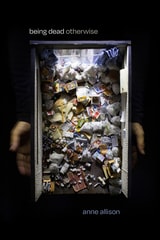
Being Dead Otherwise
Anne Allison
Duke University Press, 2023
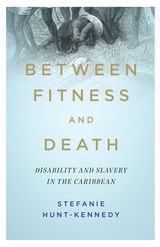
Between Fitness and Death
Disability and Slavery in the CaribbeanStefanie Hunt-Kennedy
University of Illinois Press, 2020
Stefanie Hunt-Kennedy provides a three-pronged analysis of disability in the context of Atlantic slavery. First, she examines the connections of enslavement and representations of disability and the parallel development of English anti-black racism. From there, she moves from realms of representation to reality in order to illuminate the physical, emotional, and psychological impairments inflicted by slavery and endured by the enslaved. Finally, she looks at slave law as a system of enforced disablement.
Audacious and powerful, Between Fitness and Death is a groundbreaking journey into the entwined histories of racism and ableism.
Beyond Biopolitics
Essays on the Governance of Life and DeathPatricia Ticineto Clough and Craig Willse, eds.
Duke University Press, 2011
Contributors. Ann Anagnost, Una Chung, Patricia Ticineto Clough, Steve Goodman, Sora Y. Han, Stefano Harney, May Joseph, Randy Martin, Brian Massumi, Luciana Parisi, Jasbir Puar, Amit S. Rai, Eugene Thacker, Çağatay Topal, Craig Willse

Beyond Obamacare
Life, Death, and Social PolicyJames S. House is Angus Campbell Distinguished University Professor Emeritus of Survey Research, Public Policy, and Sociology at the University of Michigan, Ann Arbor.
Russell Sage Foundation, 2015
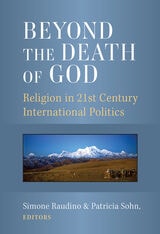
Beyond the Death of God
Religion in 21st Century International PoliticsSimone Raudino and Patricia Sohn, Editors
University of Michigan Press, 2022
This volume offers a nuanced picture with specific instances of religion and politics in Muslim, Jewish, Christian, Buddhist, and Hindu contexts, broadly presenting the phenomenon of religion and politics via country and thematic case studies. Qualitative, quantitative, material, philosophical, and theological analyses draw upon social theory to show how (and why) religion matters deeply in each time and place.
The authors and contributors demonstrate that religion is a significant force that drives societies and polities around the world, and that a radical change in the Western understanding of value-driven global politics is needed. Beyond the Death of God offers new, local voices to Western audiences—through essays that suggest the need for an appreciation of Divinity as a quintessence holding a significant place in the hearts, minds, social orders, and political organization of polities around the world.
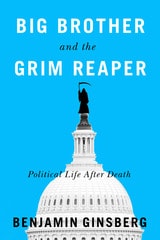
Big Brother and the Grim Reaper
Political Life After DeathBenjamin Ginsberg
Michigan State University Press, 2024
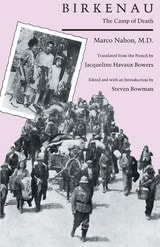
Birkenau, The Camp Of Death
Marco Nahon
University of Alabama Press, 1989

Birkenau
The Camp of DeathMarco Nahon, translated from the French by Jacqueline Bowers, edited and with an introduction by Steven B. Bowan
University of Alabama Press, 1989
Step into Birkenau, Marco Nahon’s unflinching memoir of survival in Auschwitz, where a Greek doctor bears witness to brutality, loss, and endurance—preserving forgotten voices and compelling readers to confront history through one unforgettable, human testimony
Birkenau is a searing firsthand Holocaust memoir by Greek physician Marco Nahon, recounting his deportation to Auschwitz-Birkenau and survival of one of history’s most lethal extermination camps. Writing soon after liberation, Nahon offers a deeply personal chronicle of Nazi persecution. He recounts the occupation of Greece, the ghettoization of Greek Jews, their transport to German death camps, and the daily horrors of camp life. He documents the dehumanization and destruction of Greek Jews while preserving the memory of those who perished.
Nahon presents his story episodically, guiding readers through his arrest, transport, forced labor, and survival. He illuminates the historical context of the Holocaust with vivid stories from daily life in the death camps. Rounding out the work are maps, appendices, and Bowman’s introduction, which provides background on Greek Jewry—whose complex story is little known—and describes the progress of the Nazi occupation of Greece and the Balkans.
Nahon, an MD trained in Beirut who lost much of his family, writes with restrained objectivity that heightens the emotional force of his account, while the translation and editorial framing make this early memoir accessible to modern readers.
This book will resonate with scholars of the Holocaust, students of World War II, and general readers seeking an authentic survivor voice. It is especially valuable for those interested in lesser-known aspects of the genocide, such as the fate of Greek Jewish communities. Both an indispensable historical document and a powerful act of remembrance, it speaks urgently to anyone committed to understanding—and never forgetting—the human realities of genocide.

Blue Juice
Euthanasia in Veterinary MedicinePatricia Morris
Temple University Press, 2012
Offering a candid behind-the-scenes look at small-animal veterinary practices, Blue Juice explores the emotional and ethical conflicts involved in providing a "good death" for companion animals. Patricia Morris presents a nuanced ethnographic account of how veterinarians manage patient care and client relations when their responsibility shifts from saving an animal's life to negotiating a decision to end it.
Using her own experiences and observations in veterinary settings as well as the voices of seasoned and novice vets, Morris reveals how veterinarians think about euthanasia and why this "dirty work" often precipitates "burnout," moral quandaries, and even tense or emotional interactions with clients. Closely observing these interactions, Morris illuminates the ways in which euthanasia reflects deep and unresolved tension in human-animal relationships.
Blue Juice seeks to understand how practitioners, charged with the difficult task of balancing the interests of animals and their humans, deal with the responsibility of ending their patients' lives.
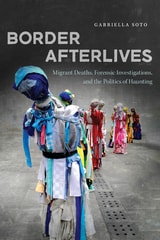
Border Afterlives
Migrant Deaths, Forensic Investigations, and the Politics of HauntingGabriella Soto
University of Arizona Press, 2026
Drawing on over a decade of ethnographic, participatory, and community-engaged research, author Gabriella Soto examines the postmortem journeys of these migrants through the fragmented infrastructure of medicolegal death investigation in the U.S. Southwest. She reveals how the state’s deterrence-based border policies not only generate death but also fail to provide adequate care for the dead. Soto argues that these deaths should be understood as structural homicides and that the forensic neglect they face is a form of ongoing violence.
Moving between the practical and the philosophical, Soto asks what it means to care for the dead and what society owes to those who die in its name. Through the lens of haunting, she explores how the dead continue to shape the living, not as objects of horror but as moral agents whose presence demands justice. Border Afterlives offers a border-scale comparative account of forensic practices, critiques the limits of “best practices” in under-resourced systems, and calls for a reimagining of forensic humanitarianism grounded in reciprocity and dignity, beyond human rights. This is a book that insists on remembering the dead.

Boy
Tracy Youngblom
CavanKerry Press, 2023
The death of a youngest child. An alcoholic and distant father. A grief-stricken family. A tentative faith. These are the building blocks of Boy, a sequence of poems that explores how death and loss color memory and influence the ways family members relate to each other and to their shared history.
Inspired by the death of her own younger brother, Tracy Youngblom has written a poetry collection that serves as a companion to grief. This book is for those who love poetry and those who are intimidated by it, those interested in the way childhood experience shapes life, and those interested in the psychology of addiction.
Breaking the Circle
Death and the Afterlife in BuddhismCarl B. Becker
Southern Illinois University Press, 1993
In this much-needed examination of Buddhist views of death and the afterlife, Carl B. Becker bridges the gap between books on death in the West and books on Buddhism in the East.
Other Western writers have addressed the mysteries surrounding death and the afterlife, but few have approached the topic from a Buddhist perspective. Here, Becker resolves questions that have troubled scholars since the beginning of Buddhism: How can Buddhism reconcile its belief in karma and rebirth with its denial of a permanent soul? What is reborn? And when, exactly, is the moment of death?
By systematically tracing Buddhism’s migration from India through China, Japan, and Tibet, Becker demonstrates how culture and environment affect Buddhist religious tradition.
In addition to discussing historical Buddhism, Becker shows how Buddhism resolves controversial current issues as well. In the face of modern medicine’s trend toward depersonalization, traditional Buddhist practices imbue the dying process with respect and dignity. At the same time, Buddhist tradition offers documented precedents for decision making in cases of suicide and euthanasia.