Results by title
271 books match the query 'Employment' and 21 start with b
BEYOND THE REPRODUCTIVE BODY
Politics of Women’s Health & Work in Early Victorian EnglandMarjorie Levine-Clark
The Ohio State University Press, 2004
Balancing Act
Motherhood, Marriage, and Employment Among American WomenDaphne Spain
Russell Sage Foundation, 1996

Band People
Life and Work in Popular MusicFranz Nicolay
University of Texas Press, 2024
A close look at the lives of working musicians who aren’t the center of their stage.
Secret (and not-so-secret) weapons, side-of-the-stagers, rhythm and horn sections, backup singers, accompanists—these and other “band people” are the anonymous but irreplaceable character actors of popular music. Through interviews and incisive cultural critique, writer and musician Franz Nicolay provides a portrait of the musical middle class. Artists talk frankly about their careers and attitudes toward their craft, work environment, and group dynamics, and shed light on how support musicians make sense of the weird combination of friend group, gang, small business consortium, long-term creative collaboration, and chosen family that constitutes a band. Is it more important to be a good hang or a virtuoso player? Do bands work best as democracies or autocracies? How do musicians with children balance their personal and professional lives? How much money is too little? And how does it feel to play on hundreds of records, with none released under your name? In exploring these and other questions, Band People gives voice to those who collaborate to create and dissects what it means to be a laborer in the culture industry.
Barriers to Reentry?
The Labor Market for Released Prisoners in Post-Industrial AmericaShawn D. Bushway
Russell Sage Foundation, 2007

Beautiful Flowers of the Maquiladora
Life Histories of Women Workers in TijuanaBy Norma Iglesias Prieto
University of Texas Press, 1997
Published originally as La flor mas bella de la maquiladora, this beautifully written book is based on interviews the author conducted with more than fifty Mexican women who work in the assembly plants along the U.S.-Mexico border. A descriptive analytic study conducted in the late 1970s, the book uses compelling testimonials to detail the struggles these women face.
The experiences of women in maquiladoras are attracting increasing attention from scholars, especially in the context of ongoing Mexican migration to the country's northern frontier and in light of the North American Free Trade Agreement (NAFTA). This book is among the earliest accounts of the physical and psychological toll exacted from the women who labor in these plants. Iglesias Prieto captures the idioms of these working women so that they emerge as dynamic individuals, young and articulate personalities, inexorably engaged in the daily struggle to change the fundamental conditions of their exploitation.
Between Belonging and Exclusion
The Intersections of Integration and Anti-Discrimination PoliticsLara-Zuzan Golesorkhi
Temple University Press, 2026
Integration and discrimination are two of the most salient yet contradictory forces shaping contemporary European politics. In Between Belonging and Exclusion Lara-Zuzan Golesorkhi asserts that this tension exists because integration politics do not facilitate non-discrimination, nor do they address experiences of discrimination. She draws on interviews with refugees and other key actors in integration politics to examine the barriers hindering refugee women’s labor market participation in Germany.
Golesorkhi introduces four explanatory tropes that reveal how and why integration efforts have often fallen short. She examines the power relations and limitations in migration governance as well as the identity narratives of Germanness/Europeanness, and the gendered and racialized mechanisms of “othering” that contribute to discrimination.
Between Belonging and Exclusion delineates what Germany and the EU “get wrong” about integration and anti-discrimination as it outlines conceptual and practical suggestions for expanding the terms of inclusion.

Between Field and Cooking Pot
The Political Economy of Marketwomen in Peru, Revised EditionBy Florence E. Babb
University of Texas Press, 1998
From reviews of the first edition:
"Between Field and Cooking Pot offers details of the daily lives of marketwomen in the central Andean departmental capital of Huaraz.... A welcome addition to studies of women and international development, this book contains a wealth of firsthand material, collected through informal participant-observation as well as formal interviews and analysis of statistical data.... The book encourages us to imagine how the dynamic culture of marketwomen might intersect with the construction, representation, and effects of class and gender."
—American Anthropologist
"The book has a clear and readable style, moving easily between vignettes of marketwomen's lives, descriptions of the markets themselves, and surveys of the theoretical literature. Babb's long, close involvement with the Huaraz markets is apparent. As someone who has spent a lot of time in Andean markets, I found the book pleasurable to read, because it recreated the experience of the marketplace so well."
—American Ethnologist
This revised edition of Between Field and Cooking Pot offers an updated appraisal of what neoliberal politics and economics mean in the lives of marketwomen in the nineties, based on new fieldwork conducted in 1997. Babb also reflects on how recent currents in feminist and anthropological studies have caused her to rethink some aspects of Andean marketers in Peruvian culture and society.
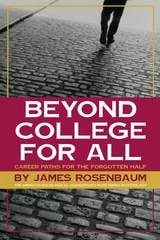
Beyond College For All
Career Paths for the Forgotten HalfJames E. Rosenbaum
Russell Sage Foundation, 2001
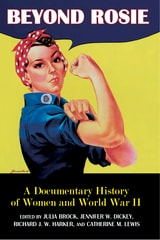
Beyond Rosie
A Documentary History of Women and World War IIJulia Brock
University of Arkansas Press, 2015
Beyond Rosie offers readers an opportunity to see the numerous contributions they made to the fight against the Axis powers and how American women’s roles changed during the war. The primary documents (newspapers, propaganda posters, cartoons, excerpts from oral histories and memoirs, speeches, photographs, and editorials) collected here represent cultural, political, economic, and social perspectives on the diverse roles women played during World War II.
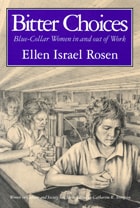
Bitter Choices
Blue-Collar Women in and out of WorkEllen Israel Rosen
University of Chicago Press, 1987
Drawing on quantitative and qualitative data from interviews with more than two hundred such women factory workers, Rosen traces the ways in which women who do "unskilled" factory work have gained in self-esteem as well as financial stability from holding paid jobs. Throughout, Rosen explores the relationship between public work experiences and private family life. She analyzes the dynamics of two-paycheck, working class families, clarifies relationships between class and gender, and explores the impact of patriarchy and capitalism on working class women. At the same time Rosen places women's job loss within the broader economic context of global industrial transformations, demonstrating how international capital shifts to cheaper labor in developing countries, as well as technological progress, are changing the shape of the entire American labor force and are beginning to undermine the material and symbolic gains of the American female factory worker, the promise of market equality, and progressive working conditions.
"This book is a significant contribution to our understanding of women's work and family lives, but it is also a valuable look at the consequences of deindustrialization in America for workers, their families, and their communities."—Myra Marx Ferree, American Journal of Sociology
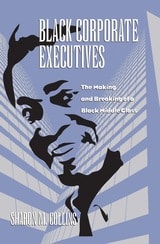
Black Corporate Executives
Sharon Collins
Temple University Press, 1996
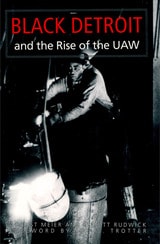
Black Detroit and the Rise of the UAW
August Meier and Elliott Rudwick
University of Michigan Press, 2007
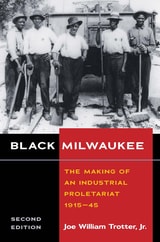
Black Milwaukee
The Making of an Industrial Proletariat, 1915-45Joe William Trotter, Jr.
University of Illinois Press, 2006
Praise for the first edition: “Trotter has written a valuable, provocative book that opens new areas for certain--and heated--debate.”--Journal of American Ethnic History
Other historians have tended to treat black urban life mainly in relation to the ghetto experience, but in Black Milwaukee, Joe William Trotter Jr. offers a new perspective that complements yet also goes well beyond that approach. The blacks in Black Milwaukee were not only ghetto dwellers; they were also industrial workers. The process by which they achieved this status is the subject of Trotter’s ground-breaking study.
This second edition features a new preface and acknowledgments, an essay on African American urban history since 1985, a prologue on the antebellum and Civil War roots of Milwaukee’s black community, and an epilogue on the post-World War II years and the impact of deindustrialization, all by the author. Brief essays by four of Trotter’s colleagues--William P. Jones, Earl Lewis, Alison Isenberg, and Kimberly L. Phillips--assess the impact of the original Black Milwaukee on the study of African American urban history over the past twenty years.
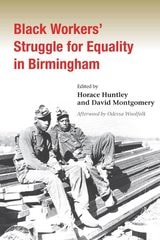
Black Workers' Struggle for Equality in Birmingham
Edited by Horace Huntley and David Montgomery
University of Illinois Press, 2004
Horace Huntley and David Montgomery curate a collection of annotated oral interviews of black workers who served on the front lines of the Civil Rights Movement in Birmingham, Alabama. As the interviewees recount their struggles against discrimination, they show how collective action--whether through unions, the Movement, or networks of workplace activists--sought to gain access to better jobs, municipal services, housing, and less restrictive voter registration.
Powerful and honest, Black Workers' Struggle for Equality in Birmingham draws on work by the Birmingham Civil Rights Institute to offer readers vivid eyewitness accounts of American history in the making.
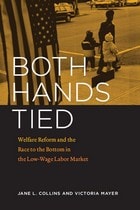
Both Hands Tied
Welfare Reform and the Race to the Bottom in the Low-Wage Labor MarketJane L. Collins and Victoria Mayer
University of Chicago Press, 2010
Both Hands Tied studies the working poor in the United States, focusing in particular on the relation between welfare and low-wage earnings among working mothers. Grounded in the experience of thirty-three women living in Milwaukee and Racine, Wisconsin, it tells the story of their struggle to balance child care and wage-earning in poorly paying and often state-funded jobs with inflexible schedules—and the moments when these jobs failed them and they turned to the state for additional aid.
Jane L. Collins and Victoria Mayer here examine the situations of these women in light of the 1996 national Personal Responsibility and Work Opportunity Reconciliation Act and other like-minded reforms—laws that ended the entitlement to welfare for those in need and provided an incentive for them to return to work. Arguing that this reform came at a time of gendered change in the labor force and profound shifts in the responsibilities of family, firms, and the state, Both Hands Tied provides a stark but poignant portrait of how welfare reform afflicted poor, single-parent families, ultimately eroding the participants’ economic rights and affecting their ability to care for themselves and their children.
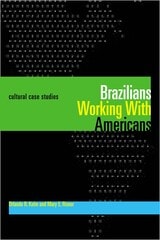
Brazilians Working With Americans/Brasileiros que trabalham com americanos
Cultural Case Studies/Estudos de casos culturaisBy Orlando R. Kelm and Mary E. Risner
University of Texas Press, 2006
Doing business internationally requires understanding not only other languages, but even more so the business practices and cultures of other countries. In the case of Brazilians working with Americans, a fundamental difference for all parties to understand is that Brazilian business culture is based on developing personal relationships between business partners, while American businesspeople often prefer to get down to hard "facts and figures" quickly, with fewer personal preliminaries. Negotiating such differences is crucial to creating successful business relationships between the two countries, and this book is designed to help businesspeople do just that.
Brazilians Working With Americans presents ten short case studies that effectively illustrate many of the cultural factors that come into play when North American business professionals work in Brazil. The authors summarize each case and the aspects of culture it involves, and American and Brazilian executives comment on the cultural differences highlighted by that case. A list of topics and questions for discussion also help draw out the lessons of each business situation. To make the book equally useful to Brazilians and Americans (whether businesspeople or language students), the entire text is presented in both English and Portuguese. In addition, Apple QuickTime movies of the executives' comments, which allow viewers to see and hear native speakers of both languages, are available on the Internet at www.laits.utexas.edu/orkelm/casos/intro.html.
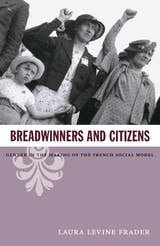
Breadwinners and Citizens
Gender in the Making of the French Social ModelLaura Levine Frader
Duke University Press, 2008
Frader’s analysis moves between the everyday lives of ordinary working women and men and the actions of national policymakers, political parties, and political movements, including feminists, pro-natalists, and trade unionists. In the years following World War I, the many women and an increasing number of immigrant men in the labor force competed for employment and pay. Family policy was used not only to encourage reproduction but also to regulate wages and the size of the workforce. Policies to promote married women’s and immigrants’ departure from the labor force were more common when jobs were scarce, as they were during the Depression. Frader contends that gender and ethnicity exerted a powerful and unacknowledged influence on French social policy during the Depression era and for decades afterward.
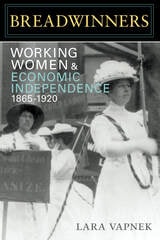
Breadwinners
Working Women and Economic Independence, 1865-1920Lara Vapnek
University of Illinois Press, 2009
Analyzing disjunctions between middle-class and working-class women's ideas of independence, Vapnek highlights the agendas for change advanced by leaders such as Jennie Collins, Leonora O'Reilly, and Helen Campbell and organizations such as the National Consumers' League, the Women's Educational and Industrial Union, and the Women's Trade Union League. Locating households as important sites of class conflict, Breadwinners recovers the class and gender politics behind the marginalization of domestic workers from labor reform while documenting the ways in which working-class women raised their voices on their own behalf.
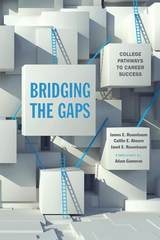
Bridging the Gaps
College Pathways to Career SuccessJames E. Rosenbaum
Russell Sage Foundation, 2017
The authors find that sub-baccalaureate credentials—associate degrees and college certificates—can improve employment outcomes. Young adults who complete these credentials have higher employment rates, earnings, autonomy, career opportunities, and job satisfaction than those who enroll but do not complete credentials. Sub-BA credentials can be completed at community college in less time than bachelor’s degrees, making them an affordable option for many low-income students.
Bridging the Gaps shows that when community colleges overemphasize bachelor’s degrees, they tend to funnel resources into remedial programs, and try to get low-performing students on track for a BA. Yet, remedial programs have inconsistent success rates and can create unrealistic expectations, leading struggling students to drop out before completing any degree. The authors show that colleges can devise procedures that reduce remedial placements and help students discover unseen abilities, attain valued credentials, get good jobs, and progress on degree ladders to higher credentials.
To turn college-for-all into a reality, community college students must be aware of their multiple credential and career options. Bridging the Gaps shows how colleges can create new pathways for non-traditional students to achieve success in their schooling and careers.

Brotherhood University
Black Men's Friendships and the Transition to AdulthoodBrandon A. Jackson
Rutgers University Press, 2024
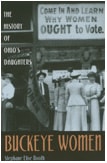
Buckeye Women
The History of Ohio’s DaughtersStephane Elise Booth
Ohio University Press, 2001
By the last two decades of the twentieth century, Ohio women had held positions as university presidents, chief executive officers, judges, superintendents of schools, and lieutenant governor. They had won Pulitzer Prizes and, in one case, the Nobel Prize for Literature.
But these women stood on the shoulders of those who came before: the pioneering women who helped tame the Ohio frontier, who filled the breach, who worked for reform, and who struggled for their own rights as citizens of one of the most prosperous states in the Union.
Buckeye Women is an accessible and comprehensive account of the role Ohio women have assumed in the history of the state and a narrative of their hardships and of the victories that have been won in the past two hundred years.
In this timely contribution to the Ohio Bicentennial Series, Professor Stephane Booth has written a rich and well-researched volume, providing for the first time a record of the vast and pivotal accomplishments shared by the women of Ohio over the last two centuries and documenting their contribution to the state’s remarkable heritage.