425 books match the query 'Ethics' and 15 start with b

cover of Be Fruitful and Multiply: Eugenics and Other Anglican Efforts to Control Fertility in Interwar England

Be Fruitful and Multiply

Eugenics and Other Anglican Efforts to Control Fertility in Interwar England

Andrew Moeller

Rutgers University Press, 2027

Be Fruitful and Multiply examines the moral justification offered by Anglican leaders for their support for eugenic, pronatalist, and neo-Malthusian schemes in the United Kingdom during the interwar period. These religious leaders often comprehended their efforts to control fertility within the context of a broader struggle over competing conceptions of human purpose in English society, and regularly justified their efforts on the grounds that fertility-manipulation schemes served to align procreative behaviors with “Christian” conceptions of human purpose. The shared moral logic of Anglican leaders helps to explain the pervasive interest in birthrate patterns, along with the enduring appeal of fertility-manipulation schemes, amongst middle- and upper-classes during the first half of the twentieth century. This book also sheds light on how population concerns led to the liberalization of church positions on marriage and sexuality, and illuminates how Anglican leaders sought to maintain moral influence in the face of the perceived large-scale rejection of Christian moral teachings.

[more]
cover of Before Virtue

Before Virtue

Jonathan J. Sanford

Catholic University of America Press, 2015
Jonathan Sanford finds that despite the common origins of contemporary virtue ethics in Anscombe, the literature varies widely not just in its scope but in its basic commitments. What exactly is contemporary virtue ethics? In Before Virtue, Sanford develops strategies for describing contemporary virtue ethics accurately. He then assesses contemporary virtue approaches by the Anscombean dual standard which inspired them: the degree to which they avoid the pitfalls of modern moral philosophy and the extent to which they exemplify a successful recovery of an Aristotelian approach to ethics.
[more]
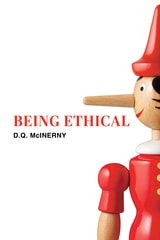
cover of Being Ethical

Being Ethical

D. Q. McInerny

St. Augustine's Press, 2020

A hallmark of Western culture is a massive moral confusion, rendering the very idea of virtue “exotic and incomprehensible.” McInerny here drags the conversation back to the beginning, establishing the terms and the tools of what it means to think and to do what is moral. As he asserts, the virtuous life and the moral life are one and the same. To be moral is to be good, and the goodness of one’s acts reflects the fundamentals of thought placed in the service of a pursuit of a virtuous life. Why is the concept of a virtuous life so foreign to many? We do not know the basics of a moral life. As McInerny states, “To be good we have to know what that means.”

The two biggest judgments one will make during life pertain to knowing what is good, what is bad, and the difference between the two. This bleeds into a study of morality and ethics when it pertains to concrete acts, but in reality all aspects of our lives bear on these judgments. “Being ethical is not simply a state of mind, it is a state of being, a way of living one’s life that reflects the fundamental principles of ethics [...] [it is one] who lives in a certain way.” Nevertheless, the subject of this book focuses on ethics––namely, the goodness or badness of human acts. McInerny’s great reason for writing this work is to teach the reader that he or she cannot properly tackle ethical questions (even if they are not identified as such) if one is not himself or herself actually ethical (living virtuously).

Writing very much as a teacher of teachers, McInerny relies on the foundations of Aristotle and Thomas Aquinas, as well as his late brother, Ralph McInerny, to reiterate the principles of ethics that inform both thought and act. To speak of ethics, then, is to admit a commitment to virtue and how the theoretical distinction of good and bad is necessarily practical. Acting well will lead to thinking better, but McInerny notes that culture has lost sight of the former and thereby the coherency to address ethical questions. Being Ethical aims to correct this disconnect in forty-eight cogent lessons. 

Being Ethical is fundamentally intended to serve as a sequel to D. Q. McInerny’s Being Logical (Random House, 2004), which has remained in print and has been translated into six languages. Its style lends itself to being used as a textbook in liberal studies. More generally, it is a refreshing presentation of this topic and timely and timeless exhortation to readers of the necessity of a love of virtue for ethical thought. For friends and students of Aristotle, Thomas Aquinas and Ralph McInerny, this book bears a style and manner that is both familiar and much loved.
[more]
cover of Best Practice: Management Consulting and the Ethics of Financialization in China

Best Practice

Management Consulting and the Ethics of Financialization in China

Kimberly Chong

Duke University Press, 2018

In Best Practice Kimberly Chong provides an ethnography of a global management consultancy that has been hired by Chinese companies, including Chinese state-owned enterprises. She shows how consulting emerges as a crucial site for considering how corporate organization, employee performance, business ethics, and labor have been transformed under financialization. To date financialization has been examined using top-down approaches that portray the rise of finance as a new logic of economic accumulation. Best Practice, by contrast, focuses on the everyday practices and narratives through which companies become financialized. Effective management consultants, Chong finds, incorporate local workplace norms and assert their expertise in the particular terms of China's national project of modernization, while at the same time framing their work in terms of global “best practices.” Providing insight into how global management consultancies refashion Chinese state-owned enterprises in preparation for stock market flotation, Chong demonstrates both the dynamic, fragmented character of financialization and the ways in which Chinese state capitalism enables this process.
[more]
cover of Between Politics and Ethics: Toward a Vocative History of English Studies

Between Politics and Ethics

Toward a Vocative History of English Studies

James N. Comas

Southern Illinois University Press, 2006

For nearly twenty-five years, English studies has been focused on two terms: politics and ethics. However, the institutional emergence, development, and relationship of these two concepts have yet to be examined. Between Politics and Ethics: Toward a Vocative History of English Studies traces the development of politics and ethics in contemporary English studies, questions the current political orientation of the discipline, and proposes a rethinking of the history of English studies based on a “vocative” dimension of writing—the idea that writers form a virtual community by “calling to” and listening to other writers.

In a series of interrelated discussions, James Comas examines the historical trends leading to recent confusion regarding ethics and its relation to the politics of English studies. Through close, rhetorical readings of texts by Judith Butler, Stephen Greenblatt, Edward Said, and others, Comas argues that this confusion is largely the result of a “political turn” that resists theorizing itself. In addition, he argues that work on ethics by Wayne Booth, Geoffrey Harpham, and J. Hillis Miller reflects an uneasy dialectic between the ethics and politics of reading and writing. In response to this discord, Comas turns to the theories of Emmanuel Levinas and Maurice Blanchot, as well as to the examples of Georges Bataille and Kenneth Burke, and proposes a vocative approach to assessing English studies and its history. In doing so, this volume offers a thoughtful reassessment of English studies that affects our understanding of the rhetoric of disciplinary histories.
[more]
cover of Beyond Caring: Hospitals, Nurses, and the Social Organization of Ethics

Beyond Caring

Hospitals, Nurses, and the Social Organization of Ethics

Daniel F. Chambliss

University of Chicago Press, 1996

A powerful account of the everyday experiences and challenges of nursing in American hospitals

Vividly documenting the real world of the contemporary hospital, its nurses, and their moral and ethical crises, Dan Chambliss offers a sobering revelation of the forces shaping moral decisions in our hospitals.

Based on more than ten years' field research, Beyond Caring is filled with eyewitness accounts and personal stories demonstrating how nurses turn the awesome into the routine. It shows how patients, many weak and helpless, too often become objects of the bureaucratic machinery of the health care system and how ethics decisions, once the dilemmas of troubled individuals, become the setting for political turf battles between occupational interest groups. The result is a compelling combination of realism and a powerful theoretical argument about moral life in large organizations.
[more]
cover of Beyond Solidarity: Pragmatism and Difference in a Globalized World

Beyond Solidarity

Pragmatism and Difference in a Globalized World

Giles Gunn

University of Chicago Press, 2001

Beyond Solidarity is an impassioned argument for a sharable morality in a world increasingly fractured along lines of difference. Giles Gunn asks how human solidarity can be reconceived when its expressions have become increasingly exceptionalist and outmoded, and when the pressures of globalization divide as much as they unify.
He finds the terms for answering these questions in a more inclusive, cosmopolitan pragmatism—one willing to explore fundamental values without recourse to absolutist arguments. Drawing on the work of William and Henry James, John Dewey, Primo Levi, Richard Rorty, and many others, as well as postcolonial writing, Jewish literature of the Holocaust, and the cultural and religious experience of African Americans in slavery, Gunn points pragmatism in a transnational direction and shows how it can better account for the consequences of diversity. Beyond Solidarity, then, is a study of the difference that difference makes in a globalized world.
[more]
cover of Bioethics Mediation: A Guide to Shaping Shared Solutions, Revised and Expanded Edition

Bioethics Mediation

A Guide to Shaping Shared Solutions, Revised and Expanded Edition

Nancy Neveloff Dubler

Vanderbilt University Press, 2011

Bioethics Mediation offers stories about patients, families, and health care providers enmeshed in conflict as they wrestle with decisions about life and death. It provides guidance for those charged with supporting the patient's traditional and religious commitments and personal wishes. Today's medical system, without intervention, privileges those within shared cultures of communication and disadvantages those lacking power and position, such as immigrants, the poor, and nonprofessionals. This book gives clinical ethics consultants, palliative care providers, and physicians, nurses, and other medical staff the tools they need to understand and manage conflict while respecting the values of patients and family members.


Conflicts come in different guises, and the key to successful resolution is early identification and intervention. Every bioethics mediator needs to be prepared with skills to listen, "level the playing field," identify individual interests, explore options, and help craft a "principled resolution" -- a consensus that identifies a plan aligned with accepted ethical principles, legal stipulations, and moral rules and that charts a clear course of future intervention.


The organization of the book makes it ideal for teaching or as a handbook for the practitioner. It includes actual cases, modified to protect the privacy of patients, providers, and institutions; detailed case analyses; tools for step-by-step mediation; techniques for the mediator; sample chart notes; and a set of actual role plays with expert mediator and bioethics commentaries. The role plays include:


- discharge planning for a dying patient

- an at-risk pregnancy

- HIV and postsurgical complications in the ICU

- treatment for a dying adolescent

- dialysis and multiple systems failure
Expanded by two-thirds from the 2004 edition, the new edition features two new role plays, a new chapter on how to write chart notes, and a discussion of new understandings of the role of the clinical ethics consultant.
[more]
cover of Bioethics: A Catholic Primer

Bioethics

A Catholic Primer

Thomas Cavanaugh

Catholic University of America Press, 2026

Bioethics: A Catholic Primer is a succinct, precise, and accurate treatment of the Catholic moral tradition in medicine. Professors teaching an undergraduate bioethics course will use it as a primary text or as an ancillary text in a general ethics course that has a medical ethics section. Professors in both situations will find it an attractive alternative or addition to current offerings. This applies especially to those teaching at a Catholic-affiliated college or university. Professors teaching in pre-health­care professional, pre-medical, and in nursing programs (both undergraduate and graduate) will adopt this text both as a primary text and as an ancillary text, depending on their needs. Because of its slender, compact, yet rewarding content, professors will find it appealing to assign. Moreover, students will not find its size daunting. Its accuracy, precision, and small size will make it appealing to a more general audience. Moreover, by its brevity, it will gain an audience interested in Catholic med­ical ethics, yet often overwhelmed by the very size of the volumes available. People interested in an overarching, accurate, yet brief treatment of the Catholic moral tradition in medicine will read this slim volume (for exam­ple, members on ethics committees at Catholic hospitals). Others (faculty, students, patients, pastors, physicians, and nurses) will read it themselves and confidently share it with their friends and loved ones, knowing that they will find in it a rewarding, slender, accessible treatment of a rich moral tradition.
[more]
cover of Biomedicen and Beatitude: An Introduction to Catholic Bioethics, Second Edition

Biomedicen and Beatitude

An Introduction to Catholic Bioethics, Second Edition

Nicanor Pier Giorgio Austriaco

Catholic University of America Press, 2021
This timely and up to date new edition of Biomedicine and Beatitude features an entirely new chapter on the ethics of bodily modification. It is also updated throughout to reflect the pontificate of Pope Francis, recent concerns including ethical issues raised by the COVID-19 pandemic, and feedback from the many instructors who used the first edition in the classroom.
[more]
cover of Biomedicine and Beatitude: An Introduction to Catholic Bioethics

Biomedicine and Beatitude

An Introduction to Catholic Bioethics

Nicanor Pier Giorgio AUSTRIACO

Catholic University of America Press, 2011

Besides ethical questions raised at the beginning and the end of life, Nicanor Austriaco, O.P., discusses the ethics of the clinical encounter, human procreation, organ donation and transplantation, and biomedical research.
[more]
cover of Black Cultural Life in South Africa: Reception, Apartheid, and Ethics

Black Cultural Life in South Africa

Reception, Apartheid, and Ethics

Lily Saint

University of Michigan Press, 2018

Under apartheid, black South Africans experienced severe material and social disadvantages occasioned by the government’s policies, and they had limited time for entertainment. Still, they closely engaged with an array of textual and visual cultures in ways that shaped their responses to this period of ethical crisis. Marshaling forms of historical evidence that include passbooks, memoirs, American “B” movies, literary and genre fiction, magazines, and photocomics, Black Cultural Life in South Africa considers the importance of popular genres and audiences in the relationship between ethical consciousness and aesthetic engagement.

This study provocatively posits that states of oppression, including colonial and postcolonial rule, can elicit ethical responses to imaginative identification through encounters with popular culture, and it asks whether and how they carry over into ethical action. Its consideration of how globalized popular culture “travels” not just in material form, but also through the circuits of the imaginary, opens a new window for exploring the ethical and liberatory stakes of popular culture. Each chapter focuses on a separate genre, yet the overall interdisciplinary approach to the study of genre and argument for an expansion of ethical theory that draws on texts beyond the Western canon speak to growing concerns about studying genres and disciplines in isolation. Freed from oversimplified treatments of popular forms—common to cultural studies and ethical theory alike—this book demonstrates that people can do things with mass culture that reinvigorate ethical life.

Lily Saint’s new volume will interest Africanists across the humanities and the social sciences, and scholars of Anglophone literary, globalization, and cultural studies; race; ethical theories and philosophies; film studies; book history and material cultures; and the burgeoning field of comics and graphic novels.

[more]
cover of Black, Quare, and Then to Where: Theories of Justice and Black Sexual Ethics

Black, Quare, and Then to Where

Theories of Justice and Black Sexual Ethics

jennifer susanne leath

Duke University Press, 2023

In Black, Quare, and Then to Where jennifer susanne leath explores the relationship between Afrodiasporic theories of justice and Black sexual ethics through a womanist engagement with Maât the ancient Egyptian deity of justice and truth. Maât took into account the historical and cultural context of each human’s life, thus encompassing nuances of politics, race, gender, and sexuality. Arguing that Maât should serve as a foundation for reconfiguring Black sexual ethics, leath applies ancient Egyptian moral codes to quare ethics of the erotic, expanding what relationships and democratic practices might look like from a contemporary Maâtian perspective. She also draws on Pan-Africanism and examines the work of Alice Walker, E. Patrick Johnson, Cheikh Anta Diop, Sylvia Wynter, Sun Ra, and others. She shows that together these thinkers and traditions inform and expand the possibilities of Maâtian justice with respect to Black sexual experiences. As a moral force, leath contends, Maât opens new possibilities for mapping ethical frameworks to understand, redefine, and imagine justices in the United States.
[more]
cover of Bound for Beatitude A Thomistic Study in Eschatology and Ethics

Bound for Beatitude A Thomistic Study in Eschatology and Ethics

Reinhard Hütter

Catholic University of America Press, 2019

Bound for Beatitude is about St. Thomas Aquinas’s theology of beatitude and the journey thereto. Consequently, the work’s topic is the meaning and purpose of human life embedded in that of the whole cosmos. This study is not an antiquarian exercise in the thought of some sundry medieval thinker, but an exercise of ressourcement in the philosophical and theological wisdom of one of the most profound theologians of the Catholic Church, one whom the Church has canonized, granted the title “Doctor of the Church,” and for a long time regarded as the common doctor. This exercise of ressourcement takes its methodological cues from the common doctor; hence, it is an integrated exercise of philosophical, dogmatic, and moral theology. Its specific theological topic, the ultimate human end, perfect happiness, beatitude, and the journey thereto—stands at the very heart of St. Thomas’s theology. Far from being passé, his theology of beatitude is of urgent pertinence as the crisis of humanity and of creation and the exile of God seems to approach its apogee. By way of a presentation, interpretation, and defense of Thomas Aquinas’s doctrine of beatitude and the journey thereto, Bound for Beatitude advances an argument based on four theses: (1) The loss of a theology of beatitude has greatly impoverished contemporary theology. In order to succeed and flourish, theology must recover a sound teleological orientation. (2) In order to recover a sound teleological orientation, theology must recover metaphysics as its privileged instrument. (3) Thomas Aquinas provides a still pertinent model for how theology might achieve these goals in a metaphysically profound theology of beatitude and the beatific vision. Finally, (4) Aquinas’s rich and sophisticated account of the virtues charts the journey to beatitude in a way that still has analytic force and striking relevance in the early twenty-first century.
[more]
cover of Breeding Better Vermonters: The Eugenics Project in the Green Mountain State

Breeding Better Vermonters

The Eugenics Project in the Green Mountain State

Nancy L. Gallagher

Brandeis University Press, 1999

Eugenics -- the study of human racial progress through selective breeding -- frequently invokes images of social engineering, virulent racism, immigrant persecution, and Nazi genocide, but Vermont's little known adventure in eugenics shows the inherent adaptability of eugenics theory and methods to parochial social justice. Beginning with genealogies of Vermont's rural poor in the 1920s, and concluding in the 1930s with an exposé of ethnic prejudice in Vermont's largest city, this story of the Eugenics Survey of Vermont explores the scope, limits, and changing interpretations of eugenics in America and offers a new approach to the history of progressive politics and social reform in New England. Inspired and directed by Zoology Professor Henry F. Perkins, the survey, through social research, political agitation, and education campaigns, infused eugenic agendas into progressive programs for child welfare, mental health, and rural community development. Breeding Better Vermonters examines social, ethnic, and religious tensions and reveals how population studies, theories of human heredity, and a rhetoric of altruism became subtle, yet powerful tools of social control and exclusion in a state whose motto was "freedom and unity."
[more]