Results by title
57 books match the query 'Europe (General)' and 5 start with b
Bait
David Albahari
Northwestern University Press, 2001
Balkan Beauty, Balkan Blood
Modern Albanian Short StoriesRobert Elsie
Northwestern University Press, 2006
Albania's more established writers (including Dritëro Agolli, Ismail Kadare, Teodor Laço, and Eqrem Basha) appear here alongside newer talents (such as Ylljet Aliçka, Mimoza Ahmeti, Elivra Dones, Lindita Arapi, and Kim Mehmeti), providing English-speaking readers with an elucidating and entertaining overview of the recent history, and the future, of the nation's literature.
Boat Number Five
Monika Kompaníková
Seagull Books, 2021
A fierce, unapologetic eye captures the universal quest for connection in post-communist Eastern Europe.
Emotionally neglected by her immature, promiscuous mother and forced to care for her cantankerous dying grandmother, twelve-year-old Jarka is left to fend for herself in the social vacuum of a post-communist concrete jungle in Bratislava. She spends her days roaming the streets and daydreaming in the only place she feels truly safe: a small garden inherited from her grandfather. One day, stopping at a suburban railway station, she impulsively abducts twin babies.
Teetering on the edge of disaster, Jarka struggles to care for the children, and in the process, begins to discover herself. Boat Number Five—which was adapted into an award-winning Slovak film—brilliantly captures the ache and emptiness of a fractured society.
Border State
Tonu Onnepalu
Northwestern University Press, 2000
An immediate sensation upon its 1993 publication in Europe, already translated into more than a dozen languages, Border State is a brilliantly realized account of a man in the grip of Western excess, emotionally crippled by a world that is subsuming his own and inhabiting a West in which "all countries have become imaginary deserts of ruins where crowds of nomads roam from one attraction to the other." His tale, in which disillusion and murder become inextricably linked, is a compelling exploration of scarcity, longing, and madness.
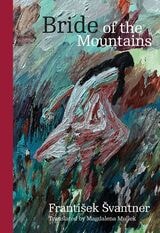
Bride of the Mountains
František Švantner
Karolinum Press, 2026
A classic work of twentieth-century Slovak literature that blends naturalism and depictions of rural life with the supernatural.
After many years, Libor returns to his native village, where he has been appointed gamekeeper. His childhood sweetheart, Zuna, is waiting for him there. But his homecoming is far from idyllic. He has “tasted city life” and soon becomes an outsider to the villagers. According to them, Zuna has become a local prostitute who sleeps with anyone who pays her. Zuna’s father, an old miller, has gone blind because he made a pact with the devil. The mill where Libor and Zuna used to play as children has fallen into disrepair and ruin. The more Libor gets to know the world that he has returned to, the more confused he becomes. The village is full of superstitions, secrets, and hostility. He meets the charcoal burner Tavo, who lives high in the mountains, and learns from him the mysterious and bloody story of Zuna’s birth. He also learns what matters most to him: Zuna is pure and innocent. Libor starts a relationship with her from scratch. But just when their forgotten love might finally come to fruition, He appears—a vagabond who can transform into a wolf—and Libor discovers that Zuna is meeting with him. Is it a monster that gouges people’s eyes out? The devil, or our immaterial, dark alter ego? Reality, dreams, and fantasy blend in Libor’s mind as his hopes seem crushed beyond redemption.