Results by title
421 books match the query 'Evolution' and 20 start with b
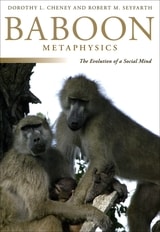
Baboon Metaphysics
The Evolution of a Social MindDorothy L. Cheney and Robert M. Seyfarth
University of Chicago Press, 2007
“The vivid narrative is like a bush detective story.”—Steven Poole, Guardian
“Baboon Metaphysics is a distillation of a big chunk of academic lives. . . . It is exactly what such a book should be—full of imaginative experiments, meticulous scholarship, limpid literary style, and above all, truly important questions.”—Alison Jolly, Science
“Cheney and Seyfarth found that for a baboon to get on in life involves a complicated blend of short-term relationships, friendships, and careful status calculations. . . . Needless to say, the ensuing political machinations and convenient romantic dalliances in the quest to become numero uno rival the bard himself.”—Science News
“Through ingenious playback experiments . . . Cheney and Seyfarth have worked out many aspects of what baboons used their minds for, along with their limitations. Reading a baboon’s mind affords an excellent grasp of the dynamics of baboon society. But more than that, it bears on the evolution of the human mind and the nature of human existence.”—Nicholas Wade, New York Times
Bacteria to AI
Human Futures with Our Nonhuman SymbiontsN. Katherine Hayles
University of Chicago Press, 2025
A new theory of mind that includes nonhuman and artificial intelligences.
The much-lauded superiority of human intelligence has not prevented us from driving the planet into ecological disaster. For N. Katherine Hayles, the climate crisis demands that we rethink basic assumptions about human and nonhuman intelligences. In Bacteria to AI, Hayles develops a new theory of mind—what she calls an integrated cognitive framework (ICF)—that includes the meaning-making practices of lifeforms from bacteria to plants, animals, humans, and some forms of artificial intelligence. Through a sweeping survey of evolutionary biology, computer science, and contemporary literature, Hayles insists that another way of life, with ICF at its core, is not only possible but necessary to safeguard our planet’s future.

Banquet at Delmonico's
The Gilded Age and the Triumph of Evolution in AmericaBarry Werth
University of Chicago Press, 2011
In Banquet at Delmonico’s, Barry Werth draws readers inside the circle of intellectuals, scientists, politicians, businessmen, and clergymen who brought Charles Darwin’s controversial ideas to post-Civil-War America. Each chapter is dedicated to a crucial intellectual encounter, culminating with an exclusive farewell dinner held in English philosopher Herbert Spencer’s honor at the venerable New York restaurant Delmonico’s in 1882. In this thought-provoking and nuanced account, Werth firmly situates social Darwinism in the context of the Gilded Age. Banquet at Delmonico’s is social history at its finest.

Bark Beetles in North American Conifers
A System for the Study of Evolutionary BiologyEdited by Jeffry B. Mitton and Kareen B. Sturgeon
University of Texas Press, 1982
Because they prey upon a wide variety of conifers, bark beetles have a major impact upon western forests. In most of the western states, for example, we have witnessed bark beetles in epidemic outbreaks, attacking and damaging ponderosa pine, limber pine, and other hosts.
The ecosystem of bark beetle and host tree is a highly coevolved community of organisms in which the evolution of one member of the community significantly influences the evolution of the other. Largely because of the enormous economic impact these insects exert on the management of our forests, few other such communities have been studied so extensively. Bark Beetles in North American Conifers brings together in one volume both theory and a wealth of empirical data gathered by researchers from all the fields in which bark beetles are studied: ecology, evolutionary biology, population genetics, entomology, and forestry.
Topics covered include the life cycle of bark beetles and their population dynamics, their genetic variation and evolutionary mechanisms, the evolution and systematics of the major groups of bark beetles, pheromone production and its implications for coevolution among these organisms, the interaction between bark beetles and their predators, host resistance and susceptibility, the relationship of parasites and symbiotic micro-organisms in general, and management and control of bark beetles based on sound ecological and evolutionary concepts. The concluding section of the book summarizes the dynamics of the coevolved system of bark beetle and host tree and discusses controversial issues for which this system may provide important answers.

Basic Color Terms
Their Universality and EvolutionBrent Berlin and Paul Kay
CSLI, 1999
The work reported in this monograph was begun in the winter of 1967 in a graduate seminar at Berkeley. Many of the basic data were gathered by members of the seminar and the theoretical framework presented here was initially developed in the context of the seminar discussions.
Much has been discovered since1969, the date of original publication, regarding the psychophysical and neurophysical determinants of universal, cross-linguistic constraints on the shape of basic color lexicons, and something, albeit less, can now also be said with some confidence regarding the constraining effects of these language-independent processes of color perception and conceptualization on the direction of evolution of basic color term lexicons.
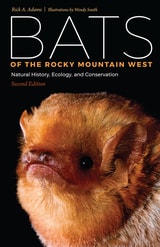
Bats of the Rocky Mountain West
Natural History, Ecology, and ConservationRick A. Adams
University Press of Colorado, 2025
In the twenty years since the original publication of Bats of the Rocky Mountain West, chiropterology (bat science) has exploded, significantly altering our understanding of the ecology, behavior, distribution, and conservation of one of the world's most enigmatic mammals. This notably updated second edition further brings to life the wonderful world of bats with beautiful illustrations and photography that grip the imagination and reveal the magnificent natural history of the only true flying mammal. In addition, thirty-two accounts of regional species with photographs, range maps, and echolocation sonograms report informative and thoroughly revised findings on bats now living in the Rocky Mountain West. Leave any preconceived notions behind and learn the real-life biology of bats, which eclipses the fabled tales of the crypt and macabre.
Becoming Undone
Darwinian Reflections on Life, Politics, and ArtElizabeth Grosz
Duke University Press, 2011
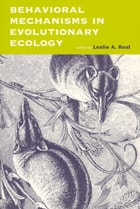
Behavioral Mechanisms in Evolutionary Ecology
Leslie A. Real
University of Chicago Press, 1994
With studies of species ranging from insects to primates, the contributors examine how various animals identify and use environmental resources and deal with ecological constraints, as well as the roles of learning, communication, and cognitive aspects of social interaction in behavioral evolution. Taken together, the chapters demonstrate how the study of internal mechanistic foundations of behavior in relation to their ecological and evolutionary contexts and outcomes provides valuable insight into such behaviors as predation, mating, and dispersal.
Behavioral Mechanisms in Evolutionary Ecology shows how a mechanistic approach unites various levels of biological organization to provide a broader understanding of the biological bases of behavioral evolution.

Beyond White Picket Fences
Evolution of an American TownCatherine Simpson Bueker
Russell Sage Foundation, 2025
Drawing on interviews, archival data, and participant observations, Bueker examines how Italian, Jewish, and Chinese newcomers influenced and were influenced by the established Wellesley community. She examines the ways in which immigrant and ethnic groups assimilate, retain their cultural backgrounds, and respond to discrimination, sometimes simultaneously, and, in doing so, alter the mainstream. Some new residents responded to Wellesley by assimilating to it. They developed relationships with long-term resident neighbors, volunteered in their children’s schools, and ran for elected positions. In adapting themselves to their new community, however, they also influenced it by virtue of their distinct cultural backgrounds.
Other new residents worked to preserve their cultures by establishing ethnic-specific organizations, lobbying to have new holidays incorporated into the calendar, and hewing to their own ethnic culinary traditions. Their efforts also influenced the established community. When newcomers attempted to retain their culture by requesting ethnic-specific food items be stocked at the local grocery store, opening ethic restaurants, or renting space for a new organization, for example, they impacted the established community. New individuals and groups also responded to experiences of hostility and discrimination. Italian residents fought against attempts at school redistricting targeting them in the 1930s, Jewish residents pushed back against housing discrimination in the 1950s and 1960s, and Chinese residents responded to anti-Asian incidents in the wake of the COVID-19 pandemic in 2020. These groups had to engage with the larger community to rectify these injustices. Some of the changes in Wellesley have come about with little recognition or response, others have been met with resistance and anger. Whether the changes are subtle or obvious and whether new groups are embraced or resisted, the whole town is altered in an ongoing process as new groups continue to move to and settle in Wellesley.
Beyond White Picket Fences is a timely and compelling examination of the ways newcomers become part of and shape American communities.
Biological Individuality
Integrating Scientific, Philosophical, and Historical PerspectivesEdited by Scott Lidgard and Lynn K. Nyhart
University of Chicago Press, 2017
Bringing together biologists, historians, and philosophers, this book provides a multifaceted exploration of biological individuality that identifies leading and less familiar perceptions of individuality both past and present, what they are good for, and in what contexts. Biological practice and theory recognize individuals at myriad levels of organization, from genes to organisms to symbiotic systems. We depend on these notions of individuality to address theoretical questions about multilevel natural selection and Darwinian fitness; to illuminate empirical questions about development, function, and ecology; to ground philosophical questions about the nature of organisms and causation; and to probe historical and cultural circumstances that resonate with parallel questions about the nature of society. Charting an interdisciplinary research agenda that broadens the frameworks in which biological individuality is discussed, this book makes clear that in the realm of the individual, there is not and should not be a direct path from biological paradigms based on model organisms through to philosophical generalization and historical reification.
Biology at Work
Rethinking Sexual EqualityKingsley R. Browne
Rutgers University Press, 2002
Does biology help explain why women, on average, earn less money than men? Is there any evolutionary basis for the scarcity of female CEOs in Fortune 500 companies? According to Kingsley Browne, the answer may be yes.
Biology at Work brings an evolutionary perspective to bear on issues of women in the workplace: the "glass ceiling," the "gender gap" in pay, sexual harassment, and occupational segregation. While acknowledging the role of discrimination and sexist socialization, Browne suggests that until we factor real biological differences between men and women into the equation, the explanation remains incomplete.
Browne looks at behavioral differences between men and women as products of different evolutionary pressures facing them throughout human history. Womens biological investment in their offspring has led them to be on average more nurturing and risk averse, and to value relationships over competition. Men have been biologically rewarded, over human history, for displays of strength and skill, risk taking, and status acquisition. These behavioral differences have numerous workplace consequences. Not surprisingly, sex differences in the drive for status lead to sex differences in the achievement of status.
Browne argues that decision makers should recognize that policies based on the assumption of a single androgynous human nature are unlikely to be successful. Simply removing barriers to inequality will not achieve equality, as women and men typically value different things in the workplace and will make different workplace choices based on their different preferences.
Rather than simply putting forward the "nature" side of the debate, Browne suggests that dichotomies such as nature/nurture have impeded our understanding of the origins of human behavior. Through evolutionary biology we can understand not only how natural selection has created predispositions toward certain types of behavior but also how the social environment interacts with these predispositions to produce observed behavioral patterns.
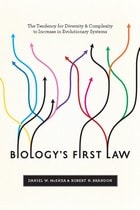
Biology's First Law
The Tendency for Diversity and Complexity to Increase in Evolutionary SystemsDaniel W. McShea and Robert N. Brandon
University of Chicago Press, 2010
Life on earth is characterized by three striking phenomena that demand explanation: adaptation—the marvelous fit between organism and environment; diversity—the great variety of organisms; and complexity—the enormous intricacy of their internal structure. Natural selection explains adaptation. But what explains diversity and complexity? Daniel W. McShea and Robert N. Brandon argue that there exists in evolution a spontaneous tendency toward increased diversity and complexity, one that acts whether natural selection is present or not. They call this tendency a biological law—the Zero-Force Evolutionary Law, or ZFEL. This law unifies the principles and data of biology under a single framework and invites a reconceptualization of the field of the same sort that Newton’s First Law brought to physics.
Biology’s First Law shows how the ZFEL can be applied to the study of diversity and complexity and examines its wider implications for biology. Intended for evolutionary biologists, paleontologists, and other scientists studying complex systems, and written in a concise and engaging format that speaks to students and interdisciplinary practitioners alike, this book will also find an appreciative audience in the philosophy of science.
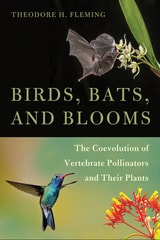
Birds, Bats, and Blooms
The Coevolution of Vertebrate Pollinators and Their PlantsTheodore H. Fleming
University of Arizona Press, 2024
Vertebrate pollinators like bats and birds are keystone species of the Sonoran Desert. Biologist Theodore H. Fleming uses these species—found in the desert around his home—to address two big questions dealing with the evolution of life on Earth: How did these animals evolve, and how did they coevolve with their food plants?
A deeply thoughtful and researched dive into evolutionary history, Birds, Bats, and Blooms offers an engaging trip across evolutionary trajectories as it discusses nectar-feeding birds and bats and their coevolution as pollinators with flowering plants. The primary focus is on New World birds such as hummingbirds and their chiropteran counterparts (nectar-feeding bats in the family Phyllostomidae). It also discusses their Old World ecological counterparts, including sunbirds, honeyeaters, lorikeets, and nectar-feeding bats in the Pteropodidae family. Fleming also addresses the conservation status of these beautiful animals.
Through engaging prose, Fleming pulls together the most recent research in evolutionary biology and pairs it with accounts of his personal interactions with bats and birds. His account includes fourteen color photographs taken by the author during his research trips around the world.
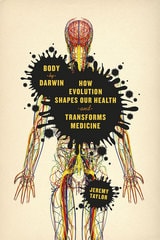
Body by Darwin
How Evolution Shapes Our Health and Transforms MedicineJeremy Taylor
University of Chicago Press, 2015
In Body by Darwin, Taylor examines the evolutionary origins of some of our most common and serious health issues. To begin, he looks at the hygiene hypothesis, which argues that our obsession with anti-bacterial cleanliness, particularly at a young age, may be making us more vulnerable to autoimmune and allergic diseases. He also discusses diseases of the eye, the medical consequences of bipedalism as they relate to all those aches and pains in our backs and knees, the rise of Alzheimer’s disease, and how cancers become so malignant that they kill us despite the toxic chemotherapy we throw at them. Taylor explains why it helps to think about heart disease in relation to the demands of an ever-growing, dense, muscular pump that requires increasing amounts of nutrients, and he discusses how walking upright and giving birth to ever larger babies led to a problematic compromise in the design of the female spine and pelvis. Throughout, he not only explores the impact of evolution on human form and function, but he integrates science with stories from actual patients and doctors, closely examining the implications for our health.
As Taylor shows, evolutionary medicine allows us think about the human body and its adaptations in a completely new and productive way. By exploring how our body’s performance is shaped by its past, Body by Darwin draws powerful connections between our ancient human history and the future of potential medical advances that can harness this knowledge.
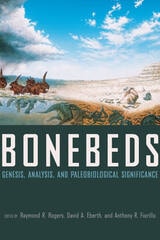
Bonebeds
Genesis, Analysis, and Paleobiological SignificanceEdited by Raymond R. Rogers, David A. Eberth, and Anthony R. Fiorillo
University of Chicago Press, 2007
Thirteen respected researchers combine their experiences in Bonebeds, providing readers with workable definitions, theoretical frameworks, and a compendium of modern techniques in bonebed data collection and analysis. By addressing the historical, theoretical, and practical aspects of bonebed research, this edited volume—the first of its kind—provides the background and methods that students and professionals need to explore and understand these fantastic records of ancient life and death.
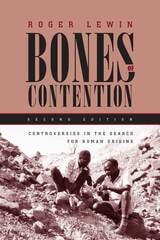
Bones of Contention
Controversies in the Search for Human OriginsRoger Lewin
University of Chicago Press, 1997
in many ways, remains contentious.
"[An] un-put-downable book."—John Gribbon, Times Educational Supplement
"Not just another 'stones and bones' account of human evolution. It is Lewin's thesis, amply demonstrated, that paleoanthropology is the most subjective of sciences because it engages the emotions of virtually everyone; and since the evidence is scrappy, interpretation is everything. . . . A splendid, stirring, and eye-opening account, to be devoured."—Kirkus Reviews, starred review
"[Lewin shows] 'how very unscientific the process of scientific inquiry can be.'. . . Bones of Contention is . . . serious intellectual history."—Edward Dolnick, Wall Street Journal
"[Lewin] documents his thesis in persuasive detail. . . . The reader is carried along by the power of Mr. Lewin's reporting."—Robert Wright, New York Times Book Review

Boulder
Evolution of a City, Revised EditionSilvia Pettem
University Press of Colorado, 2006
Pettem devotes the first chapter to an introduction of the early photographers whose work appears throughout the book. Moving outward from the central business district as development did, each subsequent chapter focuses on a particular area in Boulder, with an introductory essay followed by historic and contemporary photographs with detailed captions.

Broken Record
The Origins and Evolution of Recorded Voting in the U.S. CongressMichael S. Lynch & Anthony J. Madonna
University of Michigan Press, 2025
Consistent with the Founders’ skepticism of the impact of recorded voting in Congress, Broken Record shows that the contemporary roll call voting record includes far more meaningless position-taking and procedural roll call votes than it did during earlier congresses. The book argues that the removal of practical barriers to roll calls, internal changes to legislative procedures, and increased electoral competitiveness have led to more roll call votes on proposals sponsored by more extreme members. In addition to policy making being more difficult, increased roll call voting has played a substantial role in artificially increasing observed levels of polarization. This book argues that solving polarization requires a more nuanced set of solutions than simply replacing legislators; it will require increased public education about how Congress operates and specific procedural reforms.

Bryozoan Evolution
Frank K. McKinney and Jeremy B. C. Jackson
University of Chicago Press, 1991
"Bryozoan Evolution is profusely illustrated and has a bibliography of over 400 titles. It will find an appreciative audience of paleontologists, invertebrate zoologists, and ecologists thanks to its innovative and detailed evaluations of the roles of ecology, adaptive and functional morphology, life histories, biomechanics, developmental constraints, and chance on the evolution of the marine taxa of this speciose group."—Russel L. Zimmer, Science
"This book is an excellent source of information on the functional morphology and variety of colonial architecture in bryozoans, very well illustrated, and worth reading at least twice."-Robert L. Anstey, Paleobiology
"Even as one of the converted, I found the book a stimulating combination of paleobiology and ecology. In many ways it is a 'teaser'-the authors suggest a number of interesting hypotheses, and can test only some of them. Perhaps most important, McKinney and Jackson provide a plethora of fascinating ideas and examples that demonstrate the potential of this group of animals, and that should stimulate more work."-Michael S. Keough, TREE
"This stimulating book is sure to promote further interest in bryozoans. It will appeal to biologists and paleontologists alike."-Paul Taylor, Times Higher Education Supplement
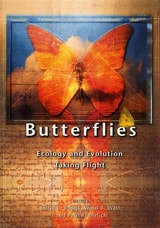
Butterflies
Ecology and Evolution Taking FlightEdited by Carol L. Boggs, Ward B. Watt, and Paul R. Ehrlich
University of Chicago Press, 2003
The first international synthesis of butterfly biology in two decades, Butterflies: Ecology and Evolution Taking Flight offers students, scientists, and amateur naturalists a concise overview of the latest developments in the field. Furthermore, it articulates an exciting new perspective of the whole group of approximately 15,000 species of butterflies as a comprehensive model system for all the sciences concerned with biodiversity and its preservation.
Contributors:
Carol L. Boggs, Paul M. Brakefield, Adriana D. Briscoe, Dana L. Campbell, Elizabeth E. Crone, Mark Deering, Henri Descimon, Erika I. Deinert, Paul R. Ehrlich, John P. Fay, Richard ffrench-Constant, Sherri Fownes, Lawrence E. Gilbert, André Gilles, Ilkka Hanski, Jane K. Hill, Brian Huntley, Niklas Janz, Greg Kareofelas, Nusha Keyghobadi, P. Bernhard Koch, Claire Kremen, David C. Lees, Jean-François Martin, Antónia Monteiro, Paulo César Motta, Camille Parmesan, William D. Patterson, Naomi E. Pierce, Robert A. Raguso, Charles Lee Remington, Jens Roland, Ronald L. Rutowski, Cheryl B. Schultz, J. Mark Scriber, Arthur M. Shapiro, Michael C. Singer, Felix Sperling, Curtis Strobeck, Aram Stump, Chris D. Thomas, Richard VanBuskirk, Hans Van Dyck, Richard I. Vane-Wright, Ward B. Watt, Christer Wiklund, and Mark A. Willis