Results by title
85 books match the query 'Experience' and 2 start with b
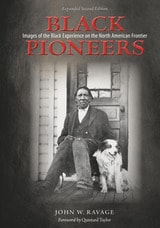
Black Pioneers
Images of the Black Experience on the North American FrontierJohn Ravage
University of Utah Press, 1997
It is difficult to piece together existing records that describe the migrations of African Americans in the nineteenth-century American West. Efforts to assemble collections of oral histories, images, diaries, and other written documents on the black experience in the Western United States and Canada have proven surprisingly fruitful, however, and the rewarding culmination of such research flourished in the archival images found in this second edition of John Ravage’s Black Pioneers.
Using public and private collections in every western state and in Canada, Ravage has gathered more than three hundred photographs, line drawings, lithographs, stereoviews, and other images. This new edition also adds sections on black entertainers and ranchers, a chapter on the dating of historic photographs and their genealogical significance, as well as an expanded bibliography. All aid understanding of the black frontier experience.
Ravage goes beyond the stereotypical photography of the era, which often reflected white fears and prejudices, to present the works of frontier photographers. Galveston’s Lucius Harper, Denver’s John Green, and the Northwest’s nomadic James Presley Ball all bring life to their subjects and meaning to their presence in the American West. Black Pioneers is a vibrant visual document of the profound influence blacks had on communal and frontier history.
[more]

Bread and Work
The Experience of Unemployment 1918-39Matt Perry
Pluto Press, 2000
Between the world wars, unemployment spread throughout the industrialised world like a disease. In Bread and Work, Matt Perry places this global unemployment crisis in its proper international context. Focusing on Britain, Europe and the United States, he compares and contrasts popular attitudes and the government response toward unemployment.
Looking beyond statistics and economic cycles, Perry investigates the human impact of unemployment. He uncovers the experience of being jobless from the perspective of those who lived through it, their employers and their communities. He uses oral history, memoirs, literary accounts, and newspaper articles to reveal the reality of unemployment.
Perry argues that the scale of the crisis has been minimised by historians who have tended to emphasise that prolonged unemployment was the problem of the distressed fringe.
Finally, Perry argues that the lessons of the 1930s have direct relevance today since the structural problems of industrial capitalism remain inherent.
[more]