Results by title
95 books match the query 'Fall' and 5 start with b
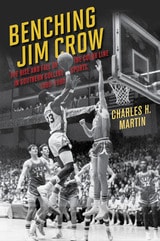
Benching Jim Crow
The Rise and Fall of the Color Line in Southern College Sports, 1890-1980Charles H. Martin
University of Illinois Press, 2010
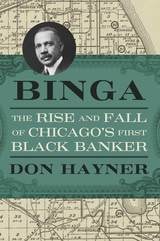
Binga
The Rise and Fall of Chicago's First Black BankerDon Hayner
Northwestern University Press, 2020
Binga is the definitive full-length biography of Jesse Binga, the first black banker in Chicago. Born into a large family in Detroit, Binga arrived in Chicago in 1892 in his late twenties with virtually nothing. Through his wits and resourcefulness, he rose to wealth and influence as a real estate broker, and in 1908 he founded the Binga Bank, the first black-owned bank in the city. But his achievements were followed by an equally notable downfall. Binga recounts this gripping story about race, history, politics, and finance.
The Black Belt, where Binga’s bank was located, was a segregated neighborhood on Chicago’s South Side—a burgeoning city within a city—and its growth can be traced through the arc of Binga’s career. He preached and embodied an American gospel of self-help and accrued wealth while expanding housing options and business opportunities for blacks. Devout Roman Catholics, he and his wife Eudora supported church activities and various cultural and artistic organizations; their annual Christmas party was the Black Belt’s social event of the year. But Binga’s success came at the price of a vicious backlash. After he moved his family into a white neighborhood in 1917, their house was bombed multiple times, his offices were attacked twice, and he became a lightning rod for the worst race riots in Chicago history, which took place in 1919. Binga persevered, but, starting with the stock market crash of October 1929, a string of reversals cost him his bank, his property, and his fortune.
A quintessentially Chicago story, Binga tells the history of racial change in one of the most segregated cities in America and how an extraordinary man stood as a symbol of hope in a community isolated by racial animosity.
Black Victory
The Rise and Fall of the White Primary in TexasDarlene Clark Hine & Essays by Darlene Clark Hine, Steven F. Lawson, & Merline Pitre
University of Missouri Press, 2003

Breaking the South Slav Dream
The Rise and Fall of YugoslaviaKate Hudson
Pluto Press, 2003
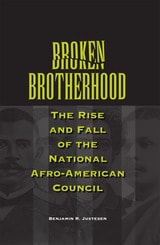
Broken Brotherhood
The Rise and Fall of the National Afro-American CouncilBenjamin R. Justesen
Southern Illinois University Press, 2008
Broken Brotherhood: The Rise and Fall of the National Afro-American Council gives a comprehensive account of the National Afro-American Council, the first truly nationwide U.S. civil rights organization, which existed from 1898 to 1908. Based on exhaustive research, the volume chronicles the Council’s achievements and its annual meetings and provides portraits of its key leaders.
Led by four of the most notable African American leaders of the time—journalist T. Thomas Fortune, Bishop Alexander Walters, educator Booker T. Washington, and Congressman George Henry White—the Council persevered for a decade despite structural flaws and external pressures that eventually led to its demise in 1908.
Author Benjamin R. Justesen provides historical context for the Council’s development during an era of unprecedented growth in African American organizations. Justesen establishes the National Afro-American Council as the earliest national arena for discussions of critical social and political issues affecting African Americans and the single most important united voice lobbying for protection of the nation’s largest minority. In a period marked by racial segregation, widespread disfranchisement, and lynching violence, the nonpartisan council helped establish two more enduring successor organizations, providing core leadership for both the National Association for the Advancement of Colored People and the National Urban League.
Broken Brotherhood traces the history of the Council and the complicated relationships among key leaders from its creation in Rochester in 1898 to its last gathering in Baltimore in 1907, drawing on both private correspondence and contemporary journalism to create a balanced historical portrait. Enhanced by thirteen illustrations, the volume also provides intriguing details about the ten national gatherings, describes the Council’s unsuccessful attempt to challenge disfranchisement before the U.S. Supreme Court, and sheds light on the gradual breakdown of Republican solidarity among African American leaders in the first decade of the twentieth century.