Results by title
520 books match the query 'Family' and 25 start with b
Bach Perspectives, Volume 11
J. S. Bach and His SonsEdited by Mary Oleskiewicz
University of Illinois Press, 2017
Robert L. Marshall traces how each of the sons grappled with—and at times suffocated beneath—their illustrious father’s legacy. Mary Oleskiewicz’s essay investigates the Bach family’s connections to historical keyboard instruments and musical venues at the Prussian court, while David Schulenberg looks at Carl Philipp Emanuel Bach’s diverse and innovative keyboard works. Evan Cortens digs into everything from performance materials to pay stubs to offer a detailed view of the business of Carl Philipp Emanuel Bach’s liturgical music. Finally, Christine Blanken discusses how the rediscovery of Bach family musical manuscripts in the Breitkopf archive opens up new perspectives on familiar topics.
A supplemental companion website is now available for Bach Perspectives 11. This resource features additional images, captions, and short descriptions to provide an essential supplement to the printed text.
Bach Perspectives, Volume 5
Bach in AmericaEdited by Stephen A. Crist
University of Illinois Press, 2002
More than a century passed after Johann Sebastian Bach's death in 1750 before his music found an audience in the United States. Volume Five in the Bach Perspectives series tracks the composer's reputation in America from obscure artist to a cultural mainstay whose music has spread to all parts of the country.
Barbara Owen surveys Bach's early reception in America. Matthew Dirst focuses on John Sullivan Dwight's role in advocating Bach's work. Michael Broyles considers Bach's early impact in Boston while Mary J. Greer offers a counterpoint in her study of Bach's reception in New York. Hans-Joachim Schulze's essay links the American descendants of August Reinhold Bach to the composer. Christoph Wolff also focuses on Bach's descendants in America, particularly Friederica Sophia Bach, the daughter of Bach's eldest son. Peter Wollny evaluates manuscripts not included in Gerhard Herz's study of Bach Sources in America. The volume concludes with Carol K. Baron's comparison of Bach with Charles Ives while Stephen A. Crist measures Bach's influence on the jazz icon Dave Brubeck.
Back in School
How Student Parents Are Transforming College and FamilyA. Fiona Pearson
Rutgers University Press, 2019
Bad Cell
PoemsElizabeth Lindsey Rogers
Acre Books, 2027
Chronicling reproduction and parenting within a lesbian relationship, this poetry collection reveals both the anxieties and awe inspired by rearing children.
In her frank, vulnerable third book of poetry, Elizabeth Lindsey Rogers considers queer kinship through scientific, cultural, and personal lenses. Bad Cell presents perspectives on family and inheritance that are at once granular and comprehensive. From a pregnant woman being mistaken as a man by a store clerk to some “FAQs Re: Queers & Reproduction” that dispel stereotypes, the collection celebrates the fluidity of gender.
Early in the volume, Rogers addresses the emotional and physical complications of fertility treatment and pregnancy loss, a medical journey that, though harrowing, is gorgeously rendered in taut lyric language. Later, in forms like the abecedarian, definition poem, questionnaire, haibun, and a sonnet crown, the poet looks at how cells themselves—the stuff of life—divide and recombine. As in previous collections, Rogers leans into science-inspired verse, showcasing her talent for turning small-scale mechanics into meaningful metaphors.
The book also supports an openness to neurodivergence in children: “I want to assemble / something that can speak / for everyone,” says the speaker of “Apraxia.” And Rogers does, with the skill of a seasoned poet and essay writer, whose eye for the particularness of the world is encompassing and gives new insight into the experience of parenting: “But I’m not mom, I tell / writers who think I’ve gone soft, given up deeper subjects. As if these wild, / xenogeneic offspring aren’t a full-on wrestle with the deep.”
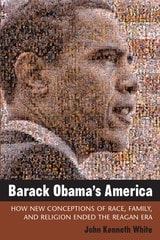
Barack Obama's America
How New Conceptions of Race, Family, and Religion Ended the Reagan EraJohn Kenneth White
University of Michigan Press, 2009
"White's Barack Obama's America eloquently captures both the important nuances of the current political scene and its long-term consequences."
---Richard Wirthlin, former pollster for Ronald Reagan
"This delightfully written and accessible book is the best available account of the changes in culture, society, and politics that have given us Barack Obama's America."
---Stan Greenberg, pollster for Bill Clinton and Chairman and CEO of Greenberg Quinlan Rosner Research
"From one of the nation's foremost experts on how values shape our politics, a clear and compelling account of the dramatic shifts in social attitudes that are transforming American political culture. White's masterful blend of narrative and data illuminates the arc of electoral history from Reagan to Obama, making a powerful case for why we are entering a new progressive political era."
---Matthew R. Kerbel, Professor of Political Science, Villanova University, and author of Netroots
"John Kenneth White is bold. He asks the big questions . . . Who are we? What do we claim to believe? How do we actually live? What are our politics? John Kenneth White writes compellingly about religion and the role it played in making Barack Obama president. White's keen insight into America's many faiths clarifies why Barack Obama succeeded against all odds. It is a fascinating description of religion and politics in twenty-first-century America---a must-read."
---Kathleen Kennedy Townsend, former Lieutenant Governor of Maryland and author of Failing America's Faithful
"In Barack Obama's America, John Kenneth White has written the political equivalent of Baedeker or Michelin, the definitive guide to and through the new, uncharted political landscape of our world. White captures and explains what America means---and what it means to be an American---in the twenty-first century."
---Mark Shields, nationally syndicated columnist and political commentator for PBS NewsHour
"John White has always caught important trends in American politics that others missed. With his shrewd analysis of why Barack Obama won, he's done it again."
---E. J. Dionne, Jr., Senior Fellow, Brookings Institution, and University Professor in the Foundations of Democracy and Culture at Georgetown University
The election of Barack Obama to the presidency marks a conclusive end to the Reagan era, writes John Kenneth White in Barack Obama's America. Reagan symbolized a 1950s and 1960s America, largely white and suburban, with married couples and kids at home, who attended church more often than not.
Obama's election marks a new era, the author writes. Whites will be a minority by 2042. Marriage is at an all-time low. Cohabitation has increased from a half-million couples in 1960 to more than 5 million in 2000 to even more this year. Gay marriages and civil unions are redefining what it means to be a family. And organized religions are suffering, even as Americans continue to think of themselves as a religious people. Obama's inauguration was a defining moment in the political destiny of this country, based largely on demographic shifts, as described in Barack Obama's America.
John Kenneth White is Professor of Politics at the Catholic University of America in Washington, D.C.
Cover image: "Out of many, we are one: Dare to Hope: Faces from 2008 Obama Rallies" by Anne C. Savage, view and buy full image at http://revolutionaryviews.com/obama_poster.html.
Barley Child
Greg Rappleye
University of Arkansas Press, 2025
Winner, 2026 Society of Midland Authors Book Award
Finalist, 2026 Kingsley Tufts Poetry Award
Finalist, 2026 Griffin Poetry Prize
Barley Child, Greg Rappleye’s fifth collection, draws from family legends, whispered stories, and sworn denials across four generations of Irish American lives—recalled, imagined, and reconstructed from census records, old letters, church registries, yellowed newspaper clippings, and a few odd photographs in which the human figures are often unnamed. The sum of these affidavits, arrayed across the lyric and narrative lines of these poems, is an electrifying human choir—male and female, child and adult, Irish and American—their voices rising out of shame, poverty, absurdity, violence, a strained Catholic faith, and a virulent legacy of madness and alcoholism.
Free of nostalgia and cant, with a sharp Irish wit that often braves nearly monstrous subject matter, and reported with eyes that seldom mist over, Barley Child is a volume that once again confirms Greg Rappleye as a poet of witness.
Beautiful Mystery
Living in a Wordless WorldDanilyn Rutherford
Duke University Press, 2025
Now in her twenties, Millie has never been able to express herself verbally, but she has a thriving social environment rooted in the people around her and in things her companions and family can see, hear, smell, and feel. Life in Millie’s world is far richer than might be immediately evident to those who think and communicate in conventional ways.
Beautiful Mystery explores what it means to be a person in the spaces between what we can and cannot say, and how we can fight to care for those we love when they don’t have the language to fight for themselves. Through her unique lens as a mother and an anthropologist, Rutherford tells the story of arriving in Millie’s world, what she found there, and how Millie showed her that words aren’t always what makes us human. Enlightening and deeply felt, Beautiful Mystery proves that you don’t have to understand someone to love them—a lesson that, if we all learned it, might allow us to live together in a fractured world.
Becoming Reinaldo Arenas
Family, Sexuality, and The Cuban RevolutionJorge Olivares
Duke University Press, 2013
Through insightful close readings of a selection of Arenas's works, including unpublished manuscripts and correspondence, Olivares examines the writer's personal, political, and artistic trajectory, focusing on his portrayals of family, sexuality, exile, and nostalgia. He documents Arenas's critical engagement with cultural and political developments in revolutionary Cuba and investigates the ways in which Arenas challenged literary and national norms. Olivares's analysis shows how Arenas drew on his life experiences to offer revealing perspectives on the Cuban Revolution, the struggles of Cuban exiles, and the politics of sexuality.
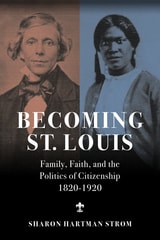
Becoming St. Louis
Family, Faith, and the Politics of Citizenship, 1820-1920Sharon Hartman Strom
University of Illinois Press, 2025
Between Foreign and Family
Return Migration and Identity Construction among Korean Americans and Korean ChineseLee, Helene K
Rutgers University Press, 2018
Between Foreign and Family explores the impact of inconsistent rules of ethnic inclusion and exclusion on the economic and social lives of Korean Americans and Korean Chinese living in Seoul. These actors are part of a growing number of return migrants, members of an ethnic diaspora who migrate “back” to the ancestral homeland from which their families emigrated. Drawing on ethnographic observations and interview data, Helene K. Lee highlights the “logics of transnationalism” that shape the relationships between these return migrants and their employers, co-workers, friends, family, and the South Korean state.
While Koreanness marks these return migrants as outsiders who never truly feel at home in the United States and China, it simultaneously traps them into a liminal space in which they are neither fully family, nor fully foreign in South Korea. Return migration reveals how ethnic identity construction is not an indisputable and universal fact defined by blood and ancestry, but a contested and uneven process informed by the interplay of ethnicity, nationality, citizenship, gender, and history.
Biblical and Theological Foundation of the Family
Joseph C. Atkinson
Catholic University of America Press, 2014
Bicycle Cowboy
And Other Poems About Growing UpRon Helmboldt
Parkhurst Brothers, Inc., 2016
BitterSweet
The Memoir of a Chinese Indonesian Family in the Twentieth CenturyStuart Pearson
National University of Singapore Press, 2013
BitterSweet
The Memoir of a Chinese-Indonesian Family in the Twentieth CenturyStuart Pearson
Ohio University Press, 2008
BitterSweet is the account of one Chinese-Indonesian family whose story stretches over the generations as their fortunes waxed and waned through revolution, riots, war, depression, occupation, and finally emigration to yet another country—Australia.
BitterSweet offers a unique insight into a world rarely seen before. An Sudibjo’s memoir, written from a woman’s perspective, is a valuable resource for anyone studying Indonesian history or the Chinese Diaspora.
Bless Me, Papi
A NovelAyendy Bonifacio
Northwestern University Press, 2026
A coming-of-age tale of a young Dominican American boy facing a grave loss and a feathered phantom
Between the looming buildings of Brooklyn, a young Dominican American boy only ever called mijo by his family has just lost his father to brain cancer. In the wake of his grief, he begins to see his deceased father take the form of a pigeon and ghost, acting as protector and advisor in moments of duress and confusion. Determined to find out the truth behind his father’s appearances, he sets out on the streets of Brooklyn with his outspoken friend Naño, and in the hills of the Dominican Republic with his cousin Matias, in search of answers, only to discover more ghostly apparitions and inexplicable occurrences. In a world of lost things and in-betweens, the grief-stricken son must choose whether he can bear to let go of his father or accept the consequences of what we let haunt us.
Blooming Fiascoes
PoemsEllen Hagan
Northwestern University Press, 2021
Blooming Fiascoes is a collective of verse that deconstructs identity. We are beautiful and monstrous. We live in a beautiful and monstrous world. Ellen Hagan poetically mirrors these metaphoric adversaries, drawing on her experiences as a woman, an artist, a mother, a transplanted southerner, and above all, a human being. She plumbs origins in history, body, and living to question how we reckon our whole selves in the catacombs of a world gone mad:
We mourn, we bless, / we blow, we wail, we / wind—down, we sip, / we spin, we blind, we / bend, bow & hem. We / hip, we blend, we bind, / we shake, we shine, / shine. We lips & we / teeth, we praise & protest.
In these poems, Assyrian, Italian, and Irish lines seep deeper into a body that is growing older but remains engaged with unruly encounters: the experience of raising daughters, sexual freedom, and squaring body image against the body’s prohibitions. This is a work where the legacy is still evolving and always asking questions in real time. Blooming Fiascos spindles poetry that is not afraid to see itself and the lives it inhabits.
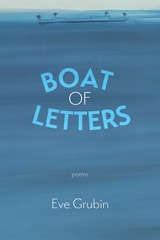
Boat of Letters
Eve Grubin
Four Way Books, 2025
In her much anticipated second full-length collection of poems, Eve Grubin conjures an "inky swamp, wild and warm, / where leaves hang down like muted lamps." Grubin navigates wild waters in a "boat of letters" she constructs, with poems narrating a daughter in mourning for her mother in adulthood's half-light; a wife in the middle of life's existential marathon; a mother raising two children in the terrifying present; an American living in London; a Jewish woman following religious tradition in what can feel like a faithless world. Grubin shapes language and silences into a bridge that holds us between longing and understanding, between effort and the holy ground of that unattainable destination. "The Poetics of Reticence" describes hovering above the waters where "there is no vessel; there are no oars," just the "sounds of a boat creaking," a material contradiction in the hushed void. "Silence is praise: words cannot touch glory," Grubin writes, but she also demonstrates what wonders our speech makes possible. In one poem, the narrator looks back at her wedding and considers how little she knew about marriage, and thinking in the context of her husband's area of expertise, palaeography, she reflects, "I didn't know that when two graphemes join / in a single glyph there is potential for stylistic re-imaginings, / for inventive, elegant variations." All is preordained, she seems to say, while paradoxically, we re-imagine and invent. And even as we create our future, we embrace the beauty of all that we cannot know: "Yesterday, we talked about the shade / of a certain blue mentioned in the Torah. / Was it the blue of our son's lips after a bath? // Or the blue of redemption? // Or the dark blue of the sky / the night we walked across the sands, the seas all around us."
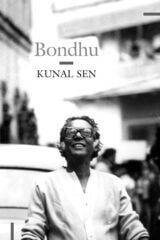
Bondhu
My Father, My FriendKunal Sen
Seagull Books, 2023
“No one remembers when and why I started calling my father Bondhu. It was a strange way to address a father, as the word means ‘friend’ in Bengali. . . . As I got older, I became very self-conscious about such an odd name . . . and yet I cannot explain why I could not switch to the more acceptable Baba or something similar.”
Just as Kunal Sen, son of actor Gita Sen and filmmaker Mrinal Sen, was approaching adolescence, his father’s cinematic celebrity was reaching new heights. In this memoir, Kunal reflects on growing up in a middle-class household in South Calcutta, where his father’s Marxist beliefs and unrelenting urge “to be challenged and contradicted” often collided with the practical challenges of making a living. Through it all, what emerges is a picture of a family’s unyielding commitment to the craft of cinema, the risks each of its members took, and their endearing sense of humor. Celebrating Mrinal Sen’s birth centenary in 2023, Bondhu takes us on an intimate journey of a son attempting to reconcile his father’s public and private selves.
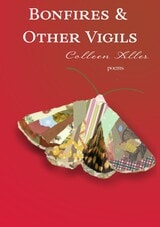
Bonfires & Other Vigils
PoemsColleen Alles
University of Alabama Press, 2024
Any event can be a vigil: a walk by a river, a flu shot at Walgreens, an hour spent by a bird feeder attracting mostly cardinals. A vigil means you are keeping watch, and these poems are watching the world around them—and the worlds beneath those worlds, too. The poems in this collection pull from dreams and apparitions as much as they do reality: a woman in a house, a coffee mug, a book of matches, a load of unfolded laundry, a goldfish won at a county fair. All is fair game. Bonfires & Other Vigils celebrates the watching in unconventional ways. Readers can expect to revel in the elusive wonder of haziness, otherworldliness, and wildness of examining life through lenses of vigilant dreaming.
Borderland Apocrypha
Anthony Cody
Omnidawn, 2019
Rather than a proposal for re-imagining the US/Mexico border, Cody’s collection is an avant-garde examination of how borderlands have remained occupied spaces, and of the necessity of liberation to usher the earth and its people toward healing. Part auto-historia, part docu-poetic, part visual monument, part myth-making, Borderland Apocrypha unearths history in order to work toward survival, reckoning, and the building of a future that both acknowledges and moves on from tragedies of the past.
Borderland Apocrypha won Omnidawn's 2018 1st/2nd Book Prize.

Boy
Tracy Youngblom
CavanKerry Press, 2023
The death of a youngest child. An alcoholic and distant father. A grief-stricken family. A tentative faith. These are the building blocks of Boy, a sequence of poems that explores how death and loss color memory and influence the ways family members relate to each other and to their shared history.
Inspired by the death of her own younger brother, Tracy Youngblom has written a poetry collection that serves as a companion to grief. This book is for those who love poetry and those who are intimidated by it, those interested in the way childhood experience shapes life, and those interested in the psychology of addiction.
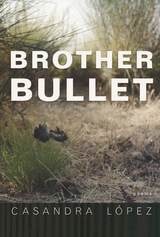
Brother Bullet
PoemsCasandra López
University of Arizona Press, 2019
Drawing on migratory experiences, López transports the reader to the Inland Empire, Baja California, New Mexico, and Arizona to create a frame for memory, filled with imagery, through the cyclical but changing essence of sorrow. This is paralleled with surrounding environments, our sense of belonging—on her family’s porch, or in her grandfather’s orange grove, or in the darkest desert. López’s landscapes are geographical markers and borders, connecting shared experiences and memories.
Brother Bullet tugs and pulls, drawing us into a consciousness—a story—we all bear.
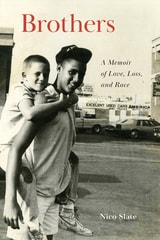
Brothers
A Memoir of Love, Loss, and RaceNico Slate
Temple University Press, 2023
Brothers is Nico Slate’s poignant memoir about Peter Slate, aka XL, a Black rapper and screenwriter whose life was tragically cut short. Nico and Peter shared the same White American mother but had different fathers. Nico’s was White; Peter’s was Black. Growing up in California in the 1980s and 1990s, Nico often forgot about their racial differences until one night in March 1994 when Peter was attacked by a White man in a nightclub in Los Angeles.
Nico began writing Brothers with the hope that investigating the attack would bring him closer to Peter. He could not understand that night, however, without grappling with the many ways race had long separated him from his brother.
This is a memoir of loss—the loss of a life and the loss at the heart of our racial divide—but it is also a memoir of love. The love between Nico and Peter permeates every page of Brothers. This achingly beautiful memoir presents one family’s resilience on the fault lines of race in contemporary America.
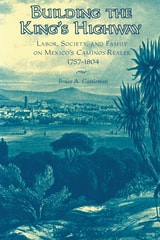
Building the King’s Highway
Labor, Society, and Family on Mexico’s Caminos Reales, 1757-1804Bruce A. Castleman
University of Arizona Press, 2005
Focusing on the camino real linking Mexico City and the port of Veracruz, Bruce Castleman has written a social history of road construction laborers in late Bourbon Mexico. He has drawn on employment and census records to study a major shift in methods used by the Spanish colonial regime to mobilize the supply of unskilled labor—and concomitant changes in the identities those laborers asserted for themselves.
Through a close analysis of wages actually paid to named individuals from one week to the next, Castleman opens a new window on Mexican history. In the 1760s, a free-wage labor regime replaced a draft-labor system, and by examining records of road construction he traces both this transformation and its implications. During this time, free-wage artisans saw their earnings reduced, and they were pushed into the labor pool, and Castleman reveals how a shift occurred in the way that laborers identified themselves as the Spanish casta system of racial classification became increasingly fluid.
In his study, Castleman introduces some of the principle players of eighteenth-century Mexico, from viceroys to tobacco planters to military engineers. He then fleshes out the lives of working persons, drawing on a complete set of construction records from the construction of the Puente de Escamela at Orizaba to forge a collective biography that considers their existences apart from the workplace. By linking census and employment records, he uncovers a host of social indicators such as marriage preference, family structure, and differences over time in how the caste system was used to classify people according to ancestry.
As Castleman shows, roads did not so much link Mexico to the global economy as forge regional markets within New Spain, and his work provides an astute analysis of struggles between the Bourbon colonial state, the important consulados of Mexico City and Veracruz, and more localized interests over road policy. More important, Building the King’s Highway provides a valuable new perspective on people’s lives as it advances our understanding of labor in late colonial Latin America.
Butterfly, the Bride
Essays on Law, Narrative, and the FamilyCarol Weisbrod
University of Michigan Press, 2004
Butterfly, the Bride looks at law from the outside, using narrative to provide a fresh perspective on the issues of law and social structure---and individual responses to law. This book thoroughly explores relationships between inner and public lives by examining what is ordinarily classified as the sphere of private life---the world of family relationships.