Results by title
50 books match the query 'Feminist Criticism' and 4 start with b

Bitter Milk
Women and TeachingMadeleine R. Grumet
University of Massachusetts Press, 1988
The first and last chapters address the familial relations that fall under the category of reproduction, a frame designed to emphasize the relations of reproduction and their importance to educational theory. The chapters closest to this margin are those that address women's work in schools, and the juxtaposition is chosen to accentuate the dialectical relation of our public and private meanings. The middle chapters are the ones most directly concerned with curriculum, that provisional ground that Grumet is naming as our mediating space, the place where we can heal. The fundamental argument of this text is that knowledge evolves in human relationships.

Body Drift
Butler, Hayles, HarawayArthur Kroker
University of Minnesota Press, 2012
As exemplary representatives of a form of critical feminism, the writings of Judith Butler, Katherine Hayles, and Donna Haraway offer entry into the great crises of contemporary society, politics, and culture. Butler leads readers to rethink the boundaries of the human in a time of perpetual war. Hayles turns herself into a “writing machine” in order to find a dwelling place for the digital humanities within the austere landscape of the culture of the code. Haraway is the one contemporary thinker to have begun the necessary ethical project of creating a new language of potential reconciliation among previously warring species.
According to Arthur Kroker, the postmodernism of Judith Butler, the posthumanism of Katherine Hayles, and the companionism of Donna Haraway are possible pathways to the posthuman future that is captured by the specter of body drift. Body drift refers to the fact that individuals no longer inhabit a body, in any meaningful sense of the term, but rather occupy a multiplicity of bodies: gendered, sexualized, laboring, disciplined, imagined, and technologically augmented.
Body drift is constituted by the blast of information culture envisioned by artists, communicated by social networking, and signified by its signs. It is lived daily by remixing, resplicing, and redesigning the codes: codes of gender, sexuality, class, ideology, and identity. The writings of Butler, Hayles, and Haraway, Kroker reveals, provide the critical vocabulary and political context for understanding the deep complexities of body drift and challenging the current emphasis on the material body.

Breaking the World
Black Insecurity and the Horizons of Speculative FictionJustin L. Mann
Duke University Press, 2026
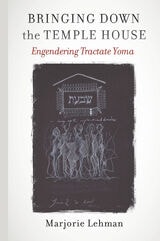
Bringing Down the Temple House
Engendering Tractate YomaMarjorie Lehman
Brandeis University Press, 2022
While the use of feminist analysis as a methodological lens is not new to the study of Talmudic literature or to the study of individual tractates, this book demonstrates that such an intervention with the Babylonian Talmud reveals new perspectives on the rabbis’ relationship with the temple and its priesthood. More specifically, through the relationships most commonly associated with home, such as those of husband-wife, father-son, mother-son, and brother-brother, the rabbis destabilize the temple bayit (or temple house). Moving beyond the view that the temple was replaced by the rabbinic home, and that rabbinic rites reappropriate temple practices, a feminist approach highlights the inextricable link between kinship, gender, and the body, calling attention to the ways the rabbis deconstruct the priesthood so as to reconstruct themselves.