Results by title
100 books match the query 'Flowers' and 3 start with b
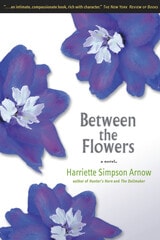
Between the Flowers
A NovelHarriette Simpson Arnow
Michigan State University Press, 1999
Between the Flowers is Harriette Simpson Arnow's second novel. Written in the late 1930s, but unpublished until 1997, this early work shows the development of social and cultural themes that would continue in Arnow's later work: the appeal of wandering and of modern life, the countervailing desire to stay within a traditional community, and the difficulties of communication between men and women in such a community.
Between the Flowers goes far beyond categories of "local color," literary regionalism, or the agrarian novel, to the heart of human relationships in a modernized world. Arnow, who went on to write Hunter's Horn (1949) and The Dollmaker (1952)—her two most famous works—has continually been overlooked by critics as a regional writer. Ironically, it is her stinging realism that is seen as evidence of her realism, evidence that she is of the Cumberland—an area somehow more "regional" than others.
Beginning with an edition of critical essays on her work in 1991 and a complete original edition of Hunter's Horn in 1997, the Michigan State University Press is pleased to continue its effort to make available the timeless insight of Arnow's work with the posthumous publication of Between the Flowers.
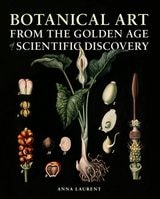
Botanical Art from the Golden Age of Scientific Discovery
Anna Laurent
University of Chicago Press, 2016
This beautifully illustrated oversized book gives the humble wall chart its due, reproducing more than two hundred of them in dazzling full color. Each wall chart is accompanied by captions that offer accessible information about the species featured, the scientists and botanical illustrators who created it, and any particularly interesting or innovative features the chart displays. And gardeners will be pleased to discover useful information about plant anatomy and morphology and species differences. We see lilies and tulips, gourds, aquatic plants, legumes, poisonous plants, and carnivorous plants, all presented in exquisite, larger-than-life detail.
A unique fusion of art, science, and education, the wall charts gathered here offer a glimpse into a wonderful scientific heritage and are sure to thrill naturalists, gardeners, and artists alike.
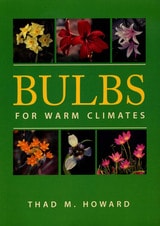
Bulbs for Warm Climates
By Thad M. Howard
University of Texas Press, 2001
Bulb gardening in the southwestern and southern United States presents challenges unknown in cooler climates. Bulbs that turn Holland into a kaleidoscope of color droop and fade in our mild winters, hot summers, and uncertain rainfall. Yet hundreds of native and naturalized species of bulbs thrive in these same conditions and offer as many colors, shapes, and fragrances as even the most demanding gardener desires. These are the bulbs that Thad Howard describes in this comprehensive guide to bulbs that will grow in USDA gardening zones 8 and 9.
Writing from more than forty-five years' experience in collecting and cultivating bulbs, Howard offers expert advice about hundreds of little-known, hybrid, and common species and varieties that grow well in warm climates. His species accounts, which are grouped by family, describe each plant and its growing requirements and often include interesting stories from his collecting expeditions. Lovely color photos illustrate many of the species.
Howard also gives reliable information about refrigerating bulbs, using them in the landscape and in containers, choosing scented ones, making potpourri, buying, collecting, cultivating, and hybridizing bulbs, and dealing with pests and diseases. He concludes with lists of plant societies and suppliers and a helpful glossary and bibliography.