Results by title
75 books match the query 'Folk & Traditional' and 11 start with b
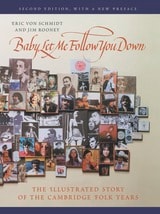
Baby, Let Me Follow You Down
The Illustrated Story of the Cambridge Folk YearsEric von Schmidt
University of Massachusetts Press, 1979
Compiled by two musicians who were active participants in the Cambridge folk scene, the volume documents a special time in United States culture when the honesty and vitality of traditional folk music were combined with the raw power of urban blues and the high energy of electric rock and roll to create a new American popular music.
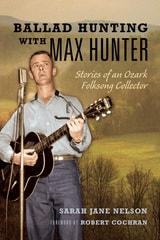
Ballad Hunting with Max Hunter
Stories of an Ozark Folksong CollectorSarah Jane Nelson; Foreword by Robert Cochran
University of Illinois Press, 2023
Sarah Jane Nelson chronicles Hunter’s song collecting adventures alongside portraits of the singers and mentors he met along the way. The guitar-strumming Hunter picked up the recording habit to expand his repertoire but almost immediately embraced the role of song preservationist. Being a local allowed Hunter to merge his native Ozark earthiness with sharp observational skills to connect--often more than once--with his singers. Hunter’s own ability to be present added to that sense of connection. Despite his painstaking approach, ballad collecting was also a source of pleasure for Hunter. Ultimately, his dedication to capturing Ozarks song culture in its natural state brought Hunter into contact with people like Vance Randolph, Mary Parler, and non-academic folklorists who shared his values.
Ballads Beyond Borders
How the Irish Diaspora Shaped Music in the Nineteenth-Century United StatesSarah Gerk
University of Illinois Press, 2026
Gerk opens by considering the popularity of Thomas Moore’s iconic collection Irish Melodies in relation to the history of British colonization shared by the US and Ireland, arguing that these songs modeled what the music of an Anglo-Celtic republic could sound like. She considers blackface minstrelsy’s complicated relationship with both Irish-American performers and theatrical stereotypes of Irish people, and positions Irish-American performers and audiences as a primary driving force in new musical styles in 1840s sheet music, in which minstrelsy’s resemblances to Anglo-Celtic traditional music disappeared. She examines the legacy of the Great Famine in music of the US Civil War, considering how that music’s role in emotional life offers robust source material for understanding famine memory. She explores the increasingly elaborate sketches in the 1870s and 1880s of the variety duo Harrigan and Hart, highlighting ways in which violent conflict between the Black community and the Irish lies at the very heart of the Mulligan entertainments. Finally, she contextualizes the work of Irish-American tenor Chauncey Olcott, showing how a number of confluent trends—the growing wealth and social status of Irish-American middle classes, the Gaelic revival, new immigration patterns, and the consolidation of the US’s sheet music industry—allowed Olcott to perform an elevated version of Irish-American musical culture, influenced by superficial elements of Italian operatic music.
Banjo Roots and Branches
Edited by Robert B. Winans
University of Illinois Press, 2018
Wide-ranging and illustrated with twenty color images, Banjo Roots and Branches offers a wealth of new information to scholars of African American and folk musics as well as the worldwide community of banjo aficionados.
Contributors: Greg C. Adams, Nick Bamber, Jim Dalton, George R. Gibson, Chuck Levy, Shlomo Pestcoe, Pete Ross, Tony Thomas, Saskia Willaert, and Robert B. Winans.

Beautiful Politics of Music
Trova in Yucatán, MexicoGabriela Vargas-Cetina
University of Alabama Press, 2017
An exploration into the history and practice of trova, a genre of music that is the soul of Yucatán.
Yucatecan trova is a music genre comprising a type of romantic song that is considered “the soul of Yucatán and Yucatecans.” This first book on Yucatecan trova offers an insider’s view of the history and practice of a treasured cultural heritage. A central theme of Gabriela Vargas-Cetina’s ethnography is what she refers to as the “beautiful politics of music” practiced by Yucatecan trova patrons and organizations, which is a way of asserting the importance of groups and issues through nonconfrontational means.
Trova emerged on the peninsula at the end of the nineteenth century and continues to be part of the general urban soundscape in the states of Yucatán and Campeche. Until the 1920s, this music was little known outside Yucatán and became absorbed into the larger Latin American Bolero genre, making it difficult to perceive its uniqueness and relation to life in Yucatán.
Vargas-Cetina, a native Yucatecan and trova musician, offers ethnographic insight into the local music scene. With family connections, she embedded herself as a trovadora, and her fieldwork—singing, playing the guitar in a trova group, and extensively researching the genre and talking with fellow enthusiasts and experts—ensued. Trova, like other types of artistic endeavors, is the result of collaboration and social milieu. She describes the dedicated trova clubs, cultural institutions, the Yucatecan economy of agricultural exports, and identity politics that helped the music come about and have maintained it today.
Positioned in the larger context of the music of Mexico and Latin America and engaging with theories of modernity and cosmopolitanism, experimental ethnography, and the anthropology of organizations, Beautiful Politics of Music consists of rigorous scholarship. It is also a warm tribute to performers and songs that have inspired many people around the world for more than two centuries.
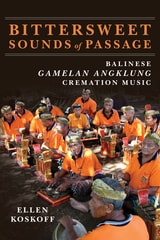
Bittersweet Sounds of Passage
Balinese Gamelan Angklung Cremation MusicEllen Koskoff
University of Illinois Press, 2025
Koskoff examines the history, cultural significance, and musical structures of contemporary gamelan angklung cremation music through the lens of three intertwined stories: existing scholarship on this music, written mostly by Western composers and scholars; the views of those performing and experiencing the music who regard it as dharma--ritual obligation, a basic concept in Balinese Hinduism; and the music itself, with a musical analysis focusing on changes in rasa--feeling, flavor and musical flow.
A journey inside a tradition, Bittersweet Sounds of Passage reveals the overlooked music of an important ritual in Balinese village life.
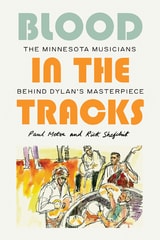
Blood in the Tracks
The Minnesota Musicians behind Dylan's MasterpiecePaul Metsa
University of Minnesota Press, 2023
The story of the Minneapolis musicians who were unexpectedly summoned to re-record half of the songs on Bob Dylan's most acclaimed album
When Bob Dylan recorded Blood on the Tracks in New York in September 1974, it was a great album. But it was not the album now ranked by Rolling Stone as one of the ten best of all time. “When something’s not right, it’s wrong,” as Dylan puts it in “You’re Gonna Make Me Lonesome When You Go”—and something about that original recording led him to a studio in his native Minnesota to re-record five songs, including “Idiot Wind” and “Tangled Up in Blue.” Six Minnesota musicians participated in that two-night recording session at Sound 80, bringing their unique sound to some of Dylan’s best-known songs—only to have their names left off the album and their contribution unacknowledged for more than forty years. This book tells the story of those two nights in Minneapolis, introduces the musicians who gave the album so much of its ultimate form and sound, and describes their decades-long fight for recognition.
Blood in the Tracks takes readers behind the scenes with these “mystery” Minnesota musicians: twenty-one-year-old mandolin virtuoso Peter Ostroushko; drummer Bill Berg and bass player Billy Peterson, the house rhythm section at Sound 80; progressive rock keyboardist Gregg Inhofer; guitarist Chris Weber, who owned The Podium guitar shop in Dinkytown; and Kevin Odegard, whose own career as a singer-songwriter had paralleled Dylan’s until he had to take a job as a railroad brakeman to make ends meet. Through in-depth interviews and assiduous research, Paul Metsa and Rick Shefchik trace the twists of fate that brought these musicians together and then set them on different paths in its wake: their musical experiences leading up to the December 1974 recording session, the divergent careers that followed, and the painstaking work required to finally obtain the official credit that they were due.
A rare look at the making—or remaking—of an all-time great album, and a long overdue recognition of the musicians who made it happen, Blood in the Tracks brings to life a transformative moment in the history of rock and roll, for the first time in its true context and with its complete cast of players.

Bonfire of Roadmaps
By Joe Ely
University of Texas Press, 2007
Since he first hitched a ride out of Lubbock, Texas, at the age of sixteen, singer-songwriter and Flatlanders band member Joe Ely has been a road warrior, traveling highways and back roads across America and Europe, playing music for "2 hours of ecstasy" out of "22 hours of misery." To stay sane on the road, Ely keeps a journal, penning verses that sometimes morph into songs, and other times remain "snapshots of what was flying by, just out of reach, so to savor at a later date when the wheels stop rolling, and the gears quit grinding, and the engines shut down."
In Bonfire of Roadmaps, Ely takes readers on the road with him. Using verse passages from his road journals and his own drawings, Ely authentically re-creates the experience of a musician's life on tour, from the hard goodbyes at home, to the long hours on the road, to the exhilaration of a great live show, to the exhaustion after weeks of touring. Ely's road trips begin as he rides the rails to Manhattan in 1972 and continue up through recent concert tours with fellow Flatlanders Jimmie Dale Gilmore and Butch Hancock.
While acknowledging that "it is not the nature of a gypsy to look in the rearview mirror," Joe Ely nevertheless offers his many fans a revelatory look back over the roads he's traveled and the wisdom he's won from his experiences. And for "those who want to venture beyond the horizon just to see what is there... to those, I hope these accounts will give a glint of inspiration..."
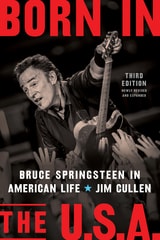
Born in the U.S.A.
Bruce Springsteen in American Life, 3rd edition, Revised and ExpandedJim Cullen
Rutgers University Press, 2024
This third edition of Born in the U.S.A. is fully revised and updated, incorporating discussion of Springsteen’s wide output in the 21st century. While addressing Springsteen’s responses to events like 9/11, it also considers the evolution of his attitudes towards religion, masculinity, and his relationship with his audience. Whether a serious Springsteen fan or simply an observer of American popular culture, Born in the U.S.A. will give you a new appreciation for The Boss.
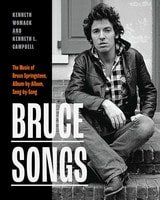
Bruce Songs
The Music of Bruce Springsteen, Album-by-Album, Song-by-SongKenneth Womack
Rutgers University Press, 2024
Bruce Songs is an authoritative guide that offers an in-depth exploration of Bruce Springsteen's musical legacy. Covering Springsteen's entire discography, from Greetings from Asbury Park, N.J. to Only the Strong Survive, this unique book combines historical context, literary analysis, and meticulous research.
Unlike any other resource, it provides detailed analyses of each album, essays on their historical significance, and a chronological examination of every studio song. Discover the stories behind the recordings and gain insight into Springsteen's creative process.
Rich with contemporary reviews, insider accounts, photographs, and special sections highlighting pivotal moments and key figures, Bruce Songs is an indispensable companion for fans and scholars. It offers an immersive journey through the music of the Boss, making it an essential read for anyone captivated by Springsteen's enduring musical legacy.
Building New Banjos for an Old-Time World
Richard Jones-Bamman
University of Illinois Press, 2017