54 books match the query 'Freedom of speech' and 4 start with b
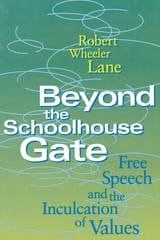
cover of Beyond the Schoolhouse Gate: Free Speech and the Inculcation of Values

Beyond the Schoolhouse Gate

Free Speech and the Inculcation of Values

Robert Wheeler Lane

Temple University Press, 1995
Outstanding Academic Title, Choice, 1995 "What makes Lane's approach unique is that he weaves together different perspectives on the nature of school into a very colorful but informative and lucid tapestry that seeks the outer limits of free expression within the boundaries of the school context, always with an eye toward promoting the goal of inculcation of values, a worthy end for students and school officials alike." --Samuel M. Davis, Allen Post Professor of Law, University of Georgia *In a 1969 landmark case, the U.S. Supreme Court ruled that the suspension of student for protesting the Vietnam War violated the First Amendment. *In 1972, the U.S. court of appeals upheld the suspension of black high school students for protesting the playing of "Dixie" at a pep rally. *In 1986, a U.S. district court ruled that the suspension of a student for directing a vulgar gesture at one of his school teachers in a fast-food restaurant was unconstitutional. On what grounds do public school students merit First Amendment protection? These three examples illustrate the broad range of litigation that has attempted to answer this question. Robert Wheeler Lane reviews the obstacles of this important issue and suggests a mix of protection and autonomy for students. Pulling together evidence about the aims of public education, the changing legal status of children, and the values underlying freedom of expression, Lane debates the relationship between constitutional litigation and the dual pursuits of academic excellence and classroom order. Ultimately, utilizing both lower court and Supreme Court decisions, he finds that independent student expression deserves considerable constitutional protection; student expression assisted by school officials (such as school-funded student newspapers) should be subject to some control; and nonstudent expression (such as a school's selection of library books) should be left largely to the school's discretion. His conclusions suggest that in forging First Amendment protection for public school students, strongly held positions need not be extreme.
[more]
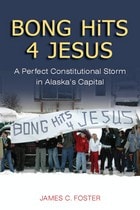
cover of Bong Hits 4 Jesus: A Perfect Constitutional Storm in Alaska's Capital

Bong Hits 4 Jesus

A Perfect Constitutional Storm in Alaska's Capital

James C. Foster

University of Alaska Press, 2010

In January 2002, for the first time, the Olympic Torch Relay visited Alaska on its way to the Winter Games. When the relay runner and accompanying camera cars passed Juneau-Douglas High School, senior Joseph Frederick and several friends unfurled a fourteen-foot banner reading "BONG HiTS 4 JESUS."

An in-depth look at student rights within a public high school, this book chronicles the events that followed: Frederick's suspension, the subsequent suit against the school district, and, ultimately, the escalation of a local conflict into a federal case. Brought to life through interviews with the principal figures in the case, Bong Hits 4 Jesus is a gripping tale of the boundaries of free speech in an American high school.
[more]
cover of Brandishing the First Amendment: Commercial Expression in America

Brandishing the First Amendment

Commercial Expression in America

Tamara R. Piety

University of Michigan Press, 2013

Over the past two decades, corporations and other commercial entities have used strategic litigation to win more expansive First Amendment protections for commercial speech—from the regulation of advertising to the role corporate interests play in the political process, most recently debated in the Supreme Court case of Citizens United v. Federal Election Commission. Tamara R. Piety, a nationally known critic of commercial and corporate speech, argues that such an expansion of First Amendment speech rights imperils public health, safety, and welfare; the reliability of commercial and consumer information; the stability of financial markets; and the global environment. 

Beginning with an evaluation of commonly evoked philosophical justifications for freedom of expression, Piety determines that, while these are appropriate for the protection of an individual’s rights, they should not be applied too literally to commercial expression because the corporate person is not the moral equivalent of the human person. She then gathers evidence from public relations and marketing, behavioral economics, psychology, and cognitive studies to show how overly permissive extensions of First Amendment protections to commercial expression limit governmental power to address some of the major social, economic, and environmental challenges of our time.

“The timeliness of the topic and the provision of original positions are sure to make the book a valuable contribution that should draw much attention.”
—Kevin W. Saunders, Michigan State University
[more]
cover of Broadcasting, Voice, and Accountability: A Public Interest Approach to Policy, Law, and Regulation

Broadcasting, Voice, and Accountability

A Public Interest Approach to Policy, Law, and Regulation

Steve Buckley, Kreszentia Duer, Toby Mendel, and Seán Ó Siochrú

University of Michigan Press, 2008

Participatory development and government accountability depend in part on the existence of media that provide broad access to information from varied sources and that equip and encourage people to raise and debate issues and develop public opinion. Conducive policies, laws, and regulations are essential for media to develop that are independent and widely accessible and that enable the expression of diverse perspectives and sources of information. Broadcasting, Voice, and Accountability presents a framework to inform analysis of existing policies and support the development of a vigorous media sector, with a particular emphasis on broadcasting. It focuses on broadcasting because that is the medium with the greatest potential to reach and involve society at large, including the most disadvantaged and illiterate segments of society in developing countries. Information on good practices in broadcasting policy is in demand in countries of every region—particularly in countries that are opening their economies, democratizing, and decentralizing public service delivery.
This book provides development practitioners with a wide overview of the key policy and regulatory issues involved in supporting freedom of information and expression and enabling development of a pluralistic, independent, and robust broadcasting sector. Policy, regulation, capacity, and institutional development are important development levers that shape the ownership, content, and social impacts of broadcasting systems. The guide shows the importance of enabling a mix of ownership and uses, commonly classified in terms of commercial, public service, and community broadcasting, that serves the public interest. With the guidance of this book, broadcasting policy and regulation can be tackled as a mainstream development topic, with important consequences for government transparency, government accountability, and enabling disadvantaged constituencies to voice their concerns and press for action.
This book is the World Bank's first publication presenting good practices from around the world in media and broadcasting policy and regulation and complements existing work in governance, public sector reform, and access to information. It is a useful tool for policymakers, reform managers, development practitioners, and students alike.
"Most books on the state of broadcasting in the third world tend either to lament the lack of governance, accountability and competence, or to speak down to their readers. This book is part of a new generation that acknowledges ability and a willingness to move forward into the twenty-first century with integrity and imagination. It is not patronizing, and it is certainly not boring. It focuses on really useful approaches to setting up, sustaining, and governing broadcasting systems across the world. This is an excellent book whose combination of sound scholarship and intelligent advice will be welcomed by policymakers and broadcasters alike. It is relevant, interesting, and a jolly good read."
---Ruth Teer-Tomaselli, UNESCO Chair in Communication for Southern Africa, Culture, Communication and Media Studies, University of KwaZulu-Natal

digitalculturebooks is an imprint of the University of Michigan Press and the Scholarly Publishing Office of the University of Michigan Library dedicated to publishing innovative and accessible work exploring new media and their impact on society, culture, and scholarly communication. Visit the website at www.digitalculture.org.

[more]